High-Protein Slushie (DIY): Calories, Nutrition and Health Benefits
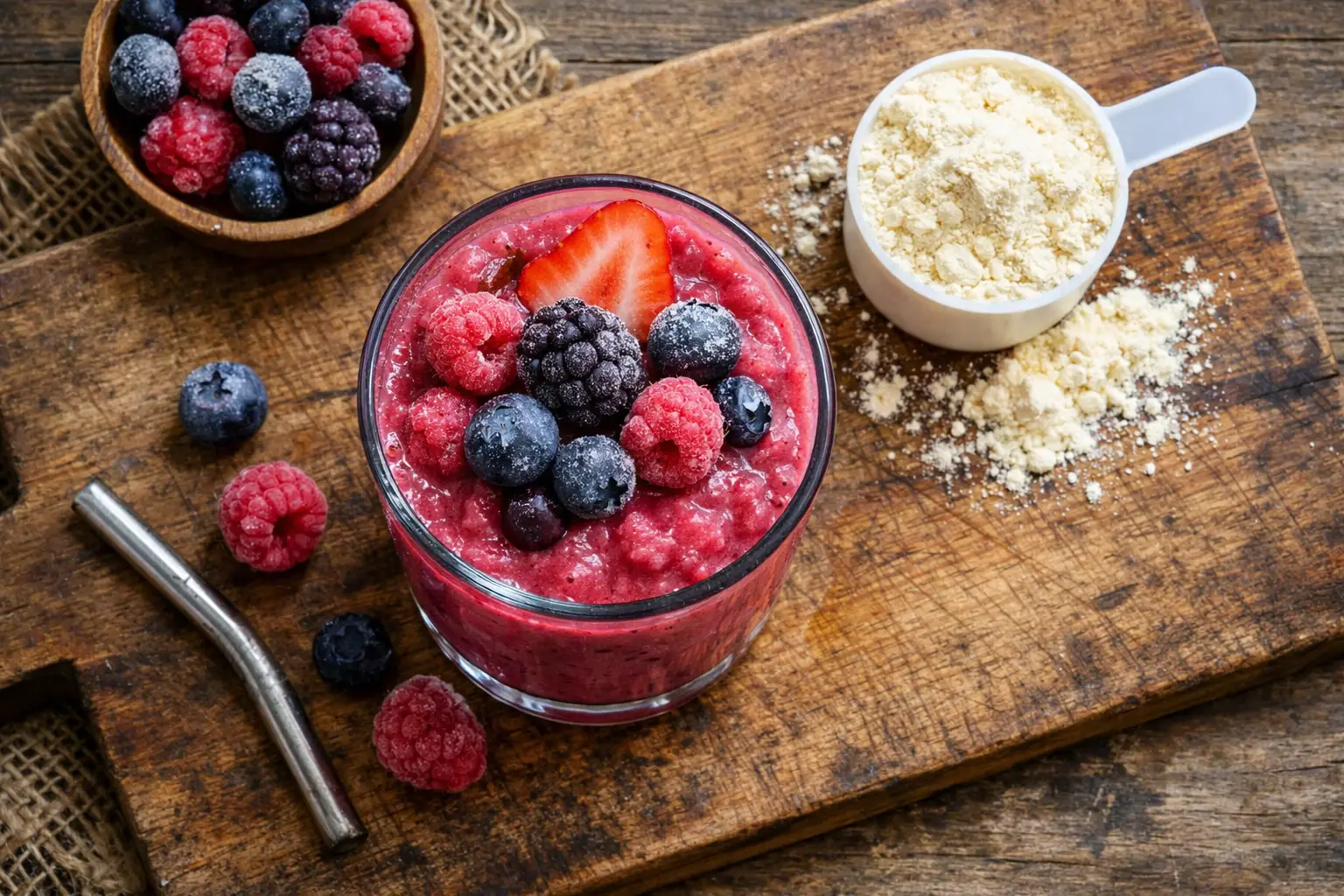
A refreshing, protein-packed frozen drink that delivers 15g of muscle-building protein in just 100 calories per serving.
Quick Nutrition Facts
Per 1 Serving (300ml) - Base Recipe: 1 scoop whey protein + frozen berries + ice + water
| Nutrient | Amount |
|---|---|
| Calories | 100 kcal |
| Protein | 15g |
| Carbohydrates | 10g |
| Fiber | 2g |
| Sugars | 6g |
| Fat | 1g |
| Sodium | 80mg |
| Calcium | 120mg |
| Potassium | 150mg |
| Leucine | 1.7g |
Macronutrient Breakdown
 ChatGPT
  Claude
  AI Mode
  Perplexity
NUTRITIONIST INSIGHT
Protein slushies are one of the most efficient post-workout recovery drinks. The combination of whey protein's fast-absorbing leucine and frozen fruit antioxidants accelerates muscle repair while the icy texture helps cool your core body temperature after exercise.
Myth Busters
MYTH #1: Protein Slushies Are Just Sugar Bombs
TRUTH: A DIY protein slushie with whole frozen berries and water has only 6g natural sugar and 15g protein. Unlike store-bought slushies (40-60g sugar), homemade versions with intact fruit fiber prevent blood sugar spikes. The key is skipping fruit juice and syrups.
MYTH #2: You Need Expensive Protein Powder
TRUTH: Greek yogurt (10g protein per 100g), cottage cheese, or silken tofu make excellent whole-food protein bases. A yogurt-based slushie delivers 12g protein per serving without any powder at all.
MYTH #3: Protein Slushies Damage Kidneys
TRUTH: For healthy individuals, protein intake up to 2g/kg body weight is safe. One slushie with 15g protein is well within safe limits. Only those with pre-existing kidney disease need to limit protein intake under medical guidance.
MYTH #4: Blending Destroys Protein
TRUTH: Blending changes the physical texture, not the molecular structure of protein. Whey protein retains its full amino acid profile and bioavailability whether shaken, stirred, or blended with ice.
MYTH #5: Protein Slushies Cause Bloating
TRUTH: Bloating typically comes from lactose intolerance or sugar alcohols in some powders. Choose whey isolate (lower lactose), plant-based protein, or lactose-free options. Adding ginger or using clear whey eliminates most digestive complaints.
NutriScore by Health Goals
| Health Goal | NutriScore | Why This Score? |
|---|---|---|
| Weight Loss |  | Only 100 calories with 15g protein promotes satiety. High thermic effect of protein boosts metabolism. |
| Muscle Gain | | 1.7g leucine triggers muscle protein synthesis. Fast-absorbing whey is ideal post-workout within 30 minutes. |
| Diabetes Management |  | Low sugar (6g), high protein blunts glycemic response. Use berries over banana; skip fruit juice. |
| PCOS Management | | High protein supports insulin sensitivity. Choose plant-based or whey isolate to minimize hormonal disruption. |
| Pregnancy Nutrition | | Helps meet increased protein needs (71g/day) during pregnancy. Choose third-party tested, additive-free protein powder. |
| Viral/Flu Recovery | | Easy to consume when appetite is low. Berry antioxidants support immune function. Cold texture soothes sore throat. |
PERSONALIZED NUTRITION
Track your meals with NutriScan for personalized NutriScores based on your specific health goals!
Blood Sugar Response to High-Protein Slushie
Understanding how a protein slushie affects your blood glucose helps you time it effectively around workouts and meals.
Typical Glucose Response Curve
This chart shows typical blood glucose response for general healthy individuals. Individual responses may vary. Not medical advice.
How to Keep Blood Sugar Stable
Adding protein to frozen fruit drinks significantly reduces postprandial glucose response compared to fruit-only beverages:
- 🫐 Use whole frozen berries - Intact fiber slows sugar absorption vs fruit juice
- 🥜 Add a tablespoon of nut butter - Healthy fats further flatten the curve
- 🧊 More ice, less fruit - Dilutes sugar content without reducing protein
- 🌱 Include chia or flax seeds - Soluble fiber creates a gel that slows digestion
Cultural Significance
Protein slushies emerged from the convergence of fitness culture and the frozen beverage industry in the 2010s, evolving rapidly with social media fitness communities.
Fitness Culture Origins:
- Born in bodybuilding communities mixing protein powder with ice in blenders
- Popularized on TikTok and Instagram as "#proteinslushie" with 500M+ views
- Clear whey isolate (2020s innovation) made true transparent slushie textures possible
- Now a mainstream post-workout staple across gym cultures worldwide
Global Variations:
- Japan: Matcha protein slushies using plant-based protein
- India: Lassi-inspired protein slushies with mango and whey
- Brazil: Acai protein slushie bowls topped with granola
- Middle East: Rose water and pistachio protein frozen drinks
Compare & Substitute
High-Protein Slushie vs Similar Protein Drinks (Per Serving)
| Nutrient | 🧊 Protein Slushie (DIY) | 🥛 Whey Protein Shake | 🫐 Berry Smoothie (no powder) | 🧋 Store-Bought Slushie |
|---|---|---|---|---|
| Calories | 100 kcal | 120 kcal | 150 kcal | 200 kcal |
| Carbs | 10g | 3g | 35g | 50g |
| Fiber | 2g | 0g | 4g | 0g |
| Protein | 15g | 24g | 2g | 0g |
| Fat | 1g | 2g | 1g | 0g |
| Sugar | 6g | 1g | 28g | 48g |
| Best For | Post-workout, refreshing | Maximum protein, convenience | Antioxidants, whole-food | Treat, hydration only |
Frequently Asked Questions
How many calories are in a high-protein slushie?
A basic DIY protein slushie has about 100 calories per 300ml serving when made with 1 scoop whey protein (25g), 50g frozen berries, ice, and water. Adding milk increases this to 150-170 calories, while adding banana brings it to 180-200 calories.
Calorie by base liquid:
- Water: 100 kcal
- Unsweetened almond milk: 115 kcal
- Skim milk: 150 kcal
- Whole milk: 170 kcal
Is a protein slushie good for weight loss?
Yes, protein slushies are excellent for weight loss. At 100 calories with 15g protein, they provide high satiety per calorie. Protein has the highest thermic effect of any macronutrient, meaning your body burns more calories digesting it.
Best weight loss recipe: 1 scoop whey isolate + 50g frozen strawberries + ice + water + squeeze of lemon. Total: 95 calories, 15g protein.
Can diabetics drink protein slushies?
Diabetics can safely enjoy protein slushies with modifications. Use low-sugar protein powder (under 2g sugar per scoop), choose berries over tropical fruits, and skip fruit juice entirely.
Diabetes-friendly tips:
- Use water or unsweetened almond milk as base
- Stick to berries (lowest glycemic fruit)
- Add cinnamon (may help insulin sensitivity)
- Limit to 50g fruit per serving
What protein powder is best for slushies?
Clear whey isolate creates the most authentic slushie texture with a light, refreshing consistency. Standard whey protein isolate works well for creamier versions. Plant-based pea protein is the best dairy-free option.
Avoid: Mass gainers (too many calories), casein-only powders (too thick when frozen), and powders with added sugars or artificial sweeteners if you prefer clean ingredients.
When should I drink a protein slushie?
Best timing by goal:
- Post-workout: Within 30 minutes for optimal muscle protein synthesis
- Afternoon snack: 2-3 PM to curb cravings and maintain energy
- Breakfast replacement: Blend with oats and nut butter for a complete meal
- Pre-bed: Use casein protein for slow overnight muscle repair
Can I make protein slushies without protein powder?
Yes, whole-food protein sources work well in slushies. Greek yogurt provides 10g protein per 100g, cottage cheese offers 11g per 100g, and silken tofu gives 8g per 100g. Blend any of these with frozen fruit and ice for 8-12g protein per serving.
Track your protein slushie nutrition with NutriScan app to see how it fits your daily macro goals.


Similar Nutritious Foods
4505 Chicharrones Classic Chili Salt
7 Eleven Japan Crispy Corn Cheese
Explore More Nutrition Tools & Resources
AI Calorie Counter App - Snap a Photo, Get Macros
AI Nutritionist App That Reads Your Logged Meals
Best Protein Supplements for Women
Bulking Meal Plan App That Sets Your Surplus
ChatGPT Calorie Counter Alternative That Keeps the Total
ChatGPT Diet Plan Alternative That Tracks What You Eat
ChatGPT Weight Loss Coach Alternative With a Food Log
Fast Food Calorie Counter App That Reads the Tray
Free Calorie Tracker App with AI Photo Scans | NutriScan
Indian Diet Plan App With Veg and Non Veg Meals
Indian Food Calorie Calculator - Get Instant Nutrition Facts for Desi Meals — 2026
Intermittent Fasting for Women, Timer and Meal Log App
Intermittent Fasting Tracker App - Free Fasting Timer
Macro Tracker App That Fills the Numbers From a Photo
Mediterranean Diet Meal Plan App That Counts the Oil
Micronutrient Tracker App for Vitamins and Minerals
MyFitnessPal Alternative That Stays Free | NutriScan
NutriScore App: A Free Grade on Every Meal | NutriScan
Nutrition Label Scanner App for the Amount You Ate
Second Trimester Protein Guide
Vegetarian Meal Plan App With a Protein Target
Voice Calorie Counter - Speak to Track Meals Hands-Free
Water and Calorie Tracker App - Free Water Log