Jaggery (Gur): Calories, Nutrition and Health Benefits
 ChatGPT
  Claude
  AI Mode
  Perplexity
 Jaggery (Gur): 383 calories, 97 g carbs, 0.4 g protein and 0.1 g fat per 100g Jaggery.
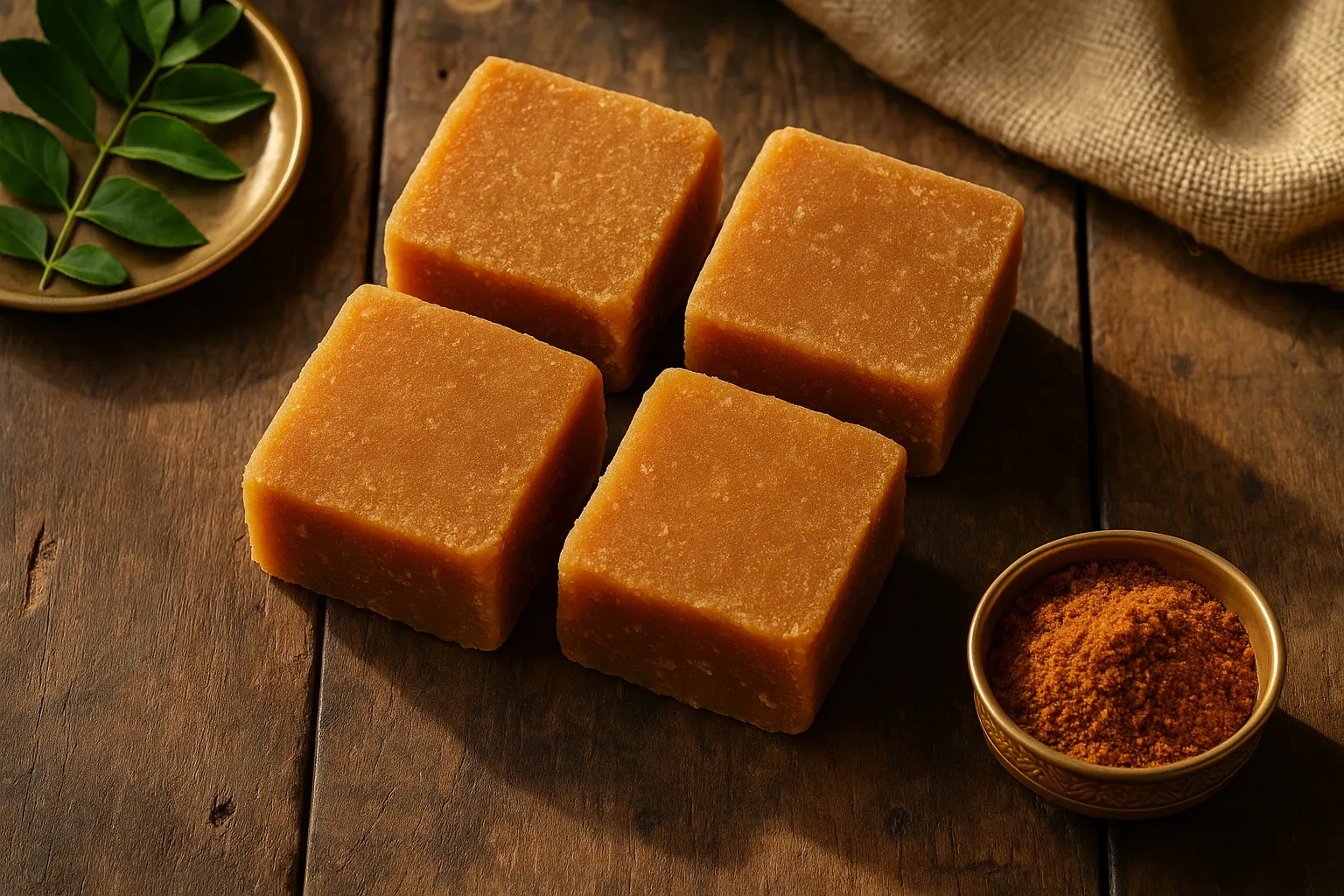
Quick Nutrition Facts
Per 100g Jaggery
| Nutrient | Amount |
|---|---|
| Calories | 383 kcal |
| Protein | 0.4g |
| Carbohydrates | 97g |
| Fiber | 0g |
| Sugars | 97g |
| Fat | 0.1g |
| Iron | 11mg |
| Potassium | 1056mg |
| Magnesium | 70-90mg |
| Calcium | 40-100mg |
Macronutrient Breakdown

NUTRITIONIST INSIGHT
Jaggery provides iron and potassium but it is mostly sucrose and affects blood sugar much like white sugar. Jaggery has no entry in the 2008 International Tables of Glycemic Index or the University of Sydney GI database, and sucrose averages 65 in the 2008 tables. The mineral content doesn't offset the blood sugar impact, so use it sparingly regardless of health claims.
Myth Busters
MYTH #1: Jaggery is a Healthy Sugar Alternative
TRUTH: Jaggery has nearly identical calories (383 vs 387 kcal/100g) to white sugar and is mostly sucrose. While it contains minerals, the amounts are too small to compensate for the high sugar content. One serving provides <1% of daily mineral needs except iron.
MYTH #2: Diabetics Can Safely Eat Jaggery Instead of Sugar
TRUTH: Jaggery has no published glycemic index test. It has no entry in the 2008 International Tables of Glycemic Index or the University of Sydney GI database. It is mostly sucrose, which averages 65 in the 2008 tables. Both jaggery and white sugar raise blood glucose similarly. Diabetics should treat jaggery as sugar and limit or avoid it completely.
MYTH #3: Jaggery Aids Weight Loss
TRUTH: At 383 calories per 100g with 97g of sugar, jaggery is calorically dense and can hinder weight loss. The sugar load causes blood sugar spikes followed by crashes, potentially increasing hunger. No evidence supports weight loss benefits.
MYTH #4: Eating Jaggery After Meals Aids Digestion
TRUTH: This Ayurvedic practice lacks scientific validation. While jaggery may stimulate digestive enzymes, adding 77 calories of pure sugar after meals can spike blood sugar and contribute to weight gain. Better digestive aids include fiber-rich foods, probiotics, and adequate water.
MYTH #5: Jaggery Purifies Blood and Detoxifies the Body
TRUTH: No scientific evidence supports "blood purification" or detoxification claims. Your liver and kidneys naturally detoxify the body. Jaggery's iron content may help with anemia but doesn't "purify" blood. Marketing myth without medical basis.
MYTH #6: Palm Jaggery is Much Healthier Than Cane Jaggery
TRUTH: Palm jaggery is reported at a GI of around 35-54. Cane jaggery has no published GI test to compare it with. However, both are still high in calories and sugars. The difference is modest, not transformative for health.
NutriScore by Health Goals
| Health Goal | NutriScore | Why This Score? |
|---|---|---|
| Weight Loss |  | 383 calories and 97g sugar per 100g cause blood sugar spikes and crashes. Avoid or limit to 5-10g daily. |
| Muscle Gain |  | Can provide quick energy post-workout but no protein. Better carb sources exist with more nutrients. Limit to 10-20g. |
| Diabetes Management |  | Mostly sucrose (GI 65 in the 2008 International Tables), so it causes rapid glucose spikes. Diabetics should avoid or consume <5g with meals, paired with protein/fiber, under medical supervision. |
| PCOS Management | | High sugar content worsens insulin resistance central to PCOS. Avoid refined sugars including jaggery; use low-GI sweeteners like stevia. |
| Pregnancy Nutrition | | Iron content (11mg/100g) supports pregnancy needs, but high sugar increases gestational diabetes risk. Limit to 10g daily. |
| Viral/Flu Recovery | | Traditional remedy for sore throat and cough; provides quick energy when appetite is low. Use 5-10g with warm water or herbal tea. |
PERSONALIZED NUTRITION
Track your meals with NutriScan for personalized NutriScores based on your specific health goals!
Blood Sugar Response to Jaggery
Understanding how jaggery affects blood glucose helps you make informed decisions about consumption timing and portion control.
Typical Glucose Response Curve
This chart shows typical blood glucose response for general healthy individuals. Individual responses may vary. Not medical advice.
How to Minimize the Spike
Pairing jaggery with protein, fiber, or healthy fat significantly reduces glucose absorption rate:
- 🥜 Nuts (almonds, cashews) - Healthy fats slow sugar absorption
- 🥛 Full-fat milk or yogurt - Protein and fat buffer
- 🌾 Whole grain roti or oats - Fiber reduces glycemic load
- 🫘 Lentils (dal) or chickpeas - Protein and fiber combination
Best practice: Never consume jaggery alone on empty stomach. Always pair with meals containing protein and fiber. Limit to 5-10g per serving.
Cultural Significance
Jaggery (गुड़/gur) is one of India's oldest traditional sweeteners, dating back over 3,000 years.
In India:
- Essential ingredient in traditional sweets: tilgul (sesame-jaggery laddu), gur ki chikki, gur ka halwa
- Given during Makar Sankranti festival symbolizing sweetness and prosperity
- Ayurvedic medicine uses jaggery for warming properties and digestive support
- Post-meal tradition in North India believed to aid digestion
- Regional varieties: cane jaggery (brown), palm jaggery (golden), date jaggery (dark)
Production:
- Made by boiling sugarcane juice or palm sap until thick, then cooling into blocks
- Retains molasses and minerals unlike refined white sugar
- India produces 70% of global jaggery supply (12+ million tons annually)
- Sustainable production supports rural farmers and traditional methods
Compare & Substitute
Jaggery vs Other Sweeteners (Per 100g)
| Nutrient | 🍯 Jaggery | ⚪ White Sugar | 🍯 Honey | 🌴 Coconut Sugar |
|---|---|---|---|---|
| Calories | 383 kcal | 387 kcal | 304 kcal | 375 kcal |
| Carbs | 97g | 100g | 82g | 93g |
| Sugars | 97g | 100g | 82g | 93g |
| Fiber | 0g | 0g | 0.2g | 0g |
| Protein | 0.4g | 0g | 0.3g | 1g |
| Iron | 11mg (61% DV) | 0mg | 0.4mg | 2mg |
| Potassium | 1056mg (23% DV) | 2mg | 52mg | 1030mg |
| GI | Not tested | 65 (Medium) | 58 (Medium) | 35-54 (Low-Medium) |
| Best For | Traditional sweets, tea | Baking, neutral use | Natural sweetness, tea | Low-GI alternative, gi |
Lower-Calorie Alternatives:
- Stevia: 0 calories, 0 GI, 200-300x sweeter than sugar, best for diabetes/weight loss
- Monk Fruit: 0 calories, 0 GI, 150-250x sweeter, no bitter aftertaste
- Date Paste: 282 cal/100g, 42 GI, contains fiber and minerals, natural whole food option
Frequently Asked Questions
Is jaggery healthier than white sugar?
Not significantly. Jaggery contains trace minerals (11mg iron (61% DV), 1056mg potassium (23% DV), 70-90mg magnesium) that white sugar lacks. However, both have similar calories (383 vs 387 kcal/100g), and jaggery is mostly sucrose, which averages a GI of 65 in the 2008 International Tables of Glycemic Index. Jaggery itself has no published GI test.
The reality: One 20g serving of jaggery provides only 2.2mg iron (12% DV) and 211mg potassium (4.5% DV), minimal compared to daily needs. You'd need to consume 500+ calories of jaggery to meet iron needs, making it an inefficient mineral source.
Verdict: Jaggery is marginally better due to minerals, but both should be consumed sparingly.
Can diabetics eat jaggery?
No, diabetics should avoid or strictly limit jaggery. Jaggery has no entry in the 2008 International Tables of Glycemic Index or the University of Sydney GI database, but it is mostly sucrose (GI 65) and raises blood sugar much like white sugar.
If consumed: Limit to 5-10g with meals containing protein and fiber; monitor blood sugar 2 hours after; pair with nuts, yogurt, or whole grains; avoid on empty stomach.
Better alternatives: Stevia, monk fruit, erythritol (0 GI), or small amounts of coconut sugar (GI 35-54). Always consult your healthcare provider before adding any sweetener to a diabetic diet.
How many calories are in jaggery?
Per 100g: 383 calories Per 20g (1 tablespoon): 77 calories Per 10g (1 teaspoon): 38 calories
Nearly identical to white sugar (387 kcal/100g, 75 kcal/tablespoon). The "natural" label doesn't reduce calories, portion control is essential for weight management.
What are the main health benefits of jaggery?
Key Benefits:
- Iron Content: 11mg per 100g (61% DV) helps prevent anemia, especially for vegetarians
- Potassium: 1056mg (23% DV) supports heart health and blood pressure regulation
- Magnesium: 70-90mg supports bone health and muscle function
- Respiratory Health: Traditional Ayurvedic remedy for cough and cold relief
- Digestion: May stimulate digestive enzymes (traditional use, limited scientific evidence)
Important caveat: Benefits are offset by high sugar content (97g/100g). Better to get minerals from whole foods like spinach (iron), bananas (potassium), and nuts (magnesium) without the sugar load.
Is jaggery good for weight loss?
No. At 383 calories per 100g with 97g of sugars, jaggery is calorically dense and causes blood sugar spikes that may increase hunger and cravings.
Why it hinders weight loss:
- High-calorie density (1 tablespoon = 77 calories)
- Rapid glucose spike followed by crash increases appetite
- No fiber or protein to promote satiety
- Easy to overconsume due to palatability
For weight loss: Avoid jaggery or limit to 5-10g daily. Use low-calorie sweeteners like stevia or monk fruit. Track intake with NutriScan app to stay within calorie goals.
What is the difference between jaggery and sugar?
Processing:
- Jaggery: Unrefined; sugarcane juice boiled and cooled, retains molasses and minerals
- White Sugar: Refined; molasses removed, crystals bleached, no minerals
Nutrition: Jaggery contains iron (11mg), potassium (1056mg), magnesium (70-90mg); sugar has none. Similar calories (383 vs 387 kcal/100g).
Glycemic Impact: Sugar (sucrose) averages GI 65 in the 2008 International Tables of Glycemic Index. Jaggery has no published GI test and is mostly sucrose, so treat the two alike.
Flavor: Jaggery has caramel/molasses taste; sugar is neutral.
Verdict: Neither offers significant nutritional advantage. Both should be limited to <25-50g daily total sugars per WHO guidelines.
How much jaggery can I eat per day?
General Guidelines:
- Healthy Adults: 10-20g daily (2-4 teaspoons) as part of total daily sugar limit (25-50g per WHO)
- Weight Loss: 5-10g daily maximum or avoid completely
- Diabetes: Avoid or <5g with meals under medical supervision
- Pregnancy: 10g daily for iron; monitor gestational diabetes risk
- Children: 5-10g daily (count towards daily sugar allowance)
Remember: Jaggery counts as "added sugar." Combine with sugars from other sources (desserts, beverages) to stay within healthy limits.
Jaggery vs sugar: how do the calories compare per tablespoon?
One tablespoon (20g) of jaggery has about 77 calories and 2.2mg of iron. One tablespoon (20g) of white sugar has about 77 calories and no iron.
The math: jaggery 20g / 100g x 383 kcal = 77 kcal and 0.2 x 11mg iron = 2.2mg. White sugar 0.2 x 387 kcal = 77 kcal. The calories are the same, so jaggery only adds small amounts of iron (2.2mg) and potassium (about 211mg) per tablespoon.
How many calories are in 100 g of jaggery?
Jaggery has 383 kcal per 100 g. Nearly all of it is 97 g of carbohydrates, which are 97 g of sugars.




Similar Nutritious Foods
4505 Chicharrones Classic Chili Salt
7 Eleven Japan Crispy Corn Cheese
Explore More Nutrition Tools & Resources
AI Calorie Counter App - Snap a Photo, Get Macros
AI Nutritionist App That Reads Your Logged Meals
Best Protein Supplements for Women
Bulking Meal Plan App That Sets Your Surplus
ChatGPT Calorie Counter Alternative That Keeps the Total
ChatGPT Diet Plan Alternative That Tracks What You Eat
ChatGPT Weight Loss Coach Alternative With a Food Log
Fast Food Calorie Counter App That Reads the Tray
Free Calorie Tracker App with AI Photo Scans | NutriScan
Indian Diet Plan App With Veg and Non Veg Meals
Indian Food Calorie Calculator - Get Instant Nutrition Facts for Desi Meals — 2026
Intermittent Fasting for Women, Timer and Meal Log App
Intermittent Fasting Tracker App - Free Fasting Timer
Macro Tracker App That Fills the Numbers From a Photo
Mediterranean Diet Meal Plan App That Counts the Oil
Micronutrient Tracker App for Vitamins and Minerals
MyFitnessPal Alternative That Stays Free | NutriScan
NutriScore App: A Free Grade on Every Meal | NutriScan
Nutrition Label Scanner App for the Amount You Ate
Second Trimester Protein Guide
Vegetarian Meal Plan App With a Protein Target
Voice Calorie Counter - Speak to Track Meals Hands-Free
Water and Calorie Tracker App - Free Water Log