Käsekuchen (German Cheesecake): Calories, Nutrition and Health Benefits
Germany's beloved quark-based cheesecake, lighter and fluffier than American versions with more protein and traditional lemon flavor.
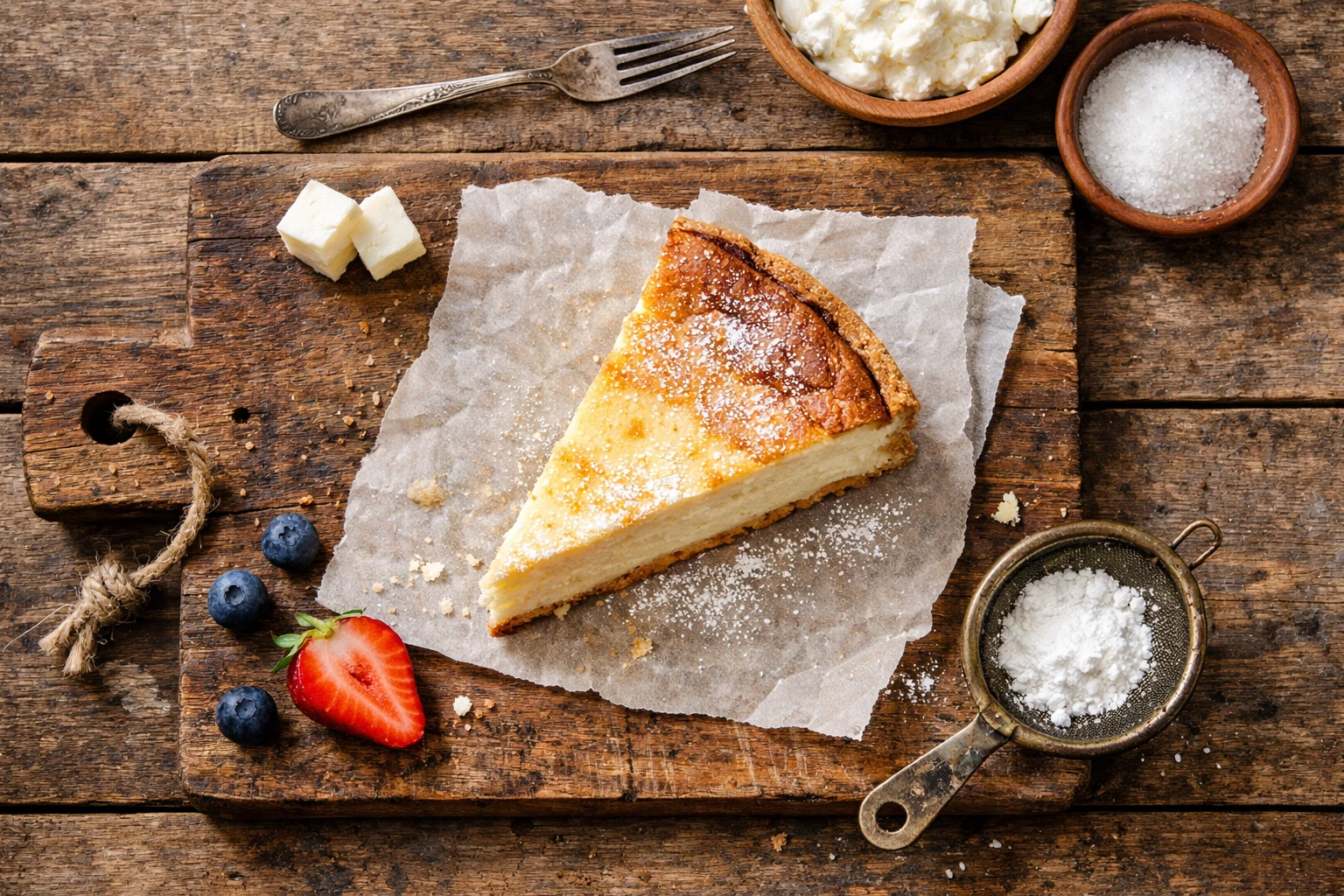
Quick Nutrition Facts
Per 1 Slice (100g)
| Nutrient | Amount |
|---|---|
| Calories | 280 kcal |
| Protein | 8g |
| Carbohydrates | 30g |
| Fiber | 0.5g |
| Sugars | 18g |
| Fat | 14g |
| Saturated Fat | 8g |
| Calcium | 80mg |
| Phosphorus | 120mg |
| Vitamin A | 150mcg |
Macronutrient Breakdown
 ChatGPT
  Claude
  AI Mode
  Perplexity
NUTRITIONIST INSIGHT
Käsekuchen uses quark (fresh cheese) instead of cream cheese, providing 8g protein per slice versus 5g in New York cheesecake. The lighter texture and lower fat content make it a better choice for protein goals.
Myth Busters
MYTH #1: Käsekuchen Is a Healthy Dessert
TRUTH: While lighter than New York cheesecake, käsekuchen still contains 280 calories, 14g fat, and 18g sugar per slice. It's a dessert best enjoyed occasionally, not a health food despite the protein from quark.
MYTH #2: All Quark Cheesecakes Are Low-Calorie
TRUTH: Käsekuchen calories vary widely by recipe. Traditional versions with butter crusts and full-fat quark have 280-320 calories per slice; lighter versions with reduced sugar can be 220-250 calories. Always check portion size and ingredients.
MYTH #3: Quark Is the Same as Greek Yogurt
TRUTH: Quark is a fresh cheese with thicker consistency and higher protein (12g/100g) than most yogurts. While both are fermented dairy, quark has a neutral flavor and creamier texture, making it ideal for baking.
MYTH #4: Käsekuchen Doesn't Spike Blood Sugar
TRUTH: Despite higher protein than American cheesecake, käsekuchen still contains 30g carbs and 18g sugar per slice, causing blood sugar elevation. Dairy protein can help moderate the spike, but diabetics should still limit portions.
MYTH #5: German Cheesecake Has No Crust
TRUTH: Traditional käsekuchen often includes a shortcrust pastry base (mürbeteig) or sometimes no crust at all. Crustless versions save 50-80 calories per slice but both styles are authentic German recipes.
NutriScore by Health Goals
| Health Goal | NutriScore | Why This Score? |
|---|---|---|
| Weight Loss |  | 280 calories per slice, lighter than NY cheesecake. Higher protein (8g) promotes satiety; limit to small portions 1-2 times per week. |
| Muscle Gain |  | Good protein source (8g) from quark, plus calcium (80mg) for muscle function. Pair with berries for post-workout recovery snack. |
| Diabetes Management |  | 30g carbs and 18g sugar cause blood sugar elevation. Limit to special occasions, eat half slice with nuts, monitor glucose 2 hours after. |
| PCOS Management | | Protein helps balance insulin response, but sugar content remains high. Choose reduced-sugar versions, pair with berries for fiber. |
| Pregnancy Nutrition | | Dairy protein and calcium support bone health (80mg per slice). Ensure quark is pasteurized; limit to 1-2 servings per week due to sugar. |
| Viral/Flu Recovery | | Provides protein (8g) for immune function and quick energy from carbs, but lacks immune-boosting vitamins. Better recovery options include yogurt with fruit. |
PERSONALIZED NUTRITION
Track your meals with NutriScan for personalized NutriScores based on your specific health goals!
Blood Sugar Response to Käsekuchen
Understanding how käsekuchen affects your blood glucose can help you make informed decisions about when and how to eat it.
Typical Glucose Response Curve
This chart shows typical blood glucose response for general healthy individuals. Individual responses may vary. Not medical advice.
How to Flatten the Spike
Pairing käsekuchen with additional protein or fiber slows glucose absorption and reduces the peak blood sugar level:
- 🥜 Handful of almonds or walnuts - Adds healthy fats and fiber to slow digestion
- 🫐 Fresh berries on top - Provides fiber and antioxidants while adding natural sweetness
- ☕ Unsweetened coffee or tea - Traditional German pairing without added sugar
- 🍓 Strawberry or raspberry compote - Fiber-rich fruit topping instead of whipped cream
This combination not only reduces the glucose spike but also increases nutrient density and satiety.
Cultural Significance
Käsekuchen has been a German dessert staple since the medieval period, with recipes documented in the 15th century.
In Germany:
- Found in every German bakery (konditorei) and home kitchen
- Traditional Sunday afternoon coffee (kaffee und kuchen) centerpiece
- Regional variations: Bavarian style with raisins, East German with pudding layer
- Often topped with fruit (cherries, apricots) or streusel crumble
- Lighter than American cheesecakes due to quark's lower fat content
Global Impact:
- Quark gaining popularity in North America as high-protein dairy alternative
- German bakeries worldwide serving authentic käsekuchen
- Home bakers discovering quark as healthier cream cheese substitute
- Fusion versions combining German techniques with international flavors
Compare & Substitute
Käsekuchen vs Similar Desserts (Per 100g)
| Nutrient | 🧀 Käsekuchen (German) | 🍰 NY Cheesecake (US) | 🍮 Basque Cheesecake | 🥧 Ricotta Cheesecake |
|---|---|---|---|---|
| Calories | 280 kcal | 350 kcal | 310 kcal | 260 kcal |
| Carbs | 30g | 28g | 24g | 26g |
| Fiber | 0.5g | 0.3g | 0.2g | 0.4g |
| Protein | 8g | 5g | 6g | 9g |
| Fat | 14g | 22g | 20g | 13g |
| Sugar | 18g | 24g | 20g | 16g |
| Best For | Higher protein option | Indulgent celebration | Caramelized flavor | Lightest option |
Frequently Asked Questions
Is käsekuchen healthier than New York cheesecake?
Yes, käsekuchen is lighter than New York cheesecake. A 100g slice has 280 calories versus 320-400 for NY style; quark provides more protein (8g vs 5g) and significantly less fat (14g vs 22g); less sugar content (18g vs 24g); lighter, fluffier texture is easier to digest.
Better for: Weight management, protein goals, reducing saturated fat intake. Both are desserts to enjoy occasionally—käsekuchen just offers better macros for your calories.
Can diabetics eat käsekuchen?
Diabetics can enjoy käsekuchen in moderation with careful portion control. Limit to half a slice (15g carbs) or less; always pair with protein (nuts, cheese) or fiber (berries) to slow glucose absorption; choose versions with reduced sugar when possible; avoid on empty stomach; best timing is after a balanced meal.
Tips: Monitor blood sugar 2 hours after eating; consider crustless versions to save 10-15g carbs; the protein from quark helps moderate blood sugar spike compared to lower-protein desserts. Consult your healthcare provider for personalized guidance.
What is quark cheese and why is it used in käsekuchen?
Quark is a fresh dairy product similar to cottage cheese but smoother, with high protein (12g/100g) and lower fat than cream cheese (18g vs 34g fat per 100g). It creates a lighter, fluffier texture in käsekuchen while providing more protein than American cheesecakes; neutral flavor pairs well with lemon zest and vanilla; traditional ingredient in German and Eastern European baking.
Availability: Found in European grocery stores and some US supermarkets; can substitute with strained Greek yogurt mixed with cottage cheese in a pinch, though texture differs slightly.
Is käsekuchen good for pregnancy?
Käsekuchen can support pregnancy nutrition when made with pasteurized quark. It provides calcium (80mg per slice) for fetal bone development; protein (8g) supports tissue growth; phosphorus (120mg) aids bone and teeth formation. Dairy protein supports maternal bone health during pregnancy.
Important: Always verify quark is pasteurized; limit to 1-2 servings per week due to sugar content; pair with fresh fruit for added vitamins and fiber; avoid homemade versions with raw eggs unless eggs are pasteurized. Consult your healthcare provider about dairy intake.
How many calories are in German cheesecake?
A typical käsekuchen slice (100g) contains 280 calories with 30g carbs, 14g fat, and 8g protein. Calories vary by recipe: traditional versions with butter crust range from 280-320 calories; crustless versions save 50-80 calories (230-250 per slice); reduced-sugar homemade versions can be 220-250 calories; bakery slices are often larger (120-150g), containing 340-420 calories.
Portion tip: Use NutriScan app to photograph your slice for accurate calorie tracking based on actual size.
What makes käsekuchen different from other cheesecakes?
Key differences: Uses quark instead of cream cheese, creating lighter texture with more protein and less fat; less sweet than American versions (18g vs 24g sugar per 100g); often includes lemon zest for bright flavor; sometimes features shortcrust pastry base (mürbeteig) instead of graham cracker crust; fluffier, almost soufflé-like consistency; traditionally served without heavy toppings.
Regional variations: Bavarian style adds raisins; East German includes pudding layer; some versions topped with fruit or streusel; modern fusion versions experiment with chocolate, matcha, or berry swirls.
Can I substitute quark in käsekuchen recipes?
Best substitutes in order: Strained Greek yogurt (closest texture, similar protein); cottage cheese blended smooth plus cream cheese (mix 70% cottage, 30% cream cheese); farmer's cheese (higher fat but authentic European alternative); ricotta cheese (Italian equivalent, slightly grainier).
Protein comparison: Quark 12g, Greek yogurt 10g, cottage cheese 11g, ricotta 9g per 100g. For authentic texture and nutrition, seek quark at European grocery stores or Whole Foods; homemade substitutes work but alter final texture and protein content slightly.


Similar Nutritious Fruits
4505 Chicharrones Classic Chili Salt
7 Eleven Japan Crispy Corn Cheese
Explore More Nutrition Tools & Resources
AI Calorie Counter App - Snap a Photo, Get Macros
AI Nutritionist App That Reads Your Logged Meals
Best Protein Supplements for Women
Bulking Meal Plan App That Sets Your Surplus
ChatGPT Calorie Counter Alternative That Keeps the Total
ChatGPT Diet Plan Alternative That Tracks What You Eat
ChatGPT Weight Loss Coach Alternative With a Food Log
Fast Food Calorie Counter App That Reads the Tray
Free Calorie Tracker App with AI Photo Scans | NutriScan
Indian Diet Plan App With Veg and Non Veg Meals
Indian Food Calorie Calculator - Get Instant Nutrition Facts for Desi Meals — 2026
Intermittent Fasting for Women, Timer and Meal Log App
Intermittent Fasting Tracker App - Free Fasting Timer
Macro Tracker App That Fills the Numbers From a Photo
Mediterranean Diet Meal Plan App That Counts the Oil
Micronutrient Tracker App for Vitamins and Minerals
MyFitnessPal Alternative That Stays Free | NutriScan
NutriScore App: A Free Grade on Every Meal | NutriScan
Nutrition Label Scanner App for the Amount You Ate
Second Trimester Protein Guide
Vegetarian Meal Plan App With a Protein Target
Voice Calorie Counter - Speak to Track Meals Hands-Free
Water and Calorie Tracker App - Free Water Log