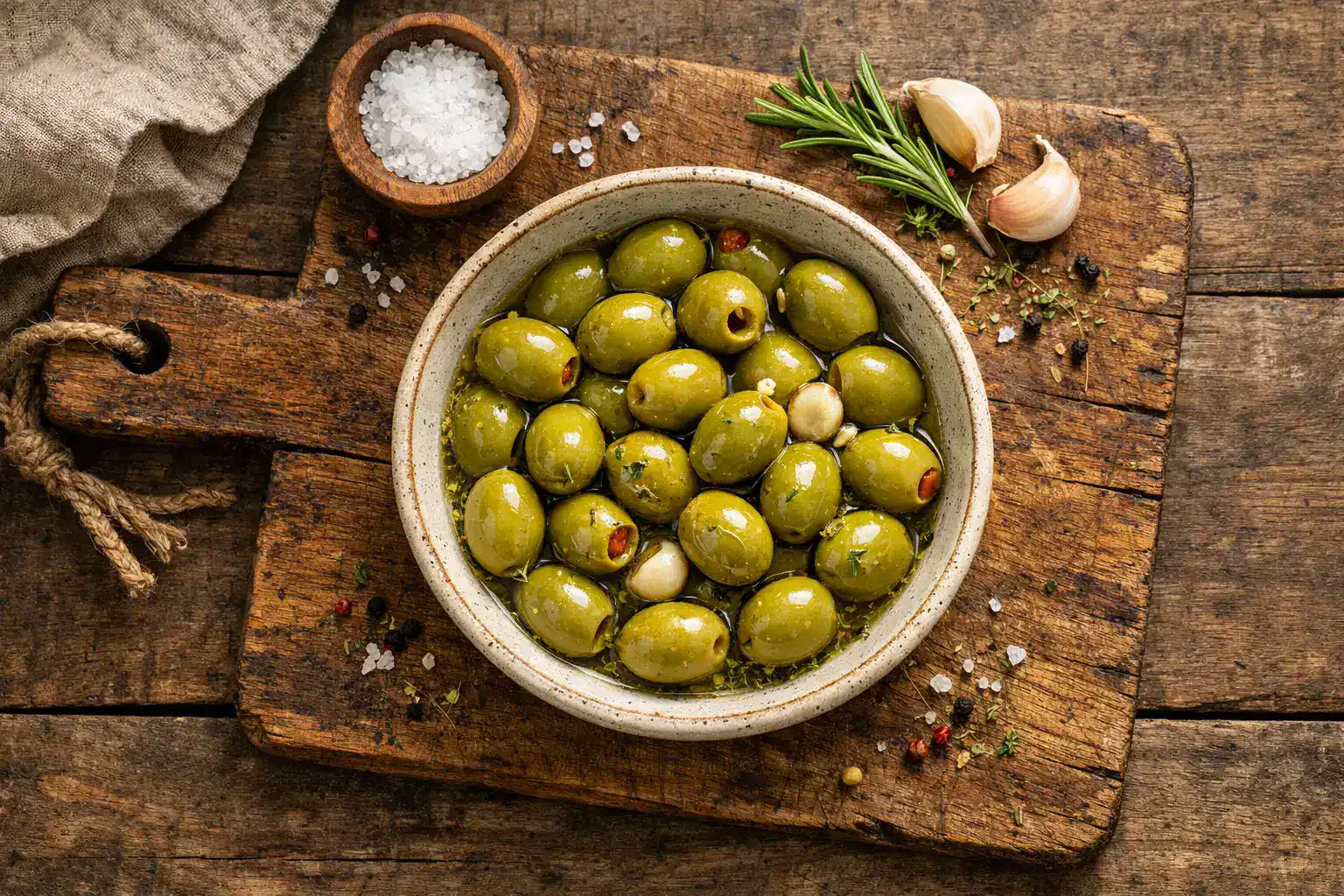
Kosterina Fermented Olives: Calories, Nutrition and Health Benefits
Probiotic-rich, naturally fermented Greek olives packed with heart-healthy monounsaturated fats, gut-friendly probiotics, and powerful polyphenols.
Quick Nutrition Facts
Per 5 Olives (~15g) | Per 100g in parentheses
| Nutrient | Amount |
|---|---|
| Calories | 35 kcal (145 kcal) |
| Protein | 0g (1g) |
| Carbohydrates | 1g (3.8g) |
| Fiber | 0.5g (3.3g) |
| Sugars | 0g (0.5g) |
| Fat | 3g (15.3g) |
| Sodium | 310mg (1556mg) |
| Iron | 0.5mg (3.3mg) |
| Vitamin E | 0.6mg (3.8mg) |
| Calcium | 8mg (52mg) |
Macronutrient Breakdown
 ChatGPT
  Claude
  AI Mode
  Perplexity
NUTRITIONIST INSIGHT
Kosterina fermented olives deliver a rare combination of live probiotics and heart-healthy oleic acid in just 35 calories per serving. The year-long natural fermentation produces beneficial Lactobacillus strains that support gut microbiome diversity, while the polyphenol content (especially oleuropein) provides anti-inflammatory benefits you won't find in chemically processed table olives.
Myth Busters
MYTH #1: Olives Are Too High in Fat to Be Healthy
TRUTH: The fat in olives is primarily oleic acid, a monounsaturated fatty acid linked to reduced cardiovascular risk and improved cholesterol levels. Just 3g of fat per 5-olive serving, mostly heart-protective.
MYTH #2: All Olives Contain Probiotics
TRUTH: Only naturally fermented olives contain live probiotic cultures. Most store-bought olives are chemically processed with lye (NaOH), which kills beneficial bacteria. Kosterina olives are brine-fermented for up to 12 months, preserving Lactobacillus plantarum and L. pentosus.
MYTH #3: Fermented Olives Are Too Salty for Heart Health
TRUTH: While sodium is present (310mg per serving), the potassium and polyphenols in olives help counterbalance sodium's effects on blood pressure. Rinsing olives before eating reduces sodium by 40-50%.
MYTH #4: Olives Cause Weight Gain
TRUTH: At just 35 calories per serving, olives are one of the most calorie-efficient snacks. The healthy fats and fiber promote satiety and reduce overall calorie intake when replacing processed snacks.
MYTH #5: Canned and Fermented Olives Are the Same
TRUTH: Canned olives undergo chemical processing that destroys probiotics and reduces polyphenol content by up to 70%. Naturally fermented olives retain significantly more bioactive compounds and contain live beneficial bacteria.
NutriScore by Health Goals
| Health Goal | NutriScore | Why This Score? |
|---|---|---|
| Weight Loss |  | Only 35 calories per serving, healthy fats promote satiety, probiotics support metabolic health. |
| Muscle Gain |  | Very low protein (0g per serving), but good for healthy fat intake and iron (0.5mg). Use as a side, not primary fuel. |
| Diabetes Management | | Near-zero carbs, no glycemic impact. Oleic acid improves insulin sensitivity and polyphenols attenuate glucose absorption. |
| PCOS Management |  | Anti-inflammatory monounsaturated fats support hormonal balance. Watch sodium intake, limit to 5-8 olives daily. |
| Pregnancy Nutrition | | Iron (0.5mg) supports blood volume, healthy fats aid fetal brain development. Limit to 5-8 olives due to sodium. |
| Viral/Flu Recovery | | Probiotics boost immune function, polyphenols provide anti-inflammatory support, easy to digest during illness. |
PERSONALIZED NUTRITION
Track your meals with NutriScan for personalized NutriScores based on your specific health goals!
Blood Sugar Response to Fermented Olives
Fermented olives have virtually no impact on blood glucose due to their near-zero carbohydrate content and high healthy fat ratio.
Typical Glucose Response Curve
This chart shows typical blood glucose response for general healthy individuals. Individual responses may vary. Not medical advice.
How to Optimize Your Snacking
Pairing olives with complementary foods enhances nutrient absorption and extends satiety:
- 🧀 Feta or goat cheese - Adds protein and calcium for a complete Mediterranean snack
- 🥒 Cucumber and tomato - Fiber and hydration balance the sodium content
- 🥜 Almonds or walnuts - Extra healthy fats and protein for sustained energy
- 🫓 Whole grain crackers - Complex carbs paired with olive fats slow glucose absorption
This combination provides a balanced macro profile and maximizes the probiotic and polyphenol benefits.
Cultural Significance
Olives are one of the oldest cultivated crops, with evidence of olive fermentation dating back over 5,000 years in the Mediterranean basin.
In Greece:
- Olive trees are sacred symbols of peace, wisdom, and prosperity
- Traditional brine fermentation methods passed down through generations
- Greek cuisine features olives in nearly every meal, from breakfast to dinner
- Kalamata, Halkidiki, and Koroneiki are iconic Greek olive varieties
In India:
- Growing popularity as a health food and Mediterranean diet staple
- Used in fusion recipes blending Mediterranean and Indian flavors
- Olive oil consumption in India has grown 200% in the last decade
- Rajasthan has started cultivating olive trees since 2007
Global Impact:
- Over 2.5 million tonnes of table olives produced annually worldwide
- Mediterranean diet (olive-centric) recognized by UNESCO as cultural heritage
- Fermented olives are gaining popularity as functional probiotic foods
Compare & Substitute
Fermented Olives vs Similar Probiotic Snacks (Per 100g)
| Nutrient | 🫒 Fermented Olives | 🥒 Fermented Pickles | 🥬 Sauerkraut | 🫘 Miso |
|---|---|---|---|---|
| Calories | 145 kcal | 11 kcal | 19 kcal | 199 kcal |
| Carbs | 3.8g | 2.3g | 4.3g | 26g |
| Fiber | 3.3g | 1.2g | 2.9g | 5.4g |
| Protein | 1g | 0.3g | 0.9g | 12g |
| Fat | 15.3g | 0.2g | 0.1g | 6g |
| Sodium | 1556mg | 1208mg | 661mg | 3728mg |
| Best For | Heart health, healthy fats | Low-cal probiotic, hydration | Gut health, vitamin C | Protein, umami flavor |
Frequently Asked Questions
Are Kosterina fermented olives good for gut health?
Yes, Kosterina fermented olives are naturally fermented for up to 12 months, producing live Lactobacillus plantarum and L. pentosus strains. These probiotics support gut microbiome diversity, immune function, and may reduce inflammation.
Best practices: Eat 5-10 olives daily for consistent probiotic intake. Do not heat olives above 45C/113F as it kills beneficial bacteria.
How many calories are in Kosterina fermented olives?
A serving of 5 olives (~15g) contains approximately 35 calories. Per 100g, fermented green olives provide 145 calories, with 15.3g fat (mostly monounsaturated), 3.8g carbs, and 1g protein.
Can diabetics eat fermented olives?
Fermented olives are an excellent choice for diabetics. They have virtually no glycemic impact with near-zero net carbs (3.8g carbs minus 3.3g fiber per 100g).
Tips for diabetics:
- Enjoy freely as a snack (5-10 olives)
- The monounsaturated fats improve insulin sensitivity
- Pair with vegetables for a diabetes-friendly appetizer
- Watch sodium if on blood pressure medication
Are fermented olives better than regular olives?
Naturally fermented olives contain live probiotic cultures that chemically processed olives lack. Fermentation also increases bioavailability of polyphenols and produces beneficial organic acids.
Key differences:
- Probiotics: Fermented olives contain live Lactobacillus; processed olives do not
- Polyphenols: 30-70% higher retention in naturally fermented varieties
- Flavor: Deeper, more complex taste from natural fermentation
- Shelf life: Both last months, but fermented olives improve with age
How many fermented olives should I eat per day?
General Guidelines:
- 5-10 olives daily - Most people (35-70 calories, good probiotic dose)
- 3-5 olives daily - On sodium-restricted diets or managing blood pressure
- 10-15 olives daily - Athletes or those needing extra healthy fats
Watch out: More than 15 olives daily may provide excessive sodium (900mg+). Rinsing before eating reduces sodium by 40-50%.
Track your meals with NutriScan app to see how fermented olives fit your personal nutrition goals.
Are fermented olives safe during pregnancy?
Fermented olives are generally safe and beneficial during pregnancy. They provide iron for blood volume, healthy fats for fetal development, and probiotics for digestive comfort.
Precautions:
- Limit to 5-8 olives per day due to sodium content
- Choose pasteurized varieties if immunocompromised
- Rinse before eating to reduce sodium
- Consult your healthcare provider for personalized advice


Similar Nutritious Foods
4505 Chicharrones Classic Chili Salt
7 Eleven Japan Crispy Corn Cheese
Explore More Nutrition Tools & Resources
AI Calorie Counter App - Snap a Photo, Get Macros
AI Nutritionist App That Reads Your Logged Meals
Best Protein Supplements for Women
Bulking Meal Plan App That Sets Your Surplus
ChatGPT Calorie Counter Alternative That Keeps the Total
ChatGPT Diet Plan Alternative That Tracks What You Eat
ChatGPT Weight Loss Coach Alternative With a Food Log
Fast Food Calorie Counter App That Reads the Tray
Free Calorie Tracker App with AI Photo Scans | NutriScan
Indian Diet Plan App With Veg and Non Veg Meals
Indian Food Calorie Calculator - Get Instant Nutrition Facts for Desi Meals — 2026
Intermittent Fasting for Women, Timer and Meal Log App
Intermittent Fasting Tracker App - Free Fasting Timer
Macro Tracker App That Fills the Numbers From a Photo
Mediterranean Diet Meal Plan App That Counts the Oil
Micronutrient Tracker App for Vitamins and Minerals
MyFitnessPal Alternative That Stays Free | NutriScan
NutriScore App: A Free Grade on Every Meal | NutriScan
Nutrition Label Scanner App for the Amount You Ate
Second Trimester Protein Guide
Vegetarian Meal Plan App With a Protein Target
Voice Calorie Counter - Speak to Track Meals Hands-Free
Water and Calorie Tracker App - Free Water Log