Kushikatsu: Calories, Nutrition and Health Benefits
Osaka's iconic street food featuring panko-breaded skewers of meat and vegetables, deep-fried to golden perfection and served with tangy dipping sauce.
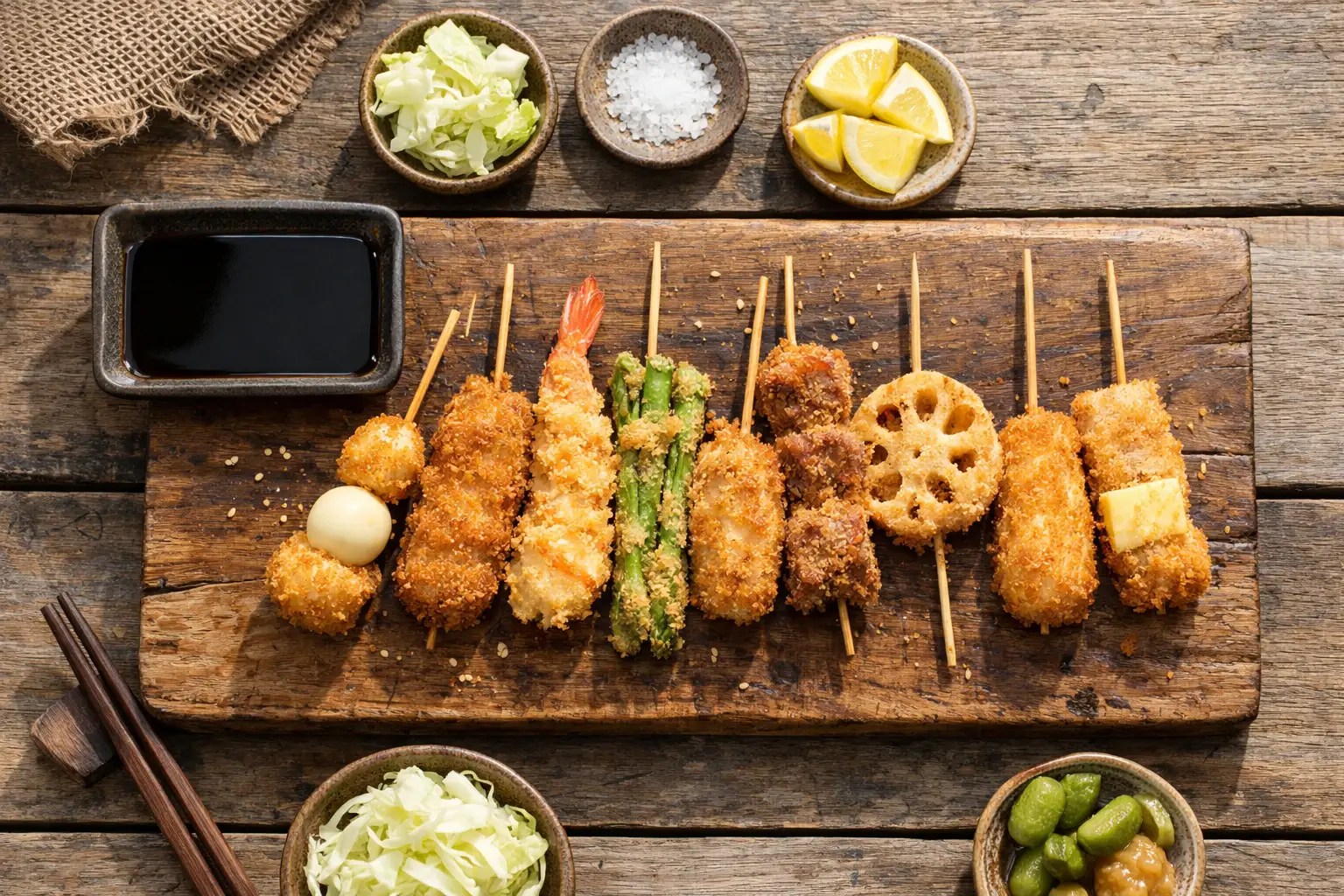
Quick Nutrition Facts
Per 2 Skewers (100g)
| Nutrient | Amount |
|---|---|
| Calories | 306 kcal |
| Protein | 11.6g |
| Carbohydrates | 9.8g |
| Fiber | 0.7g |
| Sugars | 1.2g |
| Fat | 23.4g |
| Saturated Fat | 5.5g |
| Sodium | 210mg |
| Potassium | 205mg |
| Selenium | 12.7mcg |
Macronutrient Breakdown
 ChatGPT
  Claude
  AI Mode
  Perplexity
NUTRITIONIST INSIGHT
Kushikatsu is a high-fat indulgence best enjoyed occasionally. The panko coating creates a light, crispy texture but absorbs significant oil during frying. Balance your meal by choosing more vegetable skewers (shiitake, asparagus, lotus root) over fatty meats.
Myth Busters
MYTH #1: Kushikatsu Is Just Empty Calories
TRUTH: While calorie-dense, kushikatsu provides 11.6g protein per 100g and is notably rich in selenium (12.7mcg, 153% DV), which supports thyroid function and acts as an antioxidant. The key is portion control.
MYTH #2: All Fried Foods Are Equally Unhealthy
TRUTH: Kushikatsu uses panko breadcrumbs which absorb less oil than regular breadcrumbs due to their flaky texture. Studies show panko-coated foods can have 10-15% less fat than traditional breading when fried properly.
MYTH #3: You Should Avoid Kushikatsu If Watching Blood Sugar
TRUTH: Kushikatsu has relatively low carbs (9.8g per 100g) compared to other fried foods. The high fat content actually slows glucose absorption, preventing sharp blood sugar spikes. Still, diabetics should limit portions.
MYTH #4: The Dipping Sauce Is Harmless
TRUTH: Traditional kushikatsu sauce (made with Worcestershire, ketchup, and brown sugar) adds 15-20 calories per tablespoon plus sodium. The Osaka rule of "no double-dipping" exists for hygiene, but also helps limit sauce intake.
MYTH #5: Vegetable Kushikatsu Has No Calories
TRUTH: Even vegetable skewers absorb oil during frying. A lotus root or eggplant skewer still contains 80-100 calories. They're lower in calories than meat options but not calorie-free.
NutriScore by Health Goals
| Health Goal | NutriScore | Why This Score? |
|---|---|---|
| Weight Loss |  | High in calories (306/100g) and fat (23.4g). Limit to 2 skewers max, choose vegetables, skip the sauce. |
| Muscle Gain |  | Decent protein (11.6g) but high fat ratio. Better as occasional treat than regular protein source. |
| Diabetes Management | | Low carbs but high fat affects insulin sensitivity. Limit to 1-2 veggie skewers, avoid sweet sauce. |
| PCOS Management | | Fried foods can worsen insulin resistance. Choose grilled alternatives when possible. |
| Pregnancy Nutrition | | Avoid fried foods if experiencing heartburn. Selenium content is beneficial but fat content is high. Occasional small portions only. |
| Viral/Flu Recovery | | Heavy, greasy foods can be hard to digest when ill. Choose lighter options during recovery. |
PERSONALIZED NUTRITION
Track your meals with NutriScan for personalized NutriScores based on your specific health goals!
Blood Sugar Response to Kushikatsu
Understanding how kushikatsu affects your blood glucose can help you make informed decisions about when and how to enjoy this Japanese treat.
Typical Glucose Response Curve
This chart shows typical blood glucose response for general healthy individuals. Individual responses may vary. Not medical advice.
How to Flatten the Spike
The high fat content in kushikatsu naturally slows glucose absorption, but you can further optimize your response:
- Start with vegetables first - Eating cabbage (always served with kushikatsu) before the skewers adds fiber
- Choose vegetable skewers - Asparagus, shiitake, and lotus root have lower glycemic impact
- Limit sauce intake - The sweet sauce adds quick-absorbing sugars
- Pair with miso soup - Adds protein and fills you up with fewer skewers
This combination helps maintain more stable blood glucose levels while still enjoying the meal.
Cultural Significance
Kushikatsu originated in Osaka's Shinsekai district in the 1920s as affordable street food for working-class laborers.
In Japan:
- Osaka is the kushikatsu capital, with over 100 varieties of ingredients available
- The famous "no double-dipping" rule (ソースの二度づけ禁止) is strictly observed in traditional shops
- Communal sauce pots are shared, so diners use cabbage leaves as "spoons" for extra sauce
- Each restaurant has a secret sauce recipe passed down through generations
- Kushikatsu Daruma is the most famous chain, operating since 1929
Regional Variations:
- Osaka style: Smaller pieces, thinner coating, individual skewers, tangy sauce
- Tokyo style (Kushiage): Larger pieces, served in courses like an omakase
- Modern fusion: Cheese-filled options, curry-flavored breading, truffle oil drizzles
Compare & Substitute
Kushikatsu vs Similar Fried Foods (Per 100g)
| Nutrient | 🥢 Kushikatsu | 🍗 Tonkatsu | 🍤 Tempura (Shrimp) | 🍟 Korokke |
|---|---|---|---|---|
| Calories | 306 kcal | 344 kcal | 242 kcal | 178 kcal |
| Carbs | 9.8g | 8g | 22g | 18g |
| Fiber | 0.7g | 0.5g | 1g | 1.5g |
| Protein | 11.6g | 22g | 12g | 5g |
| Fat | 23.4g | 25g | 13g | 11g |
| Sodium | 210mg | 71mg | 340mg | 420mg |
| Best For | Variety, shared dining | High protein, single portion | Lighter option, seafood | Lower calories, potato-based |
Frequently Asked Questions
How many calories are in kushikatsu?
Kushikatsu contains approximately 306 calories per 100g (about 2 skewers). A single pork skewer has around 150 calories, while vegetable options range from 80-100 calories each.
By ingredient type:
- Pork loin skewer: 150 cal
- Beef skewer: 160 cal
- Shrimp skewer: 100 cal
- Asparagus skewer: 80 cal
- Quail egg skewer: 90 cal
Is kushikatsu healthy?
Kushikatsu is best enjoyed as an occasional treat rather than a regular meal. It provides good protein (11.6g) and is exceptionally high in selenium (153% DV), but the deep-frying adds significant fat.
Healthier choices:
- Prioritize vegetable skewers over fatty meats
- Limit to 3-4 skewers per sitting
- Eat plenty of the free cabbage served alongside
- Choose restaurants that use fresh, quality oil
Can diabetics eat kushikatsu?
Diabetics can enjoy kushikatsu in moderation. The carb content is relatively low (9.8g per 100g), and the fat content slows glucose absorption.
Tips for diabetics:
- Limit to 2 vegetable skewers maximum
- Skip or minimize the sweet dipping sauce
- Fill up on raw cabbage first
- Monitor blood sugar 2 hours after eating
- Avoid if you have cardiovascular concerns alongside diabetes
What is the healthiest kushikatsu option?
Healthiest choices: Asparagus, shiitake mushroom, and shishito pepper skewers have the lowest calories and most nutrients. Shrimp provides protein with less fat than pork or beef.
Avoid for health: Pork belly, cheese-filled options, and anything with heavy sauce are highest in calories and fat.
How is kushikatsu different from tonkatsu?
Tonkatsu is a single large breaded pork cutlet served with rice and cabbage. Kushikatsu features smaller bite-sized pieces on skewers, offering variety with multiple ingredients. Kushikatsu is typically shared as an izakaya-style dish, while tonkatsu is a full individual meal.
Can I make kushikatsu at home healthier?
Home cooking tips:
- Use an air fryer to reduce oil absorption by 70-80%
- Choose chicken breast or shrimp for lean protein
- Make your own sauce with reduced sugar
- Add more vegetable variety (zucchini, bell peppers)
- Use whole wheat panko for added fiber
How many skewers should I eat?
General guidelines:
- Weight loss: 2 vegetable skewers max (160-200 cal)
- Maintenance: 3-4 mixed skewers (300-400 cal)
- Athletic/active: 5-6 skewers as part of balanced meal
- Diabetics: 1-2 vegetable skewers only
Always fill up on the complimentary cabbage first to naturally limit how many skewers you eat.


Similar Nutritious Foods
4505 Chicharrones Classic Chili Salt
7 Eleven Japan Crispy Corn Cheese
Explore More Nutrition Tools & Resources
AI Calorie Counter App - Snap a Photo, Get Macros
AI Nutritionist App That Reads Your Logged Meals
Best Protein Supplements for Women
Bulking Meal Plan App That Sets Your Surplus
ChatGPT Calorie Counter Alternative That Keeps the Total
ChatGPT Diet Plan Alternative That Tracks What You Eat
ChatGPT Weight Loss Coach Alternative With a Food Log
Fast Food Calorie Counter App That Reads the Tray
Free Calorie Tracker App with AI Photo Scans | NutriScan
Indian Diet Plan App With Veg and Non Veg Meals
Indian Food Calorie Calculator - Get Instant Nutrition Facts for Desi Meals — 2026
Intermittent Fasting for Women, Timer and Meal Log App
Intermittent Fasting Tracker App - Free Fasting Timer
Macro Tracker App That Fills the Numbers From a Photo
Mediterranean Diet Meal Plan App That Counts the Oil
Micronutrient Tracker App for Vitamins and Minerals
MyFitnessPal Alternative That Stays Free | NutriScan
NutriScore App: A Free Grade on Every Meal | NutriScan
Nutrition Label Scanner App for the Amount You Ate
Second Trimester Protein Guide
Vegetarian Meal Plan App With a Protein Target
Voice Calorie Counter - Speak to Track Meals Hands-Free
Water and Calorie Tracker App - Free Water Log