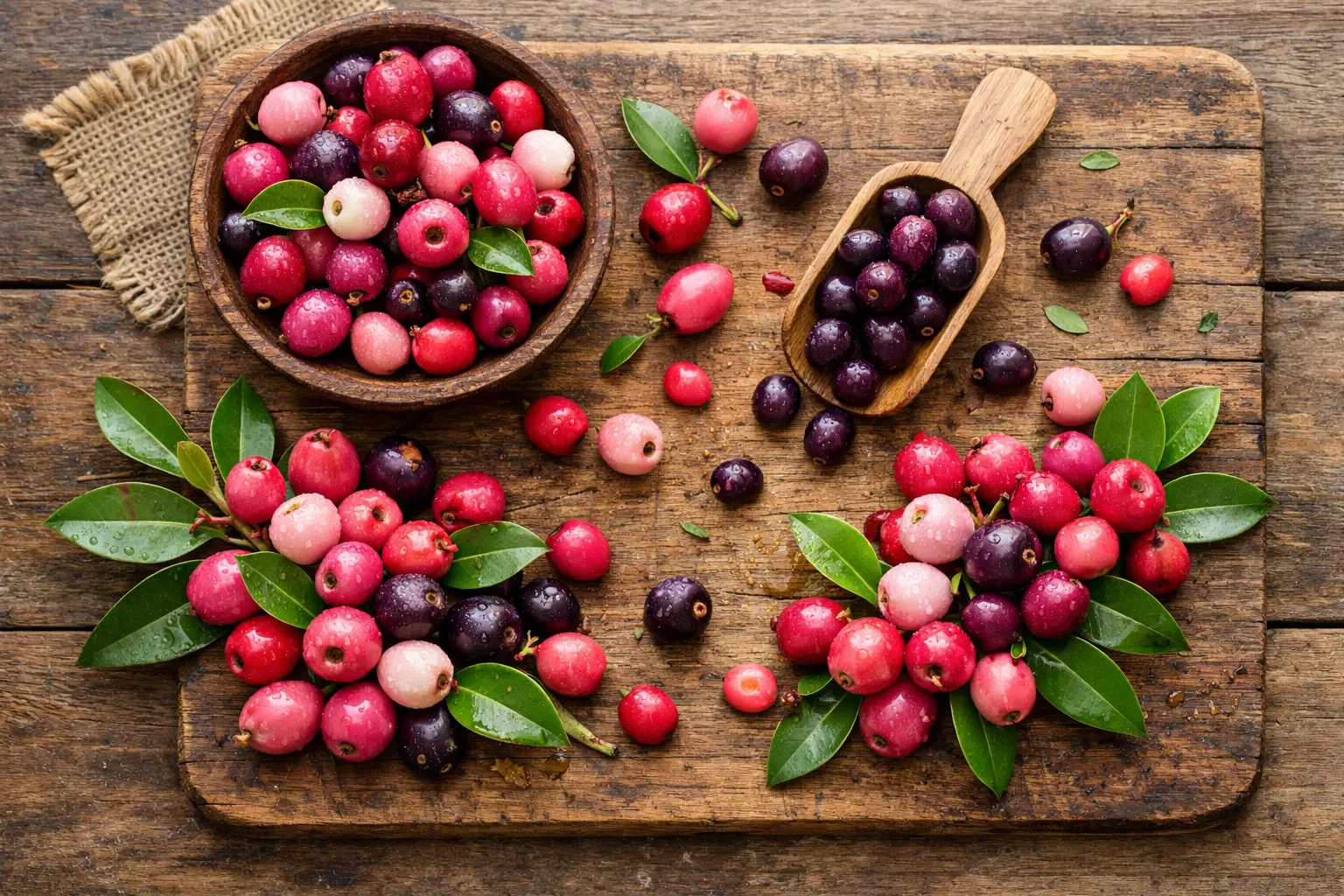
Lilly Pilly: Calories, Nutrition and Health Benefits
Lilly Pilly (Syzygium species) is a native Australian berry packed with antioxidants and unique flavor. At just 78 calories per 100g, these vibrant berries deliver 6.8g fiber and exceptional polyphenol content, making them a powerful superfruit for modern wellness.
🌟 Quick Nutrition Facts
Per 100g of Lilly Pilly Berries:
| Nutrient | Value |
|---|---|
| Energy | 78 calories (325 kJ) |
| Carbohydrates | 18.4g |
| Fiber | 6.8g |
| Sugar | 3.3g |
| Protein | 0.9g |
| Fat | 0.4g |
| Vitamin C | High (varies by species) |
| Calcium | 100mg |
| Potassium | 250mg |
| Magnesium | 48mg |
| Iron | 0.9mg |
Standout Nutrients:
- Anthocyanins: Exceptionally high levels for antioxidant protection
- Polyphenols: Neuroprotective and antimicrobial compounds
- Fiber: 6.8g supports digestive health and satiety
Macronutrient Distribution
 ChatGPT
  Claude
  AI Mode
  Perplexity
💡 NUTRITIONIST INSIGHT
Lilly Pilly stands out among berries for its exceptionally high anthocyanin content, often surpassing traditional sources like blueberries. The fiber-to-calorie ratio makes it ideal for blood sugar management and sustainable weight loss.
❌ Myth Busters: Lilly Pilly Edition
MYTH #1: "Lilly Pilly is just another berry with no unique benefits"
TRUTH: Research shows Lilly Pilly contains anthocyanins in concentrations higher than many traditional berry sources, offering superior antioxidant and neuroprotective properties. Source: PubMed
MYTH #2: "All lilly pilly species taste the same"
TRUTH: There are over 50 Lilly Pilly species with significant flavor variations. Syzygium luehmannii (Riberry) is the sweetest and most suitable for fresh consumption.
MYTH #3: "Lilly Pilly is too high in sugar for diabetics"
TRUTH: With only 3.3g sugar per 100g and 6.8g fiber, Lilly Pilly has a low glycemic load. The polyphenols may improve insulin sensitivity, making it suitable for diabetics in controlled portions. Source: PMC
MYTH #4: "Fresh berries are always better than processed lilly pilly"
TRUTH: While fresh is ideal, lilly pilly jams and syrups retain significant antioxidant content when processed with minimal sugar. The essential oils add unique culinary value to prepared products.
🎯 NutriScore by Health Goals
| Goal | Score | Recommendation | Reason |
|---|---|---|---|
| Weight Loss |  | ✅ Excellent choice | Low calorie (78), high fiber (6.8g), promotes fullness |
| Muscle Gain |  | ⚠️ Supplement needed | Minimal protein (0.9g); pair with protein-rich foods |
| Diabetes |  | ✅ Highly suitable | Low glycemic load, high fiber, polyphenols support insulin function. Research indicates antihyperglycemic potential. Source: PMC |
| PCOS | | ✅ Very good | Antioxidants reduce inflammation, fiber stabilizes blood sugar |
| Pregnancy | | ✅ Excellent choice | High calcium (100mg), magnesium (48mg), vitamin C support maternal and fetal health. Safe when consumed fresh and washed. Source: Fruitsinfo |
| Viral/Flu Recovery | | ✅ Very beneficial | Rich vitamin C, antimicrobial properties, immune-boosting antioxidants |
💊 PERSONALIZED NUTRITION
NutriScan tailors lilly pilly portions to your metabolic profile, activity level, and health goals. Download the app for custom daily recommendations!
📊 Blood Sugar Response
How Lilly Pilly Affects Blood Glucose
Lilly Pilly demonstrates a favorable blood sugar response due to its low sugar content (3.3g per 100g) and high fiber (6.8g) which slows carbohydrate absorption. The polyphenols may enhance insulin sensitivity.
Smart Pairing Tips:
- With Greek yogurt: Protein slows digestion, stabilizes glucose response
- In chia pudding: Extra fiber creates sustained energy release
- With almonds: Healthy fats further moderate blood sugar impact
- Morning smoothie: Consume with protein powder for balanced energy
⚠️ MEDICAL DISCLAIMER
Information is for educational purposes only. Consult healthcare providers before major dietary changes, especially if diabetic or on medications.
🌏 Cultural Significance
Lilly Pilly has deep roots in Australian Aboriginal culture, where it was valued for both nutrition and medicine. Indigenous Australians used the berries fresh and recognized their anti-bacterial and healing properties long before modern research confirmed these benefits.
The most common edible species, Syzygium luehmannii (Riberry), grows naturally from the Macleay River in New South Wales to near Cairns in tropical Queensland. It thrives on volcanic soils and fruits from December to February.
In modern Australian cuisine, lilly pilly has experienced a renaissance as chefs embrace native ingredients. The berries are prized for their unique flavor profile—tart-sweet with hints of clove and cinnamon—and are featured in gourmet jams, sauces, and confections.
Indigenous knowledge emphasizes using the whole plant sustainably, a practice now adopted by Australian bushfood industries. The tree's ornamental appeal has also made it popular in urban landscaping, bringing native food sources to city environments.
⚖️ Compare & Substitute
Per 100g comparison with similar berries:
| Nutrient | Lilly Pilly | Blueberries | Cranberries | Goji Berries |
|---|---|---|---|---|
| Calories | 78 | 57 | 46 | 349 |
| Carbs | 18.4g | 14.5g | 12.2g | 77g |
| Fiber | 6.8g | 2.4g | 4.6g | 13g |
| Sugar | 3.3g | 10g | 4g | 46g |
| Protein | 0.9g | 0.7g | 0.4g | 14g |
| Vitamin C | High | 9.7mg | 13.3mg | 48mg |
| Calcium | 100mg | 6mg | 8mg | 190mg |
| Best For | Low-sugar, high-fiber needs | Fresh eating | UTI prevention | Protein boost |
When to substitute:
- For lilly pilly: Use blueberries (more available) or cranberries (similar tartness)
- For blueberries: Use lilly pilly for lower sugar, higher fiber alternative
- Unique use: Lilly pilly's clove-like notes add complexity to savory dishes, unlike most berries
❓ FAQs
1. Where can I buy lilly pilly berries? Lilly pilly is seasonal (December-February) and primarily available in Australia at farmers markets, specialty grocers, and online bushfood suppliers. Jams and sauces are more widely accessible year-round.
2. Can I grow lilly pilly at home? Yes, several Syzygium species adapt well to home gardens in subtropical and tropical climates (zones 9-11). Trees prefer well-drained soil and partial shade, producing fruit after 3-5 years.
3. How should I store fresh lilly pilly? Refrigerate unwashed berries in a breathable container for up to 5 days. Wash just before eating. Freeze for longer storage (up to 6 months); great for smoothies.
4. What's the best way to eat lilly pilly? Fresh berries can be eaten whole (spit the seed). Popular uses include fruit salads, jams, syrups, savory sauces for meat/seafood, and cocktail garnishes. The tart-sweet flavor pairs well with cheese.
5. Are the seeds edible? The small seeds are not toxic but are typically discarded due to their hard texture and lack of flavor.
6. Does cooking destroy the antioxidants? Some antioxidant loss occurs with heat, but lilly pilly jams and cooked sauces retain significant anthocyanin content. For maximum benefits, consume some berries fresh.
7. Can I use lilly pilly in baking? Yes, lilly pilly works in muffins, tarts, and cakes. Reduce other sweeteners as the berries are naturally tart. The clove-like flavor complements cinnamon and nutmeg.
8. Is lilly pilly safe for children? Yes, when properly washed and with seeds removed for young children (choking hazard). Start with small amounts to check for individual tolerance.
🥗 Similar Nutritious Foods
4505 Chicharrones Classic Chili Salt
7 Eleven Japan Crispy Corn Cheese


📱 Download NutriScan App
🎯 PERSONALIZED NUTRITION
Get custom lilly pilly portion recommendations based on your metabolic profile, health goals, and activity level!
AI Calorie Counter App - Snap a Photo, Get Macros
AI Nutritionist App That Reads Your Logged Meals
Best Protein Supplements for Women
Bulking Meal Plan App That Sets Your Surplus
ChatGPT Calorie Counter Alternative That Keeps the Total
ChatGPT Diet Plan Alternative That Tracks What You Eat
ChatGPT Weight Loss Coach Alternative With a Food Log
Fast Food Calorie Counter App That Reads the Tray
Free Calorie Tracker App with AI Photo Scans | NutriScan
Indian Diet Plan App With Veg and Non Veg Meals
Indian Food Calorie Calculator - Get Instant Nutrition Facts for Desi Meals — 2026
Intermittent Fasting for Women, Timer and Meal Log App
Intermittent Fasting Tracker App - Free Fasting Timer
Macro Tracker App That Fills the Numbers From a Photo
Mediterranean Diet Meal Plan App That Counts the Oil
Micronutrient Tracker App for Vitamins and Minerals
MyFitnessPal Alternative That Stays Free | NutriScan
NutriScore App: A Free Grade on Every Meal | NutriScan
Nutrition Label Scanner App for the Amount You Ate
Second Trimester Protein Guide
Vegetarian Meal Plan App With a Protein Target
Voice Calorie Counter - Speak to Track Meals Hands-Free
Water and Calorie Tracker App - Free Water Log
Why Choose NutriScan?
- 📸 Instant Analysis - Snap, scan, know your nutrition
- 🎯 Personalized Goals - Custom plans for your health journey
- 📊 Track Progress - Visual dashboards & detailed reports
- 🌾 Indian Food Database - 1000+ local dishes accurately analyzed