Millet Protein Bar: Calories, Nutrition and Health Benefits
A clean-label ancient grain snack delivering 10g protein with the nutritional power of millet, nuts, and seeds in every bar.
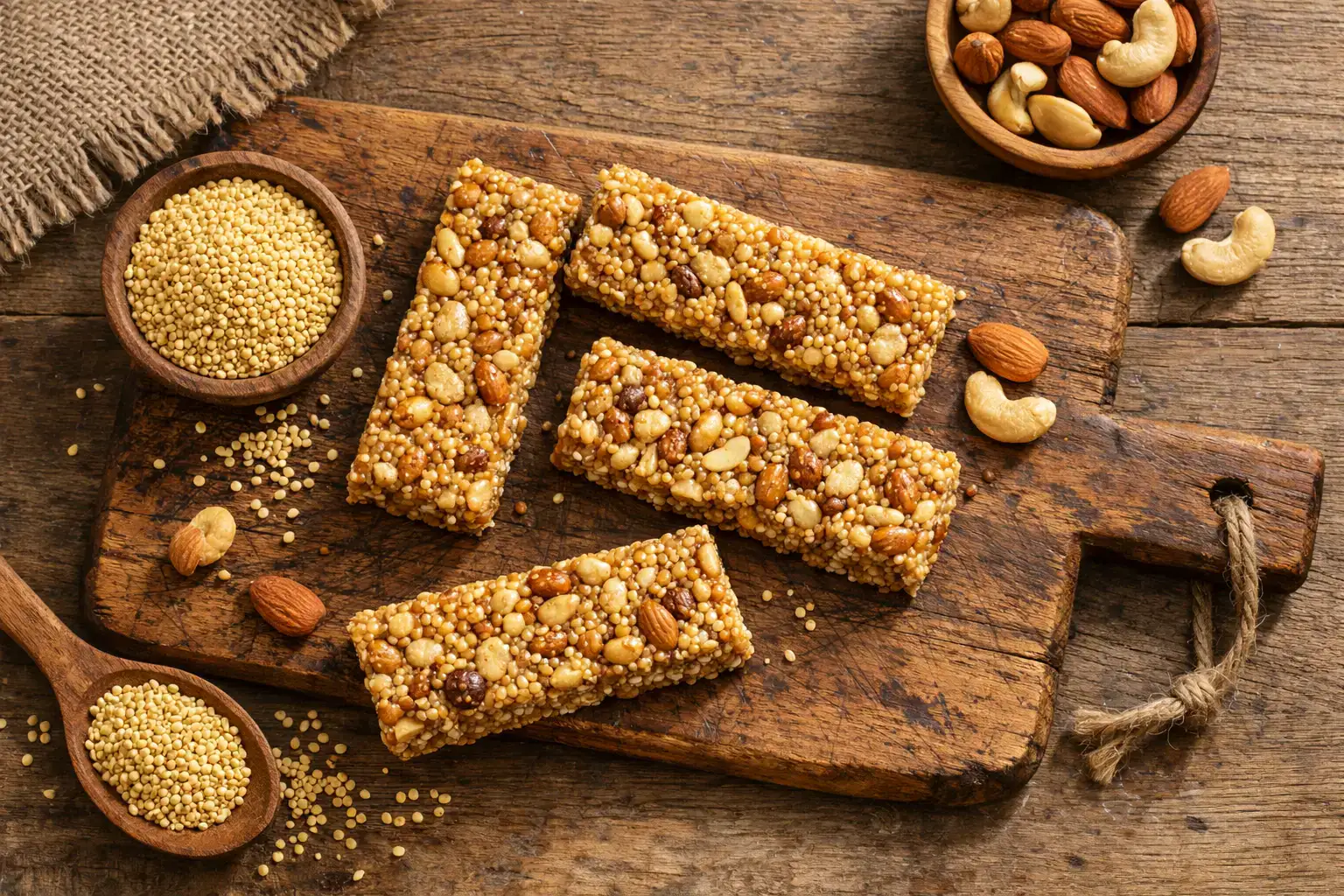
Quick Nutrition Facts
Per 1 Bar (45g)
| Nutrient | Amount |
|---|---|
| Calories | 180 kcal |
| Protein | 10g |
| Carbohydrates | 22g |
| Fiber | 3g |
| Sugars | 6g |
| Fat | 7g |
| Iron | 2.8mg |
| Magnesium | 48mg |
| Phosphorus | 120mg |
| Zinc | 1.1mg |
Macronutrient Breakdown
 ChatGPT
  Claude
  AI Mode
  Perplexity
NUTRITIONIST INSIGHT
Millet protein bars combine the low glycemic benefits of ancient grains with plant-based protein for sustained energy. The 3g fiber per bar helps regulate blood sugar, making them a smarter snack choice than conventional cereal bars. Pair with a piece of fruit for a complete mid-morning snack.
Myth Busters
MYTH #1: Millet Bars Are Just Like Regular Granola Bars
TRUTH: Millet protein bars have a significantly lower glycemic index than wheat or oat-based granola bars. Millet-based foods showed GI values of 37-53 compared to rice at 77, meaning more stable blood sugar and longer-lasting energy.
MYTH #2: You Can't Get Enough Protein From Millet
TRUTH: Millet contains 11g protein per 100g raw grain with all essential amino acids. Combined with nuts and seeds in protein bars, millet proteins provide a complete amino acid profile including lysine and methionine that many cereals lack.
MYTH #3: Millet Bars Are Only for Gluten-Free Diets
TRUTH: While millet is naturally gluten-free, its benefits extend far beyond celiac needs. Millets have hypoglycemic, anti-inflammatory, and antioxidant properties that benefit everyone from athletes to diabetics.
MYTH #4: Protein Bars Are Always Processed Junk Food
TRUTH: Clean-label millet protein bars use minimal ingredients: millet, nuts, seeds, and natural sweeteners. Unlike whey-based bars loaded with artificial additives, pearl millet protein bars deliver 15-18g protein per 100g with excellent digestibility.
MYTH #5: Ancient Grain Bars Don't Fill You Up
TRUTH: The combination of 10g protein and 3g fiber per millet bar promotes significant satiety. High fiber and slow-digesting carbohydrates in millets enhance fullness and reduce overall food intake.
NutriScore by Health Goals
| Health Goal | NutriScore | Why This Score? |
|---|---|---|
| Weight Loss |  | 180 calories with 10g protein and 3g fiber per bar promotes fullness. Use as meal snack replacement, limit to 1-2 daily. |
| Muscle Gain | | 10g protein per bar supports post-workout recovery. Pair with a protein shake for optimal muscle synthesis. |
| Diabetes Management | | Millet consumption lowered fasting blood glucose by 12% in diabetic subjects. Low GI carbs with protein slow glucose absorption. |
| PCOS Management | | Low glycemic impact helps manage insulin resistance. Iron and magnesium support hormonal balance. |
| Pregnancy Nutrition |  | Iron (2.8mg), folate, and magnesium support fetal development. ACOG recommends iron-rich whole grains during pregnancy. |
| Viral/Flu Recovery | | Easy to eat when appetite is low. Provides sustained energy, iron for immune function, and zinc for recovery. |
PERSONALIZED NUTRITION
Track your meals with NutriScan for personalized NutriScores based on your specific health goals!
Blood Sugar Response to Millet Protein Bar
Understanding how millet protein bars affect your blood glucose can help you make informed snacking decisions.
Typical Glucose Response Curve
This chart shows typical blood glucose response for general healthy individuals. Individual responses may vary. Not medical advice.
How to Flatten the Spike
Pairing millet bars with protein or healthy fat slows glucose absorption and reduces the peak blood sugar level:
- 🥛 Glass of milk or curd (dahi) - Adds protein and slows digestion
- 🥜 Handful of almonds or walnuts - Healthy fats extend energy release
- 🍵 Green tea - Catechins support glucose metabolism
- 🫐 Fresh berries - Low GI fruit adds fiber and antioxidants
This combination not only reduces the glucose spike but also extends energy release, keeping you fuller for longer.
Cultural Significance
Millet has been cultivated for over 7,000 years, making it one of humanity's oldest food crops. The modern millet protein bar bridges ancient nutrition with contemporary convenience.
In India:
- Millets (bajra, ragi, jowar) are staple grains across Rajasthan, Karnataka, and Maharashtra
- Government of India declared 2023 as the International Year of Millets via the UN
- Traditional millet-based snacks (ragi laddu, bajra rotla) inspired modern protein bar formats
- India is the world's largest millet producer at 12+ million tonnes annually
Global Impact:
- Ancient grain bars are the fastest-growing segment in the clean-label snack market
- Millet is drought-resistant, requiring 70% less water than rice
- Climate-smart crop gaining attention for sustainable food systems
- Popular in Australia, Europe, and North America as a functional food ingredient
Compare & Substitute
Millet Protein Bar vs Similar Snack Bars (Per 100g)
| Nutrient | Millet Protein Bar | Whey Protein Bar | Oat Granola Bar | Date & Nut Bar |
|---|---|---|---|---|
| Calories | 400 kcal | 380 kcal | 450 kcal | 420 kcal |
| Carbs | 49g | 35g | 62g | 55g |
| Fiber | 6.7g | 3g | 5g | 7g |
| Protein | 22g | 30g | 8g | 8g |
| Fat | 15.5g | 12g | 18g | 18g |
| Iron | 6.2mg | 2mg | 3.5mg | 1.8mg |
| GI | Low-Medium (54-62) | Low (30-40) | Medium-High (65-75) | Medium (55-65) |
| Sugar | 13g | 8g | 25g | 48g |
| Best For | Sustained energy, GF diets | Max protein, muscle gain | Quick energy, budget option | Natural energy, hiking |
Frequently Asked Questions
Are millet protein bars good for weight loss?
Yes, millet protein bars support weight loss when used as snack replacements. 180 calories per bar with 10g protein and 3g fiber promotes satiety and reduces overall calorie intake.
Best practices: Limit to 1-2 bars daily, choose brands with under 8g sugar per bar, eat as mid-morning or afternoon snack, and pair with water or green tea.
Can diabetics eat millet protein bars?
Millet protein bars are a better choice than most conventional bars for diabetics. Millet has a lower glycemic index (GI 54-62) than wheat or rice-based bars (GI 65-80).
Tips for diabetics:
- Choose bars with under 6g added sugar
- Check total carbohydrates per serving (22g per bar)
- Pair with protein-rich drink for slower absorption
- Monitor blood sugar 2 hours after eating
Long-term millet consumption lowered fasting and post-prandial blood glucose by 12-15%. Always consult your healthcare provider.
How much protein is in a millet protein bar?
A typical millet protein bar contains 10g of protein per 45g bar (22g per 100g). The protein comes from millet grain combined with nuts, seeds, or plant protein concentrates.
For muscle gain or high-protein diets, pair with a protein shake or Greek yogurt to boost total protein intake per snack.
What makes millet protein bars healthier than regular bars?
5 key advantages:
- Lower Glycemic Index: Millet carbs digest slower, providing steadier energy
- Gluten-Free: Naturally safe for celiac and gluten-sensitive individuals
- Iron-Rich: 2.8mg per bar (15% DV) supports oxygen transport and energy
- Clean Label: Minimal ingredients without artificial additives
- Ancient Grain Nutrition: Provides minerals like magnesium and phosphorus often missing in processed bars
When is the best time to eat a millet protein bar?
Depends on your goal:
- Weight Loss: Mid-morning (10-11 AM) or afternoon (3-4 PM) snack. Avoid late night.
- Muscle Gain: Post-workout (within 30 minutes) paired with a protein shake.
- Diabetes: Mid-morning paired with nuts. Not as first meal of the day.
- Energy: 45 minutes before physical activity for sustained fuel.
Are millet protein bars safe during pregnancy?
Yes, millet protein bars are generally safe and beneficial during pregnancy. They provide iron (2.8mg per bar), magnesium, and B vitamins that support fetal development.
Pregnancy tips: Choose bars with minimal added sugar, check for allergens (nuts, seeds), limit to 1-2 bars daily, and maintain a varied diet with whole foods.


Similar Nutritious Foods
4505 Chicharrones Classic Chili Salt
7 Eleven Japan Crispy Corn Cheese
Explore More Nutrition Tools & Resources
AI Calorie Counter App - Snap a Photo, Get Macros
AI Nutritionist App That Reads Your Logged Meals
Best Protein Supplements for Women
Bulking Meal Plan App That Sets Your Surplus
ChatGPT Calorie Counter Alternative That Keeps the Total
ChatGPT Diet Plan Alternative That Tracks What You Eat
ChatGPT Weight Loss Coach Alternative With a Food Log
Fast Food Calorie Counter App That Reads the Tray
Free Calorie Tracker App with AI Photo Scans | NutriScan
Indian Diet Plan App With Veg and Non Veg Meals
Indian Food Calorie Calculator - Get Instant Nutrition Facts for Desi Meals — 2026
Intermittent Fasting for Women, Timer and Meal Log App
Intermittent Fasting Tracker App - Free Fasting Timer
Macro Tracker App That Fills the Numbers From a Photo
Mediterranean Diet Meal Plan App That Counts the Oil
Micronutrient Tracker App for Vitamins and Minerals
MyFitnessPal Alternative That Stays Free | NutriScan
NutriScore App: A Free Grade on Every Meal | NutriScan
Nutrition Label Scanner App for the Amount You Ate
Second Trimester Protein Guide
Vegetarian Meal Plan App With a Protein Target
Voice Calorie Counter - Speak to Track Meals Hands-Free
Water and Calorie Tracker App - Free Water Log