M&S Plant Kitchen Coconut Kefir: Calories, Nutrition and Health Benefits
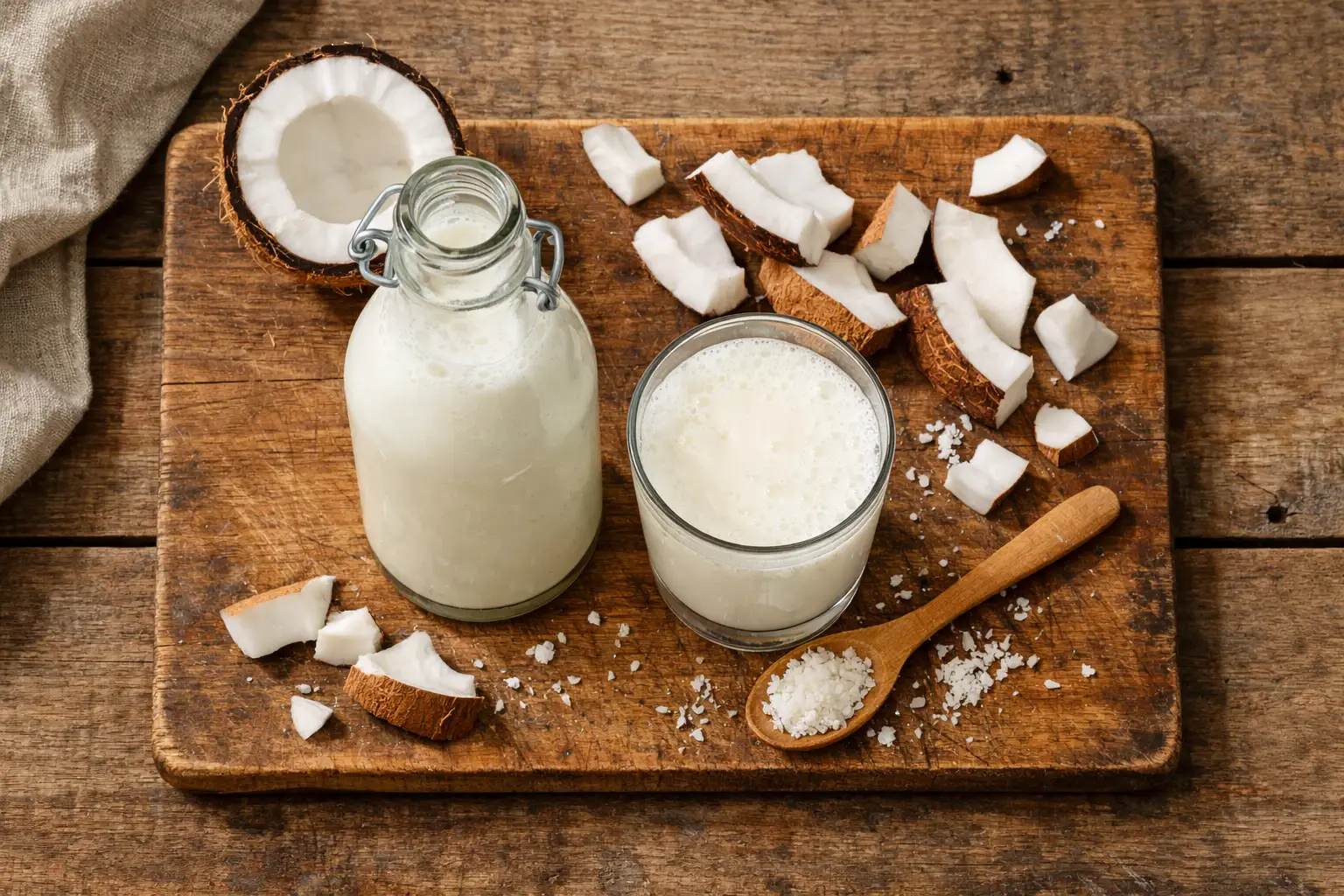
A creamy, dairy-free fermented coconut drink packed with live probiotic cultures for gut health — only 30 calories per 100ml.
Quick Nutrition Facts
Per 1 Bottle (200ml)
| Nutrient | Amount |
|---|---|
| Calories | 60 kcal |
| Protein | 1g |
| Carbohydrates | 7g |
| Fiber | 0g |
| Sugars | 5g |
| Fat | 3g |
| Saturated Fat | 2.5g |
| Salt | 0.1g |
| Calcium | 24mg |
| Probiotics | Live cultures |
Macronutrient Breakdown
 ChatGPT
  Claude
  AI Mode
  Perplexity
NUTRITIONIST INSIGHT
M&S Plant Kitchen Coconut Kefir delivers live probiotic cultures (Bifidobacterium, Lactobacillus) in a dairy-free format at just 30 calories per 100ml. The coconut base provides medium-chain triglycerides (MCTs) that are quickly metabolised for energy rather than stored as fat.
Myth Busters
MYTH #1: Dairy-Free Kefir Has No Real Probiotics
TRUTH: M&S Plant Kitchen Coconut Kefir contains five clinically studied live cultures including Bifidobacterium and Lactobacillus acidophilus. Research confirms that kefir contains over 50 species of probiotic bacteria and yeast with proven gut health benefits regardless of the milk base.
MYTH #2: Coconut Kefir Is High in Calories
TRUTH: At just 30 calories per 100ml, coconut kefir is one of the lowest-calorie probiotic drinks available. A full 200ml bottle has only 60 calories — significantly less than most fruit juices or smoothies.
MYTH #3: Fermented Drinks Are Unsafe During Pregnancy
TRUTH: Commercially produced fermented drinks like M&S Plant Kitchen Coconut Kefir use controlled pasteurised processes. The NHS states that shop-bought pasteurised fermented products are generally safe during pregnancy. Always consult your healthcare provider.
MYTH #4: Plant-Based Kefir Doesn't Help Blood Sugar
TRUTH: A meta-analysis of randomised controlled trials found that kefir consumption significantly reduced fasting blood sugar and insulin levels in diabetic patients. The probiotic strains modulate glucose absorption regardless of whether the base is dairy or plant-based.
MYTH #5: Coconut Fat in Kefir Is Unhealthy
TRUTH: The 1.5g fat per 100ml comes primarily from coconut-derived MCTs, which are metabolised differently from long-chain fats. Kefir's anti-inflammatory and cholesterol-lowering properties have been documented across multiple studies.
NutriScore by Health Goals
| Health Goal | NutriScore | Why This Score? |
|---|---|---|
| Weight Loss |  | Only 60 calories per 200ml bottle. Probiotics support metabolism and satiety. Low sugar content. |
| Muscle Gain |  | Low protein (1g per serving). Use as a gut-health supplement alongside protein-rich foods. |
| Diabetes Management |  | Kefir consumption may reduce fasting blood sugar. Low carb (3.5g/100ml). Monitor individual response. |
| PCOS Management | | Anti-inflammatory probiotics may help hormonal balance. Low glycemic impact. Include as part of a balanced diet. |
| Pregnancy Nutrition | | Commercially produced, pasteurised fermented drinks are generally considered safe. Probiotics support digestive comfort. Consult your doctor. |
| Viral/Flu Recovery | | Probiotics boost immune response. Easy to digest. Hydrating coconut base with electrolytes. |
PERSONALIZED NUTRITION
Track your meals with NutriScan for personalized NutriScores based on your specific health goals!
Blood Sugar Response to M&S Plant Kitchen Coconut Kefir
Understanding how coconut kefir affects your blood glucose helps you time it optimally around meals.
Typical Glucose Response Curve
This chart shows typical blood glucose response for general healthy individuals. Individual responses may vary. Not medical advice.
How to Flatten the Spike
Pairing fermented drinks with protein or fibre slows glucose absorption and reduces the peak blood sugar level:
- 🥣 Oats or granola - Adds soluble fibre for sustained energy
- 🥜 Nut butter on toast - Healthy fats and protein slow absorption
- 🥚 Boiled eggs or tofu - Complete protein source alongside probiotics
- 🫐 Mixed berries - Low-GI fruit with antioxidants and fibre
This combination not only reduces the glucose spike but also maximises probiotic absorption for gut health benefits.
Cultural Significance
Kefir originated in the Caucasus Mountains thousands of years ago, where shepherds discovered that milk carried in leather pouches fermented into a tangy, effervescent drink.
Modern Plant-Based Movement:
- M&S Plant Kitchen range launched as part of the UK's growing vegan movement
- Coconut kefir bridges traditional fermentation with dairy-free innovation
- The UK plant-based food market has grown significantly, with fermented alternatives leading adoption
- Live culture coconut drinks are now mainstream in UK supermarkets
In India:
- Fermented foods are deeply rooted in Indian cuisine (lassi, chaas, kanji)
- Coconut-based fermented drinks align with South Indian and Kerala culinary traditions
- Growing demand for dairy-free probiotics in urban India's health-conscious market
- Ayurveda recognises fermented foods for improving digestion (agni)
Compare & Substitute
M&S Coconut Kefir vs Similar Probiotic Drinks (Per 100ml)
| Nutrient | 🥥 M&S Coconut Kefir | 🥛 Dairy Kefir | 🍶 Kombucha | 🥥 Coconut Yoghurt |
|---|---|---|---|---|
| Calories | 30 kcal | 52 kcal | 20 kcal | 110 kcal |
| Carbs | 3.5g | 4.4g | 4g | 5g |
| Fiber | 0g | 0g | 0g | 0.5g |
| Protein | 0.5g | 3.3g | 0g | 1g |
| Fat | 1.5g | 1.6g | 0g | 9g |
| Probiotics | 5 live strains | 50+ strains | SCOBY cultures | 2-3 strains |
| Sugar | 2.5g | 3.5g | 3g | 3.5g |
| Best For | Dairy-free gut health, vegan | Highest probiotic diversity | Low-cal probiotic, caffeine | Creamy texture, cooking |
Frequently Asked Questions
Is M&S Plant Kitchen Coconut Kefir good for gut health?
Yes, it contains five clinically studied live cultures including Bifidobacterium and Lactobacillus acidophilus. Research shows kefir probiotics can modulate gut microbiota, reduce inflammation, and improve intestinal permeability.
Best practices: Drink regularly (daily or every other day), consume on an empty stomach or between meals for maximum probiotic absorption, and store refrigerated to maintain live culture viability.
How many calories are in M&S Plant Kitchen Coconut Kefir?
60 calories per 200ml bottle (30 kcal per 100ml). This makes it one of the lowest-calorie probiotic drinks available — comparable to kombucha but with significantly more diverse probiotic strains.
Can diabetics drink coconut kefir?
Yes, in moderation. With only 3.5g carbs per 100ml, it has a minimal glycemic impact. A randomised controlled trial found that kefir consumption reduced fasting blood sugar and HbA1c levels in type 2 diabetic patients.
Tips for diabetics:
- Drink plain unsweetened coconut kefir (avoid flavoured varieties)
- Best timing: with meals or mid-morning
- Monitor blood sugar 2 hours after consumption
- Limit to 200ml per day initially
Is coconut kefir safe during pregnancy?
Commercially produced coconut kefir like M&S Plant Kitchen uses pasteurised coconut milk and controlled fermentation. The NHS considers shop-bought pasteurised fermented products generally safe during pregnancy. Always consult your healthcare provider.
How does coconut kefir compare to dairy kefir?
Coconut kefir is lower in protein (0.5g vs 3.3g per 100ml) and calcium but offers similar probiotic benefits. It is completely dairy-free and vegan, making it suitable for those with lactose intolerance, dairy allergies, or following a plant-based diet. Dairy kefir typically contains more diverse probiotic strains.
How often should I drink coconut kefir?
General Guidelines:
- 1 bottle (200ml) daily — Most people, for gut health maintenance
- 100ml daily — Starting amount if new to fermented foods (to avoid bloating)
- 200ml daily — Active gut health support, weight management
- Avoid excess: More than 400ml per day may cause digestive discomfort in some people
Track your probiotic intake with NutriScan app to optimise your gut health goals.


Similar Nutritious Foods
4505 Chicharrones Classic Chili Salt
7 Eleven Japan Crispy Corn Cheese
Explore More Nutrition Tools & Resources
AI Calorie Counter App - Snap a Photo, Get Macros
AI Nutritionist App That Reads Your Logged Meals
Best Protein Supplements for Women
Bulking Meal Plan App That Sets Your Surplus
ChatGPT Calorie Counter Alternative That Keeps the Total
ChatGPT Diet Plan Alternative That Tracks What You Eat
ChatGPT Weight Loss Coach Alternative With a Food Log
Fast Food Calorie Counter App That Reads the Tray
Free Calorie Tracker App with AI Photo Scans | NutriScan
Indian Diet Plan App With Veg and Non Veg Meals
Indian Food Calorie Calculator - Get Instant Nutrition Facts for Desi Meals — 2026
Intermittent Fasting for Women, Timer and Meal Log App
Intermittent Fasting Tracker App - Free Fasting Timer
Macro Tracker App That Fills the Numbers From a Photo
Mediterranean Diet Meal Plan App That Counts the Oil
Micronutrient Tracker App for Vitamins and Minerals
MyFitnessPal Alternative That Stays Free | NutriScan
NutriScore App: A Free Grade on Every Meal | NutriScan
Nutrition Label Scanner App for the Amount You Ate
Second Trimester Protein Guide
Vegetarian Meal Plan App With a Protein Target
Voice Calorie Counter - Speak to Track Meals Hands-Free
Water and Calorie Tracker App - Free Water Log