M&S Plant Kitchen Mushroom No-Meatballs: Calories, Nutrition and Health Benefits
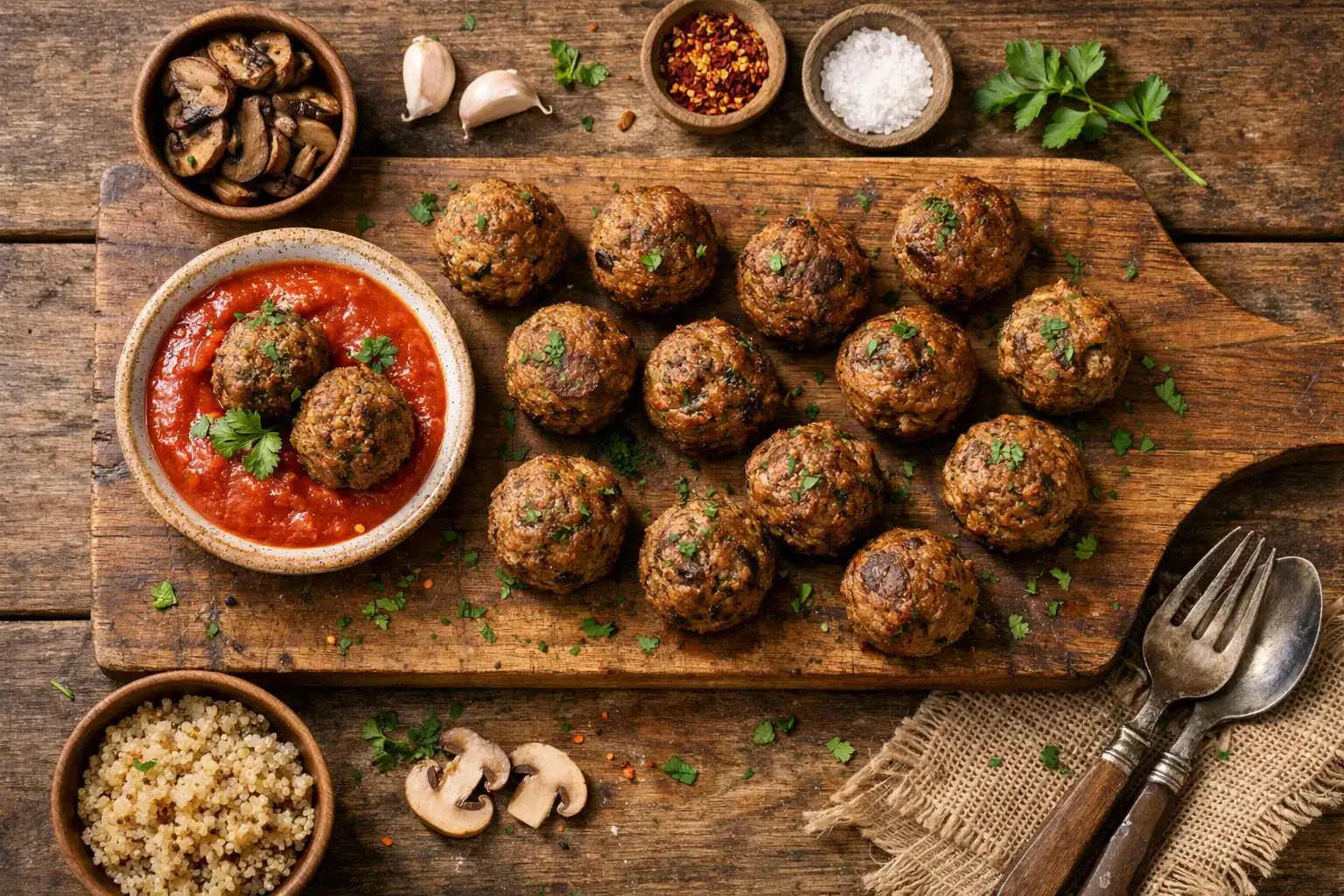
A plant-based powerhouse made from oyster mushrooms and pea protein, delivering 12g protein per 100g with rich umami flavour and just 180 calories.
Quick Nutrition Facts
Per 100g (approx. 4 meatballs)
| Nutrient | Amount |
|---|---|
| Calories | 180 kcal |
| Protein | 12g |
| Carbohydrates | 14g |
| Fiber | 3.5g |
| Sugars | 2.8g |
| Fat | 8g |
| Saturated Fat | 0.9g |
| Sodium | 480mg |
| Iron | 2.1mg |
| Vitamin B12 | 0mcg |
Macronutrient Breakdown
 ChatGPT
  Claude
  AI Mode
  Perplexity
NUTRITIONIST INSIGHT
M&S Mushroom No-Meatballs pack 12g of plant protein per 100g from pea protein and oyster mushrooms, making them one of the better plant-based meat alternatives for protein density. The mushroom base provides natural beta-glucans that support immune function and gut health.
Myth Busters
MYTH #1: Plant-Based Meatballs Are Always Highly Processed Junk Food
TRUTH: M&S Mushroom No-Meatballs use whole oyster mushrooms (27% total) and pea protein as primary ingredients. While processed, they contain recognisable whole-food ingredients and provide meaningful protein comparable to many meat alternatives.
MYTH #2: You Can't Get Enough Protein from Plant-Based Meatballs
TRUTH: At 12g protein per 100g, these meatballs deliver solid plant protein from pea protein isolate. Mushroom protein quality rivals many plant sources and combined with pea protein provides a complete amino acid profile.
MYTH #3: Mushroom-Based Products Taste Bland Compared to Meat
TRUTH: Oyster mushrooms contain natural glutamate that creates umami flavour. Studies confirm mushrooms are an emerging source for next-generation meat analogues precisely because of their meaty texture and rich flavour profile.
MYTH #4: Plant-Based Meatballs Are Too High in Sodium
TRUTH: At approximately 480mg sodium per 100g, these meatballs are comparable to many meat-based versions. A single serving provides about 20% of daily sodium intake. Simply balance with low-sodium sides like steamed vegetables or salad.
MYTH #5: Mushroom Products Aren't Safe During Pregnancy
TRUTH: Cooked mushrooms are safe during pregnancy. The pea protein provides additional folate and iron. However, always ensure mushroom products are fully cooked before consuming during pregnancy.
NutriScore by Health Goals
| Health Goal | NutriScore | Why This Score? |
|---|---|---|
| Weight Loss |  | 180 calories per 100g with 12g protein promotes satiety. High in fiber (3.5g) and low in saturated fat (0.9g). Pair with vegetables for a filling, low-calorie meal. |
| Muscle Gain | | 12g protein per 100g from pea protein and mushrooms. Good post-workout option when combined with whole grains for complete amino acids. |
| Diabetes Management | | Moderate carbs (14g/100g) with decent fiber. Plant-based diets are associated with improved glycemic control in type 2 diabetes. Pair with non-starchy vegetables. |
| PCOS Management | | Low glycemic impact with balanced macros. Anti-inflammatory mushroom compounds may support hormonal balance. Limit to 1 serving daily. |
| Pregnancy Nutrition | | Good protein source (12g/100g), cooked mushrooms are safe during pregnancy. Iron content (2.1mg) supports increased demands. Ensure fully heated before serving. |
| Viral/Flu Recovery |  | Mushroom beta-glucans support immune function. Easy to digest, provides protein for recovery, and gentle on the stomach. |
PERSONALIZED NUTRITION
Track your meals with NutriScan for personalized NutriScores based on your specific health goals!
Blood Sugar Response to M&S Mushroom No-Meatballs
Understanding how these plant-based meatballs affect your blood glucose helps you make informed meal decisions.
Typical Glucose Response Curve
This chart shows typical blood glucose response for general healthy individuals. Individual responses may vary. Not medical advice.
How to Flatten the Spike
Pairing protein-rich foods with fiber and healthy fats slows glucose absorption and reduces the peak blood sugar level:
- Steamed broccoli or green beans - Adds fiber and micronutrients with minimal carbs
- Whole-grain pasta or brown rice - Slow-release carbs for sustained energy
- Side salad with olive oil dressing - Healthy fats slow digestion
- Roasted courgette or aubergine - Low-carb vegetables that complement the umami flavour
Cultural Significance
Mushrooms have been revered across cultures for thousands of years, from ancient Chinese medicine to European foraging traditions.
In the UK:
- M&S Plant Kitchen launched as part of the UK's growing plant-based movement
- Veganuary campaigns have driven mainstream adoption of mushroom-based meat alternatives
- British mushroom farming is a significant agricultural sector with year-round production
- Oyster mushrooms, the star of these meatballs, are increasingly grown by UK urban farms
Global Impact:
- The global plant-based meat market is projected to exceed $35 billion by 2027
- Mushroom-based meat alternatives produce 90% fewer carbon emissions than beef
- Pea protein, the secondary protein source, requires 6x less water than animal protein
- Italy, Sweden, and the Netherlands lead European plant-based meatball innovation
Compare & Substitute
M&S Mushroom No-Meatballs vs Alternatives (Per 100g)
| Nutrient | M&S Mushroom No-Meatballs | Beef Meatballs (Traditional) | Beyond Meat Meatballs | Tofu (Firm) |
|---|---|---|---|---|
| Calories | 180 kcal | 250 kcal | 210 kcal | 144 kcal |
| Carbs | 14g | 5g | 12g | 3g |
| Fiber | 3.5g | 0g | 3g | 2g |
| Protein | 12g | 17g | 14g | 17g |
| Fat | 8g | 18g | 12g | 8.7g |
| Sodium | 480mg | 520mg | 540mg | 14mg |
| Sat. Fat | 0.9g | 7g | 5g | 1.3g |
| Best For | Plant-based protein, low sat. fat | Highest protein, traditional taste | Higher protein, plant-based | Lowest calorie, lowest sodium |
Frequently Asked Questions
How many calories are in M&S Mushroom No-Meatballs?
180 calories per 100g (approximately 4 meatballs). A typical serving provides 12g protein, 14g carbohydrates, and 8g fat. This makes them a moderate-calorie plant-based option suitable for most meal plans.
Are M&S Mushroom No-Meatballs healthy?
Yes, they offer a balanced nutritional profile with 12g protein, 3.5g fiber, and only 0.9g saturated fat per 100g. The mushroom base provides natural beta-glucans for immune support. They are lower in saturated fat than traditional beef meatballs.
Best enjoyed with: non-starchy vegetables, whole grains, or in pasta dishes with tomato-based sauces.
Are M&S Mushroom No-Meatballs suitable for diabetics?
Yes, with moderate carbohydrates (14g/100g) and good protein content (12g), they have a moderate glycemic impact. The fiber content (3.5g) helps slow glucose absorption.
Tips for diabetics:
- Serve with non-starchy vegetables (broccoli, courgette, spinach)
- Avoid pairing with white pasta or white rice
- Monitor portion sizes to 100-150g per meal
- Check blood sugar 2 hours after eating
What are M&S Mushroom No-Meatballs made of?
The primary ingredients are cooked mushrooms (20%), pea protein (10%), oyster mushrooms (7%), rapeseed oil, caramelised onions, rice flour, chickpea flour, and natural flavourings. They are fully vegan with no animal-derived ingredients.
How do M&S Mushroom No-Meatballs compare to real meatballs?
M&S Mushroom No-Meatballs have 28% fewer calories (180 vs 250 kcal) and 87% less saturated fat (0.9g vs 7g) compared to traditional beef meatballs per 100g. However, they have 29% less protein (12g vs 17g). They are a strong choice for reducing saturated fat intake while maintaining protein levels.
Can I eat these during pregnancy?
Yes, cooked mushroom products are safe during pregnancy. The 12g protein and 2.1mg iron per 100g support increased nutritional demands. Always ensure they are thoroughly heated to the recommended temperature before consuming.
Track your plant-based meals with NutriScan app to see how M&S Mushroom No-Meatballs fit your personal nutrition goals.


Similar Nutritious Foods
4505 Chicharrones Classic Chili Salt
7 Eleven Japan Crispy Corn Cheese
Explore More Nutrition Tools & Resources
AI Calorie Counter App - Snap a Photo, Get Macros
AI Nutritionist App That Reads Your Logged Meals
Best Protein Supplements for Women
Bulking Meal Plan App That Sets Your Surplus
ChatGPT Calorie Counter Alternative That Keeps the Total
ChatGPT Diet Plan Alternative That Tracks What You Eat
ChatGPT Weight Loss Coach Alternative With a Food Log
Fast Food Calorie Counter App That Reads the Tray
Free Calorie Tracker App with AI Photo Scans | NutriScan
Indian Diet Plan App With Veg and Non Veg Meals
Indian Food Calorie Calculator - Get Instant Nutrition Facts for Desi Meals — 2026
Intermittent Fasting for Women, Timer and Meal Log App
Intermittent Fasting Tracker App - Free Fasting Timer
Macro Tracker App That Fills the Numbers From a Photo
Mediterranean Diet Meal Plan App That Counts the Oil
Micronutrient Tracker App for Vitamins and Minerals
MyFitnessPal Alternative That Stays Free | NutriScan
NutriScore App: A Free Grade on Every Meal | NutriScan
Nutrition Label Scanner App for the Amount You Ate
Second Trimester Protein Guide
Vegetarian Meal Plan App With a Protein Target
Voice Calorie Counter - Speak to Track Meals Hands-Free
Water and Calorie Tracker App - Free Water Log