Mujaddara: Calories, Nutrition and Health Benefits
Ancient Middle Eastern comfort food combining lentils, rice, and caramelized onions—packed with plant protein, fiber, and essential nutrients.
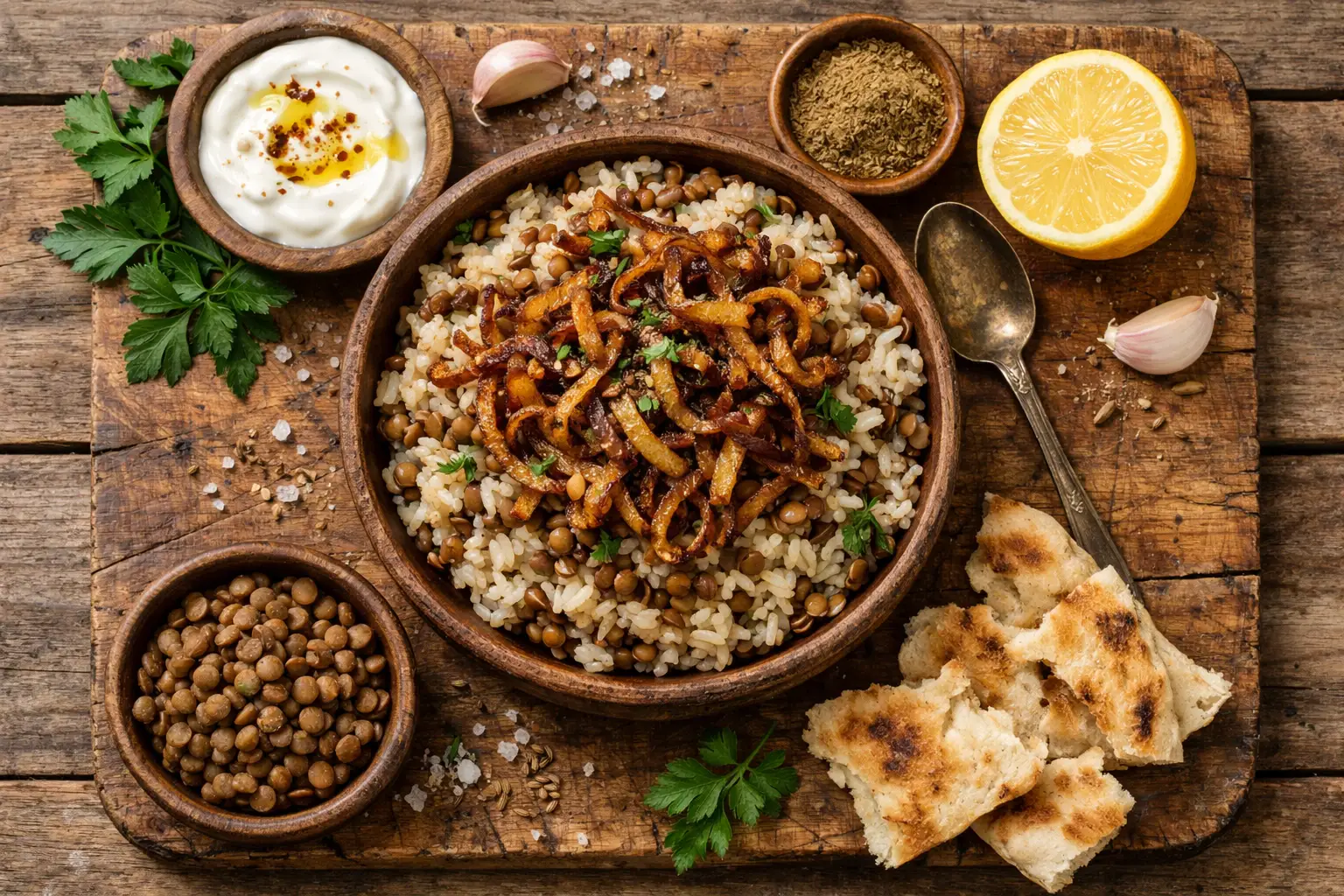
Quick Nutrition Facts
Per 1 Cup (200g)
| Nutrient | Amount |
|---|---|
| Calories | 264 kcal |
| Protein | 12g |
| Carbohydrates | 45g |
| Fiber | 8g |
| Sugars | 3g |
| Fat | 10g |
| Iron | 4.2mg |
| Folate | 179mcg |
| Potassium | 480mg |
| Manganese | 0.9mg |
Macronutrient Breakdown
 ChatGPT
  Claude
  AI Mode
  Perplexity
NUTRITIONIST INSIGHT
Mujaddara combines lentils and rice to create a complete protein with all nine essential amino acids. The 8g fiber and resistant starch support gut health while helping regulate blood sugar levels.
Myth Busters
MYTH #1: Mujaddara Is Too High in Carbs for Weight Loss
TRUTH: While mujaddara contains 45g carbs per cup, the 8g fiber promotes fullness and helps control appetite. The protein-fiber combination (12g + 8g) makes it highly satiating at just 264 calories per cup.
MYTH #2: You Need Meat for Complete Protein
TRUTH: Mujaddara provides complete protein through the combination of lentils and rice. While lentils are low in methionine and rice is low in lysine, together they provide all nine essential amino acids. No meat required for complete nutrition.
MYTH #3: Lentils and Rice Together Spike Blood Sugar
TRUTH: Lentils contain resistant starch that delays carbohydrate absorption and lowers blood sugar response. The fiber content further slows glucose absorption, making mujaddara suitable for diabetes management when consumed in appropriate portions.
MYTH #4: Caramelized Onions Make It Unhealthy
TRUTH: Traditional mujaddara uses moderate olive oil (2-3 tablespoons per recipe), contributing heart-healthy monounsaturated fats. The onions add antioxidants and prebiotics that support gut health. The 10g fat per cup is primarily healthy fat.
MYTH #5: Plant-Based Meals Lack Iron
TRUTH: One cup of mujaddara provides 4.2mg iron—about 23% of daily needs for men and 15% for women. While plant iron is less absorbable, pairing with vitamin C-rich foods (lemon juice, tomatoes) significantly increases absorption.
MYTH #6: Rice Is Always Bad for Diabetics
TRUTH: When combined with lentils in mujaddara, the high fiber and protein content moderate the glycemic response. Lentils have a low glycemic index and resistant starch that can improve insulin sensitivity when eaten regularly.
NutriScore by Health Goals
| Health Goal | NutriScore | Why This Score? |
|---|---|---|
| Weight Loss |  | 264 calories, 8g fiber promotes fullness, 12g protein supports satiety. High-volume meal that satisfies hunger. |
| Muscle Gain |  | 12g complete plant protein, 45g carbs for glycogen replenishment, 480mg potassium prevents cramps. |
| Diabetes Management | | Low GI lentils, resistant starch aids glucose control, high fiber slows digestion. Pair with vegetables, limit to 1 cup. |
| PCOS Management | | High fiber and protein help regulate insulin. Plant-based protein supports hormone balance. Limit to 1 cup daily. |
| Pregnancy Nutrition | | Rich in folate (179mcg) essential for fetal development, iron for preventing anemia, protein for growth. |
| Viral/Flu Recovery | | Easy to digest, provides sustained energy, iron supports immune function, comfort food that's gentle on stomach. |
PERSONALIZED NUTRITION
Track your meals with NutriScan for personalized NutriScores based on your specific health goals!
Blood Sugar Response to Mujaddara
Understanding how mujaddara affects your blood glucose can help you make informed decisions about when and how to eat it.
Typical Glucose Response Curve
This chart shows typical blood glucose response for general healthy individuals. Individual responses may vary. Not medical advice.
How to Optimize Blood Sugar Response
Pairing mujaddara with protein or non-starchy vegetables further slows glucose absorption and enhances nutrient balance:
- 🥗 Large mixed salad - Adds fiber and volume while reducing glycemic load
- 🥒 Cucumber yogurt (raita) - Provides protein and probiotics
- 🍅 Fresh tomatoes or bell peppers - Rich in vitamin C to enhance iron absorption
- 🥬 Sautéed spinach or kale - Adds vitamins, minerals, and additional fiber
This combination provides sustained energy without rapid blood sugar spikes, making mujaddara suitable for diabetes management.
Cultural Significance
Mujaddara (also spelled mjadra, mejadra, or mudardara) is one of the oldest recorded dishes in history, with recipes dating back to 13th-century Arabic cookbooks.
In Middle Eastern Culture:
- Considered a humble peasant food due to inexpensive ingredients
- Symbol of simplicity and sustenance across Lebanon, Syria, Palestine, Jordan
- Traditional comfort food served in homes during cold months
- Often garnished with caramelized onions, crispy onions, or yogurt
- Name derives from Arabic "jadara" meaning "pockmarked" (lentils in rice)
Global Impact:
- Staple protein source for millions in vegetarian and vegan diets
- Popular in Mediterranean diet meal plans for heart health
- Adapted globally with variations: Egyptian koshari, Indian khichdi
- Eco-friendly meal: lentils enrich soil with nitrogen, reducing fertilizer needs
Compare & Substitute
Mujaddara vs Similar Dishes (Per Cup/200g)
| Nutrient | 🍚 Mujaddara | 🍛 Khichdi (Indian) | 🍝 Koshari (Egyptian) | 🌾 Quinoa Bowl |
|---|---|---|---|---|
| Calories | 264 kcal | 240 kcal | 310 kcal | 280 kcal |
| Carbs | 45g | 42g | 52g | 38g |
| Fiber | 8g | 6g | 9g | 7g |
| Protein | 12g | 11g | 13g | 10g |
| Fat | 10g | 8g | 12g | 14g |
| Iron | 4.2mg | 3.8mg | 4.5mg | 3.2mg |
| Folate | 179mcg | 145mcg | 165mcg | 78mcg |
| Best For | Complete protein, diabetes | Comfort food, digestion | High energy, fiber | Gluten-free, quick cooking |
Frequently Asked Questions
Is mujaddara good for weight loss?
Yes, mujaddara supports weight loss with 264 calories per cup and 8g fiber that promotes fullness. The protein-fiber combination (12g protein + 8g fiber) helps control appetite and extends satiety between meals.
Best practices: Limit to 1 cup per meal, pair with large salad or non-starchy vegetables, use minimal oil for caramelized onions (2-3 tablespoons total per recipe), eat as main protein source.
Can diabetics eat mujaddara?
Diabetics can eat mujaddara in moderation. Lentils have a low glycemic index (GI ~30) and contain resistant starch that helps control blood sugar levels.
Tips for diabetics:
- Eat 1/2 to 1 cup portions (22-45g carbs)
- Always pair with non-starchy vegetables or salad
- Best timing: lunch or early dinner, not late night
- Monitor blood sugar 2 hours after eating
- Choose brown rice version over white rice for added fiber
The resistant starch in lentils can improve insulin sensitivity with regular consumption. Always consult your healthcare provider.
How much protein is in mujaddara?
One cup (200g) of mujaddara contains 12g of complete plant-based protein. The combination of lentils and rice provides all nine essential amino acids needed for protein synthesis, making it nutritionally equivalent to animal protein for muscle building and maintenance.
For higher protein needs, combine with Greek yogurt or serve alongside grilled vegetables and tahini.
What are the main health benefits of mujaddara?
Key Benefits:
- Complete Plant Protein: 12g protein with all essential amino acids
- Digestive Health: 8g fiber supports regular bowel movements and gut bacteria
- Blood Sugar Control: Resistant starch and low GI help regulate glucose
- Heart Health: Fiber, potassium, and polyphenols support cardiovascular function
- Pregnancy Nutrition: 179mcg folate (45% DV) supports fetal neural development
- Iron for Energy: 4.2mg iron helps prevent anemia and fatigue
Is mujaddara a complete protein?
Yes, mujaddara provides complete protein through the complementary amino acid profile of lentils and rice. While lentils are low in methionine (essential amino acid) and rice is low in lysine, together they provide all nine essential amino acids in adequate amounts.
This makes mujaddara an excellent protein source for vegetarians, vegans, and anyone reducing meat consumption. The 12g protein per cup supports muscle maintenance, immune function, and tissue repair.
How many calories are in mujaddara?
One cup (200g) of traditional mujaddara contains approximately 264 calories. This includes:
- 12g protein (48 calories)
- 45g carbohydrates (180 calories)
- 10g fat (90 calories), primarily from olive oil
Calorie variations:
- Light version (minimal oil): ~220 calories per cup
- Traditional (generous onions): ~280-300 calories per cup
- With added toppings (yogurt, nuts): ~350+ calories per cup
Track your portions with NutriScan app to see how mujaddara fits your personal calorie goals.
Can I eat mujaddara every day?
Yes, you can eat mujaddara daily as part of a balanced diet. It provides complete nutrition with protein, fiber, and essential minerals. However, variety is important for comprehensive nutrition.
Daily consumption guidelines:
- 1 cup daily - Most people (provides 12g protein, 8g fiber)
- Rotate with other proteins - Include fish, eggs, other legumes for nutrient diversity
- Watch sodium - Use low-sodium vegetable broth if eating daily
- Balance with vegetables - Always include non-starchy vegetables for micronutrients
Mujaddara is particularly beneficial for vegetarians needing reliable daily protein sources.
What's the best time to eat mujaddara?
Depends on your goal:
- Weight Loss: Lunch (provides sustained energy without evening carb load). Avoid dinner if watching carbs.
- Muscle Gain: Post-workout (within 2 hours) or as pre-workout meal (2-3 hours before). Carbs replenish glycogen.
- Diabetes: Lunch or early dinner, paired with salad. Monitor blood sugar response.
- General Health: Any meal - the fiber and protein make it suitable throughout the day.
IMPORTANT NOTE
Best consumed warm or room temperature. Cold leftover mujaddara increases resistant starch content (beneficial for blood sugar but may cause digestive discomfort for some people).


Similar Nutritious Foods
4505 Chicharrones Classic Chili Salt
7 Eleven Japan Crispy Corn Cheese
Explore More Nutrition Tools & Resources
AI Calorie Counter App - Snap a Photo, Get Macros
AI Nutritionist App That Reads Your Logged Meals
Best Protein Supplements for Women
Bulking Meal Plan App That Sets Your Surplus
ChatGPT Calorie Counter Alternative That Keeps the Total
ChatGPT Diet Plan Alternative That Tracks What You Eat
ChatGPT Weight Loss Coach Alternative With a Food Log
Fast Food Calorie Counter App That Reads the Tray
Free Calorie Tracker App with AI Photo Scans | NutriScan
Indian Diet Plan App With Veg and Non Veg Meals
Indian Food Calorie Calculator - Get Instant Nutrition Facts for Desi Meals — 2026
Intermittent Fasting for Women, Timer and Meal Log App
Intermittent Fasting Tracker App - Free Fasting Timer
Macro Tracker App That Fills the Numbers From a Photo
Mediterranean Diet Meal Plan App That Counts the Oil
Micronutrient Tracker App for Vitamins and Minerals
MyFitnessPal Alternative That Stays Free | NutriScan
NutriScore App: A Free Grade on Every Meal | NutriScan
Nutrition Label Scanner App for the Amount You Ate
Second Trimester Protein Guide
Vegetarian Meal Plan App With a Protein Target
Voice Calorie Counter - Speak to Track Meals Hands-Free
Water and Calorie Tracker App - Free Water Log