Nussecken: German Nut Corner Cookies Calories & Nutrition
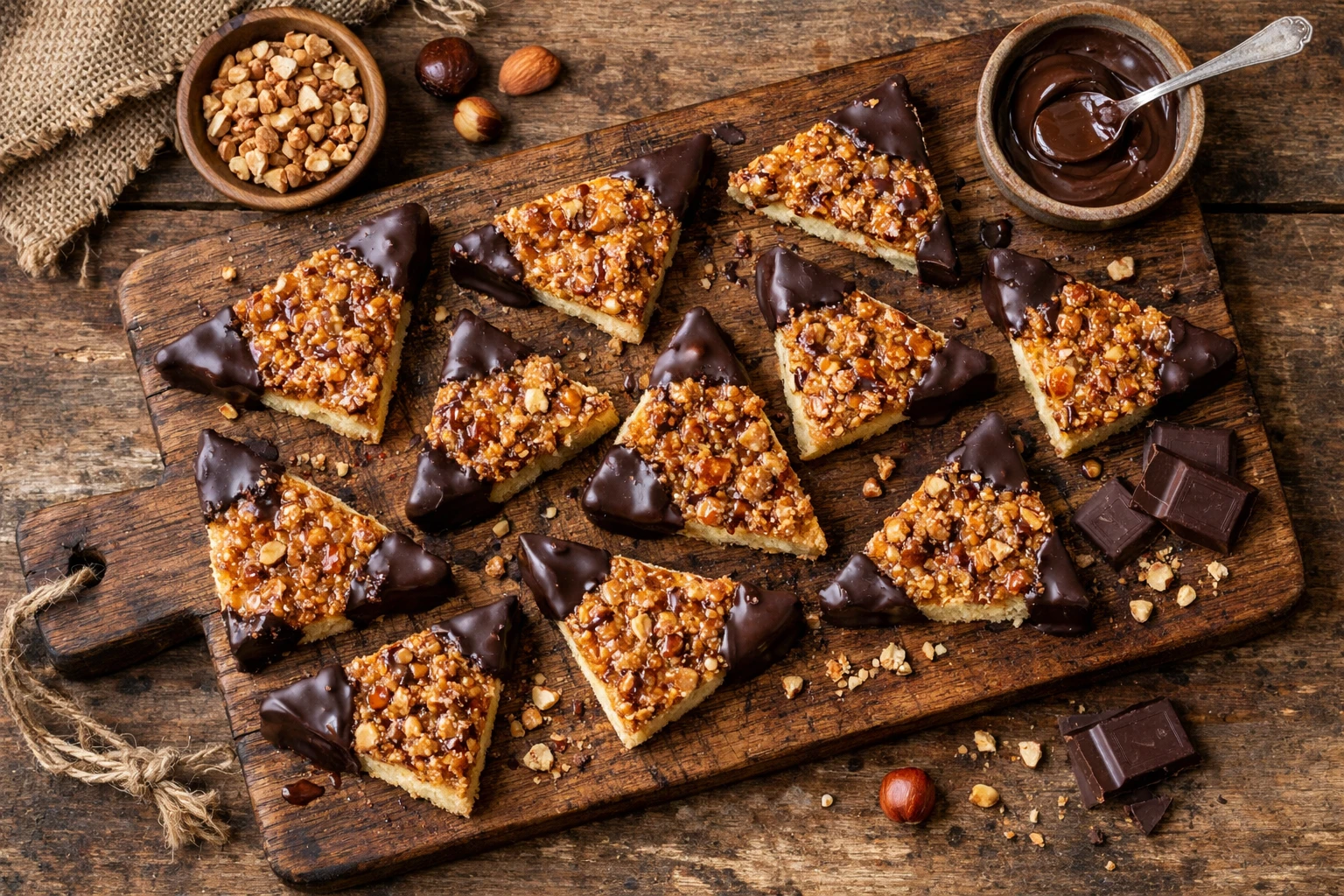
Classic German triangle cookies with buttery shortbread base, apricot jam, crunchy caramelized nuts, and dark chocolate coating.
Quick Nutrition Facts
Per 1 Nussecken (35g)
| Nutrient | Amount |
|---|---|
| Calories | 180 kcal |
| Protein | 3g |
| Carbohydrates | 15g |
| Fiber | 1.5g |
| Sugars | 9g |
| Fat | 12g |
| Saturated Fat | 3.5g |
| Vitamin E | 2.8mg |
| Magnesium | 28mg |
| Calcium | 25mg |
Macronutrient Breakdown
 ChatGPT
  Claude
  AI Mode
  Perplexity
NUTRITIONIST INSIGHT
Nussecken combine heart-healthy nuts (almonds and hazelnuts) with indulgent chocolate. The nuts provide vitamin E and antioxidants that support cardiovascular health, though the added sugar makes this a treat, not a daily staple.
Myth Busters
MYTH #1: Nussecken Are Too Unhealthy to Eat
TRUTH: While calorie-dense, Nussecken contain heart-healthy nuts rich in monounsaturated fats, vitamin E, and minerals. Studies show regular nut consumption reduces cardiovascular risk, even in desserts. Enjoy 1 piece 2-3 times weekly as part of a balanced diet.
MYTH #2: The Chocolate Coating Ruins All Health Benefits
TRUTH: Dark chocolate (70%+ cacao) used in quality Nussecken provides additional antioxidants and flavonoids. The combination of nuts and dark chocolate offers complementary cardiovascular benefits. The key is portion control, not elimination.
MYTH #3: Homemade Nussecken Are Always Healthier
TRUTH: Homemade versions allow ingredient control but often use similar amounts of sugar and butter. The nutritional difference is minimal unless you specifically reduce sugar or use alternative sweeteners. Both bakery and homemade versions should be enjoyed mindfully.
MYTH #4: You Should Never Eat Cookies While Dieting
TRUTH: Completely restricting favorite foods often leads to binge eating. Including 1 Nussecken (180 calories) within your daily calorie budget prevents feelings of deprivation and supports long-term weight management success.
MYTH #5: The Nuts Make Nussecken High in Calories
TRUTH: The nuts, butter, and sugar all contribute to calories. However, nuts provide satiety through healthy fats and protein, helping you feel satisfied with just one cookie. Pure butter cookies without nuts often lead to overeating due to lack of fiber and fat.
NutriScore by Health Goals
| Health Goal | NutriScore | Why This Score? |
|---|---|---|
| Weight Loss |  | 180 calories per piece requires portion control. Limit to 1 cookie 2-3x weekly as planned treat. |
| Muscle Gain |  | 3g protein, 12g fat provides some energy; nuts add healthy fats. Better options exist for muscle building. |
| Diabetes Management | | 15g carbs, 9g sugar require careful planning. Limit to 1 piece after balanced meal; monitor blood glucose. |
| PCOS Management | | High sugar and refined carbs can affect insulin sensitivity. Occasional treat only (1-2x monthly). |
| Pregnancy Nutrition | | Nuts provide vitamin E and healthy fats beneficial for pregnancy; limit to 1 piece weekly due to sugar content. |
| Viral/Flu Recovery | | Quick energy from carbs and fats; vitamin E supports immune function. Better recovery foods exist, but acceptable if appetite is low. |
PERSONALIZED NUTRITION
Track your meals with NutriScan for personalized NutriScores based on your specific health goals!
Blood Sugar Response to Nussecken
Understanding how Nussecken affects blood glucose helps you enjoy them strategically.
Typical Glucose Response Curve
This chart shows typical blood glucose response for healthy individuals. Individual responses may vary. Not medical advice.
How to Minimize the Spike
The fat and protein from nuts naturally slow glucose absorption. Further optimize by:
- ☕ Pair with black coffee or tea - No added calories; slows digestion
- 🥛 Enjoy with Greek yogurt - Adds protein to balance blood sugar
- 🍎 Eat after a meal - Not on empty stomach; reduces glycemic impact
- 🚶 Take a 10-minute walk - Post-dessert movement improves glucose clearance
Timing matters: Eat Nussecken mid-afternoon (2-4 PM) when insulin sensitivity is higher, not late evening.
Cultural Significance
Nussecken emerged in 19th-century Germany as a practical way to use apricot jam and seasonal nuts in traditional bakeries.
In Germany:
- Staple in German bakeries (Konditorei) alongside Bienenstich and Donauwelle
- Often served during Kaffeeklatsch (coffee and cake gatherings)
- Traditional shape cut into triangles from rectangular baking sheets
- Regional variations use different nut combinations (walnuts, pecans)
- Popular Christmas cookie variation with festive spices
Baking Tradition:
- Three-layer construction showcases German precision baking
- Shortbread base requires cold butter for proper texture
- Caramelized nut topping needs careful temperature control
- Chocolate dipping technique varies by region (half-dipped vs. drizzled)
Compare & Substitute
Nussecken vs Similar Cookies (Per Piece ~35g)
| Nutrient | 🥜 Nussecken | 🍪 Chocolate Chip Cookie | 🥐 Almond Biscotti | 🍫 Brownies |
|---|---|---|---|---|
| Calories | 180 kcal | 150 kcal | 110 kcal | 200 kcal |
| Carbs | 15g | 20g | 15g | 26g |
| Fiber | 1.5g | 0.8g | 1.8g | 1g |
| Protein | 3g | 2g | 3.5g | 2.5g |
| Fat | 12g | 7g | 5g | 9g |
| Sugar | 9g | 12g | 8g | 18g |
| Vitamin E | 2.8mg | 0.4mg | 3.2mg | 0.6mg |
| Texture | Crunchy + chewy layers | Soft, chewy | Very crunchy, hard | Fudgy, dense |
| Best For | Nut lovers, texture | Quick sweet fix | Coffee dipping | Chocolate indulgence |
Frequently Asked Questions
Are Nussecken good for weight loss?
Nussecken are calorie-dense treats (180 calories per piece) and should be enjoyed occasionally during weight loss. The nuts provide healthy fats and protein for satiety, preventing overconsumption of other sweets.
Best practices: Limit to 1 piece 2-3 times weekly; account for calories in daily budget; pair with tea or black coffee; avoid eating the whole tray by portioning beforehand; choose after lunch rather than evening to allow time for calorie burn.
Can diabetics eat Nussecken?
Diabetics can enjoy Nussecken in moderation with careful planning. One cookie contains 15g carbs (1 carb serving). The fat from nuts slows glucose absorption compared to pure sugar cookies.
Tips for diabetics: Eat 1 piece maximum; consume after a balanced meal with protein and vegetables; never on empty stomach; pair with unsweetened beverage; monitor blood sugar 2 hours after; best timing is mid-afternoon when insulin sensitivity peaks.
How much protein is in Nussecken?
One Nussecken (35g) contains 3g of protein from almonds and hazelnuts. While not a significant protein source, it's higher than most cookies due to the nut content. For comparison, a chocolate chip cookie has only 2g protein.
What makes Nussecken special?
Nussecken feature three distinct layers: buttery shortbread base, sweet apricot jam middle, and crunchy caramelized nut topping (almonds and hazelnuts), with one corner dipped in dark chocolate. This unique texture combination – crispy, chewy, crunchy, and smooth – makes them a beloved German bakery classic.
Are the nuts in Nussecken healthy?
Yes, almonds and hazelnuts provide heart-healthy monounsaturated fats, vitamin E (2.8mg per cookie), magnesium, and antioxidants. However, the added sugar (9g), butter, and chocolate make Nussecken a treat rather than a health food. Enjoy for pleasure in moderation, not as a daily protein or nutrient source.
How should I store Nussecken?
Store in an airtight container at room temperature for up to 1 week. The nut topping stays crunchy when properly sealed from humidity. Refrigerate for up to 2 weeks (bring to room temperature 30 minutes before serving). Freeze for 2-3 months in freezer-safe container with parchment between layers.
Pro tip: Don't stack without parchment paper or the chocolate will stick.
Can I make Nussecken at home?
Yes, homemade Nussecken require three steps: prepare shortbread base; spread jam and caramelize nut topping; bake, cool, cut into triangles, and dip in chocolate. The process takes 2-3 hours including cooling. German recipes typically use almonds and hazelnuts with apricot jam, though some use raspberry or strawberry.
What's the best time to eat Nussecken?
Depends on your goal:
- Weight Loss: Mid-afternoon (2-4 PM) as planned snack; avoid evening.
- Muscle Gain: Post-workout with protein shake; provides quick energy and healthy fats.
- Diabetes: After lunch (1-2 PM) when insulin sensitivity is higher; never on empty stomach.
- Energy Boost: Morning with coffee or afternoon tea; provides sustained energy from nuts.


Similar Nutritious Foods
4505 Chicharrones Classic Chili Salt
7 Eleven Japan Crispy Corn Cheese
Explore More Nutrition Tools & Resources
AI Calorie Counter App - Snap a Photo, Get Macros
AI Nutritionist App That Reads Your Logged Meals
Best Protein Supplements for Women
Bulking Meal Plan App That Sets Your Surplus
ChatGPT Calorie Counter Alternative That Keeps the Total
ChatGPT Diet Plan Alternative That Tracks What You Eat
ChatGPT Weight Loss Coach Alternative With a Food Log
Fast Food Calorie Counter App That Reads the Tray
Free Calorie Tracker App with AI Photo Scans | NutriScan
Indian Diet Plan App With Veg and Non Veg Meals
Indian Food Calorie Calculator - Get Instant Nutrition Facts for Desi Meals — 2026
Intermittent Fasting for Women, Timer and Meal Log App
Intermittent Fasting Tracker App - Free Fasting Timer
Macro Tracker App That Fills the Numbers From a Photo
Mediterranean Diet Meal Plan App That Counts the Oil
Micronutrient Tracker App for Vitamins and Minerals
MyFitnessPal Alternative That Stays Free | NutriScan
NutriScore App: A Free Grade on Every Meal | NutriScan
Nutrition Label Scanner App for the Amount You Ate
Second Trimester Protein Guide
Vegetarian Meal Plan App With a Protein Target
Voice Calorie Counter - Speak to Track Meals Hands-Free
Water and Calorie Tracker App - Free Water Log