Pide: Calories, Nutrition and Health Benefits
Turkey's beloved boat-shaped flatbread filled with savory toppings - a satisfying source of carbohydrates, protein, and traditional Mediterranean flavors.
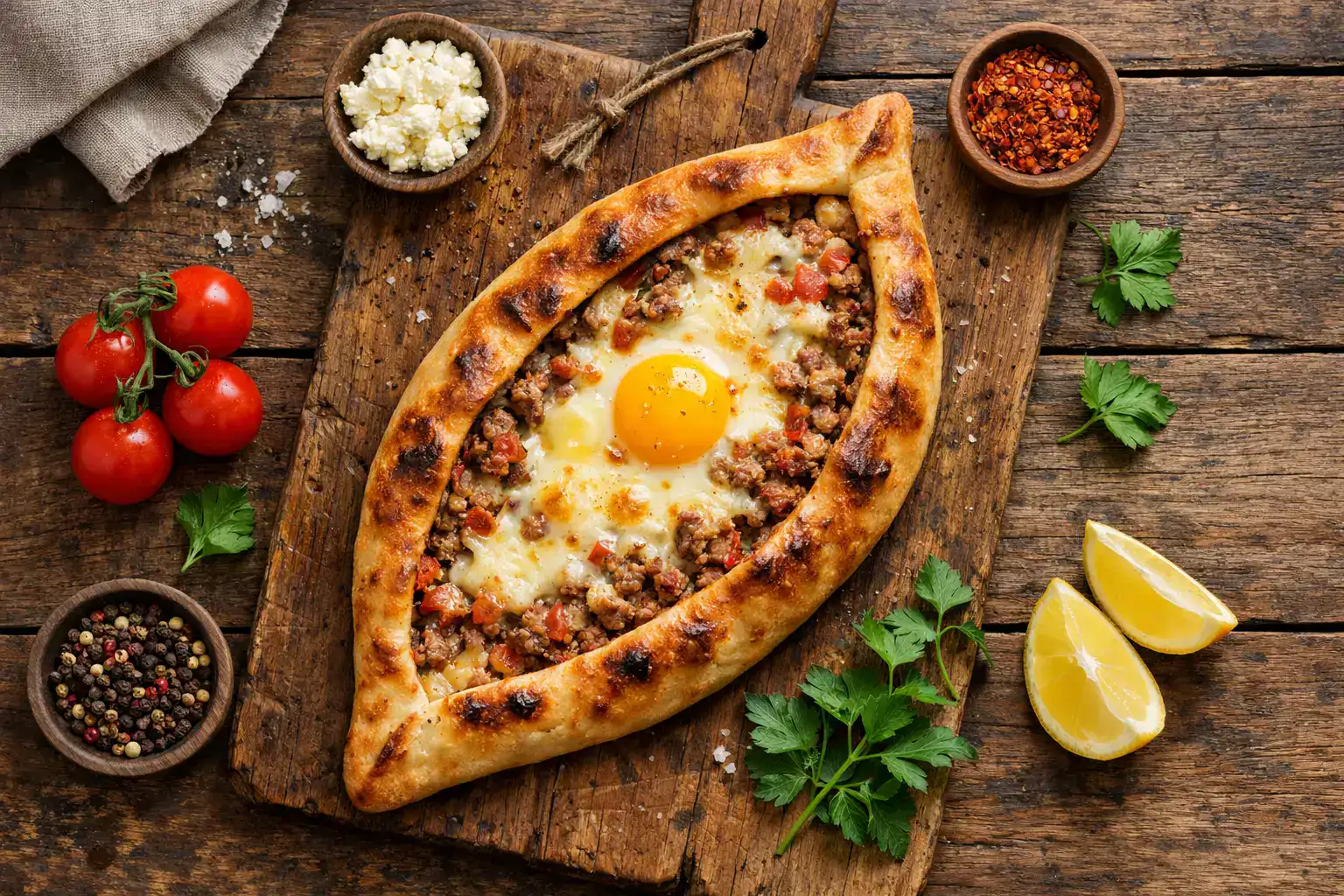
Quick Nutrition Facts
Per 100g Serving (Plain Pide Bread)
| Nutrient | Amount |
|---|---|
| Calories | 260 kcal |
| Protein | 9g |
| Carbohydrates | 48g |
| Fiber | 2.4g |
| Sugars | 2g |
| Fat | 3g |
| Saturated Fat | 1g |
| Sodium | 480mg |
| Iron | 2.8mg |
| Calcium | 45mg |
Macronutrient Breakdown
 ChatGPT
  Claude
  AI Mode
  Perplexity
NUTRITIONIST INSIGHT
Pide provides substantial energy from complex carbohydrates and 9g protein per 100g serving. The key to enjoying pide healthily is portion control and choosing lean toppings like vegetables or grilled meat over heavy cheese versions.
Myth Busters
MYTH #1: Pide Is Just Turkish Pizza
TRUTH: While often called "Turkish pizza," pide has a distinctly different dough - thicker, chewier, and traditionally made with butter. The boat shape with raised edges creates a unique texture and allows for different filling combinations than flat pizza.
MYTH #2: All Pide Has the Same Calories
TRUTH: Calorie content varies dramatically by topping. Plain bread pide has ~260 cal/100g, while cheese-topped versions can reach 320+ cal/100g. Meat pide with egg adds even more. Always consider your specific variety.
MYTH #3: Pide Is Too Heavy for Regular Eating
TRUTH: Traditional Turkish eating involves sharing pide among several people with salads and yogurt. A 100g portion (about 1/3 of a standard pide) is reasonable for a balanced meal when paired with fiber-rich vegetables.
MYTH #4: White Flour Pide Has No Nutritional Value
TRUTH: While not as nutritious as whole grain options, pide still provides 9g protein, 2.4g fiber, and iron (2.8mg per 100g). The enriched flour used in commercial pide often contains added B vitamins.
MYTH #5: Pide Should Be Avoided on a Diet
TRUTH: No single food causes weight gain - excess calories do. A moderate 100g portion of pide (260 cal) fits easily into most diet plans. The key is portion control, not complete elimination.
NutriScore by Health Goals
| Health Goal | NutriScore | Why This Score? |
|---|---|---|
| Weight Loss |  | 260 cal/100g is moderate. Limit to 80-100g portions, choose vegetable toppings, and share larger pides. |
| Muscle Gain |  | Good carb source (48g) for post-workout glycogen. Add meat or cheese toppings to boost protein beyond 9g base. |
| Diabetes Management |  | High glycemic index from refined flour causes rapid blood sugar spikes. Eat small portions with protein/fat to slow absorption. |
| PCOS Management | | Refined carbs affect insulin sensitivity. Limit portions and pair with high-fiber vegetables and lean protein. |
| Pregnancy Nutrition | | Provides iron (2.8mg) and energy. Choose meat-topped versions for added protein; avoid undercooked egg toppings. |
| Viral/Flu Recovery | | Easy to digest, provides quick energy. Plain versions are gentle on upset stomachs. Good comfort food during recovery. |
PERSONALIZED NUTRITION
Track your meals with NutriScan for personalized NutriScores based on your specific health goals!
Blood Sugar Response to Pide
Understanding how pide affects your blood glucose can help you make informed decisions about portion sizes and meal pairings.
Typical Glucose Response Curve
This chart shows typical blood glucose response for general healthy individuals. Individual responses may vary. Not medical advice.
How to Flatten the Spike
Adding fats and protein to carbohydrate-rich foods slows glucose absorption and reduces the peak blood sugar level:
- 🥗 Start with a salad - Fiber from vegetables slows carb absorption
- 🫒 Drizzle olive oil - Healthy fats reduce glycemic response
- 🍖 Choose protein toppings - Meat or cheese moderates blood sugar
- 🥒 Add cacik (yogurt-cucumber) - Traditional pairing provides protein and probiotics
This combination not only reduces the glucose spike but also extends satiety, keeping you fuller for longer.
Cultural Significance
Pide is one of Turkey's most beloved traditional foods, with roots dating back centuries in Anatolian cuisine.
In Turkey:
- Originated in the Black Sea region, particularly Samsun and Trabzon
- Each region has signature variations: Karadeniz pide (with butter), Bafra pidesi (closed edges)
- Traditionally baked in wood-fired stone ovens called "taş fırın"
- Ramadan specialty - pide bakeries work overtime during holy month
Regional Varieties:
- Lahmacun: Thinner, crispier cousin often confused with pide
- Kiymali pide: Ground meat filling
- Kasarli pide: Melted kashar cheese
- Yumurtali pide: Egg cracked on top before final baking
Global Spread:
- Popular in Germany, Netherlands, and UK due to Turkish diaspora
- Often found in Mediterranean restaurants worldwide
- Gaining recognition as a distinct cuisine separate from pizza
Compare & Substitute
Pide vs Similar Flatbreads (Per 100g)
| Nutrient | 🥖 Pide | 🍕 Pizza Dough | 🫓 Naan | 🥙 Lahmacun |
|---|---|---|---|---|
| Calories | 260 kcal | 266 kcal | 290 kcal | 270 kcal |
| Carbs | 48g | 50g | 45g | 42g |
| Fiber | 2.4g | 2.1g | 2g | 2.5g |
| Protein | 9g | 8g | 8g | 10g |
| Fat | 3g | 4g | 9g | 6g |
| Sodium | 480mg | 520mg | 540mg | 450mg |
| Sugar | 2g | 3g | 3g | 2g |
| Best For | Shared meals, protein boost | Quick individual servings | Rich curry accompaniment | Light meals, wraps |
Frequently Asked Questions
How many calories are in Turkish pide?
A 100g serving of plain Turkish pide bread contains approximately 260 calories. A full standard pide (about 300g) has around 780 calories for the bread alone - toppings add more.
Calorie variations by type:
- Plain bread pide: 260 cal/100g
- Cheese (kashar) pide: 310-320 cal/100g
- Meat (kiymali) pide: 290-300 cal/100g
- Mixed (karisik) pide: 320-340 cal/100g
Is pide healthy to eat?
Pide can be part of a healthy diet when consumed in moderation. It provides 9g protein and 2.4g fiber per 100g serving.
Healthier choices:
- Choose vegetable or lean meat toppings over extra cheese
- Share larger portions rather than eating alone
- Pair with salad and yogurt (cacik) as traditionally served
- Opt for whole wheat versions when available
Can diabetics eat Turkish pide?
Diabetics should eat pide cautiously due to its high carbohydrate content (48g per 100g) and refined flour base.
Tips for diabetics:
- Limit portions to 60-80g per serving
- Always pair with protein and vegetables
- Choose meat-topped versions over plain bread
- Monitor blood sugar 2 hours after eating
- Consider the meal's total carbohydrate content
Consult your healthcare provider for personalized advice.
What is the difference between pide and pizza?
While both are flatbreads with toppings, pide and pizza differ significantly:
Dough: Pide dough is thicker, chewier, and often contains butter. Pizza dough is thinner and crispier.
Shape: Pide is boat-shaped with raised edges. Pizza is round and flat.
Toppings: Pide traditionally uses ground meat, cheese, egg, and herbs - no tomato sauce. Pizza features tomato base with mozzarella.
Cooking: Pide is baked in extremely hot stone ovens. Pizza temperatures vary more.
Is pide good for muscle building?
Pide provides 9g protein per 100g from the dough alone, making it a moderate protein source.
For muscle gain:
- Choose meat-topped varieties (adds 8-12g protein)
- Eat post-workout for glycogen replenishment (48g carbs)
- Combine with additional protein sources
- Consider 150-200g portions for bulking phases
The high carbohydrate content supports workout energy and recovery.
How much pide should I eat per day?
Recommended portions depend on your health goals:
Weight maintenance: 100-150g per serving (260-390 calories) Weight loss: 80-100g maximum, shared from larger portions Athletes/bulking: 150-200g post-workout Diabetes/PCOS: 60-80g with protein accompaniments
Always balance pide with vegetables, lean protein, and consider your total daily calorie needs.


Similar Nutritious Foods
4505 Chicharrones Classic Chili Salt
7 Eleven Japan Crispy Corn Cheese
Explore More Nutrition Tools & Resources
AI Calorie Counter App - Snap a Photo, Get Macros
AI Nutritionist App That Reads Your Logged Meals
Best Protein Supplements for Women
Bulking Meal Plan App That Sets Your Surplus
ChatGPT Calorie Counter Alternative That Keeps the Total
ChatGPT Diet Plan Alternative That Tracks What You Eat
ChatGPT Weight Loss Coach Alternative With a Food Log
Fast Food Calorie Counter App That Reads the Tray
Free Calorie Tracker App with AI Photo Scans | NutriScan
Indian Diet Plan App With Veg and Non Veg Meals
Indian Food Calorie Calculator - Get Instant Nutrition Facts for Desi Meals — 2026
Intermittent Fasting for Women, Timer and Meal Log App
Intermittent Fasting Tracker App - Free Fasting Timer
Macro Tracker App That Fills the Numbers From a Photo
Mediterranean Diet Meal Plan App That Counts the Oil
Micronutrient Tracker App for Vitamins and Minerals
MyFitnessPal Alternative That Stays Free | NutriScan
NutriScore App: A Free Grade on Every Meal | NutriScan
Nutrition Label Scanner App for the Amount You Ate
Second Trimester Protein Guide
Vegetarian Meal Plan App With a Protein Target
Voice Calorie Counter - Speak to Track Meals Hands-Free
Water and Calorie Tracker App - Free Water Log