Satay Chicken Bowl: Calories, Nutrition and Health Benefits
A nutrient-dense meal combining lean protein, antioxidant-rich black rice, and fresh vegetables with a flavorful peanut satay dressing.
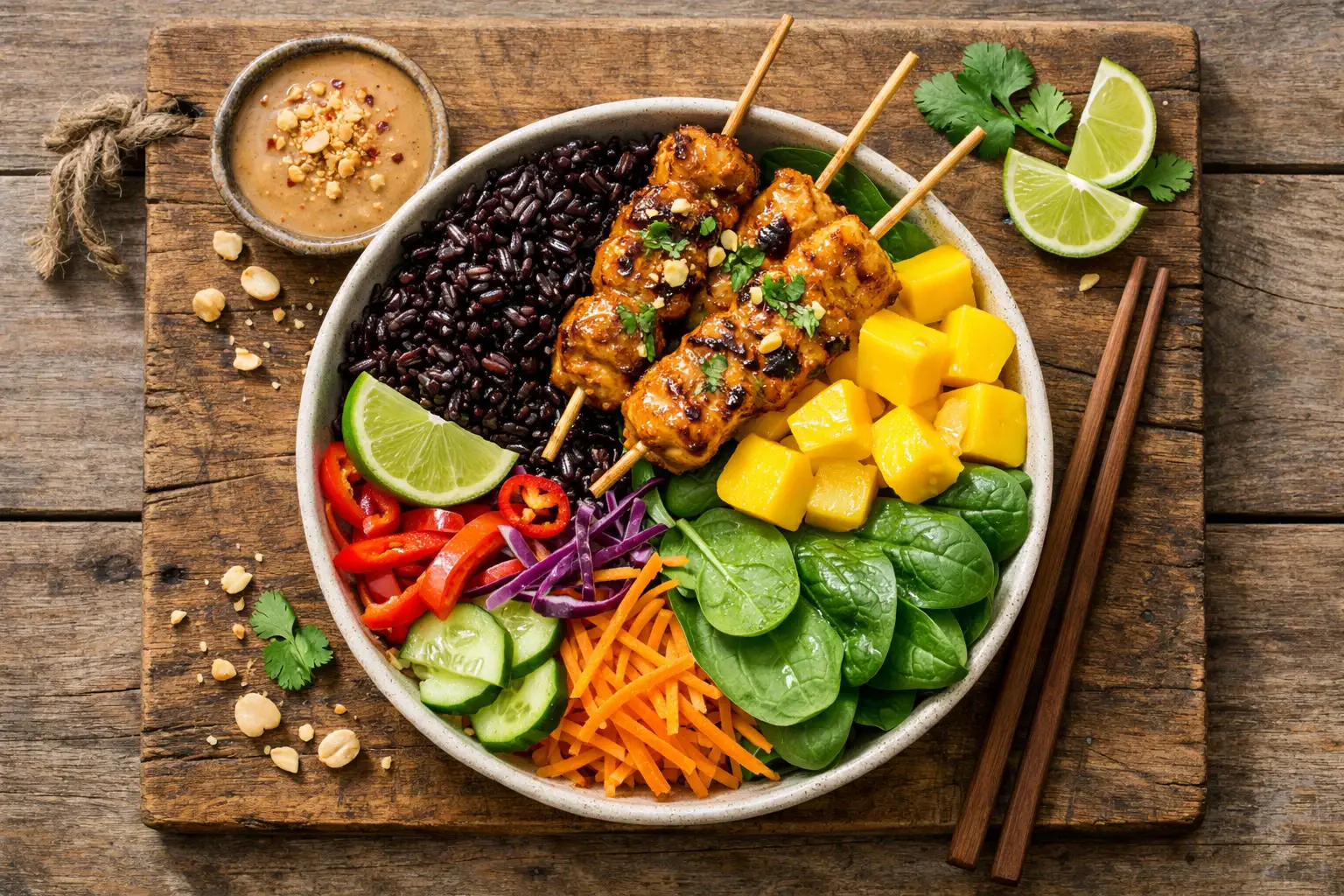
Quick Nutrition Facts
Per 1 Bowl (290g)
| Nutrient | Amount |
|---|---|
| Calories | 339 kcal |
| Protein | 22g |
| Carbohydrates | 34g |
| Fiber | 5.2g |
| Sugars | 11.3g |
| Fat | 11g |
| Saturated Fat | 2.3g |
| Iron | 2.1mg |
| Sodium | 1.6g |
| Vitamin C | 15mg |
Macronutrient Breakdown
 ChatGPT
  Claude
  AI Mode
  Perplexity
NUTRITIONIST INSIGHT
Satay chicken bowl delivers complete nutrition: lean chicken protein for muscle, black rice anthocyanins for cellular health, and peanut-based dressing for heart-healthy fats. The 5g fiber promotes satiety while the balanced macros provide sustained energy.
Myth Busters
MYTH #1: Satay Sauce Is Unhealthy Because It Contains Peanuts
TRUTH: Peanut-based satay sauce provides healthy monounsaturated fats, protein, and fiber. Research shows nut consumption supports cardiometabolic health without causing weight gain when eaten in moderation.
MYTH #2: Black Rice Is Just a Fancy Alternative with No Real Benefits
TRUTH: Black rice contains significantly more anthocyanins (antioxidants) than white rice, with anti-inflammatory and antiatherosclerotic properties. It also has more fiber, protein, and minerals than white rice.
MYTH #3: High-Protein Meals Like This Are Only for Bodybuilders
TRUTH: High protein intake increases satiety and thermogenesis, benefiting anyone seeking weight management, not just athletes. Protein also helps preserve lean muscle during calorie restriction.
MYTH #4: Prepared Meal Bowls Are Always Processed and Unhealthy
TRUTH: Quality meal bowls like satay chicken bowl use whole ingredients: real chicken breast, whole grain black rice, fresh vegetables, and natural seasonings. The key is checking ingredients and nutrition labels.
MYTH #5: The Carbs in This Bowl Will Cause Weight Gain
TRUTH: Black rice carbohydrates come with 5g fiber and are paired with protein and healthy fats, slowing digestion. Protein increases satiety more than carbs or fat alone, helping control overall calorie intake.
NutriScore by Health Goals
| Health Goal | NutriScore | Why This Score? |
|---|---|---|
| Weight Loss |  | 339 calories per bowl with 22g protein promotes fullness. High protein preserves lean mass during weight loss. Excellent meal replacement. |
| Muscle Gain | | 22g complete protein from chicken, 34g carbs for glycogen replenishment, balanced post-workout meal. |
| Diabetes Management |  | Black rice has lower glycemic index than white rice. Protein and fiber moderate blood sugar. Monitor portion size. |
| PCOS Management | | Balanced macros support insulin sensitivity. High protein, moderate carbs with fiber. Avoid sweetened versions. |
| Pregnancy Nutrition | | Iron from black rice supports blood volume increase. High-quality protein essential for fetal development. Check sodium if monitoring intake. |
| Viral/Flu Recovery | | Easy to digest, provides protein for immune function, vitamin C from vegetables, and complete nutrition for recovery. |
PERSONALIZED NUTRITION
Track your meals with NutriScan for personalized NutriScores based on your specific health goals!
Blood Sugar Response to Satay Chicken Bowl
Understanding how satay chicken bowl affects your blood glucose helps optimize meal timing and pairing strategies.
Typical Glucose Response Curve
This chart shows typical blood glucose response for general healthy individuals. Individual responses may vary. Not medical advice.
How to Flatten the Spike
The protein and fiber in satay chicken bowl already help moderate glucose response. To further optimize:
- Add extra vegetables - More fiber slows carb absorption
- Include avocado - Healthy fats extend digestion time
- Take a 10-minute walk after eating - Physical activity helps muscle uptake of glucose
- Avoid sugary drinks with the meal - Water or unsweetened tea is optimal
Pairing carbohydrates with protein and fiber significantly reduces post-meal glucose spikes.
Cultural Significance
Satay originated in Java, Indonesia, likely influenced by Indian kebab traditions brought by Muslim traders. The peanut sauce version became iconic in Southeast Asian cuisine.
Southeast Asian Heritage:
- Satay is a national dish in Indonesia, Malaysia, and Singapore
- Street food vendors grill satay over charcoal with distinctive aromatic smoke
- Each region has unique marinades and sauce variations
- The peanut sauce (bumbu kacang) balances sweet, salty, and spicy flavors
Modern Adaptation:
- Health-focused versions pair with nutrient-dense grains like black rice
- Buddha bowls and grain bowls popularized the satay chicken bowl format
- M&S and other retailers created convenient ready-to-eat versions
- The combination of protein, whole grains, and vegetables aligns with modern nutrition guidelines
Global Spread:
- Thai, Vietnamese, and Malaysian restaurants worldwide serve satay
- Peanut sauce has become a popular salad dressing and dip
- Bowl meals represent the fusion of Asian flavors with Western meal-prep culture
Compare & Substitute
Satay Chicken Bowl vs Similar Meals (Per 100g)
| Nutrient | Satay Chicken Bowl | Teriyaki Chicken Bowl | Grilled Chicken Salad | Chicken Fried Rice |
|---|---|---|---|---|
| Calories | 117 kcal | 145 kcal | 85 kcal | 168 kcal |
| Carbs | 12g | 18g | 5g | 22g |
| Fiber | 1.8g | 1.2g | 2.5g | 0.8g |
| Protein | 7.7g | 9g | 12g | 7g |
| Fat | 3.9g | 4.5g | 3g | 6g |
| Sugar | 3.9g | 8g | 3g | 2g |
| Best For | Balanced nutrition | Quick energy | Low-calorie option | Higher calorie needs |
Frequently Asked Questions
Is satay chicken bowl good for weight loss?
Yes, satay chicken bowl supports weight loss effectively. At 339 calories per bowl with 22g protein and 5.2g fiber, it provides excellent satiety while staying within calorie goals.
Best practices: Eat as a complete meal (no additions), choose versions without extra sweeteners, and pair with water or unsweetened tea.
Can diabetics eat satay chicken bowl?
Diabetics can enjoy satay chicken bowl in moderation. Black rice has a lower glycemic index than white rice, and the protein content helps moderate blood sugar response.
Tips for diabetics:
- Monitor portion size (consider half portion if needed)
- Check blood sugar 2 hours after eating
- Avoid versions with added sugars in the sauce
- Choose brands with lower sodium content
How much protein is in satay chicken bowl?
A standard satay chicken bowl (290g) contains approximately 22g of protein. This comes primarily from chicken breast, with additional protein from the peanut-based satay sauce and black rice.
For muscle gain or high-protein diets, this provides about 40% of daily protein needs in a single meal.
What are the main health benefits of satay chicken bowl?
Key Benefits:
- Muscle Maintenance: 22g complete protein from chicken
- Antioxidant Protection: Anthocyanins from black rice
- Digestive Health: 5.2g fiber from rice and vegetables
- Heart Health: Healthy fats from peanut sauce
- Sustained Energy: Balanced macronutrient ratio
- Iron Support: Black rice provides bioavailable iron
Is black rice healthier than white rice?
Yes, black rice offers significant nutritional advantages over white rice:
Black Rice Advantages:
- Higher fiber content (supports digestion and blood sugar control)
- More protein per serving
- Rich in anthocyanins (powerful antioxidants)
- Lower glycemic index
- Contains iron, zinc, and other minerals
When White Rice May Be Preferred:
- Easier digestion for some individuals
- Lower fiber (beneficial post-surgery or for certain GI conditions)
- More neutral flavor for some dishes
How many calories are in satay chicken bowl?
A standard satay chicken bowl (290g) contains approximately 339 calories. Per 100g, this equals 117 kcal.
Macro breakdown per bowl:
- Protein: 22g (26% of calories)
- Carbohydrates: 34g (40% of calories)
- Fat: 11g (29% of calories)
- Fiber: 5.2g
Track your meals with NutriScan app to see how satay chicken bowl fits your daily nutrition goals.
When is the best time to eat satay chicken bowl?
Depends on your goal:
- Weight Loss: Lunch or early dinner. The high protein promotes fullness throughout the day.
- Muscle Gain: Post-workout (within 2 hours). Provides protein for recovery and carbs for glycogen.
- Diabetes: Lunch is ideal. Avoid late evening to allow blood sugar normalization before sleep.
- Energy: Midday for sustained afternoon energy.


Similar Nutritious Foods
4505 Chicharrones Classic Chili Salt
7 Eleven Japan Crispy Corn Cheese
Explore More Nutrition Tools & Resources
AI Calorie Counter App - Snap a Photo, Get Macros
AI Nutritionist App That Reads Your Logged Meals
Best Protein Supplements for Women
Bulking Meal Plan App That Sets Your Surplus
ChatGPT Calorie Counter Alternative That Keeps the Total
ChatGPT Diet Plan Alternative That Tracks What You Eat
ChatGPT Weight Loss Coach Alternative With a Food Log
Fast Food Calorie Counter App That Reads the Tray
Free Calorie Tracker App with AI Photo Scans | NutriScan
Indian Diet Plan App With Veg and Non Veg Meals
Indian Food Calorie Calculator - Get Instant Nutrition Facts for Desi Meals — 2026
Intermittent Fasting for Women, Timer and Meal Log App
Intermittent Fasting Tracker App - Free Fasting Timer
Macro Tracker App That Fills the Numbers From a Photo
Mediterranean Diet Meal Plan App That Counts the Oil
Micronutrient Tracker App for Vitamins and Minerals
MyFitnessPal Alternative That Stays Free | NutriScan
NutriScore App: A Free Grade on Every Meal | NutriScan
Nutrition Label Scanner App for the Amount You Ate
Second Trimester Protein Guide
Vegetarian Meal Plan App With a Protein Target
Voice Calorie Counter - Speak to Track Meals Hands-Free
Water and Calorie Tracker App - Free Water Log