Shchi: Calories, Nutrition and Health Benefits
Russia's beloved sour cabbage soup delivering protein, fiber, and immune-boosting vitamins in every warming bowl.
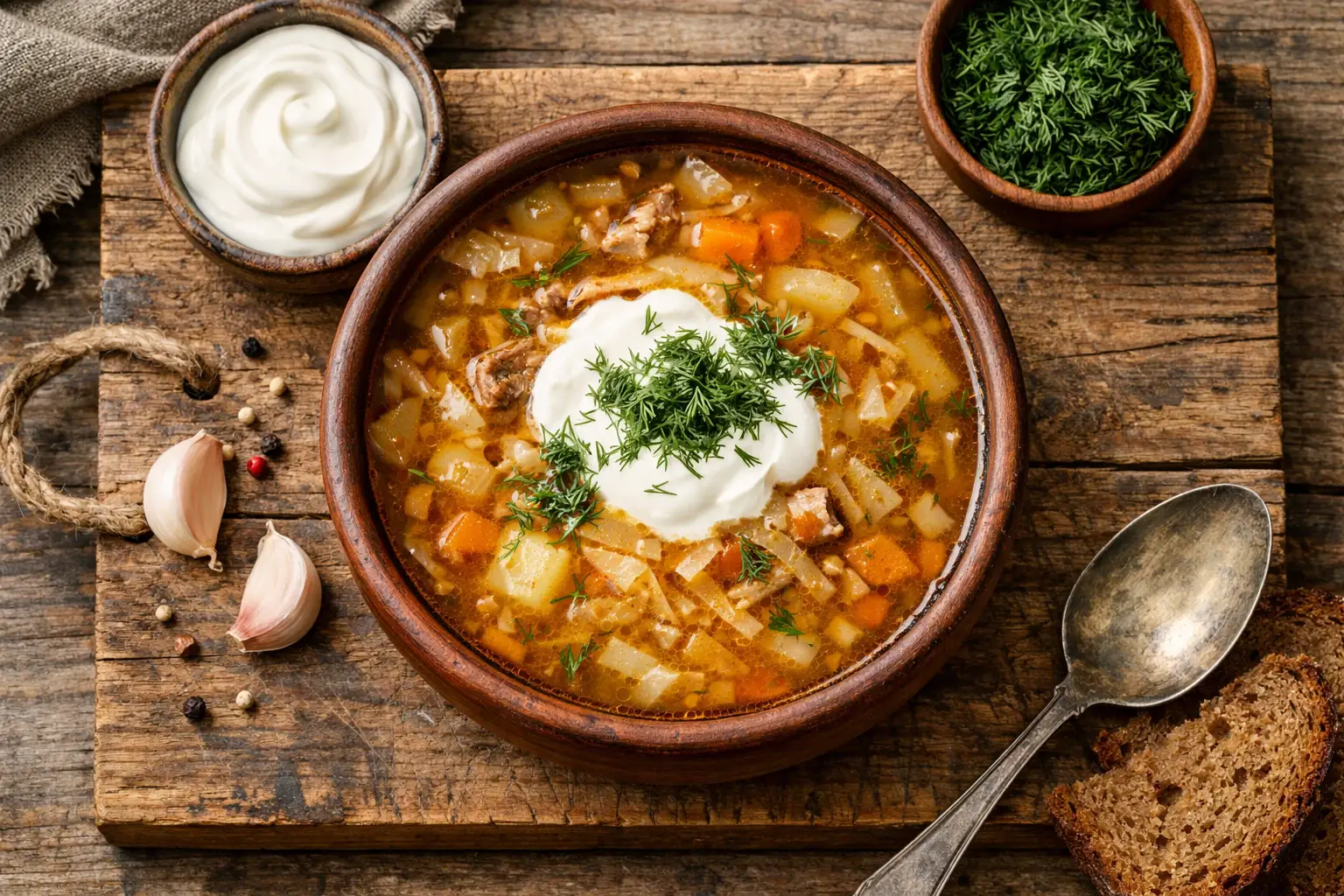
Quick Nutrition Facts
Per 1 Bowl (250g) with Meat
| Nutrient | Amount |
|---|---|
| Calories | 150 kcal |
| Protein | 10g |
| Carbohydrates | 12g |
| Fiber | 3g |
| Sugars | 4g |
| Fat | 6g |
| Vitamin C | 25mg |
| Vitamin K | 45mcg |
| Potassium | 280mg |
| Sodium | 650mg |
Macronutrient Breakdown
 ChatGPT
  Claude
  AI Mode
  Perplexity
NUTRITIONIST INSIGHT
Shchi delivers 17% of your daily vitamin C from cabbage alone. The traditional sauerkraut version provides probiotics that support gut health and immune function.
Myth Busters
MYTH #1: Cabbage Soup Diets Are Healthy Long-Term
TRUTH: While shchi is nutritious, extreme "cabbage soup diets" lack essential nutrients. Shchi works best as part of a balanced diet, providing fiber and vitamins without extreme restriction.
MYTH #2: Shchi Has Too Much Sodium
TRUTH: Traditional recipes average 650mg sodium per bowl (28% DV). You can reduce sodium by using low-sodium broth and less salt. The potassium from vegetables helps balance sodium effects.
MYTH #3: Cooked Cabbage Loses All Nutrients
TRUTH: While some vitamin C is lost during cooking, cabbage retains significant fiber, vitamin K, and glucosinolates. Slow cooking actually makes some nutrients more bioavailable.
MYTH #4: Shchi Is Only for Cold Weather
TRUTH: Shchi provides hydration, electrolytes, and nutrients year-round. Summer versions exist with fresh herbs. The soup's low calorie density makes it ideal for weight management in any season.
MYTH #5: Vegetarian Shchi Lacks Protein
TRUTH: Vegetarian shchi with beans or mushrooms provides 4-6g protein per serving. Adding sour cream (+2g) or serving with bread increases protein content sufficiently for a light meal.
NutriScore by Health Goals
| Health Goal | NutriScore | Why This Score? |
|---|---|---|
| Weight Loss |  | Only 150 calories per bowl with 10g protein and 3g fiber. High volume, low calorie density promotes fullness. |
| Muscle Gain |  | 10g protein per bowl supports muscle recovery. Add extra meat or serve with bread for more calories and carbs. |
| Diabetes Management | | Low glycemic index due to fiber-rich cabbage. Cruciferous vegetables may improve glycemic control. |
| PCOS Management | | Anti-inflammatory properties from cabbage. Low carbs and high fiber support insulin sensitivity. |
| Pregnancy Nutrition | | Good source of folate and vitamin C. Cabbage is safe during pregnancy. Watch sodium intake; choose low-salt versions. |
| Viral/Flu Recovery | | Warm broth aids hydration, vitamin C supports immunity, easy to digest when appetite is low. |
PERSONALIZED NUTRITION
Track your meals with NutriScan for personalized NutriScores based on your specific health goals!
Blood Sugar Response to Shchi
Understanding how shchi affects your blood glucose helps optimize meal timing and combinations.
Typical Glucose Response Curve
This chart shows typical blood glucose response for general healthy individuals. Individual responses may vary. Not medical advice.
How to Maintain Stable Blood Sugar
Pairing shchi with protein and fiber ensures minimal glucose fluctuation:
- Add lean meat - Beef or chicken increases protein content
- Skip the potatoes - Or use minimal amounts for diabetes management
- Include sauerkraut - Fermented cabbage has lower glycemic impact
- Serve with rye bread - Lower GI than white bread
This combination keeps energy stable for hours while supporting gut health.
Cultural Significance
Shchi has been the cornerstone of Russian cuisine for over 1,000 years, predating many modern European soup traditions.
In Russia:
- National dish mentioned in literature from Pushkin to Tolstoy
- Proverb: "Shchi da kasha - pishcha nasha" (Shchi and porridge are our food)
- Traditionally cooked in clay pots in Russian stoves overnight
- Sour shchi made with sauerkraut; fresh shchi uses young cabbage
Regional Variations:
- Lazy shchi: Quick version with fresh cabbage
- Green shchi: Made with sorrel or spinach in spring
- Rich shchi: With multiple meats and mushrooms
- Lenten shchi: Vegetarian version for Orthodox fasting
Global Influence:
- Inspired similar soups across Eastern Europe
- Adaptable to local ingredients and dietary preferences
- Growing popularity in health-conscious Western diets
Compare & Substitute
Shchi vs Similar Soups (Per 250g serving)
| Nutrient | Shchi | Borscht | Minestrone | Chicken Soup |
|---|---|---|---|---|
| Calories | 150 kcal | 180 kcal | 120 kcal | 160 kcal |
| Carbs | 12g | 18g | 15g | 8g |
| Fiber | 3g | 3g | 4g | 1g |
| Protein | 10g | 8g | 5g | 12g |
| Fat | 6g | 7g | 4g | 6g |
| Vitamin C | 25mg | 15mg | 12mg | 2mg |
| Sodium | 650mg | 700mg | 550mg | 800mg |
| Best For | Weight loss, immunity | Iron, antioxidants | Fiber, variety | Protein, cold recovery |
Frequently Asked Questions
Is shchi good for weight loss?
Yes, shchi is excellent for weight loss. A bowl has only 150 calories but provides 10g protein and 3g fiber that promotes fullness. Studies show soup consumption is associated with reduced risk of overweight.
Best practices: Use lean meat, limit sour cream to 1 tablespoon, skip potatoes, and have shchi as a main course rather than appetizer.
Can diabetics eat shchi?
Shchi is diabetes-friendly due to its low glycemic index from fiber-rich cabbage. The protein and fat slow carbohydrate absorption.
Tips for diabetics:
- Skip or minimize potatoes
- Choose sauerkraut version for lower GI
- Monitor portion of sour cream (1 tbsp max)
- Pair with protein-rich sides
Cabbage contains compounds that may support blood sugar regulation. Always monitor individual response.
How much protein is in shchi?
A bowl of shchi (250g) with meat contains approximately 10g of protein. This comes primarily from beef or pork.
Protein variations:
- With beef: 10-12g protein
- With chicken: 12-14g protein
- Vegetarian with beans: 4-6g protein
- With added sour cream: +2g protein
For muscle gain, add extra meat or serve with bread and protein-rich sides.
What are the main health benefits of shchi?
Key Benefits:
- Immune Support: 25mg vitamin C (28% DV) from cabbage
- Digestive Health: 3g fiber plus probiotics from sauerkraut
- Cancer Prevention: Glucosinolates from cruciferous vegetables
- Weight Management: High volume, low calorie density
- Bone Health: Vitamin K from cabbage supports bone metabolism
- Hydration: Broth-based soup aids fluid intake
How long does shchi last in the fridge?
Properly stored shchi lasts 3-4 days refrigerated and up to 3 months frozen.
Storage tips:
- Cool completely before refrigerating
- Store in airtight containers
- Reheat to 165°F (74°C) before serving
- Add fresh sour cream after reheating, not before storage
Traditional Russian households often made large batches, as shchi reportedly improves in flavor after a day.
What makes shchi sour?
The sourness comes from sauerkraut (fermented cabbage) or fresh cabbage combined with sour ingredients like tomatoes or kvass (fermented bread drink).
Sourness options:
- Sauerkraut: Traditional, provides probiotics
- Fresh cabbage + tomatoes: Lighter, fresher taste
- Sorrel: For green shchi, very tangy
- Kvass: Traditional method, adds depth
Adjust sourness to taste by varying sauerkraut amount or adding a splash of vinegar.
Can I freeze shchi?
Yes, shchi freezes excellently for up to 3 months.
Freezing tips:
- Freeze without sour cream
- Leave headspace in containers for expansion
- Portion into meal-sized containers
- Label with date and contents
Thaw overnight in refrigerator and reheat gently. Add fresh sour cream and herbs when serving.


Similar Nutritious Foods
4505 Chicharrones Classic Chili Salt
7 Eleven Japan Crispy Corn Cheese
Explore More Nutrition Tools & Resources
AI Calorie Counter App - Snap a Photo, Get Macros
AI Nutritionist App That Reads Your Logged Meals
Best Protein Supplements for Women
Bulking Meal Plan App That Sets Your Surplus
ChatGPT Calorie Counter Alternative That Keeps the Total
ChatGPT Diet Plan Alternative That Tracks What You Eat
ChatGPT Weight Loss Coach Alternative With a Food Log
Fast Food Calorie Counter App That Reads the Tray
Free Calorie Tracker App with AI Photo Scans | NutriScan
Indian Diet Plan App With Veg and Non Veg Meals
Indian Food Calorie Calculator - Get Instant Nutrition Facts for Desi Meals — 2026
Intermittent Fasting for Women, Timer and Meal Log App
Intermittent Fasting Tracker App - Free Fasting Timer
Macro Tracker App That Fills the Numbers From a Photo
Mediterranean Diet Meal Plan App That Counts the Oil
Micronutrient Tracker App for Vitamins and Minerals
MyFitnessPal Alternative That Stays Free | NutriScan
NutriScore App: A Free Grade on Every Meal | NutriScan
Nutrition Label Scanner App for the Amount You Ate
Second Trimester Protein Guide
Vegetarian Meal Plan App With a Protein Target
Voice Calorie Counter - Speak to Track Meals Hands-Free
Water and Calorie Tracker App - Free Water Log