Soy Milk: Calories, Nutrition and Health Benefits
 ChatGPT
  Claude
  AI Mode
  Perplexity
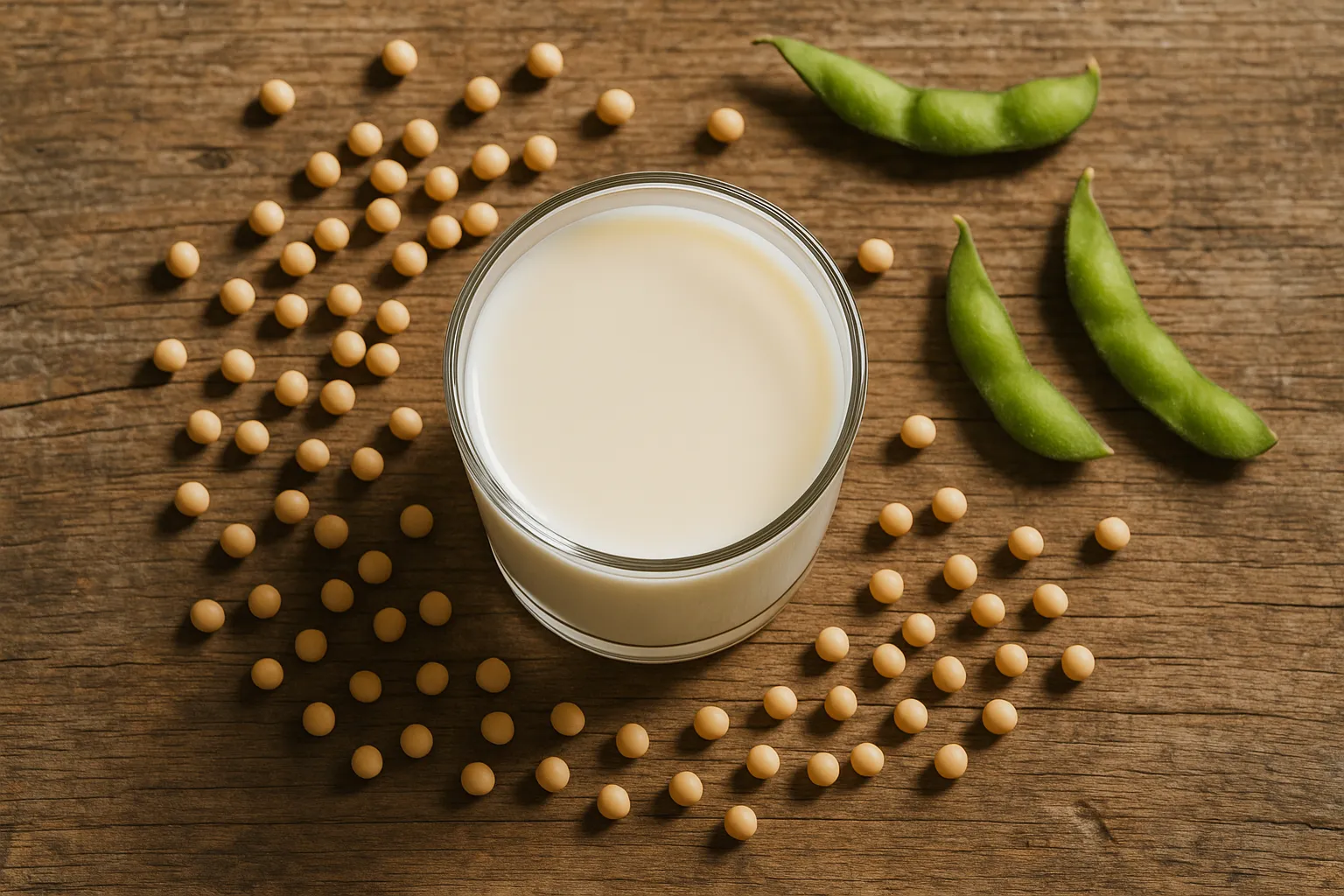
 The only FDA-approved plant milk equivalent to dairy, packed with complete protein and heart-healthy isoflavones.
Quick Nutrition Facts
Per 1 Cup (240ml) - Unsweetened
| Nutrient | Amount |
|---|---|
| Calories | 80 kcal |
| Protein | 7g |
| Carbohydrates | 4g |
| Fiber | 1g |
| Sugars | 1g |
| Fat | 4g |
| Calcium | 300mg |
| Vitamin D | 2.5mcg |
| Vitamin B12 | 1.2mcg |
| Isoflavones | 25mg |
Macronutrient Breakdown

NUTRITIONIST INSIGHT
Soy milk is the only plant-based milk recognized by the FDA as nutritionally equivalent to dairy when fortified. Its 7g complete protein per cup matches dairy milk's amino acid profile.
Myth Busters
MYTH #1: Soy Milk Causes Man Boobs and Feminization
TRUTH: This is completely false. Extensive research shows soy consumption does not affect testosterone or cause feminization in men. Isoflavones are 1000x weaker than human estrogen and don't cause breast growth, fertility issues, or hormonal changes. Men can safely consume 1-3 cups daily.
MYTH #2: Soy Is Bad for Thyroid Function
TRUTH: Soy doesn't harm thyroid function in people with adequate iodine intake. Only individuals with iodine deficiency or pre-existing thyroid conditions need to be cautious. For most people, moderate soy consumption (1-3 servings daily) is completely safe for thyroid health.
MYTH #3: Soy Milk Isn't as Good as Dairy for Protein
TRUTH: Soy milk provides 7g of complete protein per cup, equal to dairy milk. It contains all 9 essential amino acids. Studies show soy protein builds muscle as effectively as whey protein when consumed in adequate amounts.
MYTH #4: Soy Increases Breast Cancer Risk
TRUTH: The opposite is true. Research shows soy consumption reduces breast cancer risk by 20-30% and improves survival rates in breast cancer patients. The isoflavones in soy are protective, not harmful.
MYTH #5: All Soy Milk Is Highly Processed and Unhealthy
TRUTH: While some commercial brands add sugar and oils, many organic brands contain only soybeans and water. Choose "unsweetened" and "organic" versions to avoid GMOs, added sugars, and unnecessary additives. Minimally processed soy milk is a whole food.
MYTH #6: Soy Milk Causes Digestive Issues
TRUTH: Most people tolerate soy milk well. Digestive issues typically come from added thickeners (carrageenan) or FODMAPs in soybeans. Choose brands without carrageenan if sensitive. Soy is actually easier to digest than dairy for lactose-intolerant individuals.
NutriScore by Health Goals
| Health Goal | NutriScore | Why This Score? |
|---|---|---|
| Weight Loss |  | Only 80 calories per cup with 7g protein for satiety. Low carbs (4g) and sugar (1g). Best plant milk for weight loss. |
| Muscle Gain | | 7g complete protein per cup matches dairy. Studies show soy protein builds muscle as effectively as whey. |
| Diabetes Management | | Only 4g carbs vs dairy's 12g. Low glycemic index. Soy protein may improve insulin sensitivity and reduce complications. |
| PCOS Management | | Isoflavones may improve hormone balance and insulin sensitivity. Low carbs don't spike insulin. Better than dairy for PCOS. |
| Pregnancy Nutrition |  | Provides complete protein and calcium when fortified. Safe in moderation (1-2 cups daily). Choose organic to avoid GMOs. |
| Menopause Support | | Isoflavones reduce hot flashes 20-50% and improve bone density. Consuming 2 cups daily provides 50mg isoflavones for relief. |
PERSONALIZED NUTRITION
Track your meals with NutriScan for personalized NutriScores based on your specific health goals!
Blood Sugar Response to Soy Milk
Soy milk has minimal blood sugar impact due to its low carb content and protein-rich profile.
Typical Glucose Response Curve
This chart shows typical blood glucose response for healthy individuals. Individual responses vary. Not medical advice.
Why Soy Milk Is Diabetes-Friendly
With only 4g carbs per cup versus dairy's 12g, soy milk causes minimal blood sugar elevation:
- Low glycemic index - Protein and fat slow glucose absorption
- Complete protein - 7g protein stabilizes blood sugar
- Isoflavones - May improve insulin sensitivity over time
- Low sugar - Only 1g natural sugar per cup (no added sugar in unsweetened)
Research shows soy protein may reduce diabetes complications including kidney disease and cardiovascular issues.
Cultural Significance
Soy milk has over 2,000 years of history as a staple beverage in Asian cultures.
Historical Background:
- Originated in China during Han Dynasty (202 BC - 220 AD)
- Created as Buddhist monks' dairy alternative during fasting
- Traditional preparation involves soaking, grinding, boiling soybeans
- Spread to Japan, Korea, Southeast Asia by 1000 AD
In Asia:
- Daily breakfast beverage consumed hot or cold
- Traditional street vendors sell fresh soy milk with youtiao (fried dough)
- Japanese "tonyu" integral to tofu and yuba production
- Used in desserts, smoothies, and savory dishes
Global Adoption:
- Introduced to Western markets in 1970s-1980s
- First plant milk to gain mainstream acceptance
- FDA recognition in 2018 as dairy nutritional equivalent
- Most consumed plant milk globally (40% market share)
Compare & Substitute
Soy Milk vs Plant-Based Alternatives (Per 100ml)
| Nutrient | 🥛 Soy Milk | 🥛 Oat Milk | 🥛 Almond Milk | 🥛 Dairy Milk (2%) |
|---|---|---|---|---|
| Calories | 33 kcal | 47 kcal | 13 kcal | 50 kcal |
| Carbs | 1.7g | 6.7g | 0.6g | 5g |
| Fiber | 0.4g | 0.8g | 0.4g | 0g |
| Protein | 2.9g | 1.3g | 0.4g | 3.4g |
| Fat | 1.7g | 2g | 1.1g | 2g |
| Calcium | 125mg (fortified) | 146mg (fortified) | 146mg (fortified) | 125mg |
| Sugar | 0.4g (unsweetened) | 3g (varies) | 0g (unsweetened) | 5g (natural lactose) |
| Best For | Protein, muscle, FDA-approved | Coffee, cholesterol, eco | Weight loss, low-carb | Complete nutrition, muscle |
Frequently Asked Questions
Is soy milk good for muscle gain?
Yes, soy milk is excellent for muscle building. It contains 7g of complete protein per cup, matching dairy milk's amino acid profile with all 9 essential amino acids.
Muscle-building benefits: Studies show soy protein is equally effective as whey for muscle growth; provides leucine (key amino acid for muscle protein synthesis); post-workout recovery comparable to dairy; vegan-friendly complete protein source.
Consume 2-3 cups daily or use in protein shakes for optimal muscle gain results.
Does soy milk affect hormones in men?
No, moderate soy consumption does not affect male hormones. This is one of the most extensively researched nutrition myths.
Scientific facts: Isoflavones are 1000x weaker than human estrogen; no testosterone reduction in men consuming 1-3 cups daily; no feminization, breast growth, or fertility issues; over 40 clinical trials confirm hormonal safety.
Men can safely consume soy milk without any hormonal concerns. The "man boobs" myth is completely debunked by science.
How much protein is in soy milk?
Soy milk contains 7g of complete protein per cup, equal to dairy milk. It's the only plant milk recognized by the FDA as nutritionally equivalent to dairy.
Protein quality: Contains all 9 essential amino acids; PDCAAS score of 1.0 (highest quality); builds muscle as effectively as whey protein; provides leucine for muscle protein synthesis.
For high-protein needs, soy milk is the best plant-based choice, significantly better than oat (3g), almond (1g), or coconut (0g) milk.
Is soy milk safe during pregnancy?
Yes, soy milk is safe during pregnancy in moderate amounts (1-2 cups daily). It provides complete protein, calcium, and vitamin D essential for fetal development.
Pregnancy considerations: Choose organic to avoid GMOs; ensure fortification with calcium (300mg) and vitamin D (2.5mcg); limit to 1-2 servings daily; provides folate and iron when fortified; some studies suggest isoflavones may benefit fetal brain development.
Always consult your healthcare provider about dietary changes during pregnancy.
Does soy milk help with menopause symptoms?
Yes, soy milk can significantly reduce menopause symptoms. The isoflavones in soy milk act as weak plant estrogens that help balance hormones.
Menopause benefits: Reduces hot flashes by 20-50%; improves bone density and reduces osteoporosis risk; may reduce night sweats and mood swings; 2 cups daily provides 50mg isoflavones (effective dose).
Research shows consistent soy consumption over 3-6 months provides the best symptom relief. Choose unsweetened for maximum benefits.
Can diabetics drink soy milk?
Yes, soy milk is one of the best milk options for diabetics. With only 4g carbs per cup versus dairy's 12g, it has minimal blood sugar impact.
Diabetes benefits: Low glycemic index causes minimal glucose spike; 7g protein stabilizes blood sugar; may improve insulin sensitivity over time; reduces diabetes complications (kidney, cardiovascular).
Best practices: Choose unsweetened varieties; consume with meals; monitor blood sugar initially; use as dairy replacement in all recipes.
Is soy genetically modified (GMO)?
Most conventional soy is GMO (90%+ in US), but organic soy milk is always non-GMO by regulation.
GMO concerns: Conventional soy grown with glyphosate (herbicide); genetic modification for pesticide resistance; potential allergen and environmental concerns.
How to avoid GMOs: Choose organic certified soy milk; look for "Non-GMO Project Verified" label; organic brands like Silk Organic, Westsoy, Eden; slightly higher price (20-30% more) but GMO-free guarantee.
If GMO concerns matter to you, always choose organic soy milk.
Does soy milk cause digestive issues?
Most people tolerate soy milk well, but some experience digestive discomfort from specific ingredients or sensitivities.
Common culprits: Carrageenan (thickener) causes bloating in sensitive individuals; FODMAPs in soybeans affect IBS sufferers; rapid consumption of cold liquid; soy allergy (rare, affects 0.4% of population).
Solutions: Choose brands without carrageenan; consume at room temperature; start with 1/2 cup portions; try low-FODMAP alternatives if IBS-sensitive. Soy milk is still far easier to digest than dairy for lactose-intolerant individuals (65% of adults).




Similar Nutritious Foods
4505 Chicharrones Classic Chili Salt
7 Eleven Japan Crispy Corn Cheese
Explore More Nutrition Tools & Resources
AI Calorie Counter App - Snap a Photo, Get Macros
AI Nutritionist App That Reads Your Logged Meals
Best Protein Supplements for Women
Bulking Meal Plan App That Sets Your Surplus
ChatGPT Calorie Counter Alternative That Keeps the Total
ChatGPT Diet Plan Alternative That Tracks What You Eat
ChatGPT Weight Loss Coach Alternative With a Food Log
Fast Food Calorie Counter App That Reads the Tray
Free Calorie Tracker App with AI Photo Scans | NutriScan
Indian Diet Plan App With Veg and Non Veg Meals
Indian Food Calorie Calculator - Get Instant Nutrition Facts for Desi Meals — 2026
Intermittent Fasting for Women, Timer and Meal Log App
Intermittent Fasting Tracker App - Free Fasting Timer
Macro Tracker App That Fills the Numbers From a Photo
Mediterranean Diet Meal Plan App That Counts the Oil
Micronutrient Tracker App for Vitamins and Minerals
MyFitnessPal Alternative That Stays Free | NutriScan
NutriScore App: A Free Grade on Every Meal | NutriScan
Nutrition Label Scanner App for the Amount You Ate
Second Trimester Protein Guide
Vegetarian Meal Plan App With a Protein Target
Voice Calorie Counter - Speak to Track Meals Hands-Free
Water and Calorie Tracker App - Free Water Log