Sunflower Seeds: Calories, Nutrition and Health Benefits
Vitamin E powerhouse and PCOS seed cycling staple packed with heart-healthy fats, antioxidants, and inflammation-fighting nutrients.
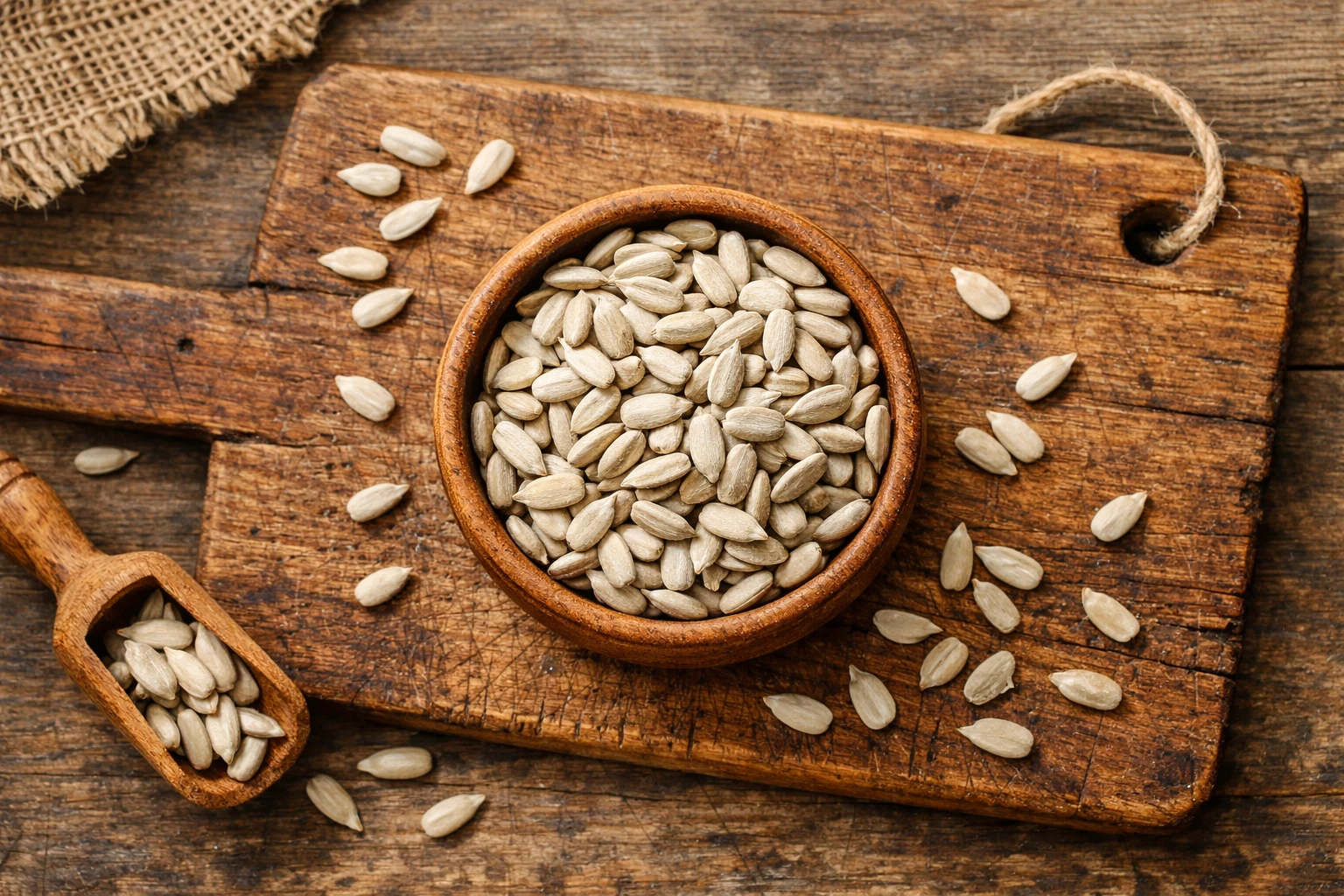
Quick Nutrition Facts
Per 1 oz (28g, dry roasted)
| Nutrient | Amount |
|---|---|
| Calories | 165 kcal |
| Protein | 5.5g |
| Fat | 14.1g |
| Carbohydrates | 6.8g |
| Fiber | 3.2g |
| Vitamin E | 7.4mg |
| Selenium | 22.5mcg |
| Copper | 0.5mg |
| Manganese | 0.6mg |
| Magnesium | 37mg |
Macronutrient Breakdown
 ChatGPT
  Claude
  AI Mode
  Perplexity
NUTRITIONIST INSIGHT
Sunflower seeds deliver 49% of your daily vitamin E in just one ounce—one of nature's richest sources. For PCOS, pair with sesame seeds during luteal phase (days 15-28) to support progesterone and hormone balance.
Myth Busters
MYTH #1: Sunflower Seeds Are Too High in Calories for Weight Loss
TRUTH: One ounce (28g) has 165 calories with 3.2g fiber and 5.5g protein that promote fullness. Eating seeds 5+ times weekly was linked to 32% lower inflammation markers, which aids weight management. Portion control is key—stick to 1 oz daily.
MYTH #2: All Sunflower Seeds Are the Same
TRUTH: Dry roasted kernels (shelled) are nutritionally superior—no added oils or excessive salt. Avoid flavored varieties with 200-300mg sodium per serving. Always choose unsalted, dry roasted kernels for maximum health benefits.
MYTH #3: Sunflower Seeds Cause Inflammation
TRUTH: Sunflower seeds are anti-inflammatory when eaten in moderation. Their vitamin E, selenium, and phenolic compounds reduce C-reactive protein levels. They're high in omega-6, so balance with omega-3 foods (fatty fish, flax) for optimal anti-inflammatory effects.
MYTH #4: Seed Cycling for PCOS Has No Science
TRUTH: While large-scale studies are limited, vitamin E in sunflower seeds supports progesterone production, and selenium aids thyroid function—both crucial for PCOS hormone balance. The practice is evidence-informed based on nutrient-hormone pathways.
MYTH #5: You Can Eat Sunflower Seed Shells
TRUTH: Shells are inedible and indigestible. Eating shells can cause fecal impaction (stool blockages) requiring medical intervention. Always crack shells and discard them, eating only the inner kernels.
MYTH #6: Sunflower Seeds Are High in Heavy Metals
TRUTH: Sunflower seeds do accumulate cadmium from soil, but eating 1 oz (28g) daily stays well below WHO safety limits. One study found 255g weekly (9 oz) caused no kidney damage or elevated blood cadmium levels.
NutriScore by Health Goals
| Health Goal | NutriScore | Why This Score? |
|---|---|---|
| Weight Loss |  | 165 calories, 14g fat requires portion control. 5.5g protein and 3.2g fiber aid satiety. Limit to 1 oz daily. |
| Muscle Gain |  | 5.5g protein per oz supports muscle repair. Add to protein shakes or post-workout meals. Healthy fats aid hormone production. |
| Diabetes Management | | Low glycemic load, high fiber slows blood sugar spikes. Healthy fats improve insulin sensitivity. Pair with protein for stable glucose. |
| PCOS Management |  | Vitamin E supports progesterone, selenium aids thyroid. Consume 1-2 tbsp daily during luteal phase (days 15-28) with sesame seeds. |
| Pregnancy Nutrition | | High in vitamin E, folate (17% DV), and magnesium for fetal development. Protein supports tissue growth. Limit to 1 oz due to calorie density. |
| Viral/Flu Recovery | | Selenium (41% DV) and vitamin E boost immune function. Zinc (14% DV) aids white blood cell production for fighting infections. |
PERSONALIZED NUTRITION
Track your meals with NutriScan for personalized NutriScores based on your specific health goals!
Blood Sugar Response to Sunflower Seeds
Understanding how sunflower seeds affect blood glucose can help you make informed snacking decisions.
Typical Glucose Response Curve
This chart shows typical blood glucose response for general healthy individuals. Individual responses may vary. Not medical advice.
How to Optimize Blood Sugar Stability
Pairing sunflower seeds with protein or fiber minimizes any glucose fluctuation and extends energy release:
- 🥛 Greek yogurt or cottage cheese - High protein for sustained energy
- 🍎 Apple slices - Fiber + antioxidants enhance benefits
- 🥗 Leafy green salad - Nutrient-dense, low-calorie pairing
- 🥜 Mixed nuts (almonds, walnuts) - Balanced omega-3 to omega-6 ratio
This approach provides steady energy without blood sugar spikes, ideal for diabetes, PCOS, or weight management.
Cultural Significance
Sunflowers originated in North America over 4,500 years ago and were domesticated by Native Americans around 1000 BCE.
In India:
- Introduced in the 18th century during colonial trade
- Grown commercially in Karnataka, Maharashtra, and Andhra Pradesh
- Used in cooking oil production (second to mustard oil)
- Seeds eaten as roasted snacks ("surajmukhi beej")
- Ayurveda recognizes sunflower oil for skin health (cooling properties)
Global Impact:
- Russia and Ukraine are top producers (combined 50% of global supply)
- Sunflower oil is the 4th most consumed vegetable oil worldwide
- Native Americans used seeds for food, oil, dye, and medicine
- Seeds symbolize longevity, loyalty, and adoration across cultures
Compare & Substitute
Sunflower Seeds vs Similar Seeds (Per 100g)
| Nutrient | 🌻 Sunflower Seeds | 🎃 Pumpkin Seeds | 🌾 Sesame Seeds | 🌰 Almonds |
|---|---|---|---|---|
| Calories | 584 kcal | 559 kcal | 573 kcal | 579 kcal |
| Protein | 20.8g | 30.2g | 17.7g | 21.2g |
| Fat | 51.5g | 49g | 49.7g | 49.9g |
| Carbs | 20g | 10.7g | 23.5g | 21.6g |
| Fiber | 8.6g | 6g | 11.8g | 12.5g |
| Vitamin E | 35.2mg (234% DV) | 0.6mg | 0.3mg | 25.6mg (171% DV) |
| Selenium | 53mcg (96% DV) | 9.4mcg | 34.4mcg | 4.1mcg |
| Magnesium | 325mg (77% DV) | 592mg (141% DV) | 351mg (84% DV) | 270mg (64% DV) |
| Best For | Vitamin E, PCOS seed cycling | High protein, zinc for immunity | Calcium, PCOS seed cycling | Vitamin E, weight loss snack |
Frequently Asked Questions
Are sunflower seeds good for PCOS?
Yes, sunflower seeds are highly beneficial for PCOS as part of seed cycling during the luteal phase (days 15-28 of your menstrual cycle).
Why sunflower seeds help PCOS:
- Vitamin E (49% DV per oz) supports progesterone production
- Selenium (41% DV) aids thyroid function—critical for PCOS hormone balance
- Omega-6 fatty acids (linoleic acid) help regulate menstrual cycles
How to use for PCOS:
- Follicular phase (days 1-14): 1 tbsp each flax + pumpkin seeds daily
- Luteal phase (days 15-28): 1 tbsp each sunflower + sesame seeds daily
- Grind fresh for better absorption; add to smoothies, yogurt, or salads
Track your cycle and symptoms with NutriScan app to monitor how seed cycling affects your PCOS.
How much vitamin E is in sunflower seeds?
Sunflower seeds are one of nature's richest vitamin E sources, providing 7.4mg per 1 oz (28g), which equals 49% of the Daily Value.
Why this matters:
- Vitamin E is a powerful antioxidant that protects cells from oxidative damage
- Supports immune function and skin health
- May reduce heart disease risk
- Essential for hormone production (especially progesterone in PCOS)
Just a small handful daily (1 oz) covers nearly half your vitamin E needs without supplements.
Can I eat sunflower seeds for weight loss?
Yes, when consumed in proper portions. Sunflower seeds can support weight loss despite being calorie-dense.
Weight loss benefits:
- 3.2g fiber per oz promotes fullness and reduces appetite
- 5.5g protein aids satiety and preserves muscle mass
- Low glycemic load prevents blood sugar spikes and cravings
- Vitamin E supports metabolism
Best practices for weight loss:
- Limit to 1 oz (28g or small handful) daily—165 calories
- Choose unsalted, dry roasted kernels (avoid oil-roasted or flavored)
- Eat slowly in shells to pace consumption (crack with teeth, spit shells)
- Add to salads or yogurt instead of eating alone as a snack
Eating more than 1-2 oz daily can sabotage weight loss due to high calorie and fat content (14g fat per oz).
What is seed cycling for PCOS?
Seed cycling is a natural hormone-balancing practice that alternates specific seeds during different menstrual cycle phases to support estrogen and progesterone production.
How it works:
Phase 1: Follicular Phase (Days 1-14)
- 1 tbsp ground flax seeds + 1 tbsp ground pumpkin seeds daily
- These support estrogen production
Phase 2: Luteal Phase (Days 15-28)
- 1 tbsp ground sunflower seeds + 1 tbsp ground sesame seeds daily
- These support progesterone production
Benefits for PCOS:
- May help regulate irregular periods
- Supports hormone balance without medication
- Reduces PCOS symptoms (acne, hair growth, weight gain)
- Evidence-informed based on nutrient-hormone pathways
Grind seeds fresh or store ground seeds refrigerated for up to 1 week. Track your cycle with NutriScan app to time seed rotation correctly.
Are sunflower seeds inflammatory?
No, sunflower seeds are anti-inflammatory when consumed in moderation (1 oz daily).
Anti-inflammatory evidence:
- People eating seeds 5+ times weekly had 32% lower C-reactive protein (inflammation marker)
- Vitamin E reduces inflammatory markers like interleukin-6
- Selenium and phenolic compounds combat oxidative stress
Important balance: Sunflower seeds are high in omega-6 fatty acids (pro-inflammatory in excess). Balance omega-6 intake by also consuming omega-3 foods (fatty fish, flaxseeds, chia, walnuts) in a 4:1 or lower omega-6 to omega-3 ratio.
Avoid eating more than 2 oz (56g) daily to prevent excessive omega-6 intake.
Should I eat sunflower seeds with or without shells?
Always eat without shells—only the inner kernels are edible.
Why shells are dangerous:
- Shells are indigestible and can cause fecal impaction (stool blockages)
- Unintentional shell fragments pass through undigested
- Medical removal under anesthesia may be required for blockages
How to eat:
- Buy pre-shelled kernels (most convenient)
- If eating in-shell: crack shell with teeth, eat kernel, spit out shell completely
- Never swallow shell fragments
Sodium warning: In-shell sunflower seeds often have salt on the shells. If watching sodium intake, choose unsalted shelled kernels instead.
How many sunflower seeds should I eat per day?
1 oz (28g, about 1/4 cup or small handful) daily is optimal for most health goals.
Guidelines by goal:
- General health: 1 oz (165 calories, 49% vitamin E)
- Weight loss: Maximum 1 oz daily; consider 0.5 oz (82 calories)
- PCOS seed cycling: 1-2 tbsp (0.5-1 oz) during luteal phase only
- Heart health: 1 oz, 4-5 times weekly
- Athletes/muscle gain: Up to 1.5 oz daily for extra protein and calories
Avoid excess: More than 2 oz (56g) daily provides excessive calories (330+), omega-6 fatty acids, and cadmium. Stick to recommended portions for sustained benefits without side effects.
Can I eat sunflower seeds on an empty stomach?
Yes, most people can safely eat sunflower seeds on an empty stomach—they provide quick energy without digestive discomfort.
Benefits of empty stomach:
- Fast-digesting for quick energy (ideal pre-workout)
- Fiber aids morning bowel movements
- Protein curbs appetite until next meal
May want to avoid if you have:
- Sensitive stomach: High fat content (14g per oz) may cause nausea
- IBS: Fiber and fat can trigger symptoms in some people
Better approach: Pair with Greek yogurt, fruit, or oatmeal for balanced nutrition and sustained energy release. This combination optimizes vitamin E absorption (fat-soluble vitamin) and provides complete protein.


Similar Nutritious Foods
4505 Chicharrones Classic Chili Salt
7 Eleven Japan Crispy Corn Cheese
Explore More Nutrition Tools & Resources
AI Calorie Counter App - Snap a Photo, Get Macros
AI Nutritionist App That Reads Your Logged Meals
Best Protein Supplements for Women
Bulking Meal Plan App That Sets Your Surplus
ChatGPT Calorie Counter Alternative That Keeps the Total
ChatGPT Diet Plan Alternative That Tracks What You Eat
ChatGPT Weight Loss Coach Alternative With a Food Log
Fast Food Calorie Counter App That Reads the Tray
Free Calorie Tracker App with AI Photo Scans | NutriScan
Indian Diet Plan App With Veg and Non Veg Meals
Indian Food Calorie Calculator - Get Instant Nutrition Facts for Desi Meals — 2026
Intermittent Fasting for Women, Timer and Meal Log App
Intermittent Fasting Tracker App - Free Fasting Timer
Macro Tracker App That Fills the Numbers From a Photo
Mediterranean Diet Meal Plan App That Counts the Oil
Micronutrient Tracker App for Vitamins and Minerals
MyFitnessPal Alternative That Stays Free | NutriScan
NutriScore App: A Free Grade on Every Meal | NutriScan
Nutrition Label Scanner App for the Amount You Ate
Second Trimester Protein Guide
Vegetarian Meal Plan App With a Protein Target
Voice Calorie Counter - Speak to Track Meals Hands-Free
Water and Calorie Tracker App - Free Water Log