Turkish Pasta: Calories, Nutrition and Health Benefits
The viral TikTok sensation combining seasoned beef, tangy garlic yogurt, and paprika butter over pasta for a protein-packed comfort meal.
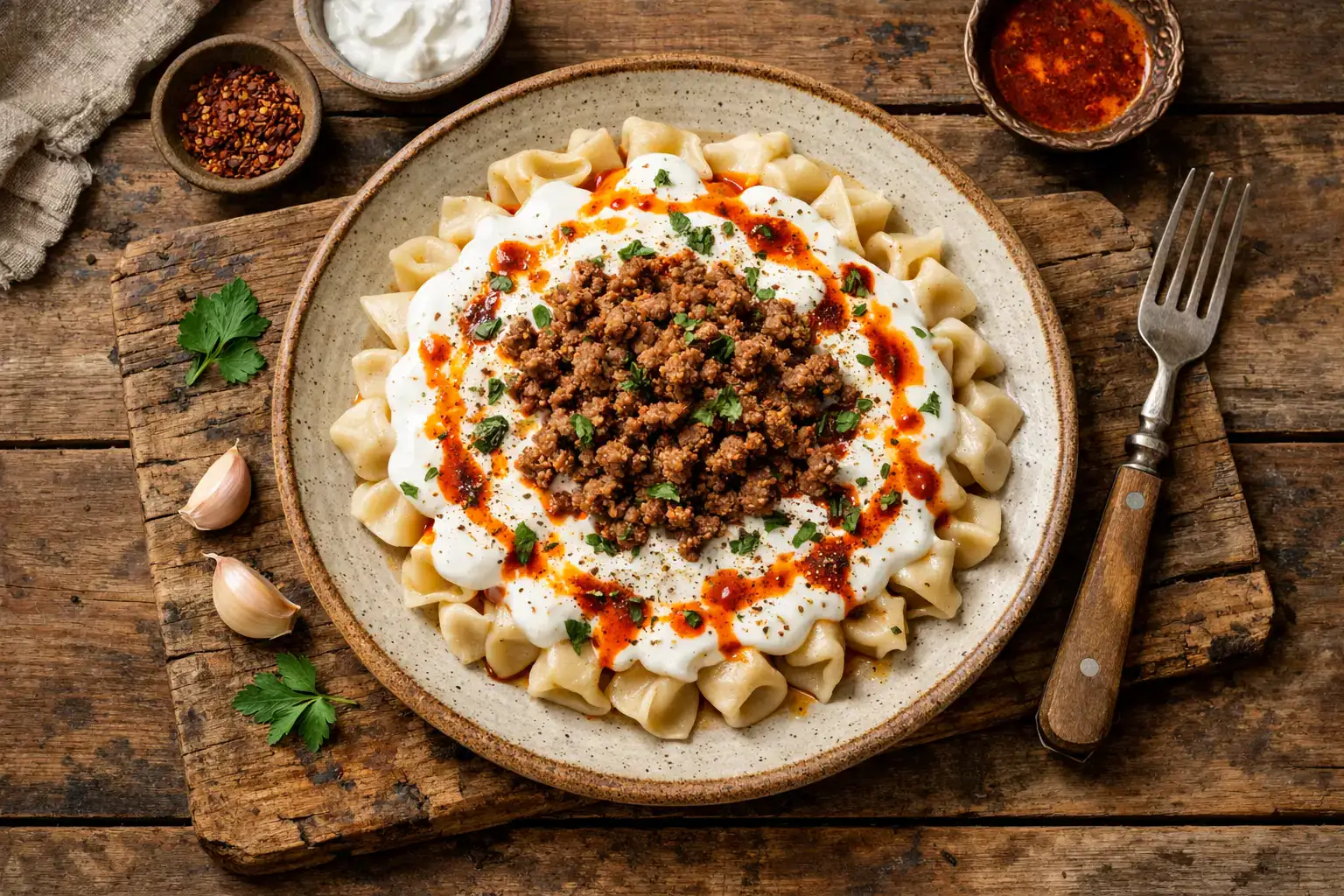
Quick Nutrition Facts
Per 1 Serving (~400g)
| Nutrient | Amount |
|---|---|
| Calories | 520 kcal |
| Protein | 28g |
| Carbohydrates | 48g |
| Fiber | 3g |
| Sugars | 5g |
| Fat | 22g |
| Saturated Fat | 10g |
| Iron | 4.2mg |
| Calcium | 180mg |
| Vitamin B12 | 2.8mcg |
Macronutrient Breakdown
 ChatGPT
  Claude
  AI Mode
  Perplexity
NUTRITIONIST INSIGHT
Turkish pasta delivers 28g protein per serving, making it excellent for muscle recovery. The combination of beef protein and yogurt probiotics supports both muscle building and gut health in one satisfying meal.
Myth Busters
MYTH #1: Turkish Pasta Is Unhealthy Fast Food
TRUTH: When made with lean beef (90% lean), Greek yogurt, and controlled butter portions, Turkish pasta provides balanced macros with 28g protein and essential nutrients. It's a legitimate protein-rich meal, not junk food.
MYTH #2: The Yogurt Makes It Too Heavy
TRUTH: Greek yogurt actually lightens the dish while adding probiotics that support digestive health. It provides creaminess with fewer calories than cream-based sauces and adds 6g protein per serving.
MYTH #3: Pasta Always Spikes Blood Sugar
TRUTH: Pasta has a medium-low glycemic index (45-55) compared to rice or bread. When combined with protein from beef and yogurt, the blood sugar response is further moderated, making Turkish pasta a reasonable choice for blood sugar management.
MYTH #4: You Can't Eat Pasta for Weight Loss
TRUTH: Turkish pasta can fit weight loss diets when portion-controlled. The 28g protein promotes satiety, reducing overall calorie intake. High-protein meals help control appetite and support lean muscle during weight loss.
MYTH #5: Red Meat in Pasta Is Bad for You
TRUTH: Lean ground beef (90%) provides complete protein, iron, and vitamin B12 essential for energy. Moderate red meat consumption (3-4 times/week) fits a healthy diet when balanced with vegetables and whole grains.
MYTH #6: Turkish Pasta Has No Nutritional Value
TRUTH: This dish provides iron (24% DV), vitamin B12 (117% DV), calcium (14% DV), and zinc from beef. The garlic offers immune-boosting allicin, while herbs add antioxidants. It's a nutrient-dense comfort food.
NutriScore by Health Goals
| Health Goal | NutriScore | Why This Score? |
|---|---|---|
| Weight Loss |  | 520 calories per serving is moderate. High protein (28g) promotes satiety. Reduce to 2/3 portion and add vegetables for better results. |
| Muscle Gain |  | Excellent 28g complete protein with 48g carbs for glycogen recovery. Ideal post-workout meal with balanced amino acids from beef and dairy. |
| Diabetes Management | | Pasta has medium-low GI (45-55). Protein moderates glucose response. Use whole wheat pasta and half portions for better control. |
| PCOS Management | | Moderate carbs may affect insulin. Choose whole grain pasta, limit to half serving, add extra vegetables for fiber. |
| Pregnancy Nutrition |  | Good source of iron and protein essential during pregnancy. Ensure beef is fully cooked. Calcium from yogurt supports fetal development. |
| Viral/Flu Recovery | | Easy-to-digest carbs, protein for recovery, garlic's antimicrobial properties, and probiotics from yogurt support immune function. |
PERSONALIZED NUTRITION
Track your meals with NutriScan for personalized NutriScores based on your specific health goals!
Blood Sugar Response to Turkish Pasta
Understanding how Turkish pasta affects your blood glucose can help you make informed decisions about portion sizes and meal timing.
Typical Glucose Response Curve
This chart shows typical blood glucose response for general healthy individuals. Individual responses may vary. Not medical advice.
How to Flatten the Spike
Pasta combined with protein has a lower glycemic response than pasta alone. Additional strategies to moderate blood sugar:
- Use whole wheat or legume pasta - Lower GI and higher fiber content
- Add extra vegetables - Fiber slows glucose absorption
- Don't overcook pasta - Al dente has lower GI than soft-cooked
- Include a side salad - Vinegar in dressing helps lower glycemic response
This combination extends energy release and prevents the crash associated with refined carb meals.
Cultural Significance
Turkish pasta, known as deconstructed Manti, represents a simplified version of traditional Turkish dumplings that date back centuries along the Silk Road.
In Turkey:
- Traditional Manti are tiny dumplings filled with spiced meat, hand-shaped by families
- The yogurt-garlic sauce (sarımsahlı yoğurt) is a staple in Turkish cuisine
- Paprika butter drizzle (tereyağı sosu) adds the signature red color and warmth
- Regional variations exist across Anatolia, each with unique spice blends
Global Viral Impact:
- Anna Paul's TikTok video sparked worldwide interest in 2024
- The dish represents the fusion of comfort food and social media culture
- Adapted versions include ground turkey, lamb, and plant-based alternatives
- Shows how traditional cuisines gain new audiences through digital platforms
Compare & Substitute
Turkish Pasta vs Similar Dishes (Per Serving)
| Nutrient | Turkish Pasta | Spaghetti Bolognese | Beef Stroganoff | Pasta Alfredo |
|---|---|---|---|---|
| Calories | 520 kcal | 580 kcal | 620 kcal | 680 kcal |
| Carbs | 48g | 55g | 42g | 52g |
| Fiber | 3g | 4g | 2g | 2g |
| Protein | 28g | 24g | 26g | 18g |
| Fat | 22g | 26g | 34g | 38g |
| Calcium | 180mg | 85mg | 120mg | 280mg |
| Probiotics | Yes (yogurt) | No | No (sour cream) | No |
| Best For | Protein, gut health | Traditional comfort | Rich, creamy cravings | Indulgent occasions |
Frequently Asked Questions
Is Turkish pasta good for weight loss?
Turkish pasta can fit a weight loss plan with proper portions. At 520 calories with 28g protein, it provides excellent satiety.
Best practices:
- Reduce to 2/3 portion (~350 calories)
- Add a large side salad with vegetables
- Use 90% lean ground beef
- Reduce butter drizzle by half
Can diabetics eat Turkish pasta?
Diabetics can enjoy Turkish pasta in moderation. The protein from beef and yogurt helps moderate the glycemic response compared to plain pasta.
Tips for diabetics:
- Use whole wheat or legume-based pasta
- Limit to half serving (260 calories, 24g carbs)
- Pair with fiber-rich vegetables
- Monitor blood sugar 2 hours after eating
The combination of protein and fat with carbs naturally slows glucose absorption. Always consult your healthcare provider.
How much protein is in Turkish pasta?
A serving of Turkish pasta contains 28g of protein from:
- Lean ground beef: ~22g
- Greek yogurt sauce: ~6g
This makes it an excellent high-protein meal, providing roughly 56% of daily protein needs for most adults. Perfect for muscle building, recovery, and satiety.
What are the main health benefits of Turkish pasta?
Key Benefits:
- Muscle Support: 28g complete protein with essential amino acids
- Gut Health: Probiotics from Greek yogurt support digestive wellness
- Energy Production: Iron and B12 from beef prevent fatigue
- Bone Health: Calcium from yogurt supports bone density
- Immune Function: Garlic provides antimicrobial compounds
- Satiety: High protein and fat content keeps you fuller longer
What is traditional Turkish pasta (Manti)?
Traditional Manti are small, hand-shaped dumplings filled with spiced ground meat. The viral Turkish pasta is a deconstructed, easier version:
Components:
- Pasta (any short shape works well)
- Seasoned ground beef with paprika, onion, and garlic powder
- Garlic yogurt sauce (Greek yogurt + raw garlic + salt)
- Paprika butter drizzle
The deconstructed version captures the same flavors in 30 minutes instead of the hours needed for traditional Manti.
How can I make Turkish pasta healthier?
Healthier modifications:
- Lower calories: Use turkey or chicken instead of beef (saves ~80 cal)
- More fiber: Use whole wheat pasta or add spinach
- Less fat: Reduce butter to 1 tablespoon per serving
- More protein: Double the Greek yogurt portion
- Lower carbs: Use zucchini noodles for half the pasta
Even with modifications, the dish retains its signature tangy-savory-spicy flavor profile.
How many calories in Turkish pasta?
Standard serving: 520 calories, 28g protein, 48g carbs, 22g fat
Variations:
- With ground turkey: ~440 calories
- With whole wheat pasta: ~510 calories
- Half portion: ~260 calories
- With extra vegetables: ~480 calories (same volume, fewer calories)
Track your exact portion with NutriScan app to see how Turkish pasta fits your personal nutrition goals.
Can I meal prep Turkish pasta?
Yes, Turkish pasta meal preps well for 3-4 days. Store components separately:
- Cooked pasta in airtight container
- Seasoned beef in separate container
- Yogurt sauce covered in fridge
- Paprika butter reheats easily
Assemble when ready to eat. The yogurt is best cold, contrasting with warm pasta and meat.


Similar Nutritious Foods
4505 Chicharrones Classic Chili Salt
7 Eleven Japan Crispy Corn Cheese
Explore More Nutrition Tools & Resources
AI Calorie Counter App - Snap a Photo, Get Macros
AI Nutritionist App That Reads Your Logged Meals
Best Protein Supplements for Women
Bulking Meal Plan App That Sets Your Surplus
ChatGPT Calorie Counter Alternative That Keeps the Total
ChatGPT Diet Plan Alternative That Tracks What You Eat
ChatGPT Weight Loss Coach Alternative With a Food Log
Fast Food Calorie Counter App That Reads the Tray
Free Calorie Tracker App with AI Photo Scans | NutriScan
Indian Diet Plan App With Veg and Non Veg Meals
Indian Food Calorie Calculator - Get Instant Nutrition Facts for Desi Meals — 2026
Intermittent Fasting for Women, Timer and Meal Log App
Intermittent Fasting Tracker App - Free Fasting Timer
Macro Tracker App That Fills the Numbers From a Photo
Mediterranean Diet Meal Plan App That Counts the Oil
Micronutrient Tracker App for Vitamins and Minerals
MyFitnessPal Alternative That Stays Free | NutriScan
NutriScore App: A Free Grade on Every Meal | NutriScan
Nutrition Label Scanner App for the Amount You Ate
Second Trimester Protein Guide
Vegetarian Meal Plan App With a Protein Target
Voice Calorie Counter - Speak to Track Meals Hands-Free
Water and Calorie Tracker App - Free Water Log