Water Kefir: Calories, Nutrition and Health Benefits
A refreshing dairy-free probiotic drink with only 20 calories per 100ml, packed with beneficial bacteria for gut health and immunity.
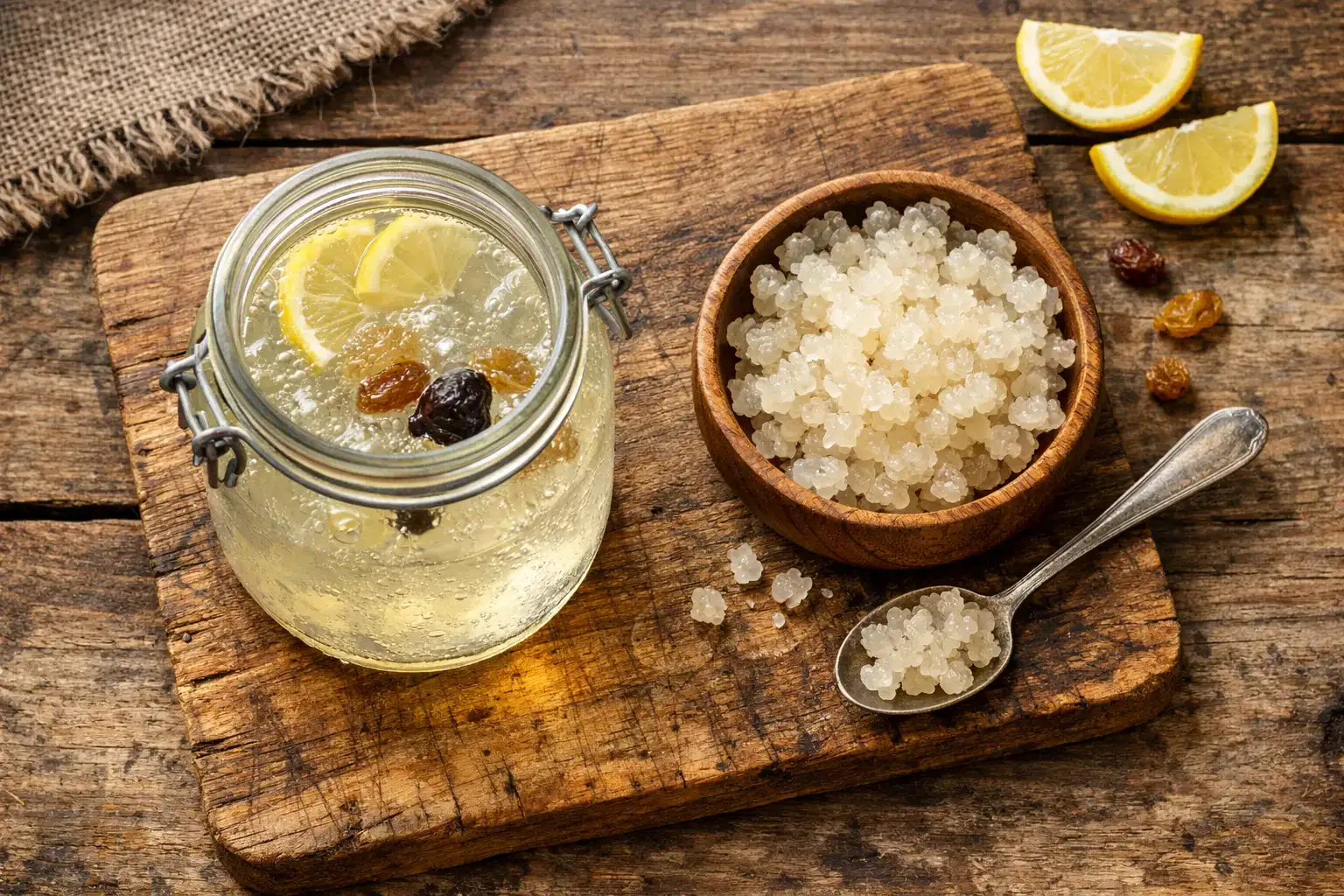
Quick Nutrition Facts
Per 1 Cup Water Kefir (240ml)
| Nutrient | Amount |
|---|---|
| Calories | 50 kcal |
| Protein | 0g |
| Carbohydrates | 12g |
| Fiber | 0g |
| Sugars | 10g |
| Fat | 0g |
| Sodium | 15mg |
| Potassium | 30mg |
| Calcium | 5mg |
| Probiotics | 1-5 billion CFU |
Macronutrient Breakdown
 ChatGPT
  Claude
  AI Mode
  Perplexity
NUTRITIONIST INSIGHT
Water kefir is one of the lowest-calorie probiotic drinks available, with just 20 calories per 100ml. The fermentation process produces a diverse ecosystem of beneficial bacteria and yeasts that support gut health without the dairy, making it ideal for vegans and lactose-intolerant individuals.
Myth Busters
MYTH #1: Water Kefir Has as Much Sugar as Soda
TRUTH: While water kefir starts with sugar, fermentation consumes most of it. A cup of water kefir has about 10g of residual sugar vs 39g in cola. The longer you ferment, the less sugar remains.
MYTH #2: Water Kefir Probiotics Are Not as Effective as Supplements
TRUTH: Water kefir contains a diverse community of Lactobacillus, Bifidobacteria, and beneficial yeasts that work synergistically. Research suggests food-based probiotics may survive digestion better than isolated supplement strains.
MYTH #3: Fermented Drinks Are Dangerous for Diabetics
TRUTH: Studies show kefir probiotics may actually improve glycemic control by reducing fasting blood glucose and insulin resistance. Choose longer-fermented, lower-sugar varieties and limit to 120-240ml per serving.
MYTH #4: Water Kefir Contains Harmful Alcohol
TRUTH: Water kefir typically contains less than 0.5% alcohol, similar to kombucha and classified as non-alcoholic. The trace alcohol is a natural byproduct of fermentation and poses no health concern for most people.
MYTH #5: You Can Get the Same Benefits from Flavored Water
TRUTH: Flavored water lacks the live probiotic cultures found in water kefir. The beneficial bacteria and yeasts in water kefir actively support immune function, nutrient absorption, and digestive health in ways plain water cannot.
NutriScore by Health Goals
| Health Goal | NutriScore | Why This Score? |
|---|---|---|
| Weight Loss |  | Only 50 calories per cup, zero fat, probiotic support for metabolism and satiety. |
| Muscle Gain |  | No protein content. Best used as a low-calorie hydration drink alongside protein-rich foods. |
| Diabetes Management |  | Kefir probiotics may reduce fasting blood glucose. Choose longer-fermented varieties, limit to 120ml portions. |
| PCOS Management | | Low calorie, gut health support may help hormonal balance. Limit sugar content by choosing well-fermented versions. |
| Pregnancy Nutrition | | Probiotics may support digestive comfort during pregnancy. Dairy-free, gentle on stomach. Consult your healthcare provider. |
| Viral/Flu Recovery | | Probiotics support immune function, easy to digest, provides hydration and gentle energy during illness. |
PERSONALIZED NUTRITION
Track your meals with NutriScan for personalized NutriScores based on your specific health goals!
Blood Sugar Response to Water Kefir
Understanding how water kefir affects your blood glucose helps you choose the best fermentation level and serving size.
Typical Glucose Response Curve
This chart shows typical blood glucose response for general healthy individuals. Individual responses may vary. Not medical advice.
How to Flatten the Spike
Pairing fermented drinks with fiber or protein slows glucose absorption and reduces the peak blood sugar level:
- 🥜 Nuts or seeds - Adds healthy fats and protein to slow sugar absorption
- 🫘 Chia seeds - Fiber-rich addition that gels and slows digestion
- 🥒 Vegetable sticks - Fiber from veggies helps buffer any glucose response
- 🧀 Cheese or nut butter - Fat and protein pairing for sustained energy
Longer fermentation (48-72 hours) naturally reduces sugar content, resulting in a flatter blood sugar response.
Cultural Significance
Water kefir has ancient roots in Mexico and Central America, where it was traditionally fermented using sugary water from the prickly pear cactus (tibicos).
Historical Origins:
- Believed to originate from Mexico, where kefir grains formed naturally on cactus pads
- Also called tibicos, tibi, or Japanese water crystals in different regions
- Traditional medicine in Mexico and Central America for digestive ailments
Global Spread:
- Gained popularity in Europe during the health food movement of the 1990s-2000s
- Now a mainstream probiotic alternative in health-conscious markets worldwide
- Growing demand driven by vegan, dairy-free, and gut health trends
- DIY home fermentation culture has created a global sharing community for kefir grains
In India:
- Gaining popularity as a dairy-free alternative to traditional lassi and chaas
- Used in Ayurvedic-inspired wellness routines for gut health
- Available through health food stores and online fermentation communities
Compare & Substitute
Water Kefir vs Similar Probiotic Drinks (Per 100ml)
| Nutrient | Water Kefir | Milk Kefir | Kombucha | Coconut Kefir |
|---|---|---|---|---|
| Calories | 20 kcal | 41 kcal | 15 kcal | 30 kcal |
| Carbs | 5g | 4g | 3g | 6g |
| Protein | 0g | 4g | 0g | 0.5g |
| Fat | 0g | 1g | 0g | 2g |
| Sugar | 4g | 4g | 2g | 4g |
| Probiotics | High | Very High | Moderate | High |
| Dairy-Free | Yes | No | Yes | Yes |
| Best For | Low-cal probiotic, vegan | High protein, calcium | Low sugar, antioxidants | Dairy-free fat source |
Frequently Asked Questions
How many calories are in water kefir?
Water kefir contains approximately 20 calories per 100ml or 50 calories per 1-cup (240ml) serving. Calorie content depends on fermentation time and sugar used. Longer fermentation (48-72 hours) results in fewer residual calories as bacteria consume more sugar.
Per 100ml: 20 kcal, 5g carbs, 0g protein, 0g fat.
Is water kefir good for gut health?
Yes, water kefir is an excellent source of probiotics. It contains Lactobacillus, Bifidobacteria, acetic acid bacteria, and beneficial yeasts that support digestive health, immune function, and nutrient absorption.
Key probiotic benefits: Improved digestion, reduced bloating, enhanced nutrient absorption, stronger immune response.
Can diabetics drink water kefir?
Diabetics can drink water kefir in moderation. Research shows kefir probiotics may help reduce fasting blood glucose and improve insulin sensitivity.
Tips for diabetics:
- Choose longer-fermented varieties (lower residual sugar)
- Limit to 120-240ml per serving
- Monitor blood sugar 2 hours after drinking
- Pair with protein or fiber-rich snacks
What is the difference between water kefir and milk kefir?
Water kefir is dairy-free, made by fermenting sugar water with water kefir grains. Milk kefir uses dairy milk and different bacterial cultures. Water kefir has fewer calories (20 vs 41 per 100ml), no protein, and is suitable for vegan and lactose-intolerant individuals. Milk kefir provides more protein and calcium.
How much water kefir should I drink per day?
General Guidelines:
- Beginners: 120ml (half cup) daily for the first week
- Regular drinkers: 240-480ml (1-2 cups) daily
- Maximum: 480ml per day to avoid digestive discomfort
Start slowly and increase gradually. Excessive consumption may cause bloating or gas as your gut adjusts to the probiotics.
Is water kefir safe during pregnancy?
Water kefir is generally considered safe during pregnancy in moderation. Probiotics may help with digestive comfort during pregnancy. Ensure proper fermentation and storage. Always consult your healthcare provider before adding fermented foods to your pregnancy diet.


Similar Nutritious Foods
4505 Chicharrones Classic Chili Salt
7 Eleven Japan Crispy Corn Cheese
Explore More Nutrition Tools & Resources
AI Calorie Counter App - Snap a Photo, Get Macros
AI Nutritionist App That Reads Your Logged Meals
Best Protein Supplements for Women
Bulking Meal Plan App That Sets Your Surplus
ChatGPT Calorie Counter Alternative That Keeps the Total
ChatGPT Diet Plan Alternative That Tracks What You Eat
ChatGPT Weight Loss Coach Alternative With a Food Log
Fast Food Calorie Counter App That Reads the Tray
Free Calorie Tracker App with AI Photo Scans | NutriScan
Indian Diet Plan App With Veg and Non Veg Meals
Indian Food Calorie Calculator - Get Instant Nutrition Facts for Desi Meals — 2026
Intermittent Fasting for Women, Timer and Meal Log App
Intermittent Fasting Tracker App - Free Fasting Timer
Macro Tracker App That Fills the Numbers From a Photo
Mediterranean Diet Meal Plan App That Counts the Oil
Micronutrient Tracker App for Vitamins and Minerals
MyFitnessPal Alternative That Stays Free | NutriScan
NutriScore App: A Free Grade on Every Meal | NutriScan
Nutrition Label Scanner App for the Amount You Ate
Second Trimester Protein Guide
Vegetarian Meal Plan App With a Protein Target
Voice Calorie Counter - Speak to Track Meals Hands-Free
Water and Calorie Tracker App - Free Water Log