Cheapest Calorie Tracker 2026: 12 Apps From $23.90/yr
 ChatGPT
  Claude
  AI Mode
  Perplexity
 The cheapest calorie tracker in 2026 is YAZIO PRO at $23.90 a year on promotion, $47.90 at list price. That is $2.00 to $3.99 a month, or $0.07 to $0.13 a day. The cheapest steady, non-promotional annual price is Carb Manager at $39.99 a year, $0.11 a day, and its free tier covers net carbs and barcode scanning (what Carb Manager's free plan includes). The cheapest month-to-month plan is Lifesum Premium at $7.49 a month. NutriScan Premium sits mid-table at about $59 a year, about $0.16 a day, and its free plan is the only one here that includes AI photo scanning: 5 scans a week, no time limit.
Last verified: August 23, 2026
You want to track your food, but which app gives you the most for your money? 🤔
TL;DR - Cheapest Nutrition App Pricing Guide
- Budget pick: YAZIO PRO at $23.90-$47.90/yr is the cheapest premium tracker
- Best free plan: FatSecret gives you barcode scanning, macro tracking, and meal plans at $0
- Best AI value: NutriScan gives you 5 free AI meal scans a week; Premium is about $59 a year
- Most expensive: Noom at $209/yr (psychology-based coaching, not just tracking)
- Key insight: only 3 apps still list a standard annual plan under $50, and Lose It left that group when it doubled to $79.99
A 2021 study in JMIR mHealth and uHealth analyzing 300+ health apps found that cost and feature limitations are top reasons people abandon a nutrition tracker within 30 days. If the price feels wrong, you quit.
The problem? Comparing app prices is not straightforward. Some charge monthly. Others lock you into annual plans. A few hide the real price behind onboarding quizzes or dynamic pricing. And "free" does not always mean useful.
This guide compares 12 nutrition apps using prices from official App Store and Google Play listings, company websites, and third-party reviews. It gives you the real numbers so you can decide which app fits your budget and your goals. NutriScan publishes this post, and we make a competing app.
The Full Pricing Table: Every Major App in One Place 💰
Here is what each app costs in the United States as of August 23, 2026. Prices may vary by region, promotional offers, and platform.
| App | Monthly | Annual | Per day | Free scans | Our page |
|---|---|---|---|---|---|
| YAZIO PRO | - | $23.90-$47.90 | $0.07-$0.13 | 0 | Pricing |
| Cal AI | $9.99 | $29.99 listed | $0.08 | 0 | Pricing |
| Lifesum | $7.49 | $30.99-$99.99 | $0.08-$0.27 | 0 | Pricing |
| Carb Manager | $8.49 | $39.99 | $0.11 | 0 | - |
| NutriScan Premium | yearly (weekly in some regions) | about $59/yr | about $0.16 | 5 a week | Pricing |
| Cronometer Gold | $10.99 | $59.99 | $0.16 | 0 | Pricing |
| FatSecret Premium | $14.99 | $59.99 | $0.16 | 0 | Pricing |
| Eat This Much | $14.99 | $60.00 | $0.16 | 0 | - |
| MacroFactor | $11.99 | $71.99 | $0.20 | 0 | Pricing |
| Lose It Premium | - | $79.99 | $0.22 | 0 | Pricing |
| MyFitnessPal Premium | $19.99 | $79.99 | $0.22 | 0 | Pricing |
| MyFitnessPal Premium+ | $24.99 | $99.99 | $0.27 | 0 | Pricing |
| Noom | $70.00 | $209.00 | $0.57 | 0 | Pricing |
"Per day" is the annual price divided by 365, rounded to 2 decimals. "Free scans" counts AI photo meal logging you get without paying. Every app here except NutriScan puts it behind a paid plan.
Sources: App Store and Google Play listings, plus official pricing pages: Lose It membership tiers, Cronometer Gold and MyFitnessPal Premium, checked August 2026. Lose It raised Premium from $39.99 to $79.99 and dropped its monthly plan. Lifesum runs promotional pricing year-round, so its annual figure is a range rather than one number.
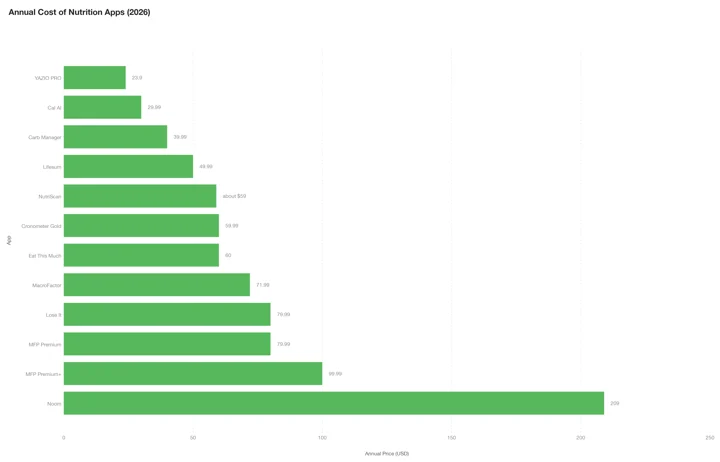 Figure 1: Annual pricing across 12 nutrition apps. Only YAZIO PRO, Cal AI and Carb Manager come in under $40, and everything from NutriScan upward costs about $59 or more. YAZIO's bar is its $23.90 promo price and Lifesum's annual price swings between $30.99 and $99.99 with promotions, so its bar is plotted mid-range at $49.99.
 When you realize some apps charge 10x more for the same basic features
Three Example Scenarios: How the Cost Adds Up 🧮
Example 1: The College Student on a Tight Budget
Take a student budget: less than $5 per month to spend on apps, and a need for calorie tracking with a barcode scanner and basic macro visibility.
Best options: YAZIO PRO (as low as $2.00/mo during promotions) or Carb Manager ($3.33/mo annual). Both include barcode scanning, calorie targets, and macro breakdowns at under $4 per month. Lose It used to be the obvious pick here, but at $79.99 a year it now works out to $6.67 a month, above that ceiling. If paying is not an option at all, FatSecret offers the most generous free plan with barcode scanner included.
Cost over one year: $24-$48.
Example 2: The Office Worker Who Wants Macro Coaching
Take a desk job schedule and a goal of steady weight change: you want an app that adjusts your macros automatically as your weight moves.
Best options: MacroFactor ($71.99/yr) gives you an adaptive algorithm that recalculates targets weekly based on actual intake and weight trends. Carbon Diet Coach ($99.99/yr) offers a similar coaching approach. Meal-plan apps cost more: Macrostax lists $179.88 a year with no free trial.
Cost over one year: $72-$100.
Example 3: The Parent Tracking the Whole Family
Take a household tracking two people: you need photo scanning for home cooked meals, and no ads.
Best option: NutriScan (about $59 a year for one person). The free plan includes 5 AI meal scans a week with no ads, which is enough to try it on the dishes a database gets wrong before paying. For two people tracking independently, the annual cost would be about $120 combined.
Cost over one year: $60-$120.
What the Data Says About App Pricing 📊
The "Free" Trap Is Real
A free calorie tracking app sounds ideal, but the features you actually need are often behind the paywall. MyFitnessPal moved its barcode scanner to Premium in 2023, and the free version now shows ads between nearly every screen.
A 2024 systematic review of mobile nutrition apps found that free-tier users logged food less consistently than paid users, partly because friction from ads and missing features reduces motivation.
Lose It still offers a strong free plan with basic calorie tracking and a clean interface. FatSecret keeps its barcode scanner free. But if you need macro tracking, custom targets, or photo logging, expect to pay.
WARNING
If an app does not show the price upfront before you create an account, that is a red flag. Transparent pricing is a sign of respect for your time.
Dynamic Pricing Makes Comparison Harder
Cal AI and Simple both use dynamic pricing. The cost you see depends on when you open the app, what answers you give during onboarding, and sometimes your location. Cal AI's App Store in-app purchase list runs from $2.99 a week to $29.99 a year, checked August 23, 2026. Users report being charged as much as $49.99 a year on the same plan, so treat the listed price as a floor. BitePal works the same way: its US App Store listing shows annual plans at five prices from $23.99 to $59.99 (BitePal pricing).
Regional Pricing Changes the Equation
FatSecret charges $14.99/mo in the US App Store but as low as $6.99/mo in other markets. Lifesum ranges from $29.99 to $99.99 per year depending on the country and promotional period. NutriScan is priced separately in local currency, about $59 a year in the United States.
TIP
Always check the final checkout price in your own App Store account. If you travel or use a VPN, you might see different prices.
The Price-to-Feature Ratio Varies Widely
Not all apps charge the same amount for the same features:
- Barcode scanning: Free in FatSecret and Cronometer, costs $79.99/yr in MyFitnessPal Premium
- AI photo logging: 5 free scans a week in NutriScan, requires $29.99/yr in Cal AI
- Adaptive macro coaching: $71.99/yr in MacroFactor, $99.99/yr in Carbon Diet Coach
The lesson: do not assume a higher price means better features.
Lifetime Plans: Worth It or Not?
A few apps offer lifetime deals. Lose It sells a lifetime subscription for $299.99, or $229.99 if you are already a Premium member (Lose It membership tiers, 2026). Against the $79.99 annual plan, that pays for itself in under four years, a much shorter payback than when Premium cost $39.99. But nutrition apps change fast. Features get added, removed, or paywalled. A lifetime purchase is a bet that the app will stay useful for many years.
Tips and Tricks: How to Pay Less for Your Nutrition App 💡
1. Always Choose the Annual Plan
Every app on this list offers a discount for annual billing, and the pattern holds outside it too: ZOE Plus costs $99.99 a year against $191.88 on monthly billing. The savings range from 30% to 60% compared to monthly payments. MacroFactor drops from $11.99/mo to $5.99/mo on the annual plan. MyFitnessPal drops from $19.99/mo to $6.67/mo.
2. Use the Free Trial Fully Before You Pay
Most apps offer 7-day to 30-day free trials of premium features. Set a calendar reminder for the day before the trial ends. Test the features you care about and cancel if the app does not fit.
3. Watch for Seasonal Promotions
New Year (January), back-to-school (August-September), and Black Friday (November) are peak discount periods. YAZIO and Lifesum frequently offer 50-70% off annual plans during these windows.
4. Start with the Best Free Plan, Then Upgrade
FatSecret and Lose It have the strongest free tiers. Use one of them for 2-3 weeks. If you find you need features they do not offer, then upgrade or switch.
5. Check if Your Employer or Insurance Covers It
Some companies and health insurance plans reimburse wellness app subscriptions. MyFitnessPal and Noom are eligible for FSA/HSA spending in the US.
6. Compare Per-Day Cost, Not Per-Month
When an app costs $49.99 per year, that is $0.14 per day, less than a cup of tea. Even the most expensive tracker (Noom at $209/yr) costs $0.57 per day.
 Trying to pick the right nutrition app from 12 options like...
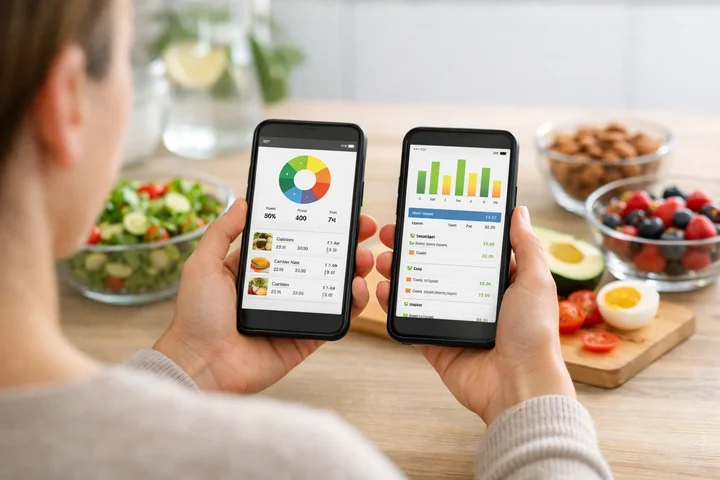 Comparing nutrition apps side by side helps you find the best value for your goals
Step-by-Step Guide: How to Pick the Cheapest App 📋
Step 1: Define What You Actually Need
Write down three features that matter most. Common ones: calorie tracking, macro tracking, barcode scanner, AI photo logging, meal plans, fasting timer, micronutrient tracking. Most people need only 2-3 of these.
Step 2: Filter the Table by Your Requirements
Use the pricing table above. Cross out any app that does not offer your must-have features. For example, if you need adaptive macro coaching, only MacroFactor and Carbon qualify.
Step 3: Compare Annual Prices of the Remaining Apps
Sort by annual price, lowest first. If two apps offer the same features, pick the cheaper one. If one is slightly more expensive but has better data accuracy, consider whether the extra cost is worth it.
Step 4: Test Before You Commit
Download the 1-2 cheapest options and use their free trials or free plans for one full week. Log every meal. Notice what feels easy and what feels like a chore. The app you will actually use every day is the one worth paying for.
TIP
Use NutriScan's 5 free weekly scans to test photo-based food logging. Spend them on the curries, restaurant plates, and mixed bowls a food database usually gets wrong. Snap a picture and the app estimates calories and macros in seconds, no payment needed.
Step 5: Set a Renewal Reminder
After purchasing an annual plan, set a reminder for 11 months later. This gives you time to evaluate whether you want to renew or switch. Many apps auto-renew, and canceling after the renewal window means you pay for another year.
What the Research Says About Nutrition App Spending 🔬
A 2022 meta-analysis in Nutrients examined 28 randomized controlled trials and found that users who tracked food consistently for 12 weeks or more lost an average of 2.3 kg more than non-trackers. App-based tracking was more effective than paper-based food diaries for long-term adherence.
A 2023 review in IJBNPA found that nutrition apps with personalized feedback improved dietary quality scores by 15% compared to apps that only tracked calories. Apps like MacroFactor and NutriScan that adjust targets based on user data fall into this category.
A 2021 analysis of nutrition app pricing in JMIR found that the median cost of nutrition apps with evidence-based features was roughly $4-5 per month on annual plans. Apps priced well above this median did not consistently deliver better outcomes.
Key Research Takeaway
Consistent tracking matters more than which specific app you use. A 2017 study in the Journal of Diabetes Research found that only participants who tracked food consistently over 12 months achieved significant weight loss. Pick an app you can afford and will actually open every day.

The Cheapest Apps by Category 🏆
Cheapest Overall (Annual Plan)
YAZIO PRO at $23.90-$47.90 per year is the lowest-priced premium tracker with calorie and fasting features. At promotional pricing, it can cost as little as $2.00 per month.
Cheapest with Adaptive Macro Coaching
MacroFactor at $71.99 per year ($5.99/mo). No free plan, but the coaching algorithm adjusts your targets weekly.
Best Free Plan (No Payment Needed)
FatSecret offers barcode scanning, calorie tracking, macro tracking, community features, and meal plans all included in the free tier. No other app matches this combination at zero cost.
If you only want to judge packaged products rather than count calories, Yuka scans and scores for free and its optional membership starts at $10 a year, which we covered in is Yuka free?. And if you want a photo journal with no calorie numbers at all, AteMate costs $49.99 a year and has no free tier for new users.
Cheapest with AI Photo Scanning
NutriScan gives you 5 AI meal scans a week on the free plan, with macros, micronutrients, and your full meal history included at no cost. Premium lifts the weekly scan cap at about $59 a year. Cal AI charges $29.99/yr at its listed price but has no free plan.
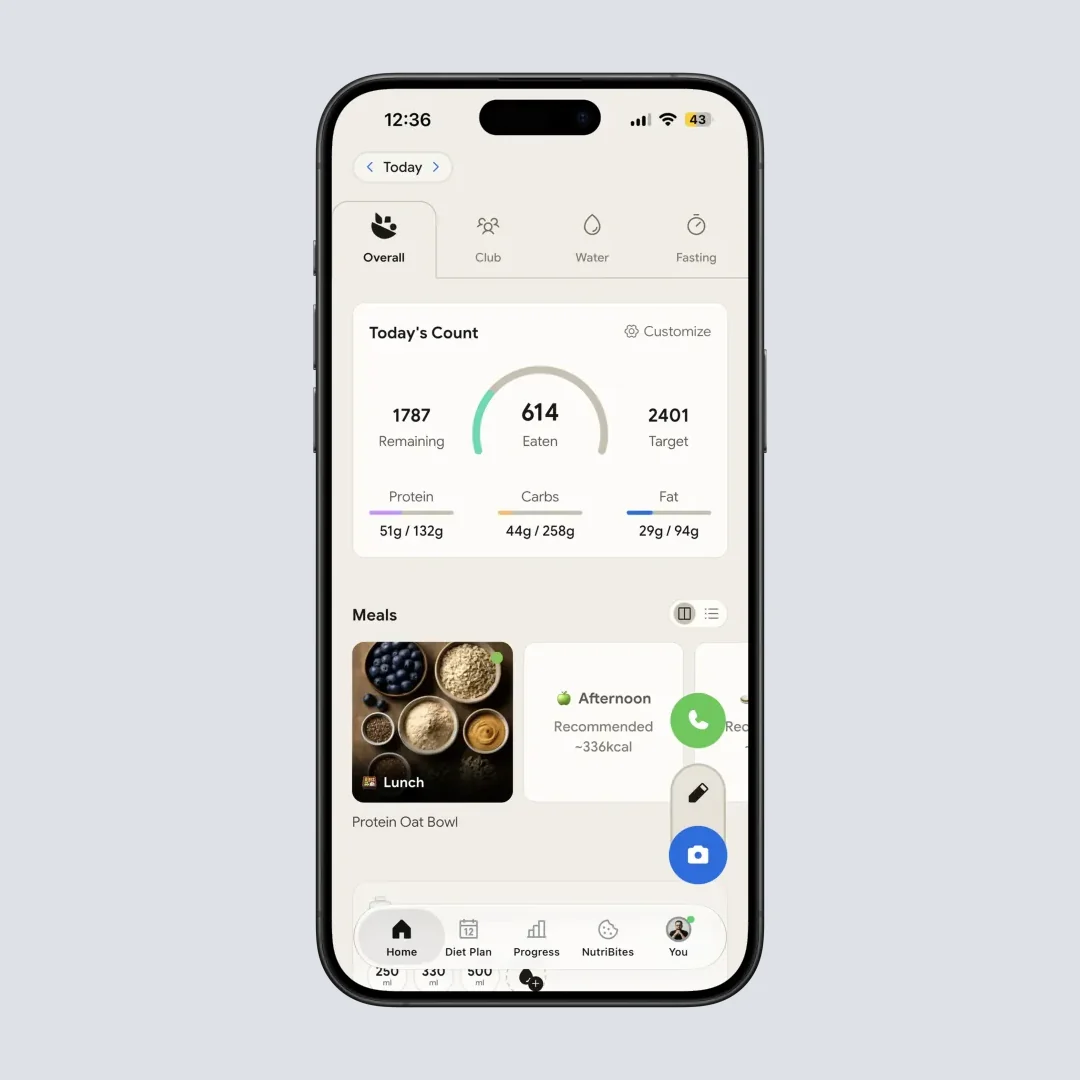
NutriScan's home screen: 5 free AI meal scans a week with calorie and macro tracking (Home > Nutrition Card)
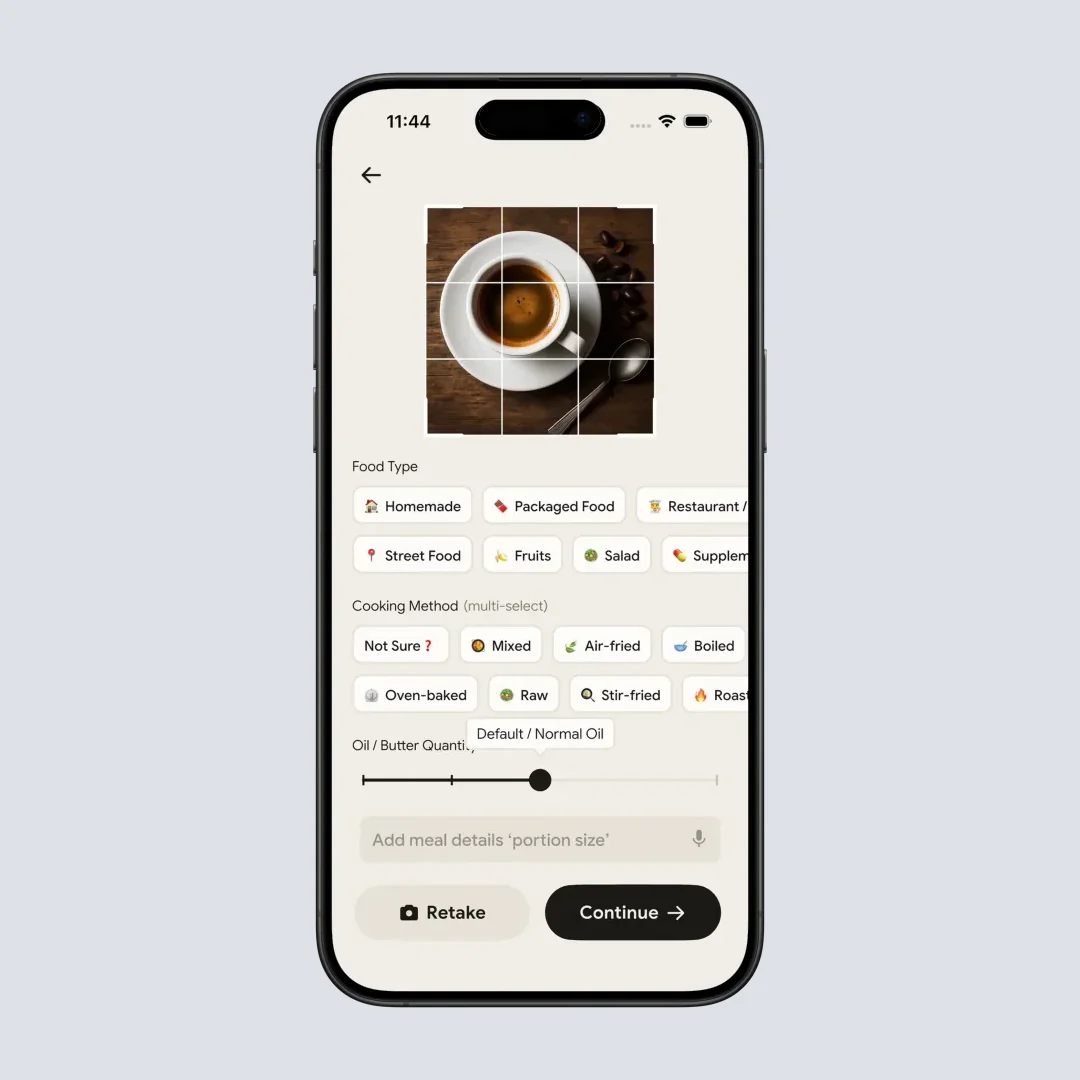
Snap a photo and get instant nutrition data. 5 free scans a week on NutriScan (Home > Camera Icon > Crop Picture)
Cheapest with Micronutrient Tracking
Cronometer tracks up to 84 nutrients in the free version, with the barcode scanner included. Gold raises that to 95 and adds fasting tracking, Photo Log, Voice Log and an ad-free experience at $59.99/yr (cronometer.com).
Most Expensive (and Why)
Noom at $209/yr ($17.40/mo) includes psychology-based coaching, daily lessons, and optional GLP-1 medication access via Noom Med. The cost reflects a coaching program, not just a food tracker.
Conclusion: The Cheapest App Is the One You Actually Use 🎯
Price matters, but it is not the only factor. A free app that you abandon after one week costs you more than a $50 annual subscription that you use every day for a year.
Here is the simple decision framework:
- $0/year budget: Start with FatSecret (best free plan) or Cronometer (best free micronutrient tracking)
- Under $50/year: YAZIO PRO ($23.90-$47.90), Carb Manager ($39.99), or Cal AI ($29.99 listed, quoted during onboarding)
- $50-$80/year: Cronometer Gold ($59.99), Eat This Much ($60), MacroFactor ($71.99), Lose It ($79.99), MyFitnessPal Premium ($79.99), or NutriScan (about $59)
- $80+/year: MyFitnessPal Premium+ ($99.99) or Noom ($209)
The average annual cost across the apps in this guide is about $75. Three list a standard annual plan under $50, and three have genuinely useful free plans. That under-$50 group shrank this year: Lose It doubled to $79.99 and Cronometer Gold moved to $59.99, so the cheap end of this category is thinner than it was.
Track your meals with NutriScan's 5 free weekly scans to see how food tracking fits into your routine. Use our macro calculator to find your ideal targets, then start scanning meals on the free plan. No payment needed to start.
Frequently Asked Questions ❓
What is the cheapest calorie counter app?
YAZIO PRO at $23.90 a year on promotion, $47.90 at list price, which is $0.07 to $0.13 a day. If you want a price that does not depend on catching a sale, Carb Manager is the cheapest steady annual plan at $39.99 a year, $0.11 a day. The cheapest month-to-month plan is Lifesum Premium at $7.49 a month.
What is the cheapest MyFitnessPal alternative?
MyFitnessPal Premium is $79.99 a year, $0.22 a day. Five apps in the table do the same core calorie and macro tracking for less: NutriScan (about $59), YAZIO PRO ($23.90-$47.90), Carb Manager ($39.99), Cal AI ($29.99 listed) and Cronometer Gold ($59.99). NutriScan and Cronometer Gold each save you about $20 a year against MyFitnessPal Premium, and NutriScan adds 5 free AI photo scans a week before you pay anything.
Is there a free calorie tracker with photo scanning?
NutriScan. Its free plan includes 5 AI photo scans a week with no time limit, plus a fasting timer and NutriScore. Every other app in the table keeps photo logging on the paid side, MyFitnessPal, Lose It, Cronometer, YAZIO, Lifesum, FatSecret and Cal AI included. Cal AI has no free scanner at all. The app downloads free and the scanner needs a subscription.
Which calorie tracking app is the cheapest in 2026?
On annual plans, YAZIO PRO can cost as little as $23.90 per year during promotional periods. Carb Manager costs $39.99 per year at full price. Lose It is no longer in this conversation: Premium went from $39.99 to $79.99 per year in 2026 (Lose It membership tiers). For a completely free option, FatSecret offers the most features at zero cost, including barcode scanning and macro tracking.
Is MyFitnessPal worth the price compared to cheaper alternatives?
MyFitnessPal Premium costs $79.99 per year, twice the price of Carb Manager and level with Lose It. You get the largest food database (millions of entries) and strong device integration. However, database entries are user-generated and can contain errors. If you need a verified database, Cronometer Gold ($59.99/yr) or MacroFactor ($71.99/yr) offer better accuracy at a lower price.
Are free calorie tracking apps good enough?
For basic calorie counting, yes. FatSecret, Lose It (free tier), and Cronometer all provide solid calorie tracking at no cost. You will likely need to upgrade if you want AI photo logging, adaptive macro targets, or ad-free experience.
How much does the average nutrition app cost per day?
The median cost across popular nutrition apps with annual plans is about $0.16 per day (roughly $60/year). This is less than a single cup of coffee. Even premium options like MacroFactor ($0.20/day), Lose It ($0.22/day) and MyFitnessPal ($0.22/day) cost less than most daily beverages.
Should I pay monthly or annually for a nutrition app?
Annual billing saves 30-67% compared to monthly payments across every app in this guide. If you have used a free trial and know you want to continue, switch to annual billing. Set a renewal reminder so you can cancel if needed before the next billing cycle.