Lifesum Pricing: Free Plan and Premium Monthly vs Yearly Cost
 ChatGPT
  Claude
  AI Mode
  Perplexity
Lifesum is free to use, and Lifesum Premium costs $7.49 a month, $29.99 for 3 months, or $99.99 a year at list price. Catch a promotion and the year drops to $30.99 to $45, about 8 to 12 cents a day. Those are standard US prices as of mid 2026 and they change by region.
The awkward part is that almost nobody pays the list price, and plenty of people cannot even see a monthly plan. Lifesum discounts hard and often, the month-to-month option is missing in the US and several other markets, and the number on your paywall depends on your country, your app store and how long your free account has been sitting idle.
TL;DR - Lifesum prices at a glance
Free plan: yes, and it has no expiry. Calorie logging, barcode scanning, water, weight, exercise, one diet plan
Monthly: $7.49/month (not available in all regions, some see $9.99-$14.99)
3-Month: $29.99 list ($14.99-$21.99 with discounts) - ~$5-$7.33/month
Annual: $99.99 list ($30.99-$45 with discounts) - ~$2.58-$3.75/month
Best value: Annual plan during a sale saves up to 65% vs monthly billing
Free trial: the store listing marks one on all three Premium plans, but length and availability vary by region and account
NutriScan publishes this post, and we make a competing app. This post prices every Lifesum tier, works out what each one costs per day, and flags where the free plan stops being enough. If you want the verdict on whether the paid tier earns its money, our Lifesum Premium worth-it breakdown goes feature by feature.
 That face when you see three different Lifesum plan options and have no idea which one to pick
Lifesum Prices in 2026: What Every Plan Costs 💰
Lifesum uses a tiered subscription model with different prices depending on your commitment length. Here is the current pricing structure based on official app store listings and third-party reviews:
| Plan Length | List Price | Discounted Price | Monthly Cost |
|---|---|---|---|
| 1 Month | $7.49-$14.99 | N/A | $7.49-$14.99/mo |
| 3 Months | $29.99 | ~$14.99-$21.99 | ~$5-$7.33/mo |
| 6 Months | $49.99 | ~$20.99-$30 | ~$3.50-$5/mo |
| 12 Months | $99.99 | ~$30.99-$45 | ~$2.58-$3.75/mo |
Important note: The monthly option is not available in all regions. According to PCMag's Lifesum review, there is no month-to-month offer in the US market, although some regions can access a $7.50 per month Premium account.
Pricing also varies by country due to regional App Store and Google Play pricing. Users in South Africa see prices in Rand (R439.99/year, R219.99/3 months) according to Apple App Store listings.
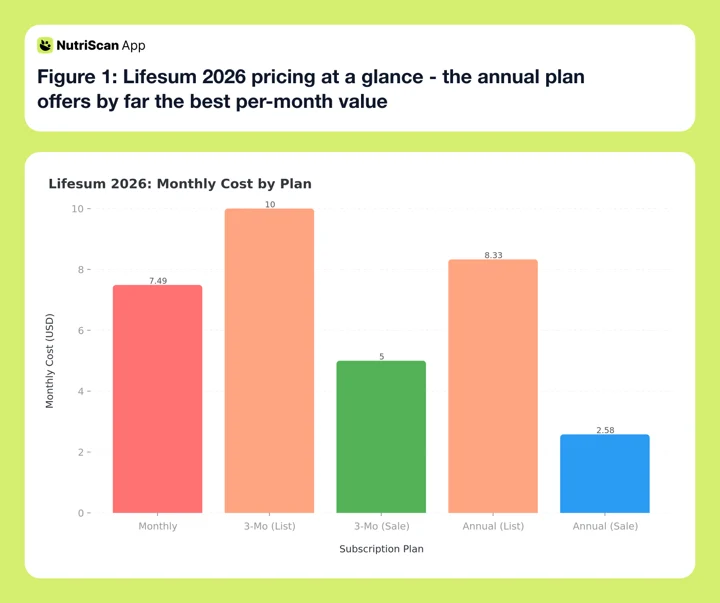 Figure 1: Lifesum 2026 cost per month by plan. The promotional annual price is the lowest at $2.58 a month; at the $99.99 list price the annual plan works out to $8.33, above the $7.49 monthly plan.
Is Lifesum Free? What You Get Without Paying ✨
Lifesum is free, with no time limit and no forced upgrade. The free account covers the basics of calorie logging forever. What it does not cover is macros, which is the line most people hit within a week or two.
Free Version Features
The free tier includes, at no cost and with no expiry date:
- Basic food tracking
- Barcode scanner for packaged foods
- Water intake logging
- Weight tracking
- Exercise logging
- One diet plan option
Premium Features
Upgrading to Premium adds:
- 12+ diet plans including Keto, Mediterranean, Clean Eating, High Protein, 5:2 Fasting, 16:8 Fasting, and more
- Macronutrient tracking for carbs, protein, and fat
- Detailed nutrition information beyond just calories
- Weekly Life Score to track your overall progress
- Unlimited favorites for foods and exercises
- Meal plans with shopping lists
- No advertisements
- Connect to more fitness apps like Fitbit, Runkeeper, and Withings
Is Lifesum Free Enough?
If you only need basic calorie counting and barcode scanning, the free version works fine. But if you want specific diet plans (keto, Mediterranean, fasting), macro breakdowns, or meal planning features, Premium is where the real value lives. Want to calculate your own macro targets first? Try our free online macro calculator.
Why the Lifesum Price You See Keeps Changing 🌍
If you have checked Lifesum pricing multiple times, you may have noticed different numbers each time. This is not a mistake. Lifesum uses several pricing strategies:
1. Regional Pricing Variations
Different countries pay different prices based on local purchasing power and app store policies. A user in India may see significantly lower prices than a user in the US or UK.
Lifesum price in Sweden and the Nordics
Lifesum was built in Stockholm, which is why so much of the search traffic for its price comes from Sweden, Norway and Denmark. Nordic subscribers are billed in kronor through Apple or Google, and app store price tiers are set per country rather than converted from the dollar figure, so do not expect the SEK or NOK number to match a straight exchange-rate conversion of $99.99. Open the paywall inside the app to see your own tier.
2. Promotional Discounts
Lifesum frequently offers discounts, especially for new users or during major holidays. The list price of $21.99 for 3 months often becomes $14.99 during promotions. According to PCMag, the discounted annual price can drop from $45 to $30.99.
3. No Consistent Monthly Option
Unlike apps like MyFitnessPal or Noom, Lifesum does not offer a monthly subscription in all markets. This pushes users toward longer commitments where Lifesum can lock in revenue.
4. Platform Differences
Prices sometimes differ between iOS App Store, Google Play Store, and Lifesum website direct purchase. The Apple App Store commission (30%) can affect pricing compared to Android or web subscriptions.

How Does Lifesum Compare to Other Nutrition Apps? 📊
Understanding Lifesum's value requires comparing it to competitors. Here is how the pricing stacks up. These are standard US prices as of mid 2026 and they change by region.
| App | Monthly | Annual | Notes |
|---|---|---|---|
| Lifesum | $7.49 (limited markets) | $30.99-$99.99 | No monthly in US |
| MyFitnessPal Premium | $19.99 | $79.99 | Larger food database |
| Noom | $59 | $199 | Includes coaching |
| Cronometer Gold | $10.99 | $59.99 | Better micronutrient tracking |
| MacroFactor | $11.99 | $71.99 | No free tier |
| Lose It Premium | No monthly plan | $79.99 | Lifetime option at $299.99, or $229.99 for current Premium members |
| FatSecret Premium | $6.99-$14.99 | $38.99-$59.99 | Regional pricing varies |
Where Lifesum lands depends entirely on which price you get. Discounted, at $30.99, it is the cheapest annual plan in this table. At the $99.99 list price it is the most expensive thing here apart from Noom. That spread is the story of Lifesum pricing. For reference, Lose It raised Premium from $39.99 to $79.99 and dropped its monthly plan in 2026, so a promotional Lifesum year at $30.99 now costs well under half of it. According to Lifehacker's review, Lifesum's pricing at $99.99/year, $29.99/3 months, or $7.49/month is reasonable for what you get.
For a deeper look at how FatSecret compares, check out our FatSecret Premium pricing breakdown. And if Lose It caught your eye, see our Lose It pricing analysis.
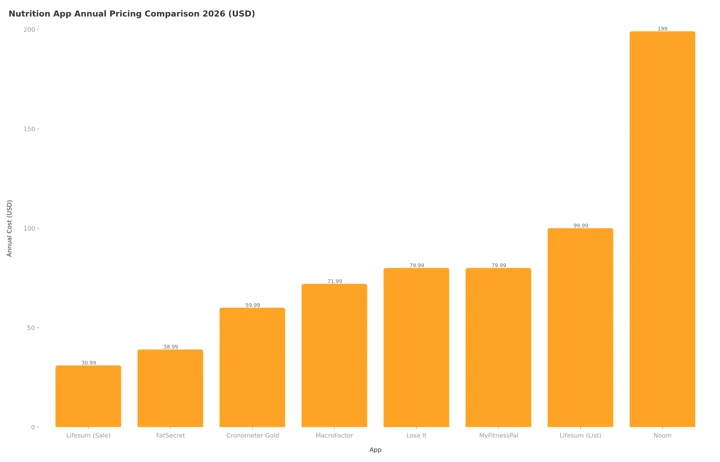 Figure 2: Lifesum annual pricing compared to major competitors. Its range crosses the whole field: $30.99 on promotion is the cheapest bar here, and $99.99 at list price is beaten only by Noom. Lose It now sits at $79.99, level with MyFitnessPal. The FatSecret bar plots $38.99, the low end of its $38.99 to $59.99 regional range.
Is the 3-Month Plan Worth It? 🤔
The 3-month plan appeals to users who want to test Premium without a full year commitment. Here is the math:
- 3-month list price: $29.99 ($10/month)
- 3-month discounted: $14.99-$21.99 ($5-$7.33/month)
- 12-month discounted: $30.99-$45 ($2.58-$3.75/month)
If you renew the 3-month plan four times in a year, you pay $60-$120 compared to $31-$100 for annual. The 3-month plan costs more long-term but provides an exit point if the app does not work for you.
According to a Reddit user discussion, one user reported subscribing to a 3-month plan for around $20 and found it worthwhile despite some bugs with AI features.
When the 3-month plan makes sense:
- First time trying Lifesum
- Unsure if you will stick with tracking
- Short-term goal (wedding, vacation, sports event)
- Budget cannot handle the annual payment upfront
Is the Annual Plan Worth It? 💎
The annual plan offers the best per-month value. At $30.99-$45 per year (discounted), you pay roughly $2.58-$3.75 per month compared to $7.49 monthly or $5-$7.33 for the 3-month plan.
When the annual plan makes sense:
- You have used Lifesum before and know it works for you
- Long-term health goals requiring consistent tracking
- You want to save 50-65% compared to shorter plans
- You can afford the upfront cost
When the annual plan does not make sense:
- First time using any nutrition app
- History of abandoning subscriptions
- Uncertain about your dietary goals
Before You Subscribe
Lifesum's store listing marks a free trial on all three Premium subscriptions, but the length and whether you qualify depend on your region and store account, so read the paywall before you tap. Three months free only comes through an employer benefit like Wellhub or Edenred, which our Lifesum free trial deals guide walks through. Once you pay, refunds depend on your app store policies.
What Makes Lifesum Different from Other Apps? 🎯
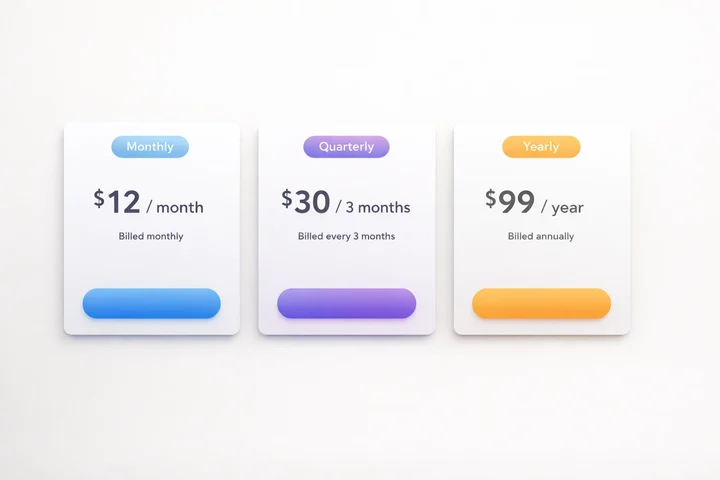 Choosing the right plan comes down to knowing what features matter most to you
Lifesum stands out in several ways that affect whether its pricing is justified for you:
The Life Score System
Unlike most calorie trackers that just count calories, Lifesum gives you a weekly "Life Score" ranging from 0 to 150. This score combines:
- Your food choices and nutritional balance
- Exercise activity
- Sleep patterns (if connected to wearables)
- Water intake
- Progress toward your stated goals
According to Lifehacker's reviewer, seeing your overall Life Score laid out in pastel colors and without shaming is "actually pretty helpful" for understanding your week at a glance.
Positive Psychology Approach
Many users who previously felt stressed by calorie counting report that Lifesum's approach feels different. The app uses smiley faces instead of red warning colors. A food aligned with your goals shows a happy face, while foods that are less aligned show neutral or sad faces - but in a way that feels "cute" rather than punishing.
The Lifehacker reviewer specifically noted: "I downloaded it, vowing to delete it the moment it made me feel bad about myself, but it never did."
Multiple Input Methods
Lifesum Premium offers five ways to log food:
- Barcode scanning - Most accurate for packaged foods
- Quick Track - Shows your commonly eaten foods
- Image - AI estimates nutrition from photos
- Text - Type what you ate
- Voice - Say what you ate
The AI-based methods (image, text, voice) are less accurate but faster. Users who need exact macro tracking should stick with barcode and manual entry. Photo logging is the part most people want to compare across apps, so if that is your deciding factor, see how an AI food tracker reads a plate.
Diet Plan Flexibility
Lifesum offers 12+ specialized diet plans you can switch between at any time:
- Sugar Detox
- Paleo
- Keto Burn / Keto Maintain
- Vegan for a Week
- 16:8 Morning / Evening Fasting
- Hormonal Balance
- 3 Week Weight Loss
- Protein Weight Loss
- Mediterranean
- Clean Eating
How to Get the Best Lifesum Deal in 2026 💡
Based on published prices and offers, here are strategies to pay less:
1. Wait for Promotions
Lifesum regularly discounts during:
- New Year (January) - biggest discounts
- Summer (May-June)
- Black Friday / Cyber Monday (November)
- Back-to-school (August-September)
The best discounts often appear around New Year when people set health resolutions.
2. Check Email Offers
If you create a free account but do not subscribe, Lifesum often sends discount offers via email within 2-4 weeks. Some users report receiving 50% off codes.
3. Compare App Store vs Website
Prices sometimes differ between:
- iOS App Store
- Google Play Store
- Lifesum website direct purchase
Check all three before committing.
The Daily Cost That Puts Everything in Perspective
Here is the simple math that makes the Lifesum pricing decision obvious:
| Plan | Annual Cost | Monthly | Weekly | Daily |
|---|---|---|---|---|
| Monthly (where available) | $89.88 | $7.49 | $1.73 | $0.25 |
| 3-month (list) | $119.96 | $10 | $2.31 | $0.33 |
| 3-month (discounted) | $60-$88 | $5-$7.33 | $1.15-$1.69 | $0.16-$0.24 |
| Annual (list) | $99.99 | $8.33 | $1.92 | $0.27 |
| Annual (discounted) | $30.99-$45 | $2.58-$3.75 | $0.60-$0.87 | $0.08-$0.12 |
At the best discounted annual price of $30.99, you pay just 8 cents per day for Premium features. That is less than a single piece of fruit.
 When you realize premium nutrition tracking costs less than your daily coffee
Compare that to a single coffee at $5 or a protein bar at $3. One month of Lifesum Premium (on the annual plan) costs less than a single takeout meal.
This perspective makes the annual plan the obvious choice if you plan to track for more than 3 months. Lifesum is cheap at these numbers. The question worth asking is whether you will open the app often enough to justify any amount.

Who Should Choose Lifesum? 👤
Best For:
- Diet experimenters who want to try keto, Mediterranean, fasting, and more without switching apps
- Macro-curious beginners who find apps like MacroFactor or Cronometer too complex
- Emotional eaters who need a positive, non-shaming tracking experience
- Fitness app collectors who already use Fitbit, Apple Watch, Runkeeper, or Withings
Not Ideal For:
- Micronutrient trackers who need detailed vitamin and mineral data (try Cronometer)
- Community seekers who want social features and group challenges (try WeightWatchers)
- Coaching clients who need personalized human guidance (try Noom)
- Indian food loggers who need accurate entries for biryani, dosa, dal, and regional dishes (try NutriScan)
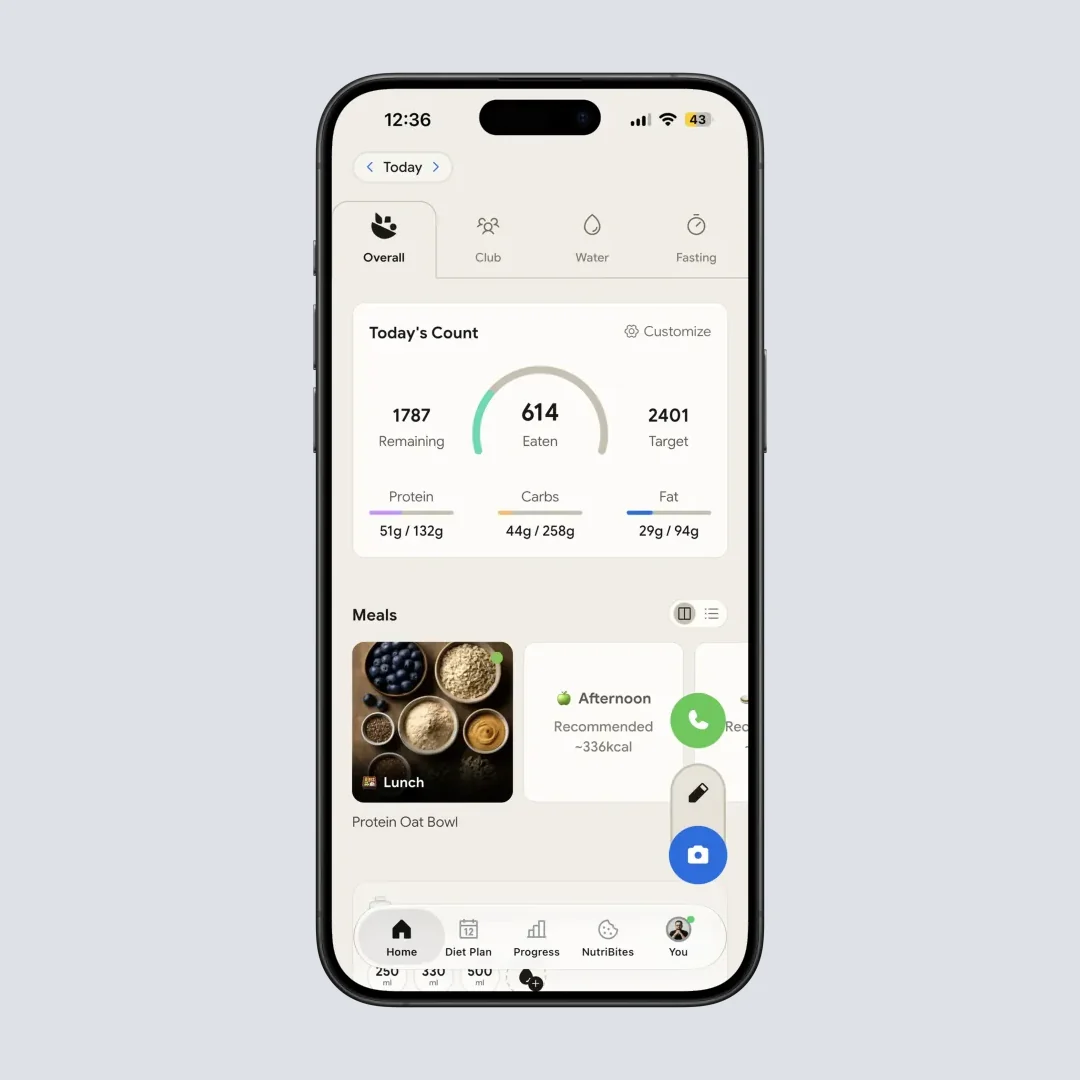
NutriScan's home page (Home > Nutrition Card) provides detailed daily macro tracking with AI-powered meal scanning - an alternative worth trying if Lifesum does not fit your needs
How to Cancel Lifesum Premium 🚪
Since subscriptions run through Apple App Store or Google Play, you use standard platform cancellation:
On iPhone:
- Open Settings
- Tap your name at the top
- Tap Subscriptions
- Find Lifesum and tap Cancel Subscription
On Android:
- Open Google Play Store
- Tap your profile icon
- Tap Payments & subscriptions > Subscriptions
- Find Lifesum and tap Cancel
According to PCMag, Lifesum keeps cancellation easy because it relies on standard app store subscription management rather than custom cancellation flows. Our step-by-step guide to canceling Lifesum Premium covers the edge cases, including what happens to a plan bought through the web.
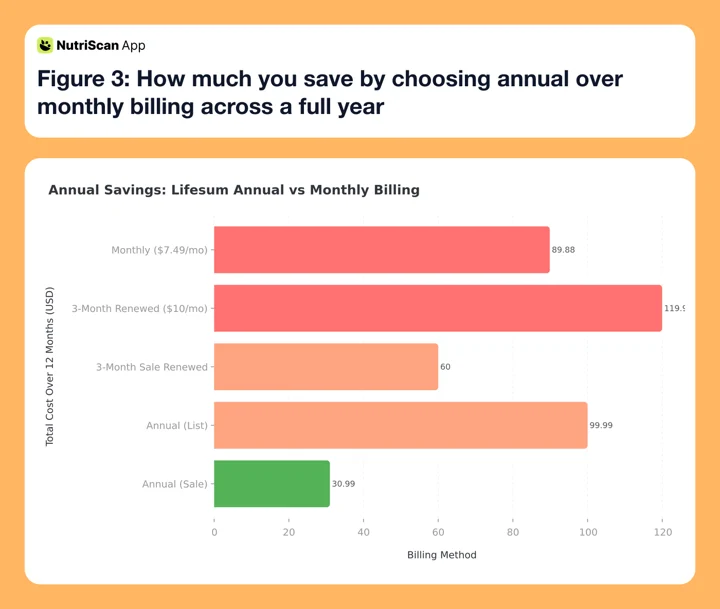 Figure 3: Twelve months of Lifesum under each plan. Only the promotional annual price beats monthly billing by a wide margin; at the $99.99 list price the annual plan costs more than twelve months at $7.49.
Conclusion: Which Lifesum Plan Should You Choose? 📝
For most users in 2026, the annual plan during a promotional period offers the best value at $31-$45 per year. This works out to less than $4 per month for full access to 12+ diet plans, macro tracking, and detailed nutrition data.
If you are new to Lifesum or unsure about committing, the 3-month plan at $15-$22 provides a reasonable trial period without the full year lock-in.
The monthly option at $7.49 only makes sense if it is available in your region and you genuinely cannot commit to 3 months.
At 8 cents per day on the best annual deal, Lifesum is one of the most affordable premium nutrition trackers on the market. The bigger cost is your attention, because a tracker only pays off if you open it every day. If Lifesum is not holding your attention, our roundup of Lifesum alternatives covers the trackers people switch to most, and our diet plan guide helps you pick a structure first.
Track your nutrition journey with NutriScan to see how your eating habits compare and find the approach that works best for your health goals.
Frequently Asked Questions ❓
Q: Is Lifesum free?
A: Yes. Lifesum has a free tier with no expiry, covering calorie logging, the barcode scanner, water and weight tracking, exercise logging and one diet plan. Macro breakdowns, the 12+ diet plans, meal plans with shopping lists and an ad-free app all sit behind Premium.
Q: How much does Lifesum Premium cost?
A: List prices are $7.49 a month where a monthly plan exists, $29.99 for 3 months, $49.99 for 6 months and $99.99 a year. On promotion the year falls to roughly $30.99 to $45, which is 8 to 12 cents a day. These are standard US prices as of mid 2026 and they change by region.
Q: Does Lifesum have a free trial?
A: Lifesum's store listing marks a free trial on all three Premium subscriptions, so you can usually test Premium before the first charge. Length and eligibility depend on your store account and region. A three-month free stretch comes only from an employer benefit such as Wellhub or Edenred.
Q: Can I get a refund from Lifesum?
A: Refund policies depend on your app store. Apple and Google typically offer refunds within 48 hours of purchase if you contact their support. Lifesum does not handle refunds directly since subscriptions go through app stores. Our refund rules comparison sets out what Apple and Google actually approve.
Q: Why is my Lifesum price different from what I read online?
A: Lifesum uses regional pricing that varies by country. Your local app store currency, taxes, and promotional status all affect the final price. The numbers in this article reflect US pricing - other regions may be higher or lower.
Q: Is Lifesum cheaper than MyFitnessPal?
A: It depends on the plan. Lifesum annual (discounted) at $31-$45 is cheaper than MyFitnessPal Premium annual at $79.99. However, MyFitnessPal has a more generous free tier and a larger food database. Our MyFitnessPal pricing guide breaks down every MyFitnessPal tier.
Q: Is Lifesum the same app as Life360?
A: No. Life360 is a family location sharing app and has nothing to do with nutrition. Lifesum is the Stockholm-built calorie and diet tracker priced in this article. The two names get crossed in search because both start with Life, and neither subscription gives you anything in the other app.
Q: Can I share my Lifesum subscription with family?
A: No, Lifesum Premium is tied to a single account. There is no family plan option. Each family member would need their own subscription.
Q: Why is there no monthly option in my country?
A: Lifesum removed monthly subscriptions in certain markets like the US as a business strategy. By eliminating the monthly option, users must commit to at least 3 months, reducing churn and making revenue more predictable.
Q: What are the best times to get a Lifesum discount?
A: The best discounts typically appear during New Year (January), Black Friday (November), and summer (May-June). Creating a free account and waiting for email offers can also bring 50% off codes.
Q: Does Lifesum work for Indian foods?
A: Lifesum's food database is strong for Western foods but may lack accurate entries for Indian dishes like biryani, dosa, dal variations, or regional specialties. NutriScan and HealthifyMe both include Indian dishes in their food databases.