Akuma Onigiri: Calories, Nutrition and Health Benefits
Japan's most addictive convenience store rice ball, packed with umami from mentsuyu broth, crispy tenkasu, and fragrant aonori seaweed.
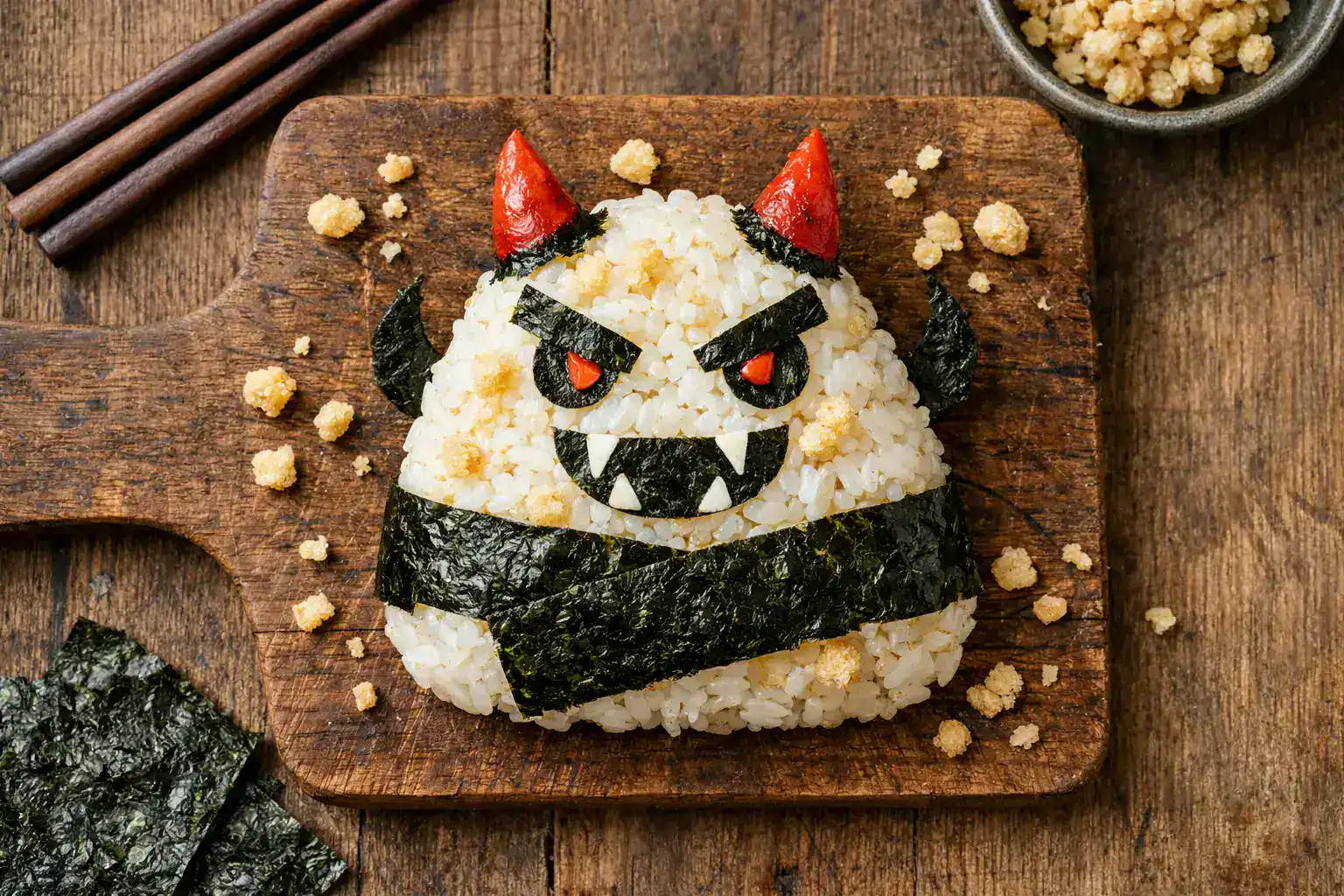
Quick Nutrition Facts
Per 1 Akuma Onigiri (110g)
| Nutrient | Amount |
|---|---|
| Calories | 200 kcal |
| Protein | 4g |
| Carbohydrates | 35g |
| Fiber | 0.5g |
| Sugars | 1.5g |
| Fat | 5g |
| Sodium | 480mg |
| Potassium | 35mg |
| Iron | 0.8mg |
| Vitamin B1 | 0.04mg |
Macronutrient Breakdown
 ChatGPT
  Claude
  AI Mode
  Perplexity
NUTRITIONIST INSIGHT
Akuma Onigiri delivers 200 calories of quick energy with a satisfying umami punch. The white rice provides fast-digesting carbs ideal for pre-workout fuel, but the tenkasu adds 5g of fat from deep-fried batter. Pair with miso soup and vegetables for a more balanced konbini meal.
Myth Busters
MYTH #1: Akuma Onigiri Is Extremely Unhealthy Junk Food
TRUTH: At 200 calories, Akuma Onigiri is comparable to a granola bar. While it lacks fiber and micronutrients, white rice provides easily digestible energy without the added sugars found in many processed snacks.
MYTH #2: The "Devil" Name Means It's Loaded with Fat
TRUTH: With only 5g of fat per serving, Akuma Onigiri has less fat than a single tablespoon of butter. The name refers to how addictively delicious it tastes, not its nutritional profile.
MYTH #3: Rice Balls Cause Diabetes
TRUTH: No single food causes diabetes. While white rice has a higher glycemic index (GI 70-73), portion control and pairing with protein or vegetables can significantly reduce blood sugar impact.
MYTH #4: Convenience Store Onigiri Contains Harmful Preservatives
TRUTH: Japanese konbini onigiri like Akuma Onigiri use minimal preservatives. Lawson's version contains simple ingredients: rice, mentsuyu, tenkasu, green onions, and aonori seaweed. Japanese food safety standards are among the strictest globally.
MYTH #5: All Calories from Rice Are "Empty Calories"
TRUTH: Rice provides manganese, selenium, and B vitamins alongside its carbohydrate energy. While not as nutrient-dense as whole grains, enriched white rice still contributes essential minerals to your diet.
NutriScore by Health Goals
| Health Goal | NutriScore | Why This Score? |
|---|---|---|
| Weight Loss |  | 200 calories with minimal fiber (0.5g). Low satiety factor means you may eat multiple. Limit to 1 per day as a controlled snack. |
| Muscle Gain | | Quick carbs (35g) for glycogen replenishment but only 4g protein. Add a protein-rich side like edamame or chicken. |
| Diabetes Management |  | White rice has high GI (70-73). Research shows white rice increases postprandial glucose significantly. Eat with protein and vegetables. |
| PCOS Management | | High-GI white rice can spike insulin levels. Limit portions and always pair with fiber-rich foods. |
| Pregnancy Nutrition | | Safe to eat during pregnancy. Rice provides quick energy. ACOG recommends whole grains over refined, so don't rely on it as a staple. |
| Viral/Flu Recovery |  | Gentle on the stomach, easy to digest, provides quick energy when appetite is low. The warm mentsuyu-flavored rice is soothing. |
PERSONALIZED NUTRITION
Track your meals with NutriScan for personalized NutriScores based on your specific health goals!
Blood Sugar Response to Akuma Onigiri
Understanding how this rice ball affects your blood glucose can help you make informed decisions about when and how to eat it.
Typical Glucose Response Curve
This chart shows typical blood glucose response for general healthy individuals. Individual responses may vary. Not medical advice.
How to Flatten the Spike
Pairing high-GI rice with protein or healthy fat slows glucose absorption and reduces the peak blood sugar level:
- 🥚 Boiled egg or tamago - Adds protein and healthy fats, classic konbini pairing
- 🫘 Edamame - Plant protein and fiber from soybeans
- 🥗 Seaweed salad - Adds fiber and minerals with minimal calories
- 🍵 Green tea - Catechins may help moderate blood sugar response
This combination not only reduces the glucose spike but also extends energy release, keeping you fuller for longer.
Cultural Significance
Akuma Onigiri (Akuma no Onigiri) first appeared at Lawson convenience stores in 2018 and became an instant viral sensation, selling over 200,000 units in just four weeks.
In Japan:
- Konbini (convenience store) food culture is a uniquely Japanese institution
- Onigiri is Japan's most popular grab-and-go meal, with billions sold annually
- Lawson, 7-Eleven, and FamilyMart compete fiercely with new onigiri flavors
- The "devil" branding tapped into the trend of naming irresistibly tasty foods after the forbidden
Global Impact:
- Japanese konbini culture has inspired convenience store innovation worldwide
- Onigiri has spread to international markets in the US, UK, Australia, and Southeast Asia
- Home cooks worldwide recreate Akuma Onigiri using mentsuyu, tenkasu, and aonori
- The recipe showcases how simple, inexpensive ingredients can create cult food hits
Compare & Substitute
Akuma Onigiri vs Similar Snacks (Per 100g)
| Nutrient | Akuma Onigiri | Plain Onigiri | Sushi Roll | Sandwich |
|---|---|---|---|---|
| Calories | 182 kcal | 179 kcal | 150 kcal | 250 kcal |
| Carbs | 32g | 39g | 30g | 28g |
| Fiber | 0.5g | 0.5g | 1g | 2g |
| Protein | 3.6g | 2.7g | 6g | 12g |
| Fat | 4.5g | 0.3g | 3g | 10g |
| Sodium | 436mg | 300mg | 500mg | 450mg |
| Sugar | 1.4g | 0.5g | 3g | 4g |
| Best For | Quick energy, umami craving | Low-fat energy, simple fuel | Balanced macros, protein boost | Sustained energy, protein |
Frequently Asked Questions
How many calories are in Akuma Onigiri?
One Akuma Onigiri from Lawson contains approximately 200 calories with 35g carbs, 4g protein, and 5g fat. Per 100g, that breaks down to about 182 calories, making it comparable to plain onigiri but with more fat from the tenkasu tempura flakes.
Is Akuma Onigiri healthy?
Akuma Onigiri is a moderate-calorie convenience snack. It provides quick energy from rice carbs but lacks significant fiber, vitamins, or protein.
Best practices: Limit to 1 per day, pair with protein (egg, edamame) and vegetables (salad, miso soup), choose it over higher-calorie konbini options like fried chicken or pastries.
What makes Akuma Onigiri so addictive?
The combination of mentsuyu (dashi-based noodle broth) seasoned rice, crispy tenkasu, scallions, and aonori seaweed creates layers of umami, texture, and aroma. Mentsuyu is rich in glutamate, the amino acid responsible for the savory umami taste that keeps you reaching for more.
Can diabetics eat Akuma Onigiri?
Diabetics should eat Akuma Onigiri in moderation. White rice has a high glycemic index (GI 70-73), which causes rapid blood sugar spikes.
Tips for diabetics:
- Eat half at a time (17g carbs vs 35g)
- Always pair with protein or fiber-rich foods
- Best timing: post-meal as a small side, not as a standalone snack
- Monitor blood sugar 2 hours after eating
What is the difference between regular onigiri and Akuma Onigiri?
Regular onigiri uses plain seasoned rice with a filling (salmon, tuna mayo, umeboshi) wrapped in nori. Akuma Onigiri has no filling; instead, the rice itself is cooked in mentsuyu broth and mixed with tenkasu, green onions, and aonori throughout, creating a uniformly flavored rice ball.
Can I make Akuma Onigiri at home?
Yes. Cook Japanese short-grain rice, mix in mentsuyu (2 tablespoons per cup of rice), tenkasu, chopped scallions, and aonori. Shape into triangles or balls. The homemade version lets you control sodium and oil levels while keeping the addictive flavor.


Similar Nutritious Foods
4505 Chicharrones Classic Chili Salt
7 Eleven Japan Crispy Corn Cheese
Explore More Nutrition Tools & Resources
AI Calorie Counter App - Snap a Photo, Get Macros
AI Nutritionist App That Reads Your Logged Meals
Best Protein Supplements for Women
Bulking Meal Plan App That Sets Your Surplus
ChatGPT Calorie Counter Alternative That Keeps the Total
ChatGPT Diet Plan Alternative That Tracks What You Eat
ChatGPT Weight Loss Coach Alternative With a Food Log
Fast Food Calorie Counter App That Reads the Tray
Free Calorie Tracker App with AI Photo Scans | NutriScan
Indian Diet Plan App With Veg and Non Veg Meals
Indian Food Calorie Calculator - Get Instant Nutrition Facts for Desi Meals — 2026
Intermittent Fasting for Women, Timer and Meal Log App
Intermittent Fasting Tracker App - Free Fasting Timer
Macro Tracker App That Fills the Numbers From a Photo
Mediterranean Diet Meal Plan App That Counts the Oil
Micronutrient Tracker App for Vitamins and Minerals
MyFitnessPal Alternative That Stays Free | NutriScan
NutriScore App: A Free Grade on Every Meal | NutriScan
Nutrition Label Scanner App for the Amount You Ate
Second Trimester Protein Guide
Vegetarian Meal Plan App With a Protein Target
Voice Calorie Counter - Speak to Track Meals Hands-Free
Water and Calorie Tracker App - Free Water Log