Amaranth Grain: Calories, Nutrition and Health Benefits
Ancient African superfood with 30% more protein than rice, complete amino acid profile, and powerful antioxidants for modern nutrition.
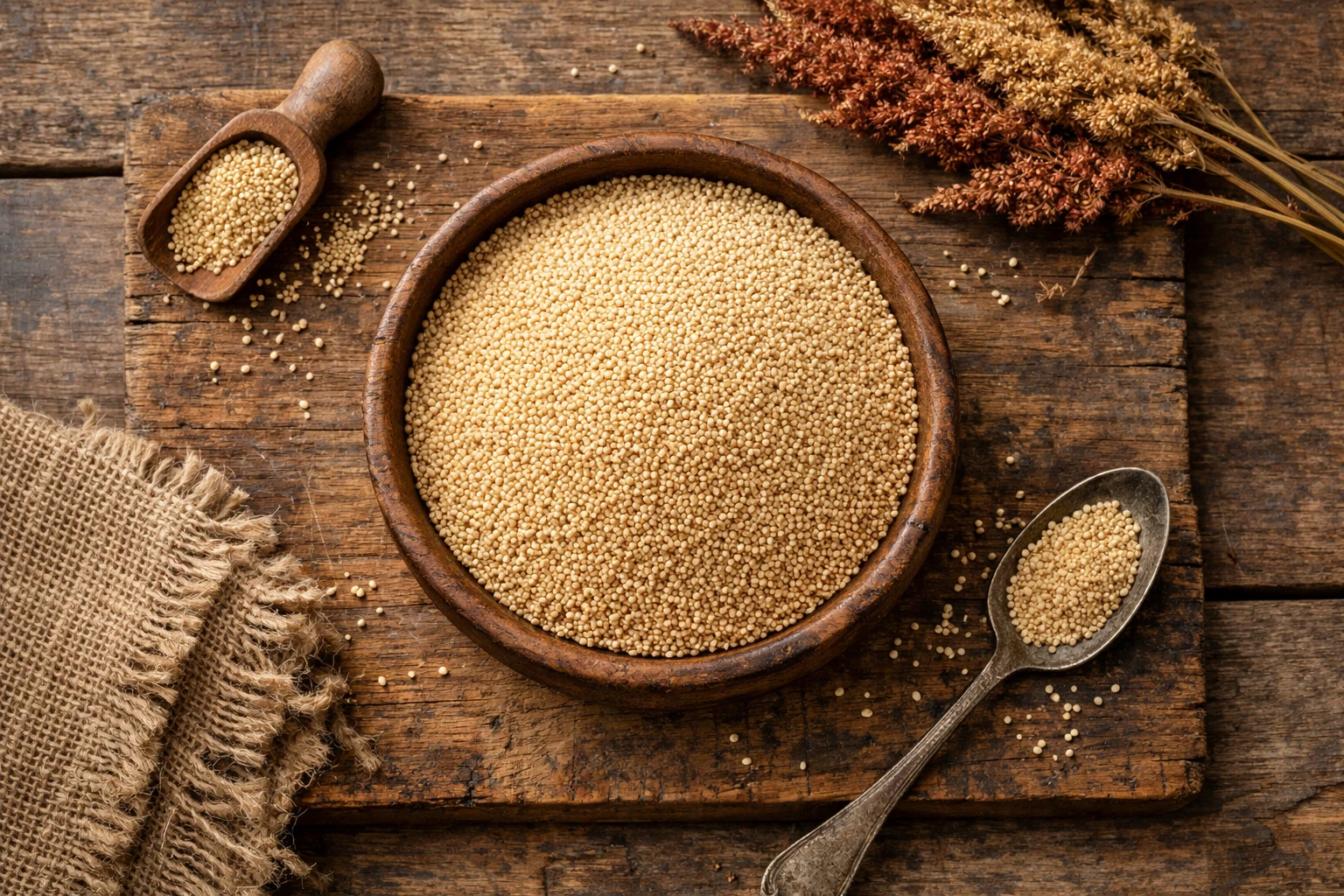
Quick Nutrition Facts
Per 100g Dry Grain
| Nutrient | Amount |
|---|---|
| Calories | 371 kcal |
| Protein | 14g |
| Carbohydrates | 65g |
| Fiber | 7g |
| Sugars | 1.7g |
| Fat | 7g |
| Iron | 7.6mg |
| Calcium | 159mg |
| Magnesium | 248mg |
| Phosphorus | 557mg |
Macronutrient Breakdown
 ChatGPT
  Claude
  AI Mode
  Perplexity
NUTRITIONIST INSIGHT
Amaranth is a complete protein containing all 9 essential amino acids—rare for plant foods. The 7g fiber per 100g supports digestive health and helps stabilize blood sugar.
Myth Busters
MYTH #1: Amaranth Is Just Another Quinoa
TRUTH: While both are pseudocereals, amaranth has 30% more protein than rice and contains lysine, an amino acid often lacking in grains. Its calcium content (159mg per 100g) is higher than quinoa (47mg).
MYTH #2: Amaranth Is Too High in Calories for Weight Loss
TRUTH: With 7g fiber and 14g protein per 100g, amaranth promotes satiety and reduces overall calorie intake. High-protein, high-fiber grains help weight management better than refined grains. A ¼ cup dry serving (about 90 calories) expands to a filling portion.
MYTH #3: Grains Spike Blood Sugar—Amaranth Included
TRUTH: Amaranth has a low-to-medium glycemic index (35-50), significantly lower than white rice (73). The 7g fiber slows glucose absorption, making it suitable for diabetes management.
MYTH #4: Amaranth Is Hard to Digest
TRUTH: Cooked amaranth is easily digestible and gentle on the stomach. The fiber supports healthy gut bacteria. Soaking before cooking can further improve digestibility, though it's not necessary.
MYTH #5: Only Traditional Grains Provide Essential Nutrients
TRUTH: Amaranth delivers 7.6mg iron (42% DV), 248mg magnesium (62% DV), and 557mg phosphorus (79% DV) per 100g—outperforming wheat and rice in most micronutrients.
MYTH #6: You Need Animal Protein for Complete Amino Acids
TRUTH: Amaranth is a complete plant protein with all essential amino acids, including lysine often missing in other grains. Ideal for vegetarian and vegan diets.
NutriScore by Health Goals
| Health Goal | NutriScore | Why This Score? |
|---|---|---|
| Weight Loss |  | 7g fiber + 14g protein promote fullness; low GI (35-50) stabilizes appetite. Limit to ¼ cup dry per meal. |
| Muscle Gain |  | Complete protein (14g per 100g dry), all 9 essential amino acids, plus magnesium (248mg) supports muscle recovery. |
| Diabetes Management | | Low GI (35-50), high fiber (7g) slows glucose absorption; better blood sugar control than refined grains. |
| PCOS Management | | Low GI and high fiber improve insulin sensitivity; portion control recommended (¼ cup dry). |
| Pregnancy Nutrition | | Iron (7.6mg) prevents anemia, folate (82mcg) supports fetal development, calcium for bones. |
| Viral/Flu Recovery | | Iron, zinc, and complete protein support immune function; easy to digest as warm porridge. |
PERSONALIZED NUTRITION
Track your meals with NutriScan for personalized NutriScores based on your specific health goals!
Blood Sugar Response to Amaranth
Amaranth's low-to-medium glycemic index and high fiber create a gentle, sustained glucose response ideal for diabetes management and stable energy.
Typical Glucose Response Curve
This chart shows typical blood glucose response for general healthy individuals. Individual responses may vary. Not medical advice.
How to Flatten the Spike
Pairing amaranth with protein or healthy fat enhances nutrient absorption and extends energy release:
- 🥚 Scrambled eggs or tofu - Complete protein pairing
- 🥑 Avocado slices - Healthy fats slow digestion
- 🥛 Greek yogurt or paneer - Adds protein and probiotics
- 🌰 Almonds or walnuts - Omega-3s and fiber boost
This combination reduces glucose spikes, stabilizes energy, and keeps you fuller longer.
Cultural Significance
Amaranth has been cultivated for over 8,000 years, revered by Aztec, Inca, and Maya civilizations as a sacred grain.
In Africa:
- Traditional staple in East Africa (Kenya, Uganda, Tanzania)
- Called "mchicha" in Swahili; leaves eaten as vegetables
- Used in porridge, flatbreads, and ceremonial foods
- Recently rediscovered as climate-resilient superfood
In India:
- Known as "rajgira" or "ramdana" (grain of the gods)
- Essential during Hindu fasting periods (Navratri, Ekadashi)
- Made into laddoos, chikki, and flour for rotis
- Ayurveda uses amaranth for strength and vitality
Global Impact:
- Thrives in poor soil and drought conditions—key for food security
- Entire plant edible: grain, leaves (high in vitamins A and C), and stems
- NASA studied amaranth for space missions due to high nutrition density
Compare & Substitute
Amaranth vs Similar Grains (Per 100g Dry)
| Nutrient | 🌾 Amaranth | 🌾 Quinoa | 🍚 Brown Rice | 🌾 Millet |
|---|---|---|---|---|
| Calories | 371 kcal | 368 kcal | 370 kcal | 378 kcal |
| Carbs | 65g | 64g | 77g | 73g |
| Fiber | 7g | 7g | 3.5g | 8.5g |
| Protein | 14g | 14g | 7.9g | 11g |
| Fat | 7g | 6g | 2.9g | 4.2g |
| Iron | 7.6mg | 4.6mg | 1.5mg | 3mg |
| Calcium | 159mg | 47mg | 23mg | 8mg |
| Magnesium | 248mg | 197mg | 143mg | 114mg |
| Best For | Complete protein, high iron | Balanced nutrition | Low-fat option | High fiber |
Frequently Asked Questions
Is amaranth good for weight loss?
Yes, amaranth supports weight loss in portion-controlled amounts. With 7g fiber and 14g protein per 100g, it promotes fullness, stabilizes blood sugar, and reduces cravings.
Best practices: Cook ¼ cup dry (90 calories cooked weight ~250 calories); pair with vegetables and lean protein; use as breakfast porridge or grain bowl base; avoid adding excess oil or sugar.
Can diabetics eat amaranth?
Diabetics can eat amaranth—it's one of the best grain choices. With low-to-medium GI (35-50), 7g fiber, and slow-digesting complex carbs, amaranth regulates blood sugar better than white rice or wheat.
Tips for diabetics: Limit to ½ cup cooked per meal; pair with protein and non-starchy vegetables; monitor blood sugar 2 hours after eating; choose amaranth over refined grains.
How much protein is in amaranth?
Amaranth contains 14g protein per 100g dry grain—30% more than rice. It's a complete protein with all 9 essential amino acids, including lysine often missing in plant foods.
For muscle gain or high-protein diets, combine amaranth with legumes, eggs, dairy, or lean meats for enhanced amino acid profile.
What are the main health benefits of amaranth?
Key Benefits:
- Complete Plant Protein: All 9 essential amino acids for muscle repair and growth
- High Iron Content: 7.6mg (42% DV) prevents anemia; supports oxygen transport
- Bone Health: 159mg calcium + 248mg magnesium + 557mg phosphorus
- Heart Health: Squalene and phytosterols reduce cholesterol
- Digestive Support: 7g fiber promotes regularity and gut health
- Blood Sugar Control: Low GI (35-50) + fiber stabilize glucose
Is amaranth gluten-free?
Yes, amaranth is 100% gluten-free. It's a pseudocereal (seed, not true grain) safe for celiac disease, gluten sensitivity, and wheat allergies.
Uses: Flour substitute in baking; breakfast porridge; rice alternative in grain bowls; thickener for soups; popped amaranth as crunchy topping.
How do you cook amaranth grain?
Basic Method: Rinse amaranth; use 3 cups water per 1 cup grain; bring to boil; reduce heat; simmer covered 20 minutes; let rest 5 minutes.
Texture: Soft, slightly sticky, porridge-like consistency.
Serving ideas: Breakfast porridge with milk and fruit; savory grain bowl with vegetables; rice substitute in stir-fries; add to soups for thickness.
Storage: Cooked amaranth keeps 5 days refrigerated; freeze up to 3 months.
How many calories in 1 cup cooked amaranth?
1 cup cooked amaranth (246g) contains approximately 251 calories. This is for plain cooked amaranth without added oil, butter, or seasonings.
Portion guide: ½ cup cooked = 125 calories (weight loss); 1 cup cooked = 251 calories (maintenance); 1.5 cups cooked = 375 calories (muscle gain, active lifestyles).
Track your meals with NutriScan app to see how amaranth fits your personal nutrition goals.
What does amaranth taste like?
Amaranth has a mild, earthy, slightly nutty flavor with a hint of sweetness. When cooked, it becomes creamy and porridge-like, softer than quinoa.
Flavor pairings: Cinnamon and honey for sweet porridge; garlic and herbs for savory dishes; coconut milk for tropical flavor; lemon and olive oil for Mediterranean style.


Similar Nutritious Grains
4505 Chicharrones Classic Chili Salt
7 Eleven Japan Crispy Corn Cheese
Explore More Nutrition Tools & Resources
AI Calorie Counter App - Snap a Photo, Get Macros
AI Nutritionist App That Reads Your Logged Meals
Best Protein Supplements for Women
Bulking Meal Plan App That Sets Your Surplus
ChatGPT Calorie Counter Alternative That Keeps the Total
ChatGPT Diet Plan Alternative That Tracks What You Eat
ChatGPT Weight Loss Coach Alternative With a Food Log
Fast Food Calorie Counter App That Reads the Tray
Free Calorie Tracker App with AI Photo Scans | NutriScan
Indian Diet Plan App With Veg and Non Veg Meals
Indian Food Calorie Calculator - Get Instant Nutrition Facts for Desi Meals — 2026
Intermittent Fasting for Women, Timer and Meal Log App
Intermittent Fasting Tracker App - Free Fasting Timer
Macro Tracker App That Fills the Numbers From a Photo
Mediterranean Diet Meal Plan App That Counts the Oil
Micronutrient Tracker App for Vitamins and Minerals
MyFitnessPal Alternative That Stays Free | NutriScan
NutriScore App: A Free Grade on Every Meal | NutriScan
Nutrition Label Scanner App for the Amount You Ate
Second Trimester Protein Guide
Vegetarian Meal Plan App With a Protein Target
Voice Calorie Counter - Speak to Track Meals Hands-Free
Water and Calorie Tracker App - Free Water Log