Arancini (Italian Rice Balls): Calories, Nutrition and Health Benefits
Sicilian golden-fried rice balls with savory fillings - a comfort food classic now trending in Australia and globally.
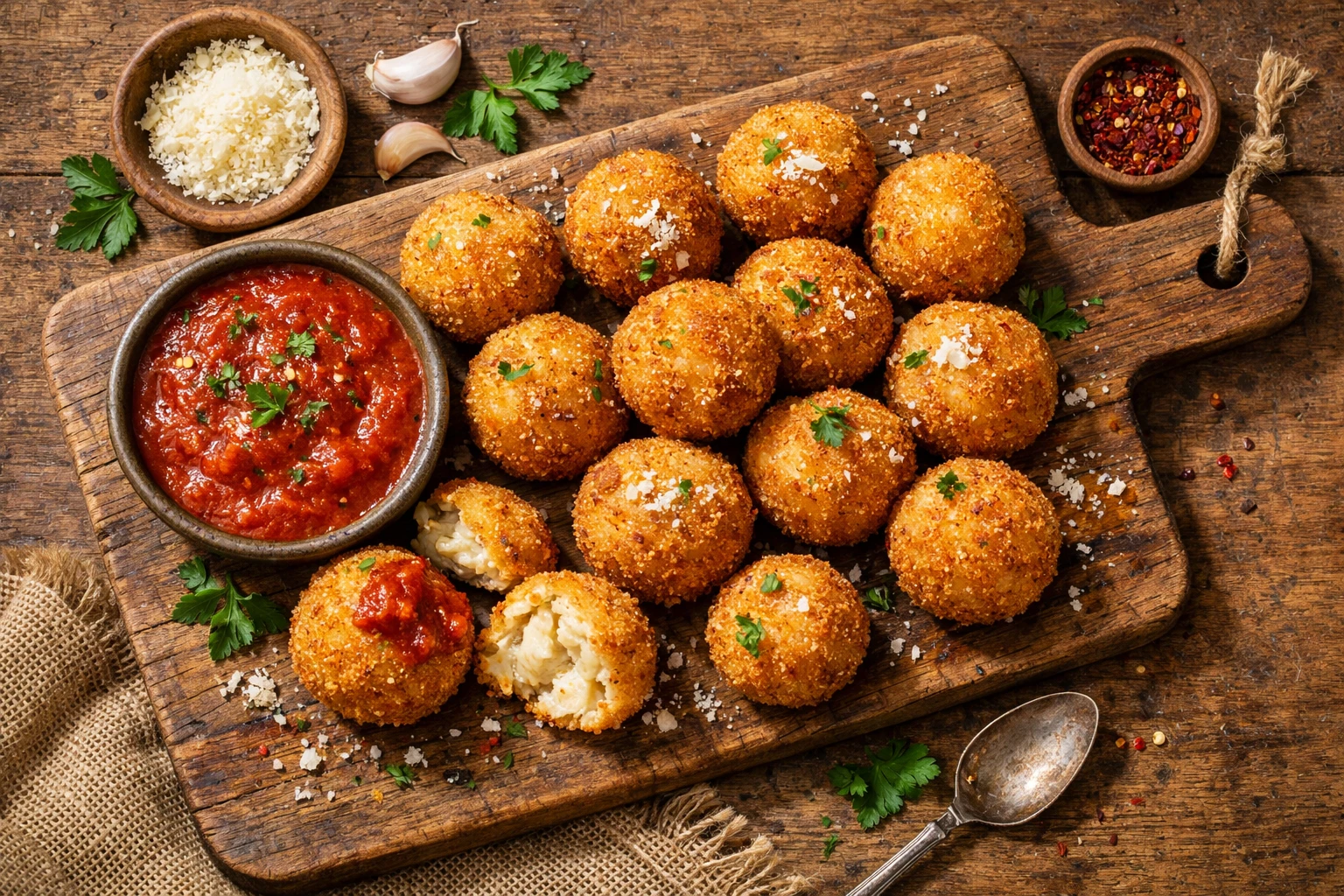
Quick Nutrition Facts
Per 1 Ball (80g)
| Nutrient | Amount |
|---|---|
| Calories | 250 kcal |
| Protein | 8g |
| Carbohydrates | 28g |
| Fiber | 1g |
| Sugars | 2g |
| Fat | 12g |
| Saturated Fat | 3g |
| Sodium | 350mg |
| Calcium | 80mg |
| Iron | 1.2mg |
Macronutrient Breakdown
 ChatGPT
  Claude
  AI Mode
  Perplexity
NUTRITIONIST INSIGHT
Arancini are calorie-dense due to deep frying, providing 312 calories per 100g. The cheese and meat fillings add protein and calcium, but portion control is key. Choose baked versions to reduce calories by 30-40%.
Myth Busters
MYTH #1: Arancini Are Just Empty Carbs
TRUTH: While rice-based, arancini contain 8g protein per ball from cheese and meat fillings, plus calcium and iron. The high glycemic index white rice (GI 70+) does spike blood sugar, but protein and fat from fillings slow absorption.
MYTH #2: Fried Foods Are Always Unhealthy
TRUTH: Deep frying adds calories and saturated fat, but arancini can fit balanced diets when portioned correctly. Baked versions retain flavor with 40% fewer calories. Occasional indulgence (1-2 times monthly) won't derail health goals if overall diet is balanced.
MYTH #3: You Can't Eat Arancini on a Diet
TRUTH: Portion control makes it possible. Half a ball (125 calories) as an appetizer paired with salad provides satisfaction without excess calories. Track with apps like NutriScan to fit into daily calorie budget. Choose vegetable-filled versions for lower calories.
MYTH #4: All Arancini Have the Same Calories
TRUTH: Calories vary widely by size (50-150g per ball), filling (meat vs vegetable), and cooking method. Restaurant versions can exceed 400 calories per large ball, while mini baked arancini may have only 90 calories each. Always check specific nutrition info.
MYTH #5: Arancini Are Too Heavy for Post-Workout
TRUTH: The carb-protein combo (28g carbs + 8g protein per ball) actually supports muscle recovery post-workout. The fat slows digestion, making them better for 1-2 hours post-exercise rather than immediately after. Pair with vegetables for balanced recovery meal.
NutriScore by Health Goals
| Health Goal | NutriScore | Why This Score? |
|---|---|---|
| Weight Loss |  | 250 calories per ball, high fat from frying. Limit to half portion as occasional treat; choose baked versions. |
| Muscle Gain |  | 28g carbs for glycogen, 8g protein for recovery, 350mg sodium for electrolytes. Good post-workout meal. |
| Diabetes Management | | White rice GI 70+ causes rapid glucose spike. Limit to half ball maximum, pair with vegetables/protein. |
| PCOS Management | | High GI rice affects insulin resistance. Occasional only (monthly), choose brown rice versions if available. |
| Pregnancy Nutrition |  | Provides calcium (80mg) and iron (1.2mg), but high sodium (350mg). Limit to 1 ball weekly; ensure thorough cooking to avoid food safety risks. |
| Viral/Flu Recovery | | Easy to digest carbs for energy, protein for immune support, but high sodium may cause bloating. Better options exist. |
PERSONALIZED NUTRITION
Track your meals with NutriScan for personalized NutriScores based on your specific health goals! Use our Online Macro Calculator to find your daily nutrition targets.
Blood Sugar Response to Arancini
Understanding how arancini affect blood glucose helps you make informed decisions about portions and timing.
Typical Glucose Response Curve
This chart shows typical blood glucose response for general healthy individuals. Individual responses may vary. Not medical advice.
How to Flatten the Spike
The protein and fat in arancini already slow glucose absorption compared to plain rice, but these pairings help further:
- 🥗 Large green salad - Fiber slows digestion; eat salad first
- 🥩 Grilled chicken or fish - Add lean protein to balance the meal
- 🥒 Raw vegetables with hummus - Fiber and protein appetizer
- 🍋 Lemon water or vinegar dressing - May slightly reduce glucose spike
Limit portion to half a ball (40g) and combine with high-fiber, high-protein sides for better blood sugar control.
Cultural Significance
Arancini originated in Sicily during the 10th century under Arab rule, when rice cultivation was introduced to the island.
In Sicily:
- Traditional food for Saint Lucy's feast (December 13) in Palermo, Syracuse, and Trapani
- Name means "little oranges" due to golden color and round shape
- Regional variations: cone-shaped in eastern Sicily, round in western Sicily
- Classic fillings: ragù (meat sauce), mozzarella, peas, or ham
Global Impact:
- Trending in Australia as #3 food of 2025 (appetizer category)
- Popular in Italian diaspora communities worldwide
- Modern fusion versions include Asian, Mexican, and vegan fillings
- Street food staple in Italy; gourmet restaurant trend globally
Compare & Substitute
Arancini vs Similar Comfort Foods (Per 100g)
| Nutrient | 🍙 Arancini | 🥟 Samosa | 🌮 Taco (Beef) | 🍕 Pizza (Margherita) |
|---|---|---|---|---|
| Calories | 312 kcal | 262 kcal | 226 kcal | 266 kcal |
| Carbs | 35g | 31g | 18g | 33g |
| Fiber | 1g | 3g | 2g | 2g |
| Protein | 10g | 6g | 12g | 11g |
| Fat | 15g | 13g | 14g | 10g |
| Sodium | 440mg | 480mg | 380mg | 550mg |
| Calcium | 100mg | 40mg | 80mg | 150mg |
| Best For | Post-workout energy | Vegetarian option | Higher protein | Balanced macros |
Frequently Asked Questions
Are arancini good for weight loss?
No, arancini are not ideal for weight loss due to 250 calories per ball and 12g fat from deep frying. However, they can fit strict portion control plans.
Weight loss strategies: Limit to half a ball (125 calories) as appetizer 1-2 times monthly; choose baked versions (40% fewer calories); pair with large green salad; skip if daily calories are limited.
Can diabetics eat arancini?
Diabetics should limit arancini to rare occasions due to high glycemic white rice (GI 70+).
Tips for diabetics: Eat maximum half a ball (14g carbs); always pair with protein and non-starchy vegetables; avoid as meal centerpiece; monitor blood sugar 2 hours after eating; choose brown rice versions if available. The fat content does slow glucose absorption slightly compared to plain rice.
How much protein is in arancini?
One arancini ball (80g) contains 8g of protein from rice, cheese filling (mozzarella or parmesan), and meat (if included in ragù filling). Vegetable-only versions have 5-6g protein.
For muscle gain, arancini provide moderate protein. Pair with additional protein source (chicken, fish, Greek yogurt) for optimal post-workout recovery.
What are the main health benefits of arancini?
Key Benefits:
- Quick Energy: 28g carbs per ball for immediate fuel
- Muscle Recovery: Carb-protein combo supports post-workout glycogen replenishment
- Calcium: 80mg per ball from cheese filling supports bone health
- Iron: 1.2mg per ball aids oxygen transport
- Comfort Food: Satisfies cravings in moderation, supports mental wellbeing
- Cultural Connection: Traditional Sicilian heritage food
Best consumed: Post-workout for athletes, occasional treat for others. Not a daily health food.
When is the best time to eat arancini?
Depends on your goal:
- Muscle Gain: Post-workout (1-2 hours after) to replenish glycogen and support recovery.
- Weight Maintenance: Lunch paired with large salad to balance calories.
- Diabetes: Avoid or limit to half portion with vegetables and protein.
- General Health: Occasional indulgence (1-2 times monthly), not late at night.
IMPORTANT NOTE
Avoid eating arancini late at night due to high calories and carbs that may disrupt sleep and weight management.
Are baked arancini healthier than fried?
Yes, significantly healthier. Baked arancini contain 30-40% fewer calories (approximately 180 calories per ball vs 250 fried) and 50% less fat (6g vs 12g).
Baking benefits: Reduces oil absorption; preserves crispy texture with breadcrumb coating; lowers saturated fat; easier digestion; retains flavor and cultural authenticity. Use cooking spray and bake at 400°F (200°C) for 25-30 minutes.
Recommendation: Choose baked for regular consumption; reserve fried for special occasions.
How many arancini should I eat per meal?
General Guidelines:
- Weight loss: Half a ball maximum as appetizer with salad
- Weight maintenance: 1 ball paired with vegetables and protein
- Muscle gain: 1-2 balls post-workout with additional protein
- Diabetes/PCOS: Avoid or maximum half ball monthly
Avoid excess: More than 2 balls (500+ calories, 56g carbs) can spike blood sugar, exceed calorie budgets, and cause digestive discomfort.
Track with NutriScan app to see how arancini fit your personal nutrition goals.
Can I eat arancini on a low-carb diet?
Challenging due to 28g carbs per ball. Most low-carb diets limit carbs to 50-130g daily; one arancini consumes 20-55% of that budget.
Low-carb strategies: Avoid during strict keto phases (20-30g daily carbs); eat half ball on moderate low-carb days (50-100g); choose cauliflower rice versions if available; prioritize protein and vegetables in meal.
Better low-carb comfort foods exist (zucchini fritters, cheese crisps, meat-based snacks).


Similar Nutritious Foods
4505 Chicharrones Classic Chili Salt
7 Eleven Japan Crispy Corn Cheese
Explore More Nutrition Tools & Resources
AI Calorie Counter App - Snap a Photo, Get Macros
AI Nutritionist App That Reads Your Logged Meals
Best Protein Supplements for Women
Bulking Meal Plan App That Sets Your Surplus
ChatGPT Calorie Counter Alternative That Keeps the Total
ChatGPT Diet Plan Alternative That Tracks What You Eat
ChatGPT Weight Loss Coach Alternative With a Food Log
Fast Food Calorie Counter App That Reads the Tray
Free Calorie Tracker App with AI Photo Scans | NutriScan
Indian Diet Plan App With Veg and Non Veg Meals
Indian Food Calorie Calculator - Get Instant Nutrition Facts for Desi Meals — 2026
Intermittent Fasting for Women, Timer and Meal Log App
Intermittent Fasting Tracker App - Free Fasting Timer
Macro Tracker App That Fills the Numbers From a Photo
Mediterranean Diet Meal Plan App That Counts the Oil
Micronutrient Tracker App for Vitamins and Minerals
MyFitnessPal Alternative That Stays Free | NutriScan
NutriScore App: A Free Grade on Every Meal | NutriScan
Nutrition Label Scanner App for the Amount You Ate
Second Trimester Protein Guide
Vegetarian Meal Plan App With a Protein Target
Voice Calorie Counter - Speak to Track Meals Hands-Free
Water and Calorie Tracker App - Free Water Log