Asado (Argentine BBQ): Calories, Nutrition and Health Benefits
Argentina's beloved wood-fire grilled beef ribs - a protein powerhouse rich in iron, zinc, and B vitamins, best enjoyed in moderation.
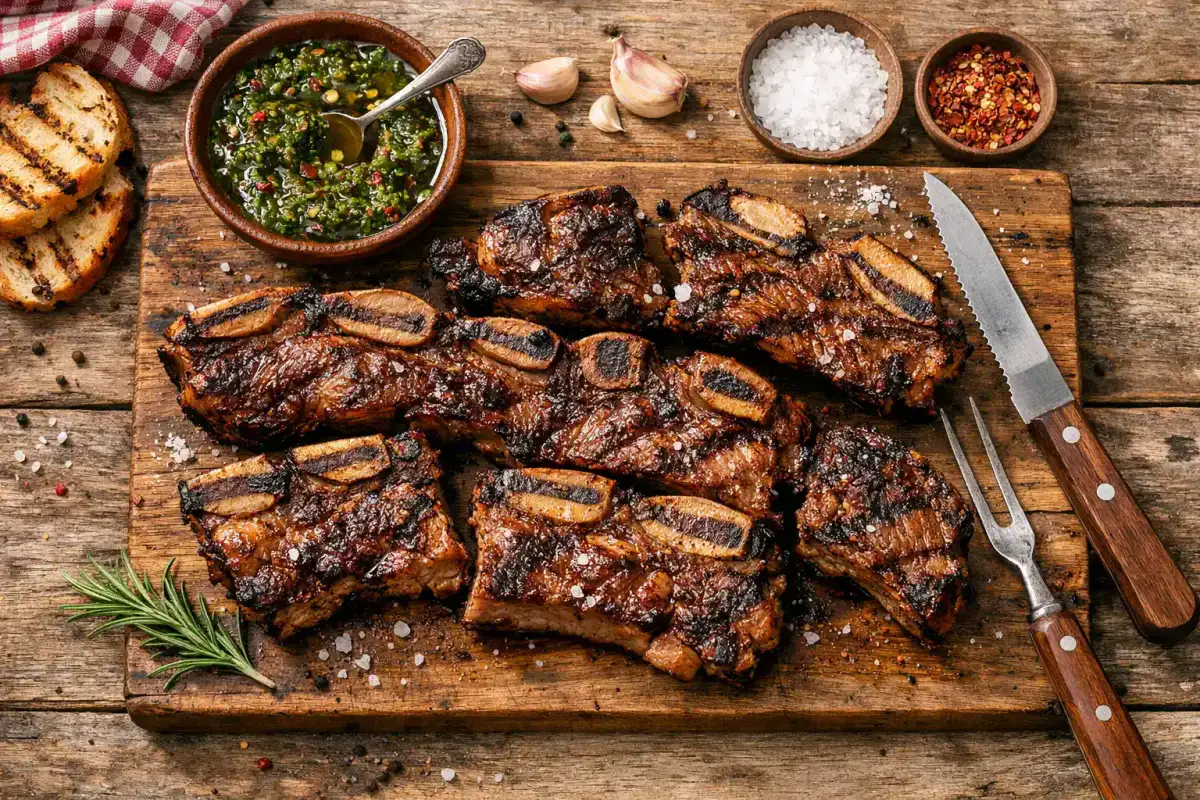
Quick Nutrition Facts
Per 100g Grilled Beef Ribs (Asado)
| Nutrient | Amount |
|---|---|
| Calories | 290 kcal |
| Protein | 26g |
| Carbohydrates | 0g |
| Fiber | 0g |
| Fat | 21g |
| Saturated Fat | 8g |
| Iron | 2.6mg |
| Zinc | 6.5mg |
| Vitamin B12 | 2.5mcg |
| Phosphorus | 200mg |
Macronutrient Breakdown
 ChatGPT
  Claude
  AI Mode
  Perplexity
NUTRITIONIST INSIGHT
Asado provides highly bioavailable heme iron (2.6mg/100g) that's absorbed 2-3x better than plant iron. The high zinc content (6.5mg) supports immune function and testosterone production. For heart health, limit portions to 100-150g and trim visible fat before eating.
Myth Busters
MYTH #1: All Red Meat Is Equally Bad for You
TRUTH: Quality and preparation matter significantly. Grass-fed beef and traditional slow-grilling (like asado) produces fewer harmful compounds than high-heat processed meats. Unprocessed red meat has different health effects than processed varieties.
MYTH #2: Asado Has No Nutritional Value Beyond Protein
TRUTH: Asado is rich in essential micronutrients including iron, zinc, B12, and phosphorus. A 100g serving provides 40% of daily zinc needs and significant amounts of vitamin B12 crucial for nerve function.
MYTH #3: You Should Never Eat Red Meat if You Have Heart Disease Risk
TRUTH: Lean cuts of unprocessed red meat can fit into a heart-healthy diet when consumed in moderation (1-2 times weekly). Choose leaner cuts like entraña (skirt steak), trim visible fat, and balance with vegetables and whole grains.
MYTH #4: Grilling Meat Always Creates Carcinogens
TRUTH: Traditional asado uses indirect heat and wood smoke, producing fewer harmful compounds than direct high-heat grilling. Marinating meat, avoiding charring, and cooking at lower temperatures reduces heterocyclic amine formation.
MYTH #5: Red Meat Causes Immediate Blood Sugar Spikes
TRUTH: Pure meat contains zero carbohydrates and doesn't directly spike blood sugar. Protein and fat slow glucose absorption when eaten with carb-containing sides, potentially improving overall meal glycemic response.
NutriScore by Health Goals
| Health Goal | NutriScore | Why This Score? |
|---|---|---|
| Weight Loss |  | High protein (26g) promotes satiety, but calorie-dense (290 kcal/100g). Limit to 100g portions. |
| Muscle Gain |  | Excellent complete protein source with all essential amino acids. Zinc supports testosterone and recovery. |
| Diabetes Management |  | Zero carbs means no direct blood sugar impact. Moderate portions (100-150g), pair with fiber-rich vegetables. |
| PCOS Management | | Protein and zinc support hormone balance, but high saturated fat may worsen inflammation. Limit to 1x weekly. |
| Pregnancy Nutrition | | Iron prevents anemia, zinc supports fetal development. Ensure meat is well-cooked. |
| Viral/Flu Recovery | | Zinc (6.5mg) and protein support immune function and tissue repair during recovery. |
PERSONALIZED NUTRITION
Track your meals with NutriScan for personalized NutriScores based on your specific health goals!
Blood Sugar Response to Asado
Understanding how asado affects your blood glucose helps plan balanced meals.
Typical Glucose Response Curve
This chart shows typical blood glucose response for general healthy individuals. Individual responses may vary. Not medical advice.
How to Optimize the Meal
Combining protein with fiber-rich foods optimizes nutrient absorption and maintains stable energy:
- Grilled vegetables - Peppers, onions, zucchini add fiber and antioxidants
- Fresh salad with olive oil - Healthy fats and phytonutrients
- Chimichurri sauce - Parsley provides vitamin K and antioxidants
- Whole grain bread (small portion) - Adds fiber for satiety
This combination provides balanced nutrition while keeping the meal satisfying and nutrient-dense.
Cultural Significance
Asado is far more than food in Argentina - it's a social institution that brings families and communities together.
In Argentina:
- Sunday asado is a sacred family tradition dating back centuries
- The asador (grill master) holds an honored role, often passed through generations
- Different cuts have specific names: costillas (ribs), vacío (flank), entraña (skirt steak)
- Slow-cooked over wood fire for 2-4 hours, never rushed
Regional Variations:
- Uruguay: Similar tradition with emphasis on different cuts
- Brazil: Churrasco uses rotisserie-style cooking
- Chile: Asado al palo uses vertical spit roasting
- Paraguay: Asado a la estaca cooks meat on stakes around fire
Global Influence:
- Argentine steakhouses (parrillas) found worldwide
- UNESCO recognition of asado's cultural importance
- Sustainable ranching practices in Pampas grasslands
Compare & Substitute
Asado vs Other Protein Sources (Per 100g)
| Nutrient | 🥩 Asado (Ribs) | 🍗 Chicken Breast | 🐟 Salmon | 🌱 Tofu |
|---|---|---|---|---|
| Calories | 290 kcal | 165 kcal | 208 kcal | 144 kcal |
| Protein | 26g | 31g | 20g | 17g |
| Fat | 21g | 3.6g | 13g | 9g |
| Sat. Fat | 8g | 1g | 3g | 1.3g |
| Iron | 2.6mg | 1mg | 0.8mg | 2.7mg |
| Zinc | 6.5mg | 1mg | 0.6mg | 1.8mg |
| B12 | 2.5mcg | 0.3mcg | 2.8mcg | 0mcg |
| Best For | Muscle gain, iron needs | Weight loss, lean protein | Heart health, omega-3s | Plant-based, low calorie |
Frequently Asked Questions
How many calories are in a serving of asado?
A typical Argentine serving of asado (200g grilled beef ribs) contains approximately 580 calories, with 52g protein and 42g fat. For weight management, reduce portions to 100-150g (290-435 calories).
Different cuts vary: entraña (skirt steak) has about 250 kcal/100g while fattier cuts like costilla can reach 350 kcal/100g.
Is asado good for building muscle?
Yes, asado is excellent for muscle building. A 200g serving provides 52g of complete protein containing all essential amino acids needed for muscle protein synthesis. The high zinc content (13mg per serving) supports testosterone production and muscle recovery.
Optimal timing: Consume within 2 hours post-workout for best protein utilization.
Can people with diabetes eat asado?
People with diabetes can enjoy asado in moderation. Since it contains zero carbohydrates, it doesn't directly spike blood sugar levels.
Tips for diabetics:
- Keep portions at 100-150g
- Pair with non-starchy vegetables (grilled peppers, salad)
- Avoid sugary marinades or sauces
- Monitor overall saturated fat intake
What makes asado different from regular grilled beef?
Asado is distinguished by its cooking method and cultural preparation:
- Wood fire - Uses specific hardwoods (quebracho, espinillo) for flavor
- Slow cooking - 2-4 hours at lower temperatures
- Minimal seasoning - Only coarse salt, letting meat flavor shine
- Social ritual - Communal gathering, not just a cooking method
How often should I eat asado?
For optimal health, limit red meat consumption including asado to 1-2 servings per week (350-500g total weekly). This aligns with dietary guidelines for cardiovascular health.
Balance with:
- 2-3 servings of fish weekly
- Plant proteins (legumes, nuts)
- Poultry as lean protein option
Is grass-fed asado healthier?
Grass-fed beef offers some nutritional advantages:
- Higher omega-3 fatty acids
- More conjugated linoleic acid (CLA)
- Better omega-6 to omega-3 ratio
- No antibiotics or added hormones
However, both grass-fed and conventional beef provide similar protein, iron, and zinc levels. The primary benefits of grass-fed relate to fatty acid profile and environmental sustainability.
What are the healthiest asado cuts?
Leaner cuts (lower fat, fewer calories):
- Entraña (skirt steak) - 250 kcal/100g
- Vacío (flank) - 260 kcal/100g
- Lomo (tenderloin) - 220 kcal/100g
Fattier cuts (higher calories, more marbling):
- Costilla (ribs) - 290-350 kcal/100g
- Asado de tira (short ribs) - 330 kcal/100g
Choose leaner cuts for weight management; fattier cuts occasionally for flavor.


Similar Nutritious Foods
4505 Chicharrones Classic Chili Salt
7 Eleven Japan Crispy Corn Cheese
Explore More Nutrition Tools & Resources
AI Calorie Counter App - Snap a Photo, Get Macros
AI Nutritionist App That Reads Your Logged Meals
Best Protein Supplements for Women
Bulking Meal Plan App That Sets Your Surplus
ChatGPT Calorie Counter Alternative That Keeps the Total
ChatGPT Diet Plan Alternative That Tracks What You Eat
ChatGPT Weight Loss Coach Alternative With a Food Log
Fast Food Calorie Counter App That Reads the Tray
Free Calorie Tracker App with AI Photo Scans | NutriScan
Indian Diet Plan App With Veg and Non Veg Meals
Indian Food Calorie Calculator - Get Instant Nutrition Facts for Desi Meals — 2026
Intermittent Fasting for Women, Timer and Meal Log App
Intermittent Fasting Tracker App - Free Fasting Timer
Macro Tracker App That Fills the Numbers From a Photo
Mediterranean Diet Meal Plan App That Counts the Oil
Micronutrient Tracker App for Vitamins and Minerals
MyFitnessPal Alternative That Stays Free | NutriScan
NutriScore App: A Free Grade on Every Meal | NutriScan
Nutrition Label Scanner App for the Amount You Ate
Second Trimester Protein Guide
Vegetarian Meal Plan App With a Protein Target
Voice Calorie Counter - Speak to Track Meals Hands-Free
Water and Calorie Tracker App - Free Water Log