Asparagus (Cooked): Calories, Nutrition and Health Benefits
A nutrient-dense green vegetable with exceptional folate, vitamin K, and just 22 calories per 100g, making it ideal for weight management and pregnancy nutrition.
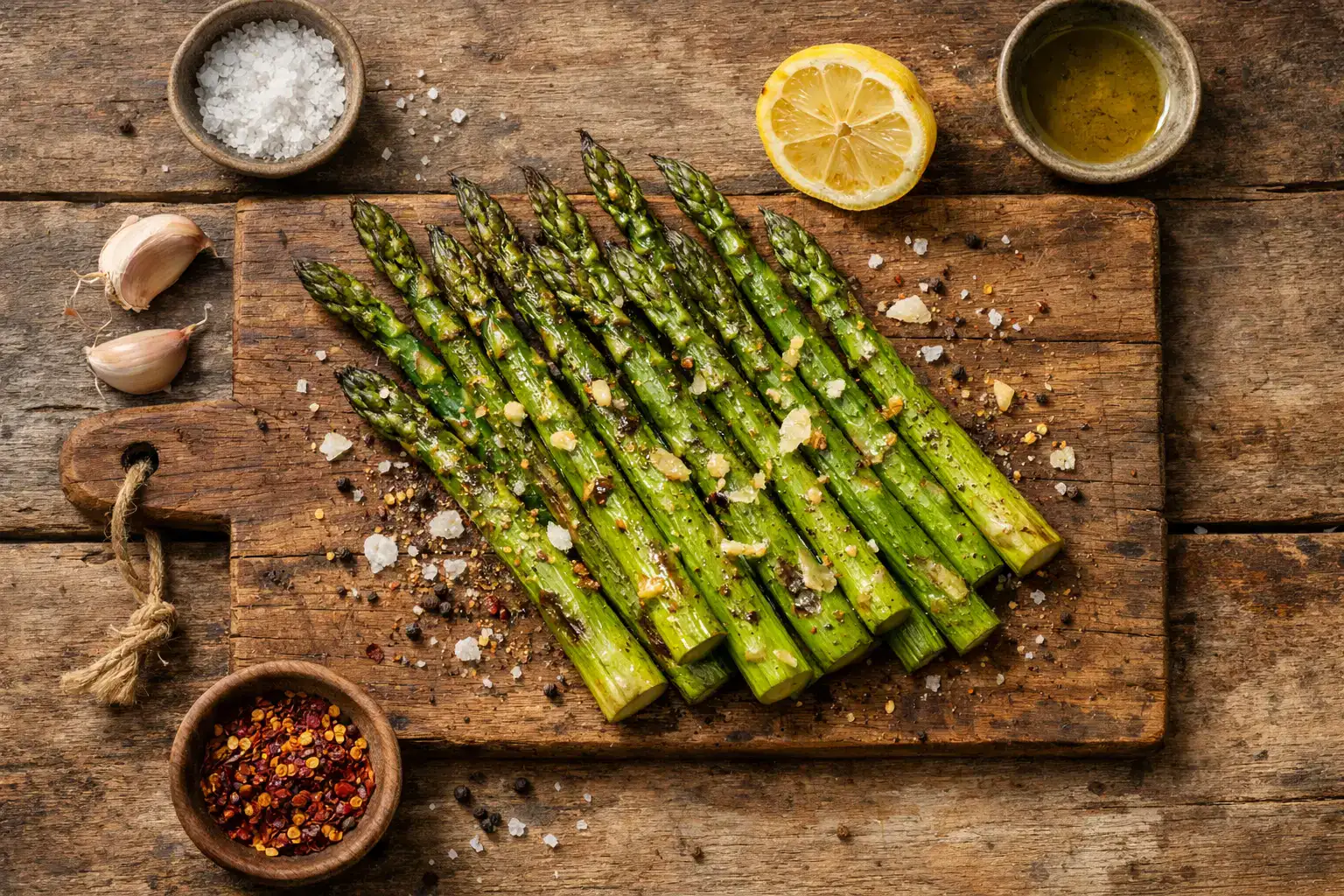
Quick Nutrition Facts
Per 1 Cup Cooked Asparagus (180g)
| Nutrient | Amount |
|---|---|
| Calories | 40 kcal |
| Protein | 4.3g |
| Carbohydrates | 7.4g |
| Fiber | 3.2g |
| Sugars | 2.3g |
| Fat | 0.4g |
| Folate (B9) | 268mcg |
| Vitamin K | 76mcg |
| Vitamin C | 13.9mg |
| Potassium | 403mg |
Macronutrient Breakdown
 ChatGPT
  Claude
  AI Mode
  Perplexity
NUTRITIONIST INSIGHT
Asparagus delivers 37% of your daily folate in just 100g with only 22 calories. Steaming for 3-5 minutes preserves the most nutrients, especially water-soluble folate and vitamin C.
Myth Busters
MYTH #1: Asparagus Urine Smell Means Something Is Wrong
TRUTH: The distinctive odor is caused by harmless breakdown of asparagusic acid into sulfur compounds. About 40% of people can detect it due to genetic variation in olfactory receptors. It is completely harmless and not a sign of illness.
MYTH #2: Asparagus Is a Detox Food That Cleanses Your Liver
TRUTH: While asparagus has mild diuretic properties that help excrete excess sodium, it does not detoxify the liver or blood in any clinical sense. Its health benefits come from high folate, vitamin K, and antioxidants like glutathione.
MYTH #3: Cooking Destroys All Nutrients in Asparagus
TRUTH: Brief steaming or roasting (3-5 minutes) preserves most micronutrients. Extended boiling can reduce water-soluble vitamins like folate and vitamin C. Steaming retains the most nutritional value compared to other methods.
MYTH #4: Asparagus Is High in Calories
TRUTH: Cooked asparagus has only 22 calories per 100g with 93% water content. It is one of the lowest-calorie cooked vegetables available, making it excellent for weight management.
MYTH #5: Asparagus Is Only Available in Spring
TRUTH: While peak season is spring (April-June), asparagus is available year-round in most supermarkets. Frozen asparagus retains most of its nutritional value and is a good alternative when fresh is out of season.
NutriScore by Health Goals
| Health Goal | NutriScore | Why This Score? |
|---|---|---|
| Weight Loss |  | Only 22 cal/100g, 93% water, 1.8g fiber promotes fullness. Natural diuretic reduces water retention. |
| Muscle Gain |  | 2.4g protein/100g is moderate for a vegetable. Folate supports DNA synthesis and muscle repair. Pair with lean protein. |
| Diabetes Management | | GI of 15 (very low). Only 4.1g carbs/100g. Studies show asparagus extract improves insulin sensitivity. |
| PCOS Management | | Very low GI stabilizes insulin. Anti-inflammatory antioxidants reduce systemic inflammation common in PCOS. |
| Pregnancy Nutrition | | 149mcg folate/100g (37% DV) supports neural tube development. Vitamin K for fetal bone health. |
| Viral/Flu Recovery | | Vitamin C for immunity, easy to digest, hydrating (93% water). Glutathione supports antioxidant defense. |
PERSONALIZED NUTRITION
Track your meals with NutriScan for personalized NutriScores based on your specific health goals!
Blood Sugar Response to Asparagus
Understanding how asparagus affects your blood glucose can help you make informed decisions about meal planning.
Typical Glucose Response Curve
This chart shows typical blood glucose response for general healthy individuals. Individual responses may vary. Not medical advice.
How to Flatten the Spike
Asparagus already has a very low glycemic impact (GI 15), but pairing it with protein or healthy fat maximizes nutrient absorption:
- 🫒 Olive oil or butter - Enhances absorption of fat-soluble vitamins A and K
- 🥚 Poached or scrambled eggs - Complete protein with complementary nutrients
- 🍋 Lemon juice - Vitamin C boosts iron absorption from asparagus
- 🧀 Parmesan cheese - Adds protein and calcium for a balanced side dish
This combination maximizes nutrient bioavailability and provides sustained energy.
Cultural Significance
Asparagus has been cultivated for over 3,000 years, with origins tracing to the eastern Mediterranean.
In Europe:
- Romans were the first systematic cultivators, prizing asparagus as food and medicine
- Germany celebrates "Spargelzeit" (asparagus season) April-June as a national culinary event
- France's Alsace region honors white asparagus through the annual Confrérie de l'Asperge
- White asparagus (grown underground) remains a luxury in European cuisine
In India:
- Native Asparagus racemosus (Shatavari) has been central to Ayurvedic medicine for 2,000+ years
- Used traditionally for digestive health, female reproductive wellness, and as an adaptogen
- Garden asparagus pairs well with Indian spices: cumin, ginger, garlic, and red chili
Global Impact:
- China, Peru, and Germany are the top global producers
- Asparagus stir-fries are popular across East and Southeast Asian cuisines
- Ancient Egyptians offered asparagus to their gods as a sacred food
Compare & Substitute
Asparagus vs Similar Vegetables (Per 100g, Cooked)
| Nutrient | 🥦 Asparagus | 🥦 Broccoli | 🫛 Green Beans | 🥬 Spinach |
|---|---|---|---|---|
| Calories | 22 kcal | 55 kcal | 35 kcal | 41 kcal |
| Carbs | 4.1g | 11.2g | 7.9g | 4.8g |
| Fiber | 1.8g | 2.4g | 3.4g | 2.4g |
| Protein | 2.4g | 3.7g | 1.9g | 4.0g |
| Fat | 0.2g | 0.6g | 0.3g | 0.3g |
| Folate | 149mcg | 108mcg | 33mcg | 146mcg |
| Vitamin K | 42mcg | 141mcg | 47mcg | 494mcg |
| Best For | Folate, lowest calories | Vitamin C, overall nutrients | Fiber, versatile cooking | Iron, vitamin K, protein |
Frequently Asked Questions
Is asparagus good for weight loss?
Yes, asparagus is one of the best vegetables for weight loss. At only 22 calories per 100g with 93% water content and 1.8g fiber, it provides volume and fullness with minimal calories. Its natural diuretic properties help reduce water retention.
Best practices: Steam or roast instead of sauteing in butter, pair with lean protein, and enjoy as a low-calorie side dish at any meal.
Can diabetics eat asparagus?
Asparagus is excellent for diabetics. With a glycemic index of just 15 and only 4.1g carbs per 100g, it causes virtually no blood sugar spike.
Tips for diabetics:
- Enjoy freely as it has very low glycemic load (GL of 1 per cup)
- Pair with protein for balanced meals
- Use as a replacement for higher-carb sides like potatoes or rice
- The chromium content may further improve insulin sensitivity
How much folate is in asparagus?
Cooked asparagus provides 149mcg of folate per 100g (37% of the daily value). One cup (180g) delivers 268mcg. This makes asparagus one of the richest whole-food sources of folate, critical for pregnancy, DNA synthesis, and red blood cell formation.
What are the main health benefits of asparagus?
Key Benefits:
- Folate Powerhouse: 37% DV per 100g supports cell division and pregnancy health
- Bone Health: Vitamin K (35% DV) supports calcium metabolism and bone density
- Antioxidant Protection: Glutathione and flavonoids combat oxidative stress
- Digestive Health: 1.8g fiber and natural diuretic properties aid digestion
- Heart Health: Potassium and folate support cardiovascular function
- Anti-Inflammatory: Saponins and flavonoids reduce chronic inflammation
Why does asparagus make urine smell?
Asparagus contains asparagusic acid, a sulfur compound unique to this vegetable. During digestion, it breaks down into volatile sulfur compounds that are excreted through urine. This is completely harmless. About 40% of people can detect the odor, while others lack the specific olfactory receptors.
What is the best way to cook asparagus for nutrition?
Depends on your priority:
- Steaming (3-5 minutes): Best overall nutrient retention, especially folate and vitamin C
- Roasting (400F, 10-12 minutes): Caramelizes natural sugars, slightly reduces water-soluble vitamins
- Stir-frying (2-3 minutes): Quick cooking preserves nutrients, oil aids vitamin A and K absorption
- Grilling: Adds flavor with minimal nutrient loss
IMPORTANT NOTE
Avoid boiling asparagus for extended periods as folate and vitamin C leach into the cooking water.


Similar Nutritious Foods
4505 Chicharrones Classic Chili Salt
7 Eleven Japan Crispy Corn Cheese
Explore More Nutrition Tools & Resources
AI Calorie Counter App - Snap a Photo, Get Macros
AI Nutritionist App That Reads Your Logged Meals
Best Protein Supplements for Women
Bulking Meal Plan App That Sets Your Surplus
ChatGPT Calorie Counter Alternative That Keeps the Total
ChatGPT Diet Plan Alternative That Tracks What You Eat
ChatGPT Weight Loss Coach Alternative With a Food Log
Fast Food Calorie Counter App That Reads the Tray
Free Calorie Tracker App with AI Photo Scans | NutriScan
Indian Diet Plan App With Veg and Non Veg Meals
Indian Food Calorie Calculator - Get Instant Nutrition Facts for Desi Meals — 2026
Intermittent Fasting for Women, Timer and Meal Log App
Intermittent Fasting Tracker App - Free Fasting Timer
Macro Tracker App That Fills the Numbers From a Photo
Mediterranean Diet Meal Plan App That Counts the Oil
Micronutrient Tracker App for Vitamins and Minerals
MyFitnessPal Alternative That Stays Free | NutriScan
NutriScore App: A Free Grade on Every Meal | NutriScan
Nutrition Label Scanner App for the Amount You Ate
Second Trimester Protein Guide
Vegetarian Meal Plan App With a Protein Target
Voice Calorie Counter - Speak to Track Meals Hands-Free
Water and Calorie Tracker App - Free Water Log