Australian Meat Pie: Calories, Nutrition and Health Facts
Australia's iconic handheld comfort food - a flaky pastry shell filled with seasoned beef in rich gravy, delivering protein and iron but also significant fat and sodium.
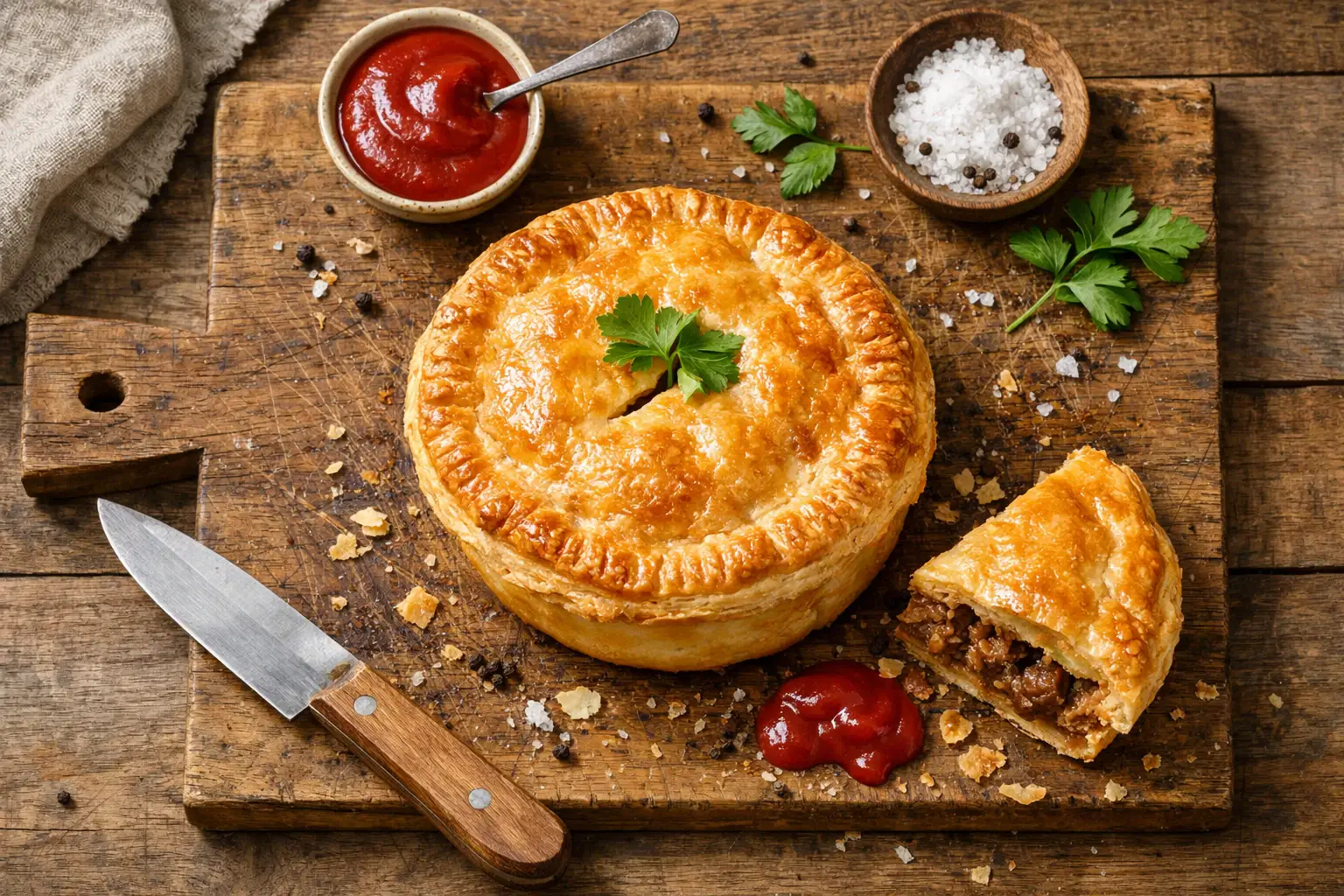
Quick Nutrition Facts
Per 1 Individual Meat Pie (175g)
| Nutrient | Amount |
|---|---|
| Calories | 390 kcal |
| Protein | 15.6g |
| Carbohydrates | 37g |
| Fiber | 4.2g |
| Sugars | 2.3g |
| Fat | 20g |
| Saturated Fat | 9.9g |
| Sodium | 875mg |
| Iron | 2.0mg |
| Cholesterol | 33mg |
Macronutrient Breakdown
 ChatGPT
  Claude
  AI Mode
  Perplexity
NUTRITIONIST INSIGHT
Meat pies pack 38% of your daily sodium limit in one serve. The pastry contributes most of the carbs and saturated fat, while the filling provides iron (11% DV) and protein. Consider as an occasional treat rather than a regular meal.
Myth Busters
MYTH #1: Meat Pies Are a Good Protein Source
TRUTH: While a pie has 15.6g protein, it comes with 20g fat (10g saturated) and 875mg sodium. The protein-to-fat ratio is poor compared to lean meat. For the same calories, 150g grilled chicken provides 45g protein with only 5g fat.
MYTH #2: One Meat Pie Makes a Complete Meal
TRUTH: Meat pies lack vegetables, providing minimal vitamins A, C, or antioxidants. They're also low in fiber (4.2g). NHS recommends limiting pastry products as they're high in fat and salt. Add a side salad for balanced nutrition.
MYTH #3: Bakery Pies Are Healthier Than Frozen
TRUTH: Fresh bakery pies often contain more fat than frozen versions due to traditional butter-based pastry. Both typically have similar calorie counts (350-450 kcal). Check labels - some frozen options use reduced-fat pastry.
MYTH #4: Meat Pies Have No Nutritional Value
TRUTH: While not a health food, meat pies do provide iron (2mg, 11% DV), B vitamins, zinc, and selenium from the beef filling. The key is moderation - occasional consumption as part of varied diet is fine.
MYTH #5: All Meat Pies Have Similar Nutrition
TRUTH: Nutrition varies significantly by size and recipe. Mini pies (47g) have ~105 calories while party pies can reach 180 calories. Family-size servings may exceed 500 calories. Gourmet pies with premium fillings often contain more fat.
MYTH #6: Eating the Filling Only Is Much Healthier
TRUTH: The filling contains about 40% of calories but most of the sodium and saturated fat from gravy and meat fat. Skipping pastry saves ~150 calories but doesn't eliminate health concerns. High saturated fat intake raises cardiovascular risk regardless of source.
NutriScore by Health Goals
| Health Goal | NutriScore | Why This Score? |
|---|---|---|
| Weight Loss |  | High in calories (390), fat (20g), and refined carbs. Low satiety per calorie. Limit to rare occasions, choose mini size (105 cal). |
| Muscle Gain |  | Provides 15.6g protein but excessive fat ratio. Better post-workout options exist with higher protein-to-calorie ratio. |
| Diabetes Management | | High glycemic load from refined pastry (37g carbs). Refined carbs cause rapid blood sugar spikes. Choose mini size with vegetables. |
| PCOS Management | | Refined carbs and saturated fat may worsen insulin resistance. Very occasional treat only. |
| Pregnancy Nutrition | | Iron content beneficial but must be heated to 75°C/165°F to avoid listeria. High sodium concerning for blood pressure. |
| Viral/Flu Recovery | | Easy to eat when unwell, provides protein and iron. But lacks vitamin C and hydration - pair with juice and vegetables. |
PERSONALIZED NUTRITION
Track your meals with NutriScan for personalized NutriScores based on your specific health goals!
Blood Sugar Response to Meat Pie
Understanding how meat pies affect your blood glucose helps with meal planning and diabetes management.
Typical Glucose Response Curve
This chart shows typical blood glucose response for general healthy individuals. Individual responses may vary. Not medical advice.
How to Flatten the Spike
Pairing carb-rich foods with fiber and protein slows glucose absorption:
- 🥗 Side salad with vinegar dressing - Vinegar and fiber slow carb absorption
- 🫘 Baked beans - Adds fiber and plant protein
- 🥦 Steamed vegetables - Fiber-rich, low-calorie addition
- 🥛 Glass of milk - Protein helps moderate glucose response
Eating vegetables before the pie can reduce the glycemic impact by up to 30%.
Cultural Significance
The meat pie is deeply embedded in Australian national identity, often called "Australia's national dish."
In Australia:
- Originated from British meat pie traditions in the 1800s
- A staple at Australian Rules Football matches since the 1900s
- Approximately 270 million meat pies consumed annually in Australia
- "Pie floater" (pie in pea soup) is a South Australian specialty
- Harry's Cafe de Wheels in Sydney has served pies since 1938
Global Presence:
- Similar to British pork pies and New Zealand's mince pies
- Australian bakeries worldwide maintain the tradition
- Featured in Australian cultural celebrations and events
- The "Four'N Twenty" brand is an iconic Australian pie maker
Compare & Substitute
Meat Pie vs Similar Foods (Per 100g)
| Nutrient | 🥧 Meat Pie | 🌯 Beef Burrito | 🍔 Cheeseburger | 🥟 Samosa |
|---|---|---|---|---|
| Calories | 223 kcal | 195 kcal | 250 kcal | 262 kcal |
| Carbs | 21g | 18g | 24g | 24g |
| Fiber | 2.4g | 2g | 1.5g | 3g |
| Protein | 8.9g | 10g | 14g | 5g |
| Fat | 11.4g | 8g | 12g | 16g |
| Sodium | 500mg | 420mg | 480mg | 380mg |
| Best For | Comfort food, convenience | Balanced meal option | Quick protein | Vegetarian option |
Frequently Asked Questions
How many calories are in an Australian meat pie?
A standard individual meat pie (175g) contains 390 calories. Mini pies (47g) have about 105 calories, while party-size pies average 150-180 calories each. Family-size portions (per 175g serving) contain similar calories.
Are meat pies healthy?
Meat pies are best classified as an occasional treat rather than a health food. They provide some iron and protein but come with significant drawbacks: high sodium (875mg, 38% DV), saturated fat (10g, 50% DV), and refined carbohydrates.
For healthier choices:
- Choose mini size to control portions
- Add a large side salad
- Limit to once per week or less
- Look for reduced-sodium versions
Can diabetics eat meat pies?
Diabetics should limit meat pies due to the 37g of carbohydrates per standard pie, mostly from refined flour pastry with moderate-high glycemic impact.
Tips for diabetics:
- Choose mini pies (10g carbs)
- Eat with fiber-rich vegetables first
- Monitor blood sugar 2 hours after eating
- Consider as occasional treat, not regular meal
How much protein is in a meat pie?
An individual meat pie (175g) contains 15.6g protein from the beef filling. Per 100g, that's 8.9g protein. While meaningful, the protein comes packaged with 20g fat, making it less efficient than lean protein sources.
Are meat pies safe during pregnancy?
Meat pies are generally safe during pregnancy with precautions:
- Heat thoroughly to above 75°C/165°F throughout
- Avoid cold or lukewarm pies (listeria risk)
- Limit frequency due to high sodium
- Choose quality bakeries with good food safety practices
The iron content (2mg per pie) is beneficial for pregnancy, but better sources exist with less sodium.
What are healthier alternatives to meat pies?
Healthier swaps:
- Homemade pies with lean mince and reduced-fat pastry
- Filo pastry pies (50% less fat than puff pastry)
- Chicken and vegetable pies
- Open-faced pies with single pastry layer
- Shepherds pie with sweet potato topping (no pastry)
- Portobello mushroom "pies" for vegetarians
How often can I eat meat pies?
For general health, limit to once per week or less. Those with cardiovascular concerns, high blood pressure, or diabetes should consume even less frequently. Always balance with plenty of vegetables and lean protein at other meals.
Track your overall nutrition with NutriScan app to see how meat pies fit into your weekly goals.


Similar Nutritious Foods
4505 Chicharrones Classic Chili Salt
7 Eleven Japan Crispy Corn Cheese
Explore More Nutrition Tools & Resources
AI Calorie Counter App - Snap a Photo, Get Macros
AI Nutritionist App That Reads Your Logged Meals
Best Protein Supplements for Women
Bulking Meal Plan App That Sets Your Surplus
ChatGPT Calorie Counter Alternative That Keeps the Total
ChatGPT Diet Plan Alternative That Tracks What You Eat
ChatGPT Weight Loss Coach Alternative With a Food Log
Fast Food Calorie Counter App That Reads the Tray
Free Calorie Tracker App with AI Photo Scans | NutriScan
Indian Diet Plan App With Veg and Non Veg Meals
Indian Food Calorie Calculator - Get Instant Nutrition Facts for Desi Meals — 2026
Intermittent Fasting for Women, Timer and Meal Log App
Intermittent Fasting Tracker App - Free Fasting Timer
Macro Tracker App That Fills the Numbers From a Photo
Mediterranean Diet Meal Plan App That Counts the Oil
Micronutrient Tracker App for Vitamins and Minerals
MyFitnessPal Alternative That Stays Free | NutriScan
NutriScore App: A Free Grade on Every Meal | NutriScan
Nutrition Label Scanner App for the Amount You Ate
Second Trimester Protein Guide
Vegetarian Meal Plan App With a Protein Target
Voice Calorie Counter - Speak to Track Meals Hands-Free
Water and Calorie Tracker App - Free Water Log