Avocado Sushi Roll: Calories, Nutrition and Health Benefits
Japanese elegance meets nutritional excellence with avocado-filled sushi rolls—perfect balance of healthy fats, lean protein, and essential minerals.
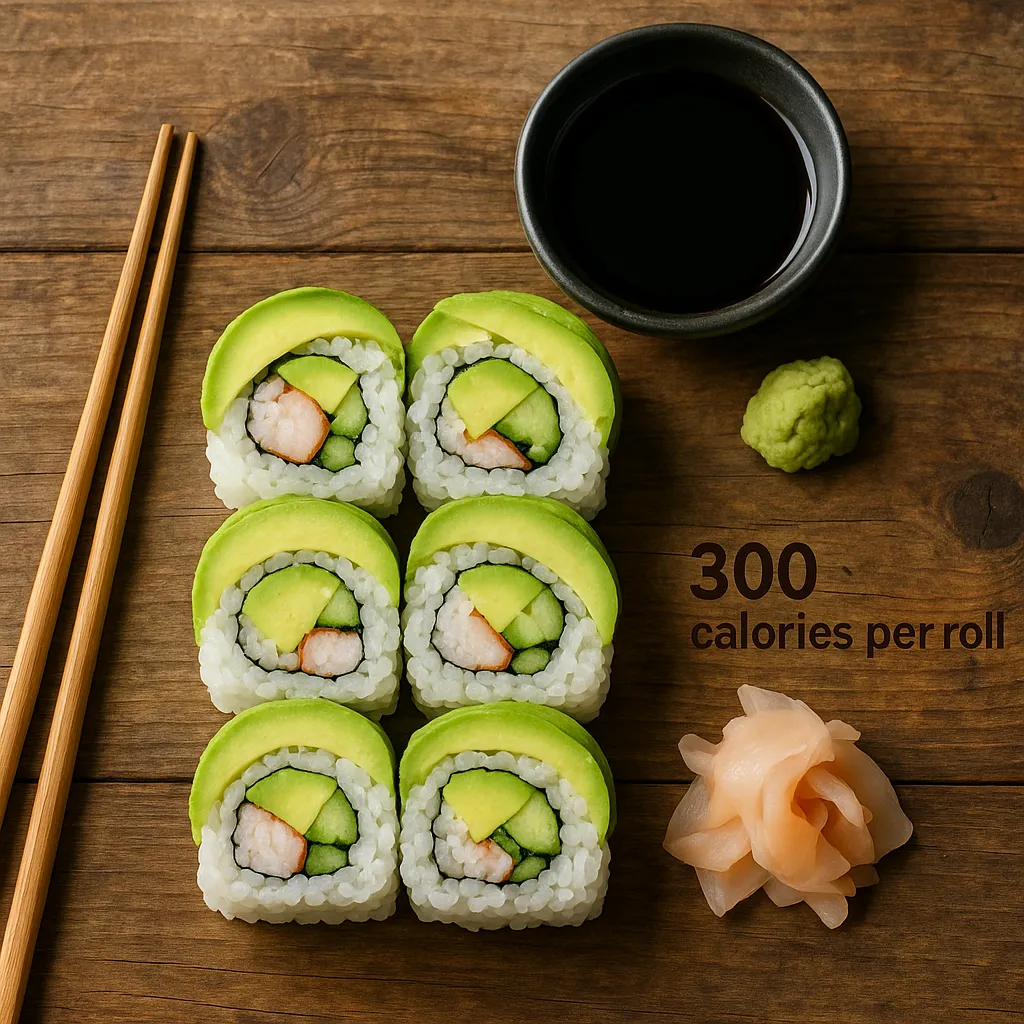
Quick Nutrition Facts
Per 1 Avocado Sushi Roll (180g)
| Nutrient | Amount |
|---|---|
| Calories | 300 kcal |
| Protein | 8g |
| Carbohydrates | 28g |
| Fiber | 4.2g |
| Sugars | 1.2g |
| Fat | 17g |
| Sodium | 380mg |
| Iodine | 24mcg |
| Potassium | 485mg |
| Magnesium | 48mg |
Macronutrient Breakdown
 ChatGPT
  Claude
  AI Mode
  Perplexity
NUTRITIONIST INSIGHT
Avocado's monounsaturated fats increase nutrient absorption from vegetables and nori. The seaweed provides iodine for thyroid health while keeping calories moderate. A perfect pre-workout meal when paired with edamame.
Myth Busters
MYTH #1: Avocado Sushi Is Too High in Fat
TRUTH: The 17g fat is primarily heart-healthy monounsaturated fat that lowers LDL cholesterol. Regular sushi consumption supports cardiovascular health, not the reverse.
MYTH #2: Sushi Rolls Cause Weight Gain
TRUTH: At 300 calories, one roll is a nutrient-dense meal. The fiber (4.2g) and protein (8g) promote fullness, preventing overeating. Traditional Japanese portions (2-3 rolls) are reasonable for lunch.
MYTH #3: Nori (Seaweed) Is High in Sodium
TRUTH: While sushi contains sodium (380mg per roll), this is from soy sauce, not nori. Nori itself is mineral-rich and low-sodium. Rinse rice vinegar before rolling to reduce salt further.
MYTH #4: Brown Rice Sushi Tastes Bad
TRUTH: Modern brown rice varieties have improved texture and flavor. Brown rice sushi provides more fiber (6-7g vs 2-3g white) and lower glycemic impact—worth trying.
MYTH #5: Raw Avocado Loses Nutrients When Cut
TRUTH: Avocado's nutrients (fats, potassium, magnesium) remain stable after cutting. Minimal browning occurs within 2-3 hours. Cut just before rolling for best results.
MYTH #6: All Sushi Rolls Have the Same Calories
TRUTH: Calorie range varies dramatically—vegetable rolls (150-200 cal) to spicy mayo rolls (400+ cal). Avocado rolls (300 cal) fall in the healthy middle with balanced macros.
NutriScore by Health Goals
| Health Goal | NutriScore | Why This Score? |
|---|---|---|
| Weight Loss |  | 300 calories, 4.2g fiber promotes fullness, healthy fats increase satiety. Limit to 1-2 rolls per meal with vegetable sides. |
| Muscle Gain | | 8g protein provides amino acids for recovery, carbs (28g) replenish glycogen post-workout. Pair with edamame or miso soup for 15-18g total protein. |
| Diabetes Management |  | Moderate carbs (28g, mostly refined rice). Choose brown rice varieties, pair with protein, monitor portions. Individual blood sugar response varies. |
| PCOS Management | | Refined carbs can affect insulin sensitivity. Moderate portion with added protein (edamame, miso) improves metabolic response. |
| Pregnancy Nutrition |  | Rich in iodine (24mcg supports fetal thyroid), magnesium (48mg reduces cramping), potassium (485mg) for blood pressure. Excellent nutrient profile for healthy pregnancy. |
| Viral/Flu Recovery | | Easy to digest, iodine boosts immunity, healthy fats reduce inflammation, gentle on recovering digestive system. Pair with miso soup for probiotic support. |
PERSONALIZED NUTRITION
Track your meals with NutriScan for personalized NutriScores based on your specific health goals!
Blood Sugar Response to Avocado Sushi Roll
White rice in sushi triggers moderate glucose response. Understanding the impact helps you make informed decisions about pairing and timing.
Typical Glucose Response Curve
This chart shows typical blood glucose response for general healthy individuals. Individual responses may vary. Not medical advice.
How to Flatten the Spike
Pairing sushi with protein or healthy fats slows glucose absorption:
- 🥢 Edamame or miso soup - Adds plant protein and fermented probiotics
- 🥒 Pickled ginger and wasabi - Contains compounds that may slow carb absorption
- 🍵 Green tea - Contains EGCG that improves insulin sensitivity
- 🌿 Cucumber or vegetable side - Additional fiber flattens the curve
Pairing these sides with your sushi roll extends energy release and maintains stable blood sugar for 3-4 hours post-meal.
Cultural Significance
Sushi originated in Southeast Asia over 2,000 years ago, evolving into Japan's iconic cuisine by the Edo period (1603-1868).
In Japanese Tradition:
- Sushi preparation is considered an art form requiring years of apprenticeship
- Nori (seaweed) symbolizes purification and protection in Japanese culture
- Sushi rice vinegar recipe varies by region, reflecting local culinary pride
- Traditional nigiri is preferred over rolls in formal settings
Global Impact:
- Sushi restaurants number over 5,000 worldwide, expanding rapidly in India
- Avocado sushi rolls emerged in California in the 1970s as Western adaptation
- Now considered accessible, healthy meal option across fitness communities
- Sustainable sushi movements promote farmed alternatives to wild fish
Compare & Substitute
Sushi Roll Varieties (Per 180g roll)
| Nutrient | 🥑 Avocado Roll | 🐟 Salmon Roll | 🥒 Cucumber Roll | 🦐 Tempura Shrimp |
|---|---|---|---|---|
| Calories | 300 kcal | 280 kcal | 200 kcal | 380 kcal |
| Carbs | 28g | 26g | 26g | 34g |
| Fiber | 4.2g | 1g | 3.5g | 1.5g |
| Protein | 8g | 12g | 6g | 10g |
| Fat | 17g (monounsaturated) | 11g (omega-3 rich) | 1g | 18g (saturated) |
| Sodium | 380mg | 420mg | 350mg | 580mg |
| Best For | Heart health, satiety | Omega-3 needs, muscle recovery | Low-calorie, light meals | Indulgent treat, occasional |
Frequently Asked Questions
Is avocado sushi roll good for weight loss?
Yes, avocado sushi rolls support weight loss when portion-controlled. At 300 calories per roll, they provide balanced macros with healthy fats promoting satiety and fiber aiding digestion. The protein (8g) keeps you fuller longer than equivalent calorie refined snacks.
Best practices: Limit to 1-2 rolls per meal, pair with vegetable sides (cucumber, edamame), choose brown rice varieties when available, and avoid mayo-based rolls which add 100+ calories.
Can diabetics eat avocado sushi roll?
Diabetics can enjoy sushi rolls in moderation with smart choices. The white rice (28g carbs) will raise blood glucose, especially on empty stomach. Choose brown rice sushi (lower GI), pair with protein-rich sides, and monitor portion sizes.
Recommendations: Eat half a roll (150 cal, 14g carbs) with miso soup; test blood sugar 2 hours after eating; avoid sweet sauces (spicy mayo, eel sauce); pair with protein.
How much protein is in an avocado sushi roll?
An avocado sushi roll (180g) contains approximately 8g protein from nori and rice. To increase protein for muscle recovery, add wasabi, cucumber sides, or choose rolls with cooked proteins. A salmon avocado roll provides 12-14g total protein.
High-protein sushi options: Add edamame (5g protein per half cup), miso soup (3-4g), or tempeh-based fillings for 15-18g total protein per meal.
What are the main health benefits of avocado sushi?
Key Benefits:
- Heart Health: Monounsaturated fats lower LDL cholesterol, supporting cardiovascular function
- Thyroid Support: Iodine from nori (24mcg) supports thyroid hormone production
- Satiety: Healthy fats and fiber keep you full for hours
- Mineral-Rich: Potassium (485mg) supports blood pressure; magnesium reduces cramping
- Easy Digestion: Rice and cooked ingredients gentle on stomach
- Pregnancy Health: Iodine and folate support fetal development
When is the best time to eat sushi rolls?
Depends on your goal:
- Weight Loss: Lunch with vegetable sides; avoids late-night sodium retention
- Muscle Gain: Post-workout (45-60 minutes after training) for carb + protein replenishment
- Diabetes: Mid-meal with protein sides; not on empty stomach
- General Health: Anytime; avoid immediately before high-intensity exercise on empty stomach
IMPORTANT NOTE
Sushi's sodium content (380-420mg per roll) makes it less ideal for evening consumption if you're sodium-sensitive or have hypertension.
Are vegetable or fish sushi rolls healthier?
Both offer distinct benefits—choose based on your priorities:
Vegetable Rolls (Avocado, Cucumber):
- Lower calorie (200-300 cal)
- Higher fiber (3-4g)
- Suitable for all health goals
- Budget-friendly
Fish Rolls (Salmon, Tuna):
- Higher protein (12-15g)
- Omega-3 fatty acids for heart and brain health
- Better for muscle recovery
- Higher cost
Recommendation: Vegetable rolls for daily meals and weight management; fish rolls 2-3 times weekly for omega-3 benefits and protein needs.
How many sushi rolls should I eat per day?
General Guidelines:
- 1-2 rolls - Most people (300-600 calories fits lunch/dinner)
- 1 roll - Strict calorie restriction or weight loss
- 2-3 rolls - Athletes, muscle gain, or high activity levels
- Avoid excess: More than 3-4 rolls daily adds excess sodium (1,200+ mg) and refined carbs
Track your meals with NutriScan app to see how sushi fits your personal nutrition goals.
Can I eat sushi on an empty stomach?
Generally safe but white rice will spike blood glucose faster without other nutrients. Better to pair with miso soup, edamame, or protein-rich sides for balanced nutrition.
May want to avoid if you have:
- Diabetes: Without protein pairing, refined carbs cause sharp spikes
- Reactive Hypoglycemia: The carb load may trigger energy crashes
- IBS: Raw vegetables and vinegared rice may cause bloating
Better approach: Always eat sushi as part of a meal with protein, vegetables, and beverages. Never as standalone carbs.


Similar Nutritious Foods
4505 Chicharrones Classic Chili Salt
7 Eleven Japan Crispy Corn Cheese
Explore More Nutrition Tools & Resources
AI Calorie Counter App - Snap a Photo, Get Macros
AI Nutritionist App That Reads Your Logged Meals
Best Protein Supplements for Women
Bulking Meal Plan App That Sets Your Surplus
ChatGPT Calorie Counter Alternative That Keeps the Total
ChatGPT Diet Plan Alternative That Tracks What You Eat
ChatGPT Weight Loss Coach Alternative With a Food Log
Fast Food Calorie Counter App That Reads the Tray
Free Calorie Tracker App with AI Photo Scans | NutriScan
Indian Diet Plan App With Veg and Non Veg Meals
Indian Food Calorie Calculator - Get Instant Nutrition Facts for Desi Meals — 2026
Intermittent Fasting for Women, Timer and Meal Log App
Intermittent Fasting Tracker App - Free Fasting Timer
Macro Tracker App That Fills the Numbers From a Photo
Mediterranean Diet Meal Plan App That Counts the Oil
Micronutrient Tracker App for Vitamins and Minerals
MyFitnessPal Alternative That Stays Free | NutriScan
NutriScore App: A Free Grade on Every Meal | NutriScan
Nutrition Label Scanner App for the Amount You Ate
Second Trimester Protein Guide
Vegetarian Meal Plan App With a Protein Target
Voice Calorie Counter - Speak to Track Meals Hands-Free
Water and Calorie Tracker App - Free Water Log