Baba Ganoush: Calories, Nutrition and Health Benefits
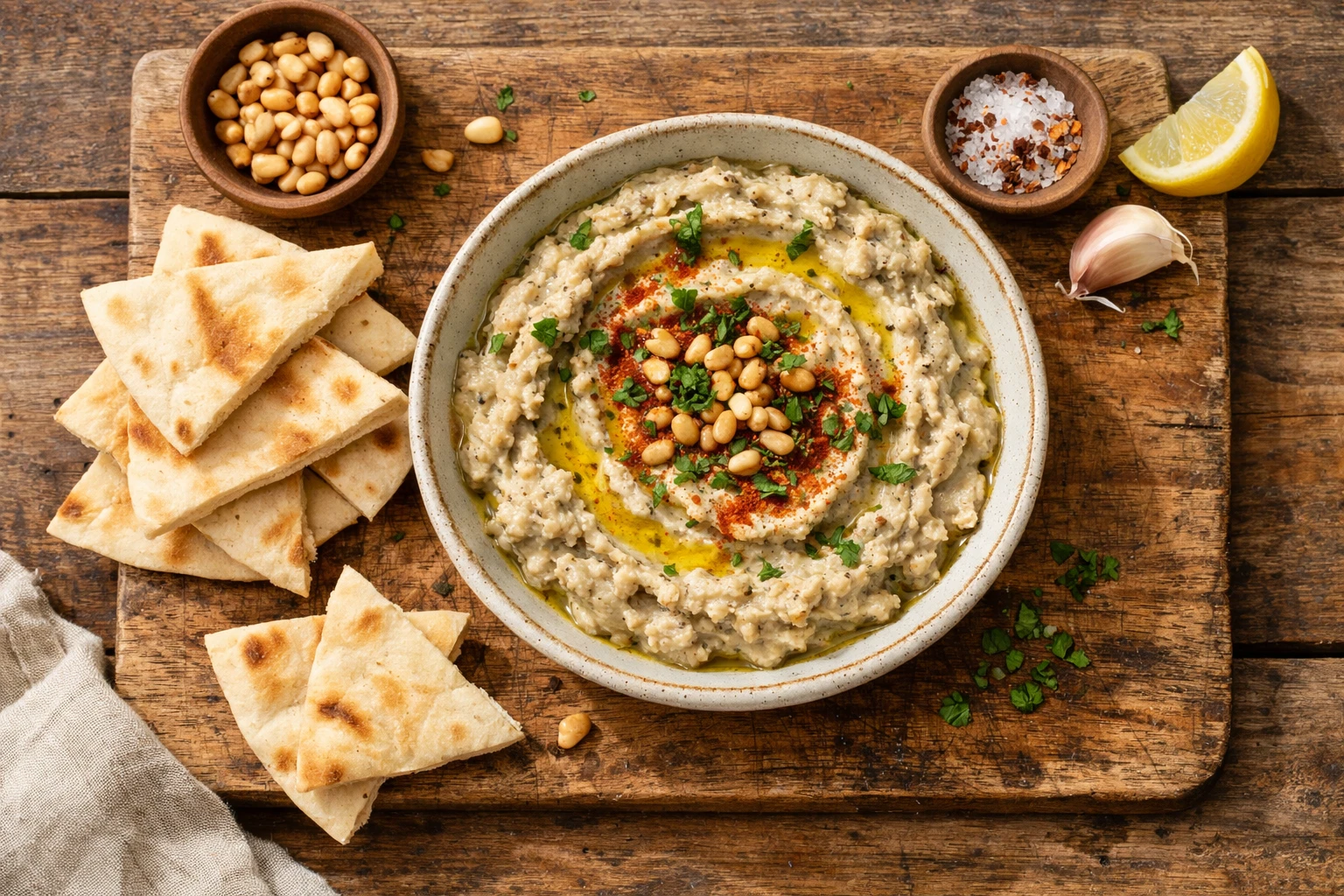
Smoky Mediterranean eggplant dip rich in antioxidants, fiber, and heart-healthy fats from tahini and olive oil.
Quick Nutrition Facts
Per 60g Serving (1/4 cup)
| Nutrient | Amount |
|---|---|
| Calories | 120 kcal |
| Protein | 2g |
| Carbohydrates | 8g |
| Fiber | 3g |
| Sugars | 2g |
| Fat | 10g |
| Calcium | 45mg |
| Iron | 0.8mg |
| Potassium | 180mg |
| Vitamin C | 3mg |
Macronutrient Breakdown
 ChatGPT
  Claude
  AI Mode
  Perplexity
NUTRITIONIST INSIGHT
Baba ganoush combines eggplant's potent antioxidant nasunin for brain protection with tahini's calcium and heart-healthy fats. The smoky char from roasting enhances flavor without added calories.
Myth Busters
MYTH #1: Baba Ganoush Is High in Calories
TRUTH: At 120 calories per serving, baba ganoush is lower in calories than many dips. Eggplant is 92% water, providing volume and fiber without excess calories, making it excellent for weight management.
MYTH #2: Tahini Makes It Unhealthy
TRUTH: Tahini provides heart-healthy unsaturated fats, calcium, iron, and plant-based protein. These nutrients support bone health and reduce inflammation when consumed as part of a balanced diet.
MYTH #3: It's Just for Mediterranean Diets
TRUTH: Baba ganoush fits any healthy eating pattern—keto, vegetarian, vegan, or whole-food diets. The combination of fiber, healthy fats, and low carbs supports multiple nutritional goals from weight loss to heart health.
MYTH #4: Store-Bought Is Just as Good
TRUTH: Homemade baba ganoush avoids preservatives, excess sodium (often 300mg+ in packaged versions), and artificial flavors. Fresh preparation preserves antioxidant content and allows control over oil and salt quantities.
MYTH #5: Eggplant Has No Nutritional Value
TRUTH: Eggplant contains cardioprotective compounds and nasunin, a powerful antioxidant that protects brain cell membranes. It also provides fiber, potassium, and vitamins B1 and B6 despite being low in calories.
NutriScore by Health Goals
| Health Goal | NutriScore | Why This Score? |
|---|---|---|
| Weight Loss |  | 120 calories with 3g fiber promotes satiety; eggplant provides volume; pair with vegetables for a filling, low-calorie meal. |
| Muscle Gain |  | Only 2g protein per serving; pair with grilled chicken or falafel for complete amino acids and muscle recovery. |
| Diabetes Management | | Low glycemic index; 3g fiber slows glucose absorption; minimal blood sugar impact when paired with vegetables instead of pita. |
| PCOS Management |  | Anti-inflammatory from olive oil and garlic; fiber supports insulin sensitivity; moderate portions recommended due to tahini calories. |
| Pregnancy Nutrition | | Provides folate from eggplant, calcium from tahini for bone development; use pasteurized tahini for safety. |
| Viral/Flu Recovery | | Easy to digest; vitamin C and antioxidants support immunity; garlic has antimicrobial properties; gentle on upset stomachs. |
PERSONALIZED NUTRITION
Track your meals with NutriScan for personalized NutriScores based on your specific health goals! Use our Online Macro Calculator to find your daily nutrition targets.
Blood Sugar Response to Baba Ganoush
Understanding how baba ganoush affects blood glucose helps you make informed meal planning decisions.
Typical Glucose Response Curve
This chart shows typical blood glucose response for general healthy individuals. Individual responses may vary. Not medical advice.
How to Optimize Blood Sugar Control
Baba ganoush already has minimal blood sugar impact due to fiber and healthy fats. Enhance control further:
- 🥒 Serve with raw vegetables (cucumbers, bell peppers, carrots) - Adds fiber and volume without bread carbs
- 🥗 Add to salad bowls - Combines protein, greens, and healthy fats for balanced meals
- 🍗 Pair with grilled protein - Chicken, fish, or falafel extend satiety and stabilize glucose
- 🫓 Choose whole grain pita sparingly - If using bread, opt for whole wheat and limit to 1-2 small pieces
This approach maintains the creamy satisfaction of baba ganoush while minimizing glucose fluctuations.
Cultural Significance
Baba ganoush (Arabic: بابا غنوج) is a cornerstone of Levantine cuisine, originating in Lebanon and Syria centuries ago.
In the Middle East:
- Name means "pampered father" or "spoiled old daddy" in Arabic folklore
- Essential mezze dish served at family gatherings and celebrations
- Each region has variations: some add pomegranate, others use different smoking techniques
- Traditional preparation involves charring whole eggplants over open flame for authentic smoky flavor
Global Adoption:
- Mediterranean diet staple recognized by UNESCO as cultural heritage
- Popular in vegan and vegetarian cuisines worldwide as protein-rich dip
- Restaurant mezze platters introduced global audiences to authentic preparation
- Health-conscious consumers embrace it as nutritious alternative to cream-based dips
Compare & Substitute
Baba Ganoush vs Similar Mediterranean Dips (Per 100g)
| Nutrient | 🍆 Baba Ganoush | 🫘 Hummus | 🧄 Tzatziki | 🫒 Muhammara |
|---|---|---|---|---|
| Calories | 200 kcal | 277 kcal | 61 kcal | 365 kcal |
| Carbs | 13g | 22g | 4g | 13g |
| Fiber | 5g | 6g | 0.5g | 4g |
| Protein | 3.3g | 8.2g | 5g | 6g |
| Fat | 17g | 18g | 3g | 32g |
| Calcium | 75mg | 49mg | 85mg | 35mg |
| Iron | 1.3mg | 2.4mg | 0.2mg | 1.2mg |
| Best For | Low-calorie, antioxidants | High-protein, plant-based diet | Low-fat, probiotic benefits | Rich flavor, walnut omega-3 |
Frequently Asked Questions
Is baba ganoush good for weight loss?
Yes, baba ganoush supports weight loss with only 120 calories per 60g serving and 3g fiber that promotes fullness. Eggplant provides bulk and volume without excess calories; tahini delivers healthy fats that increase satiety. Serve with raw vegetables instead of pita to keep calorie intake low while maintaining satisfaction.
Best practices: Use as salad dressing alternative; pair with cucumber and bell pepper sticks; limit to 60-90g portions; avoid commercial versions with added oils.
Can diabetics eat baba ganoush?
Yes, baba ganoush is excellent for diabetics. Eggplant and tahini create a low glycemic index combination with 8g carbs and 3g fiber per serving that slows glucose absorption.
Tips for diabetics:
- Pair with non-starchy vegetables (celery, radishes, cherry tomatoes) instead of bread
- Combine with protein (grilled chicken, hard-boiled eggs) for balanced blood sugar
- Use 60g portions to control carb intake
- Monitor blood sugar 2 hours after eating to understand personal response
How much protein is in baba ganoush?
A 60g serving contains 2g of protein from tahini and eggplant. While not high-protein, baba ganoush provides 10g healthy fats from tahini and olive oil plus calcium and iron.
For muscle gain or higher protein needs, pair with falafel (6g protein per ball), grilled chicken (31g per 100g), or hummus (8.2g per 100g).
What are the main health benefits of baba ganoush?
Key Benefits:
- Brain Health: Nasunin antioxidant protects brain cell membranes from oxidative damage
- Heart Protection: Cardioprotective compounds from eggplant reduce cardiovascular risk
- Bone Strength: Calcium and iron from tahini support bone density
- Digestive Health: 3g fiber per serving promotes regular bowel movements
- Anti-Inflammatory: Olive oil and garlic reduce systemic inflammation
- Weight Management: Low-calorie, high-volume food promotes satiety
Is baba ganoush healthier than hummus?
Both are nutritious Mediterranean dips with different strengths. Baba ganoush has fewer calories (200 vs 277 per 100g) and unique nasunin antioxidant for brain health; hummus provides more protein (8.2g vs 3.3g) and iron.
Choose baba ganoush for: Weight loss; antioxidant boost; lower calorie intake; unique smoky flavor.
Choose hummus for: Higher protein needs; plant-based iron; chickpea fiber; versatility in recipes.
Both fit healthy eating patterns; rotate between them for nutritional variety.
How do you make authentic baba ganoush?
Char whole eggplants over open flame or under broiler until skin blackens and flesh softens (15-20 minutes). Peel charred skin; mash flesh with tahini, lemon juice, garlic, and olive oil. Season with cumin, salt, and garnish with pomegranate seeds or parsley.
Authentic tips: Use 3 parts eggplant to 1 part tahini; add lemon juice gradually to taste; let flavors meld 30 minutes before serving; drizzle quality olive oil on top.


Similar Nutritious Foods
4505 Chicharrones Classic Chili Salt
7 Eleven Japan Crispy Corn Cheese
Explore More Nutrition Tools & Resources
AI Calorie Counter App - Snap a Photo, Get Macros
AI Nutritionist App That Reads Your Logged Meals
Best Protein Supplements for Women
Bulking Meal Plan App That Sets Your Surplus
ChatGPT Calorie Counter Alternative That Keeps the Total
ChatGPT Diet Plan Alternative That Tracks What You Eat
ChatGPT Weight Loss Coach Alternative With a Food Log
Fast Food Calorie Counter App That Reads the Tray
Free Calorie Tracker App with AI Photo Scans | NutriScan
Indian Diet Plan App With Veg and Non Veg Meals
Indian Food Calorie Calculator - Get Instant Nutrition Facts for Desi Meals — 2026
Intermittent Fasting for Women, Timer and Meal Log App
Intermittent Fasting Tracker App - Free Fasting Timer
Macro Tracker App That Fills the Numbers From a Photo
Mediterranean Diet Meal Plan App That Counts the Oil
Micronutrient Tracker App for Vitamins and Minerals
MyFitnessPal Alternative That Stays Free | NutriScan
NutriScore App: A Free Grade on Every Meal | NutriScan
Nutrition Label Scanner App for the Amount You Ate
Second Trimester Protein Guide
Vegetarian Meal Plan App With a Protein Target
Voice Calorie Counter - Speak to Track Meals Hands-Free
Water and Calorie Tracker App - Free Water Log