BEAST LIFE Creatine Monohydrate: Nutrition Facts and Usage Guide
Most researched sports supplement proven to boost strength, power output, and muscle growth through enhanced ATP production.
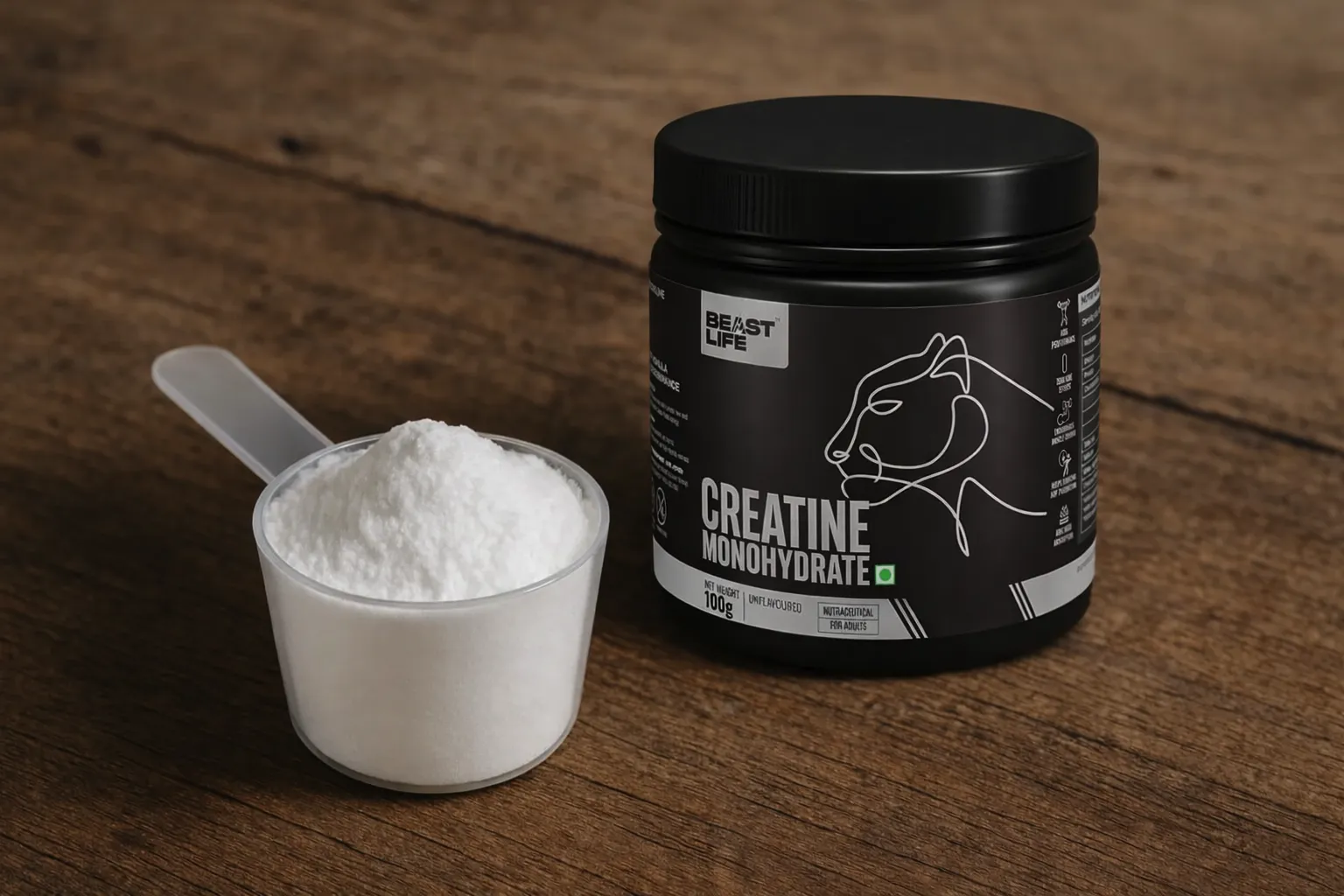
Quick Nutrition Facts
Per 1 Scoop (5g)
| Nutrient | Amount |
|---|---|
| Calories | 0 kcal |
| Protein | 0g |
| Carbohydrates | 0g |
| Fat | 0g |
| Creatine Monohydrate | 5g |
| Sodium | 0mg |
Macronutrient Breakdown
 ChatGPT
  Claude
  AI Mode
  Perplexity
NUTRITIONIST INSIGHT
Creatine monohydrate is the most studied form with 500+ clinical trials. It enhances ATP regeneration for strength gains of 5-15% and supports muscle growth through increased training volume and cell hydration.
Myth Busters
MYTH #1: Creatine Damages Your Kidneys
TRUTH: Creatine does not harm kidneys in healthy individuals. Elevated creatinine levels (a kidney function marker) are normal with creatine use and don't indicate kidney damage. Over 500 studies confirm safety at 3-5g daily doses.
MYTH #2: You Must Load Creatine to See Results
TRUTH: Loading (20g for 5-7 days) saturates muscles faster (7 days vs 28 days), but isn't mandatory. Taking 5g daily from day one achieves the same muscle saturation in 3-4 weeks with identical long-term results.
MYTH #3: Creatine Causes Bloating and Puffiness
TRUTH: Creatine increases intracellular water in muscle cells, not subcutaneous water (bloating). This muscle hydration enhances cell volume and protein synthesis. Weight gain is 1-3 kg of muscle water, not fat or bloat.
MYTH #4: Creatine Only Works for Young Athletes
TRUTH: Creatine benefits all ages. Studies show improved strength, muscle mass, and cognitive function in adults 50-80 years old. It's particularly effective for preserving muscle mass during aging.
MYTH #5: You Need to Cycle Creatine
TRUTH: No cycling needed. Your body naturally regulates creatine production. Long-term use at 3-5g daily is safe and effective for years without breaks or diminishing returns.
MYTH #6: Creatine Causes Hair Loss
TRUTH: One poorly designed 2009 study suggested DHT increase, but subsequent research found no link between creatine and hair loss. No credible evidence supports this myth.
NutriScore by Health Goals
| Health Goal | NutriScore | Why This Score? |
|---|---|---|
| Weight Loss |  | Zero calories but causes 1-3 kg water weight gain. Improves training intensity for fat loss. Best combined with calorie deficit and resistance training. |
| Muscle Gain |  | Gold standard for muscle building. Increases strength 5-15%, training volume, and muscle protein synthesis. Essential for serious muscle growth. |
| Diabetes Management |  | May improve glucose metabolism and insulin sensitivity. Consult doctor as it can affect blood sugar monitoring (elevated creatinine). |
| PCOS Management | | Supports lean muscle mass which improves insulin sensitivity. Safe for PCOS but monitor hydration closely. |
| Pregnancy Nutrition | | Limited research in pregnancy. May support fetal brain development but consult healthcare provider first. |
| Viral/Flu Recovery | | Not directly beneficial for immune function. Focus energy on recovery nutrition (protein, vitamins). Resume after illness subsides. |
PERSONALIZED NUTRITION
Track your supplement intake with NutriScan for personalized recommendations based on your training goals!
Blood Sugar Response to Creatine
Creatine contains zero carbohydrates and does not directly impact blood glucose levels.
Typical Glucose Response Curve
*No glucose response - creatine contains zero carbs and zero calories. Flat line represents stable blood sugar.*
Optimal Timing & Pairing
While creatine doesn't affect blood sugar directly, pairing with carbohydrates may enhance muscle uptake:
- 🍚 Post-workout with rice or dextrose - Insulin spike aids creatine transport
- 🥛 With milk or juice - Natural sugars support absorption
- 🍌 With banana - Quick carbs enhance muscle delivery
- ☕ With coffee (optional) - Caffeine doesn't impair creatine effectiveness despite old myths
Timing is flexible: post-workout, pre-workout, or any consistent daily time works equally well for maintaining muscle saturation.
Cultural Significance
Creatine was discovered in 1832 by French scientist Michel Eugène Chevreul, isolated from meat extracts.
In Sports History:
- 1990s: Became mainstream after Olympic athletes credited performance gains
- Used by 75% of elite athletes across all sports globally
- Annual market size exceeds $500 million worldwide
- Recognized by IOC, NCAA, and professional sports leagues as safe and legal
Global Impact:
- Most researched supplement with 500+ peer-reviewed studies
- Available in 150+ countries across all continents
- Used by 4 million+ fitness enthusiasts in India alone
- Vegetarians/vegans benefit most due to lower dietary creatine from no meat intake
Compare & Substitute
Creatine Monohydrate vs Other Forms (Per 5g Serving)
| Nutrient | ⚡ Creatine Mono | 🔬 Creatine HCL | 💧 Creatine Ethyl Ester | 🧪 Buffered Creatine |
|---|---|---|---|---|
| Calories | 0 kcal | 0 kcal | 0 kcal | 0 kcal |
| Creatine Content | 5g (100%) | 3.75g (75%) | 4g (80%) | 5g (100%) |
| Water Retention | Moderate (1-3kg) | Lower (0.5-1.5kg) | Minimal (<1kg) | Lower (0.5-2kg) |
| Absorption | Standard | Higher bioavailability | Poor (converts to creatinine) | Similar to mono |
| Cost per Serving | ₹10-15 | ₹30-40 | ₹25-35 | ₹20-30 |
| Research Support | 500+ studies | Limited studies | No superiority shown | Equal to monohydrate |
| Best For | All users, proven | Sensitive stomach | Avoid - ineffective | Same as monohydrate |
Frequently Asked Questions
Is creatine safe for kidneys?
Yes, creatine is safe for healthy kidneys. Numerous studies show no kidney damage at 3-5g daily in people with normal kidney function. Elevated creatinine (kidney marker) is expected and harmless - it's a byproduct of creatine breakdown, not kidney damage.
Caution: Avoid if you have pre-existing kidney disease; consult nephrologist. Drink 3-4 liters water daily to support kidney filtration.
How much water weight does creatine cause?
Typically 1-3 kg (2-7 lbs) in the first 1-2 weeks. This is intracellular water inside muscle cells, creating fuller muscles and aiding protein synthesis - not bloating or puffiness under the skin.
Key point: Water weight is beneficial for muscle function and strength. It's not fat gain.
What is the proper creatine loading protocol?
Loading phase (optional): 20g daily split into 4 doses of 5g for 5-7 days saturates muscles in one week.
Maintenance: 5g daily thereafter maintains saturation.
Alternative: Skip loading and take 5g daily from day 1 - reaches same saturation in 3-4 weeks with identical long-term results and less water retention.
Should I take creatine on rest days?
Yes, absolutely. Creatine works by maintaining elevated muscle creatine stores which requires daily intake regardless of training. Missing rest days causes gradual depletion. Take 5g every single day for consistent benefits.
Does creatine need to be cycled?
No. Long-term studies show continuous use at 3-5g daily is safe for years without breaks. Your body naturally produces 1-2g creatine daily and adjusts production when you supplement. No tolerance buildup or diminishing returns occur.
What are the proven benefits of creatine?
Strength & Performance: 5-15% strength increase; improved power output; enhanced high-intensity exercise capacity.
Muscle Growth: Increased training volume; better recovery; 0.5-2 kg extra muscle mass in 4-12 weeks when combined with training.
Brain Health: May improve cognitive function, memory, and mental fatigue in vegetarians and older adults.
Additional: Faster sprint performance; better anaerobic endurance; potential neuroprotective effects.
When is the best time to take creatine?
Timing doesn't significantly matter. What matters most is taking 5g daily consistently at any time.
Slight advantages: Post-workout with carbs may enhance uptake slightly; pre-workout provides immediate ATP support. Morning with breakfast ensures you never forget.
Bottom line: Choose a consistent time that fits your routine - muscle saturation depends on daily intake, not precise timing.
Can vegetarians and vegans take creatine?
Yes, and they benefit more. Creatine naturally comes from meat and fish. Vegetarians/vegans have 20-30% lower muscle creatine stores and see larger strength and muscle gains from supplementation compared to meat-eaters. Plant-based athletes should prioritize creatine supplementation.




Similar Nutritious Supplements
4505 Chicharrones Classic Chili Salt
7 Eleven Japan Crispy Corn Cheese
Explore More Nutrition Tools & Resources
AI Calorie Counter App - Snap a Photo, Get Macros
AI Nutritionist App That Reads Your Logged Meals
Best Protein Supplements for Women
Bulking Meal Plan App That Sets Your Surplus
ChatGPT Calorie Counter Alternative That Keeps the Total
ChatGPT Diet Plan Alternative That Tracks What You Eat
ChatGPT Weight Loss Coach Alternative With a Food Log
Fast Food Calorie Counter App That Reads the Tray
Free Calorie Tracker App with AI Photo Scans | NutriScan
Indian Diet Plan App With Veg and Non Veg Meals
Indian Food Calorie Calculator - Get Instant Nutrition Facts for Desi Meals — 2026
Intermittent Fasting for Women, Timer and Meal Log App
Intermittent Fasting Tracker App - Free Fasting Timer
Macro Tracker App That Fills the Numbers From a Photo
Mediterranean Diet Meal Plan App That Counts the Oil
Micronutrient Tracker App for Vitamins and Minerals
MyFitnessPal Alternative That Stays Free | NutriScan
NutriScore App: A Free Grade on Every Meal | NutriScan
Nutrition Label Scanner App for the Amount You Ate
Second Trimester Protein Guide
Vegetarian Meal Plan App With a Protein Target
Voice Calorie Counter - Speak to Track Meals Hands-Free
Water and Calorie Tracker App - Free Water Log