Beetroot Hummus: Calories, Nutrition and Health Benefits
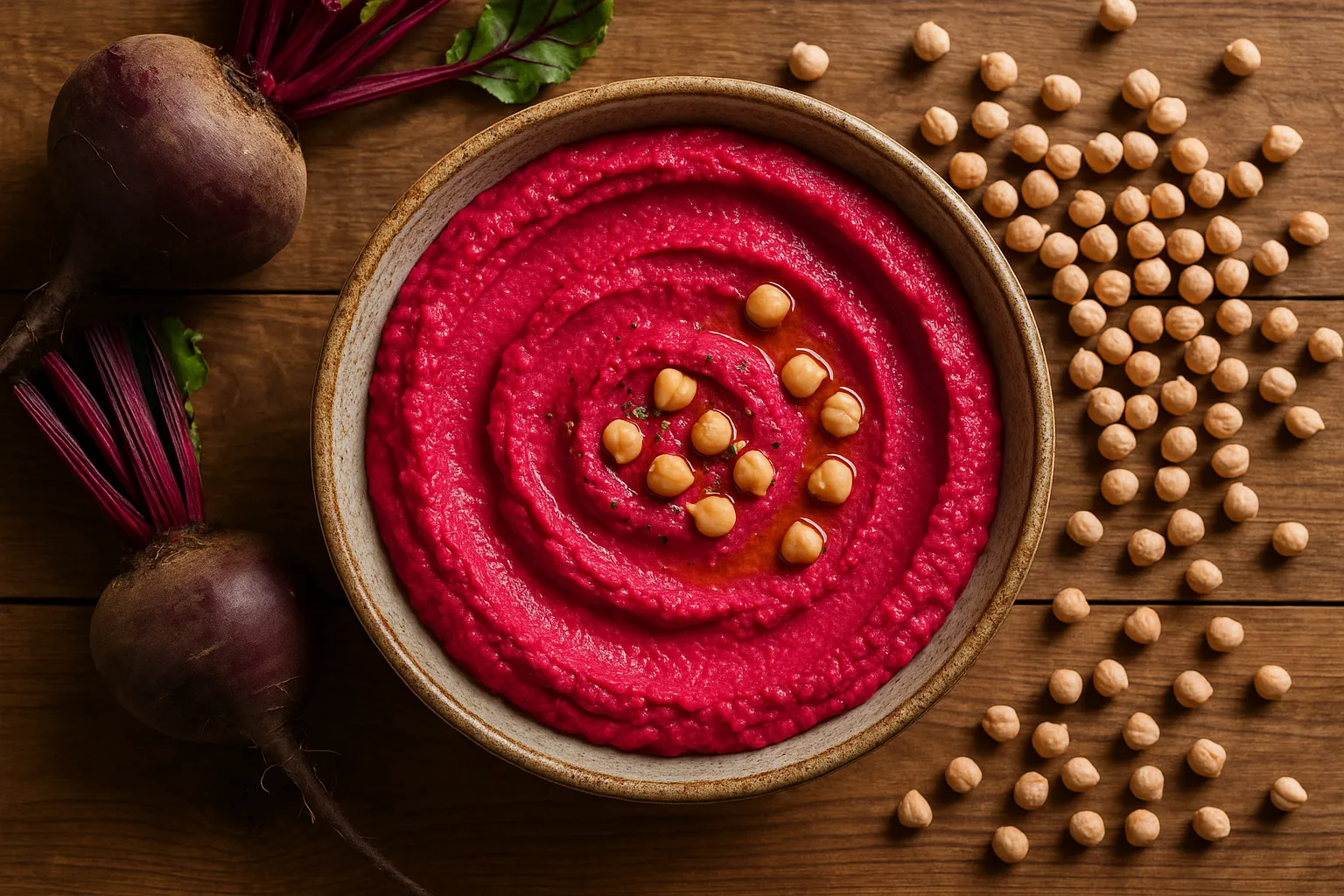
Vibrant plant-based protein dip combining earthy beetroot with creamy chickpeas for heart health, blood sugar control, and natural energy.
Quick Nutrition Facts
Per 100g (about 1/3 cup)
| Nutrient | Amount |
|---|---|
| Calories | 170 kcal |
| Protein | 5g |
| Carbohydrates | 18g |
| Fiber | 4.5g |
| Sugars | 3.2g |
| Fat | 8g |
| Iron | 1.8mg |
| Folate | 65mcg |
| Potassium | 240mg |
| Vitamin C | 4.2mg |
Macronutrient Breakdown
 ChatGPT
  Claude
  AI Mode
  Perplexity
NUTRITIONIST INSIGHT
Beetroot hummus combines chickpea protein with beetroot's natural nitrates for blood pressure support. The 4.5g fiber per 100g aids digestion and blood sugar control, making it ideal for diabetes management.
Myth Busters
MYTH #1: Hummus Is Too High in Calories for Weight Loss
TRUTH: Beetroot hummus has 170 calories per 100g (about 50 calories per 2 tablespoons). The combination of protein and fiber promotes satiety, helping you eat less overall. Studies show chickpeas aid weight management.
MYTH #2: Diabetics Should Avoid Hummus Due to Carbs
TRUTH: Chickpeas have a low glycemic index (GI 28) and improve postprandial glucose control. The fiber and protein slow carb absorption, making hummus diabetes-friendly in 50-75g portions.
MYTH #3: Plant Proteins Are Incomplete
TRUTH: Chickpeas provide all nine essential amino acids, making hummus a complete protein source. When combined with tahini, the protein quality rivals many animal sources.
MYTH #4: Store-Bought Hummus Is Unhealthy
TRUTH: Many commercial beetroot hummus brands use simple ingredients (chickpeas, beetroot, tahini, olive oil, lemon, spices). Check labels for added sugars or excessive sodium; most quality brands are nutritious.
MYTH #5: Beetroot Hummus Spikes Blood Sugar Like Beets
TRUTH: While beetroot contains natural sugars, combining it with chickpeas (high fiber, protein) dramatically slows sugar absorption. The overall glycemic load remains low.
MYTH #6: Hummus Isn't Good for Muscle Gain
TRUTH: With 5g protein per 100g plus healthy fats, hummus supports muscle recovery when paired with whole grains. It's excellent for plant-based athletes as a post-workout snack.
NutriScore by Health Goals
| Health Goal | NutriScore | Why This Score? |
|---|---|---|
| Weight Loss |  | 170 calories per 100g, 4.5g fiber promotes fullness, plant-based protein aids satiety. Portion control key (50-75g servings). |
| Muscle Gain | | 5g complete plant protein, healthy fats support recovery, pairs well with whole grains for amino acid variety. |
| Diabetes Management |  | Low glycemic index (28), chickpeas improve blood sugar regulation, high fiber slows carb absorption. Excellent diabetes-friendly dip. |
| PCOS Management | | Plant-based protein supports hormone balance, low GI aids insulin sensitivity, anti-inflammatory properties. Limit to 75g per serving. |
| Pregnancy Nutrition | | Rich in folate (65mcg), iron (1.8mg) for fetal development, plant protein supports pregnancy needs, easy to digest. |
| Viral/Flu Recovery | | Plant-based protein for immune support, easy to digest, vitamin C and antioxidants boost immunity, gentle on stomach. |
PERSONALIZED NUTRITION
Track your meals with NutriScan for personalized NutriScores based on your specific health goals!
Blood Sugar Response to Beetroot Hummus
Understanding how beetroot hummus affects your blood glucose helps you make informed snacking decisions.
Typical Glucose Response Curve
This chart shows typical blood glucose response for general healthy individuals. Individual responses may vary. Not medical advice.
How to Optimize Blood Sugar Response
Pairing beetroot hummus with fiber-rich vegetables minimizes glucose spikes:
- 🥕 Carrot and celery sticks - Adds fiber and crunch
- 🥒 Cucumber and bell pepper slices - Low-carb, high-volume
- 🥦 Broccoli and cauliflower florets - Nutrient-dense, low glycemic
- 🫓 Whole grain pita (small portions) - Adds complex carbs
This combination extends energy release and keeps blood sugar stable for 2-3 hours.
Cultural Significance
Hummus dates back to 13th century Egypt and has been a Middle Eastern staple for centuries, with beetroot variations emerging as modern fusion cuisine.
In Middle East:
- Traditional hummus served at every meal, considered symbol of hospitality
- Beetroot version popularized in Israel and Lebanon in recent decades
- Often paired with pita bread, olive oil drizzle, and za'atar spice
- Cultural variations include topping with whole chickpeas, pine nuts, or parsley
Global Impact:
- Plant-based protein revolution has made hummus mainstream globally
- Hummus market valued at $2.5 billion globally, growing 12% annually
- Beetroot hummus appeals to health-conscious consumers seeking colorful, nutrient-dense options
- Vegan and vegetarian diets rely on hummus as protein staple
Compare & Substitute
Beetroot Hummus vs Similar Dips (Per 100g)
| Nutrient | 🥗 Beetroot Hummus | 🫘 Classic Hummus | 🥑 Guacamole | 🧀 Tzatziki |
|---|---|---|---|---|
| Calories | 170 kcal | 166 kcal | 160 kcal | 90 kcal |
| Carbs | 18g | 14g | 9g | 4g |
| Fiber | 4.5g | 6g | 7g | 0.5g |
| Protein | 5g | 8g | 2g | 3.5g |
| Fat | 8g | 10g | 15g | 7g |
| Iron | 1.8mg | 2.4mg | 0.6mg | 0.1mg |
| Folate | 65mcg | 109mcg | 81mcg | 5mcg |
| Best For | Color, antioxidants, blood pressure | High protein, versatility | Healthy fats, avocado lovers | Low-calorie, probiotic |
Frequently Asked Questions
Is beetroot hummus good for weight loss?
Yes, beetroot hummus supports weight loss with 170 calories per 100g and 4.5g fiber that promotes fullness. The plant-based protein and healthy fats provide sustained energy without blood sugar crashes.
Best practices: Use 2-3 tablespoon portions (50-75g), pair with vegetable sticks instead of crackers, enjoy as mid-morning or afternoon snack, avoid late-night eating.
Can diabetics eat beetroot hummus?
Diabetics can safely eat beetroot hummus. Chickpeas have a low glycemic index (28) and contain resistant starch that improves insulin sensitivity.
Tips for diabetics:
- Stick to 50-75g portions (about 1/4 cup)
- Pair with low-carb vegetables (cucumbers, celery, peppers)
- Avoid high-carb pita or crackers, or limit to 1 small piece
- Monitor blood sugar 2 hours after eating
The chickpea-beetroot combination actually helps regulate blood sugar levels. Always consult your healthcare provider.
How much protein is in beetroot hummus?
Beetroot hummus contains 5g of protein per 100g. While moderate compared to animal sources, it's a complete plant-based protein from chickpeas, providing all nine essential amino acids.
For higher protein needs, combine with whole grain pita (adds 8g protein per pita) or use as a spread in protein-rich wraps.
What are the main health benefits of beetroot hummus?
Key Benefits:
- Blood Pressure Regulation: Natural nitrates from beetroot support healthy blood pressure
- Blood Sugar Control: Low GI (28), high fiber stabilizes glucose levels
- Heart Health: Monounsaturated fats, potassium, and antioxidants protect cardiovascular system
- Digestive Health: 4.5g fiber supports gut health and regular bowel movements
- Plant-Based Protein: Complete protein for vegetarian/vegan diets
- Pregnancy Support: Folate (65mcg), iron (1.8mg) aid fetal development
When is the best time to eat beetroot hummus?
Depends on your goal:
- Weight Loss: Mid-morning or afternoon snack (paired with vegetables). Avoid late evening.
- Muscle Gain: Post-workout (within 1 hour) with whole grain pita or as part of protein-rich meal.
- Diabetes: With lunch as a salad topper or vegetable dip. Not on empty stomach.
- Energy: 1-2 hours before physical activity for sustained energy.
IMPORTANT NOTE
Pair with low-carb vegetables for best blood sugar control.
Is beetroot hummus healthier than regular hummus?
Both are healthy with unique benefits:
Beetroot Hummus:
- Higher in antioxidants (betalains from beetroot)
- More vitamin A and vitamin C
- Natural nitrates support blood pressure and athletic performance
- Lower in protein (5g vs 8g per 100g)
Regular Hummus:
- Higher protein content (8g per 100g)
- More iron and folate from extra chickpeas
- Classic flavor, more versatile
Recommendation: Alternate between both. Beetroot hummus for blood pressure/antioxidants; regular hummus for higher protein needs.
How much beetroot hummus should I eat per day?
General Guidelines:
- 50-75g daily (2-3 tablespoons) - Most people, as snack or meal component
- 75-100g daily - Athletes, plant-based diets, pregnancy
- 50g daily - Diabetes, strict calorie control, PCOS management
Avoid excess: More than 150g per day can provide too many calories (255+), potential digestive issues from high fiber.
Track your meals with NutriScan app to see how beetroot hummus fits your personal nutrition goals.
Can I eat beetroot hummus on an empty stomach?
Generally safe for most people - provides sustained energy from protein and healthy fats without rapid blood sugar spike.
May want to avoid if you have:
- IBS/IBD: Chickpeas can cause gas/bloating
- Kidney stones: Beetroot contains oxalates
- Low blood pressure: Natural nitrates may lower blood pressure further
Better approach: Pair with whole grain crackers or vegetables for balanced nutrition and better digestive comfort.


Similar Nutritious Foods
4505 Chicharrones Classic Chili Salt
7 Eleven Japan Crispy Corn Cheese
Explore More Nutrition Tools & Resources
AI Calorie Counter App - Snap a Photo, Get Macros
AI Nutritionist App That Reads Your Logged Meals
Best Protein Supplements for Women
Bulking Meal Plan App That Sets Your Surplus
ChatGPT Calorie Counter Alternative That Keeps the Total
ChatGPT Diet Plan Alternative That Tracks What You Eat
ChatGPT Weight Loss Coach Alternative With a Food Log
Fast Food Calorie Counter App That Reads the Tray
Free Calorie Tracker App with AI Photo Scans | NutriScan
Indian Diet Plan App With Veg and Non Veg Meals
Indian Food Calorie Calculator - Get Instant Nutrition Facts for Desi Meals — 2026
Intermittent Fasting for Women, Timer and Meal Log App
Intermittent Fasting Tracker App - Free Fasting Timer
Macro Tracker App That Fills the Numbers From a Photo
Mediterranean Diet Meal Plan App That Counts the Oil
Micronutrient Tracker App for Vitamins and Minerals
MyFitnessPal Alternative That Stays Free | NutriScan
NutriScore App: A Free Grade on Every Meal | NutriScan
Nutrition Label Scanner App for the Amount You Ate
Second Trimester Protein Guide
Vegetarian Meal Plan App With a Protein Target
Voice Calorie Counter - Speak to Track Meals Hands-Free
Water and Calorie Tracker App - Free Water Log