Beetroot Slice: Calories, Nutrition and Health Benefits
Vibrant ruby-red root vegetable packed with nitrates, folate, and powerful antioxidants for optimal health and performance.
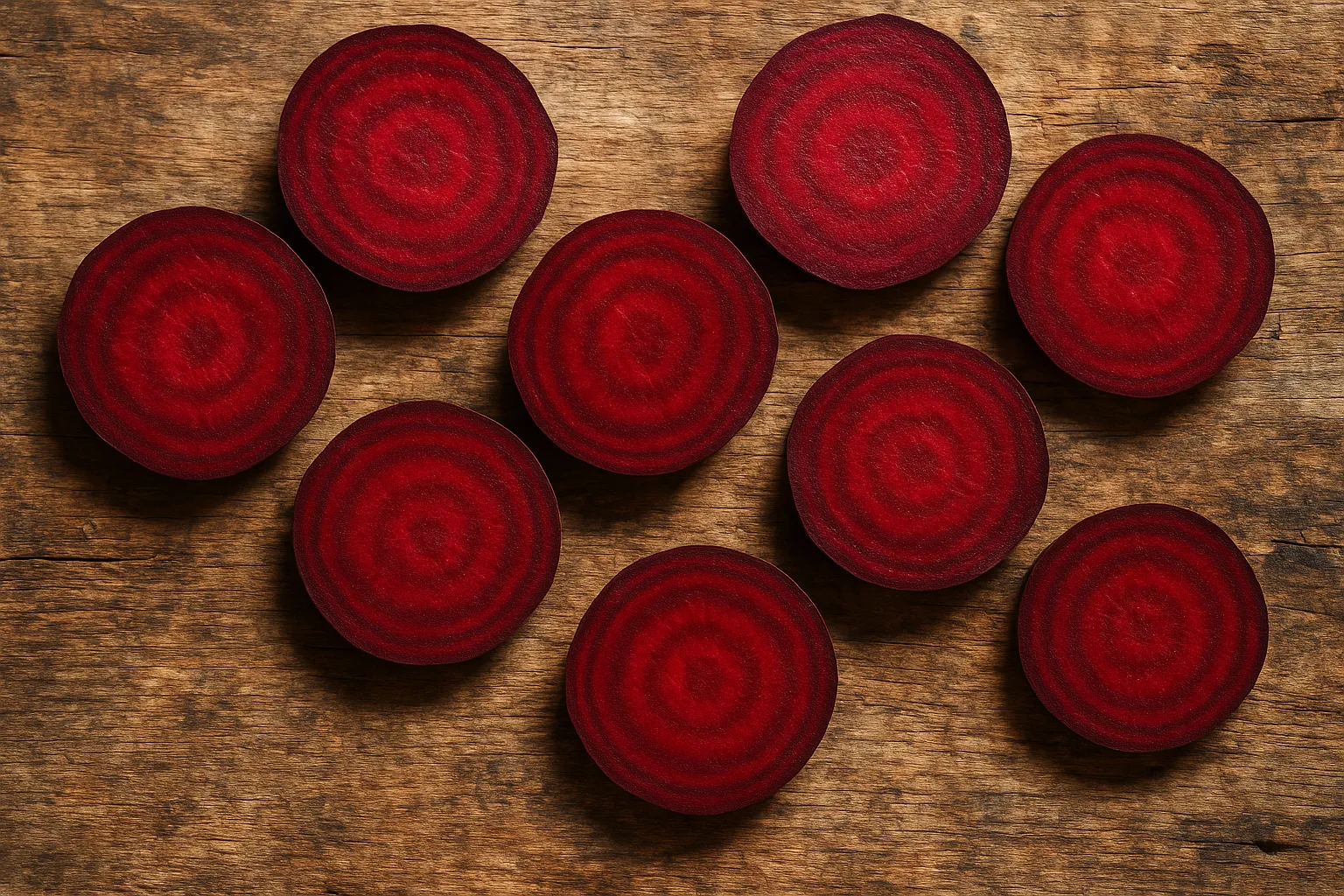
Quick Nutrition Facts
Per 100g (About 5 Slices)
| Nutrient | Amount |
|---|---|
| Calories | 43 kcal |
| Protein | 1.6g |
| Carbohydrates | 9.6g |
| Fiber | 2.8g |
| Sugars | 6.8g |
| Fat | 0.2g |
| Potassium | 325mg |
| Folate | 109mcg |
| Vitamin C | 4.9mg |
| Magnesium | 23mg |
Macronutrient Breakdown
 ChatGPT
  Claude
  AI Mode
  Perplexity
NUTRITIONIST INSIGHT
Beetroot is one of the richest dietary sources of nitrates, which convert to nitric oxide to lower blood pressure by 4-10 mmHg. The 109mcg folate per 100g supports pregnancy and cardiovascular health.
Myth Busters
MYTH #1: Beetroot Has Too Much Sugar
TRUTH: While beetroot contains 6.8g natural sugars per 100g, the 2.8g fiber significantly slows sugar absorption. The glycemic load is low (5), meaning minimal blood sugar impact. The antioxidants and nitrates outweigh sugar concerns.
MYTH #2: Diabetics Should Avoid Beetroot
TRUTH: Diabetics can eat beetroot in moderation. While GI is 61 (medium), the fiber and antioxidants help regulate blood sugar. Best practices: limit to 50-100g, pair with protein/fat, monitor blood sugar response.
MYTH #3: Beetroot Juice Is Just a Fad
TRUTH: Scientific research consistently shows beetroot juice lowers blood pressure, improves exercise performance, and enhances endurance. The nitrate content is medically validated, not marketing hype.
MYTH #4: Pink Urine After Eating Beetroot Is Dangerous
TRUTH: Beeturia (pink/red urine) affects 10-14% of people after eating beetroot. It's completely harmless and caused by betalain pigments passing through the digestive system. No health concerns.
MYTH #5: Cooking Beetroot Destroys All Nutrients
TRUTH: While vitamin C decreases with cooking, most nutrients remain stable. Cooked beetroot retains nitrates, folate (80-85%), potassium, and fiber. Some nutrients become more bioavailable with light cooking.
MYTH #6: Beetroot Is Only Good for Athletes
TRUTH: While athletes benefit from improved oxygen efficiency and endurance, everyone gains from beetroot's blood pressure reduction, anti-inflammatory effects, liver support, and folate for pregnancy.
NutriScore by Health Goals
| Health Goal | NutriScore | Why This Score? |
|---|---|---|
| Weight Loss |  | Only 43 calories per 100g, 2.8g fiber promotes fullness, natural nitrates boost exercise performance and fat burning. |
| Muscle Gain | | Nitrates improve blood flow to muscles, enhance oxygen delivery, reduce muscle fatigue, support recovery. Excellent pre-workout food. |
| Diabetes Management |  | Medium GI (61) requires portion control (50-100g), but fiber and antioxidants help blood sugar regulation. Monitor response. |
| PCOS Management | | Anti-inflammatory antioxidants, supports insulin sensitivity, low calorie density, liver detoxification benefits. |
| Pregnancy Nutrition | | Folate (109mcg) prevents neural tube defects, iron supports blood volume expansion, fiber prevents constipation. |
| Viral/Flu Recovery | | Antioxidants boost immunity, easy to digest, vitamin C supports immune function, hydrating, anti-inflammatory compounds. |
PERSONALIZED NUTRITION
Track your meals with NutriScan for personalized NutriScores based on your specific health goals!
Blood Sugar Response to Beetroot
Understanding how beetroot affects your blood glucose helps you optimize portion sizes and meal combinations.
Typical Glucose Response Curve
This chart shows typical blood glucose response for general healthy individuals. Individual responses may vary. Not medical advice.
How to Optimize Beetroot for Blood Sugar
Pairing beetroot with protein or healthy fat moderates glucose response and maximizes nutrient benefits:
- 🥗 Beetroot salad with feta and walnuts - Protein and fat slow digestion
- 🥚 Roasted beetroot with eggs - Complete protein balances carbs
- 🥜 Beetroot hummus - Chickpea protein and tahini fat stabilize blood sugar
- 🐟 Beetroot with grilled fish - Lean protein optimizes glucose control
This combination minimizes spikes while delivering nitrates, folate, and antioxidants for comprehensive health benefits.
Cultural Significance
Beetroot has been cultivated for over 4,000 years, evolving from medicinal plant to culinary staple across civilizations.
Historical Significance:
- Ancient Romans valued beetroot for blood-building properties (accurate!)
- Eastern European cuisine features borscht (beetroot soup) as national dish
- Victorian England popularized pickled beetroot as condiment
- Traditional medicine used beetroot for liver cleansing and blood disorders
In India:
- Gaining popularity in modern Indian cuisine and health circles
- Used in salads (chukandar salad) with lemon and spices
- Beetroot juice increasingly popular for blood pressure and stamina
- Growing in cooler regions like Punjab, Haryana, UP, Tamil Nadu
- Ayurveda recommends beetroot for blood purification and energy
Modern Applications:
- Athletic performance supplement (beetroot juice/powder)
- Natural food coloring (betalain pigments)
- Sustainable crop (leaves, stems, roots all edible)
- Research focus for cardiovascular health and endurance
Compare & Substitute
Beetroot vs Similar Vegetables (Per 100g)
| Nutrient | 🍠 Beetroot | 🥕 Carrot | 🥔 Sweet Potato | 🍠 Radish |
|---|---|---|---|---|
| Calories | 43 kcal | 41 kcal | 86 kcal | 16 kcal |
| Carbs | 9.6g | 9.6g | 20g | 3.4g |
| Fiber | 2.8g | 2.8g | 3g | 1.6g |
| Protein | 1.6g | 0.9g | 1.6g | 0.7g |
| Fat | 0.2g | 0.2g | 0.1g | 0.1g |
| Potassium | 325mg | 320mg | 337mg | 233mg |
| Folate | 109mcg | 19mcg | 11mcg | 25mcg |
| Vitamin C | 4.9mg | 5.9mg | 2.4mg | 14.8mg |
| Nitrates | Very high | Low | Low | Medium |
| Best For | Blood pressure, exercise boost | Vitamin A, eye health | Sustained energy, vitamin A | Low-carb, digestive health |
Frequently Asked Questions
Is beetroot good for weight loss?
Yes, beetroot is excellent for weight loss. At only 43 calories per 100g with 2.8g fiber, it provides volume and fullness while being nutrient-dense. The nitrates boost exercise performance and fat burning efficiency.
Best practices: Eat raw in salads (highest nutrient retention), roast lightly without oil, drink beetroot juice pre-workout (250ml), pair with protein for balanced meals, aim for 100-200g daily.
Can diabetics eat beetroot?
Diabetics can eat beetroot in moderation with awareness. While GI is 61 (medium) and carbs are 9.6g per 100g, the fiber and antioxidants help regulate blood sugar response.
Tips for diabetics:
- Limit portion to 50-100g per serving (about 2.5-5 slices); pair with protein/healthy fat (eggs, fish, nuts); eat with meals, not alone; monitor blood sugar 2 hours after eating; choose raw or lightly cooked over juice (whole food provides fiber buffer).
Does beetroot really lower blood pressure?
Yes, beetroot is scientifically proven to lower blood pressure. The dietary nitrates convert to nitric oxide in the body, which relaxes and dilates blood vessels, improving blood flow.
Research findings: 250ml beetroot juice reduces systolic BP by 4-10 mmHg within 2-3 hours; effects last 24 hours; comparable to some blood pressure medications; works best in people with elevated BP.
How to use: Drink 250ml beetroot juice daily (morning or 2-3 hours before workout); eat 100-200g cooked beetroot daily; consistent intake provides sustained benefits; consult doctor if on BP medication (may enhance effects).
What are the main health benefits of beetroot?
Key Benefits:
- Blood Pressure Reduction: Nitrates dilate blood vessels, reducing hypertension by 4-10 mmHg
- Exercise Performance: Improves oxygen efficiency, endurance, and reduces muscle fatigue
- Pregnancy Support: 109mcg folate prevents neural tube defects and supports fetal development
- Anti-Inflammatory: Betalains reduce inflammation and oxidative stress
- Liver Detoxification: Supports liver function and toxin elimination
- Brain Health: Improves blood flow to brain, may enhance cognitive function
Can I eat beetroot every day?
Yes, eating beetroot daily is safe and beneficial for most people. Consistent intake provides sustained cardiovascular and performance benefits.
Recommended daily intake:
- 100-200g cooked beetroot - General health maintenance
- 250ml beetroot juice - Blood pressure management or athletic performance
- 50-100g - Diabetes or low-carb diets
- 150-200g - Pregnancy (folate benefits)
Note: May cause harmless pink urine (beeturia) in 10-14% of people. If you have kidney stones (calcium oxalate type), limit beetroot due to oxalate content.
Track your meals with NutriScan app to optimize beetroot intake for your health goals.
Is raw or cooked beetroot healthier?
Both forms are healthy with different advantages. Choose based on your preference and digestive tolerance.
Raw Beetroot:
- Retains maximum vitamin C (4.9mg) and folate (109mcg); crisp texture for salads; harder to digest for some people; strongest antioxidant content.
Cooked Beetroot:
- Easier to digest and sweeter taste; retains 80-85% of nutrients; concentrated flavor; nitrates remain stable; some nutrients become more bioavailable.
Beetroot Juice:
- Fastest nitrate absorption (2-3 hours to peak); most effective for blood pressure and exercise; lacks fiber (higher glycemic impact); easier to overconsume.
Recommendation: Rotate forms - raw in salads, roasted as side dish, juice for pre-workout boost. All forms provide significant health benefits.
Why does my urine turn pink after eating beetroot?
This condition called beeturia affects 10-14% of people and is completely harmless. The betalain pigments (responsible for beetroot's red color) pass through your digestive system without being fully broken down.
Factors affecting beeturia: Iron deficiency (more common with low iron), stomach acid levels (low acid increases occurrence), genetic variation in pigment metabolism, amount consumed (higher intake = more likely).
Is it dangerous? No, beeturia has no health implications. It simply indicates your body processes betalains differently. The pink/red color typically appears within hours and fades within 24-48 hours.
Can beetroot help with anemia?
Beetroot supports anemia management but is not a standalone cure. While beetroot doesn't contain significant iron (0.8mg per 100g), it aids iron absorption and red blood cell production.
How beetroot helps: High folate (109mcg) supports red blood cell formation; vitamin C (4.9mg) enhances iron absorption from other foods; copper aids hemoglobin synthesis; improves blood circulation via nitrates.
Best approach: Combine beetroot with iron-rich foods (spinach, lentils, red meat); eat with vitamin C sources for better iron absorption; consistent daily intake (100-200g); consult doctor for severe anemia (may need supplements).


Similar Nutritious Vegetables
4505 Chicharrones Classic Chili Salt
7 Eleven Japan Crispy Corn Cheese
Explore More Nutrition Tools & Resources
AI Calorie Counter App - Snap a Photo, Get Macros
AI Nutritionist App That Reads Your Logged Meals
Best Protein Supplements for Women
Bulking Meal Plan App That Sets Your Surplus
ChatGPT Calorie Counter Alternative That Keeps the Total
ChatGPT Diet Plan Alternative That Tracks What You Eat
ChatGPT Weight Loss Coach Alternative With a Food Log
Fast Food Calorie Counter App That Reads the Tray
Free Calorie Tracker App with AI Photo Scans | NutriScan
Indian Diet Plan App With Veg and Non Veg Meals
Indian Food Calorie Calculator - Get Instant Nutrition Facts for Desi Meals — 2026
Intermittent Fasting for Women, Timer and Meal Log App
Intermittent Fasting Tracker App - Free Fasting Timer
Macro Tracker App That Fills the Numbers From a Photo
Mediterranean Diet Meal Plan App That Counts the Oil
Micronutrient Tracker App for Vitamins and Minerals
MyFitnessPal Alternative That Stays Free | NutriScan
NutriScore App: A Free Grade on Every Meal | NutriScan
Nutrition Label Scanner App for the Amount You Ate
Second Trimester Protein Guide
Vegetarian Meal Plan App With a Protein Target
Voice Calorie Counter - Speak to Track Meals Hands-Free
Water and Calorie Tracker App - Free Water Log