Bhindi Fry (Okra Stir Fry): Calories, Nutrition and Health Benefits
A beloved Indian vegetable dish packed with fiber, vitamins, and minerals. Low in calories, excellent for diabetes, weight loss, and digestive health.
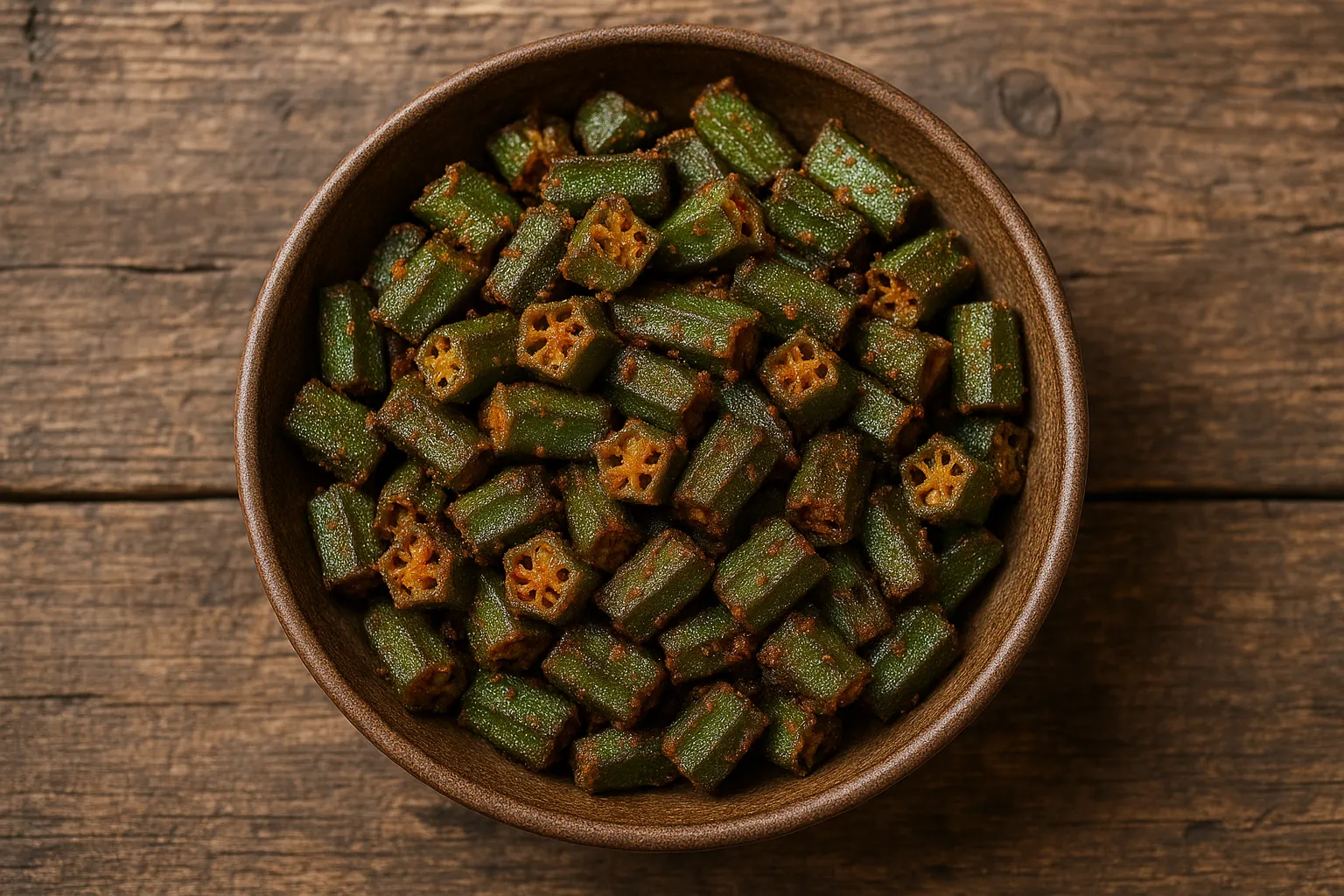
Quick Nutrition Facts
Per 100g (approx. 1 cup cooked)
| Nutrient | Amount |
|---|---|
| Calories | 90 kcal |
| Protein | 2.0g |
| Carbohydrates | 7.0g |
| Fiber | 3.2g |
| Sugars | 1.5g |
| Fat | 6.5g |
| Vitamin K | 40mcg |
| Vitamin C | 13mg |
| Folate | 46mcg |
| Magnesium | 43mg |
| Potassium | 299mg |
Macronutrient Breakdown
 ChatGPT
  Claude
  AI Mode
  Perplexity
NUTRITIONIST INSIGHT
Bhindi's mucilage (gel-like substance) contains soluble fiber that helps regulate blood sugar, supports gut health, and promotes feelings of fullness. The vitamin K content (40mcg per 100g) supports bone health and blood clotting.
Myth Busters
MYTH #1: Bhindi Causes Blood Sugar Spikes
TRUTH: Bhindi has a very low glycemic index (20-22), making it excellent for diabetes management. The soluble fiber actually slows glucose absorption and improves insulin sensitivity. Studies show regular okra consumption may help reduce fasting blood sugar levels.
MYTH #2: The Sliminess Makes Bhindi Unhealthy
TRUTH: The mucilage (slimy texture) is actually beneficial! This soluble fiber supports digestive health, helps regulate blood sugar, lowers cholesterol, and promotes gut bacteria growth. To reduce sliminess, cook at high heat, add lemon juice, or choose smaller, tender okra pods.
MYTH #3: Bhindi Is High in Calories Due to Oil
TRUTH: Cooked with minimal oil (1-2 teaspoons), bhindi fry has only 90 calories per 100g. Air-frying reduces it to 35-40 calories. Even moderate oil stir-frying keeps it under 120 calories per serving—making it an excellent weight loss food.
MYTH #4: Bhindi Has No Protein
TRUTH: While not a complete protein source, bhindi provides 2g protein per 100g, plus essential amino acids. Pair with dal (lentils), roti, or quinoa for a complete protein meal that supports muscle maintenance and satiety.
MYTH #5: Frozen or Canned Okra Is Nutritionally Inferior
TRUTH: Frozen okra retains 85-95% of its nutrients, including fiber and vitamin content. Canned okra has slightly reduced vitamin C but maintains fiber. Fresh, frozen, and canned all provide significant health benefits—choose based on convenience and availability.
MYTH #6: Eating Bhindi Daily Is Excessive
TRUTH: Consuming bhindi daily (1-2 cups) is safe and beneficial for most people. The high fiber, vitamins, and minerals support overall health. Only individuals with kidney stones or oxalate sensitivity should moderate intake due to oxalate content.
NutriScore by Health Goals
| Health Goal | NutriScore | Why This Score? |
|---|---|---|
| Weight Loss |  | Only 90 calories per 100g, 3.2g fiber promotes fullness, low in fat with minimal oil. Perfect for calorie deficit diets. |
| Muscle Gain |  | Provides 2g protein, supports digestion for nutrient absorption. Pair with protein source (dal, chicken) for muscle synthesis. |
| Diabetes Management | | Very low GI (20-22), soluble fiber regulates blood sugar, improves insulin sensitivity. Excellent choice. |
| PCOS Management | | Low GI, high fiber balances hormones, anti-inflammatory properties, supports insulin sensitivity crucial for PCOS. |
| Pregnancy Nutrition | | 46mcg folate per 100g supports fetal development, vitamin K for bone health, fiber prevents constipation. |
| Viral/Flu Recovery | | Vitamin C (13mg) supports immunity, easy to digest, anti-inflammatory properties, gentle on stomach. |
PERSONALIZED NUTRITION
Track your meals with NutriScan for personalized NutriScores based on your specific health goals!
Blood Sugar Response to Bhindi Fry
Understanding how bhindi affects your blood glucose demonstrates why it's considered a superfood for diabetes management.
Typical Glucose Response Curve
This chart shows typical blood glucose response for general healthy individuals. Individual responses may vary. Not medical advice.
How Bhindi Helps Stabilize Blood Sugar
Bhindi's soluble fiber and polyphenols work together to minimize glucose spikes and improve insulin function:
- 🥄 Mucilage coating - Slows carbohydrate digestion and glucose absorption
- 🌾 High fiber content (3.2g) - Delays gastric emptying, extends fullness
- 💧 Low carb density - Only 7g carbs per 100g with minimal impact
- 🔬 Polyphenols - Improve insulin sensitivity and glucose uptake
Best combinations: Pair with roti (whole wheat), dal (lentils), brown rice, or quinoa for sustained energy and balanced nutrition.
Cultural Significance
Bhindi (Abelmoschus esculentus) originated in Ethiopia and has been cultivated for over 3,500 years, spreading across Asia, Africa, and the Americas.
In India:
- Staple vegetable across all regions, known as "lady's finger" in English
- Essential in North Indian cuisine: bhindi masala, bhindi do pyaza, kurkuri bhindi
- South Indian preparations: vendakkai poriyal, bhindi pachadi, bhindi curry
- Ayurvedic medicine uses okra for digestive health and blood sugar regulation
- Cultural symbolism: represents prosperity and good fortune in some communities
Global Impact:
- Cultivated in tropical and warm temperate regions worldwide
- Key ingredient in Southern US gumbo (thickening agent)
- Used in Middle Eastern and Mediterranean cuisines
- Popular in African stews and soups
- Growing recognition as a superfood for diabetes management
Compare & Substitute
Bhindi Fry vs Similar Vegetables (Per 100g Cooked)
| Nutrient | 🥒 Bhindi Fry | 🥕 Carrot Stir Fry | 🥦 Broccoli Stir Fry | 🍆 Baingan Fry |
|---|---|---|---|---|
| Calories | 90 kcal | 85 kcal | 78 kcal | 115 kcal |
| Carbs | 7g | 9g | 6g | 8g |
| Fiber | 3.2g | 2.8g | 2.6g | 3.0g |
| Protein | 2g | 1g | 2.8g | 1.2g |
| Fat | 6.5g | 5.8g | 6.2g | 8.5g |
| Vitamin K | 40mcg | 13mcg | 102mcg | 3.6mcg |
| Folate | 46mcg | 19mcg | 63mcg | 22mcg |
| Vitamin C | 13mg | 6mg | 89mg | 2.2mg |
| Potassium | 299mg | 320mg | 316mg | 229mg |
| Best For | Diabetes, PCOS, pregnancy | Vitamin A, eye health | Vitamin C, immunity | Weight loss, low-carb |
Frequently Asked Questions
Is bhindi fry good for weight loss?
Yes, bhindi fry is excellent for weight loss with only 90 calories per 100g when cooked with minimal oil. The 3.2g fiber promotes fullness, reduces hunger, and supports healthy digestion.
Weight loss tips: Use 1-2 teaspoons oil for stir-frying; try air-frying (35-40 calories per 100g); avoid deep-frying (150-180 calories); pair with roti and dal for balanced meals; eat 1-2 cups as a main vegetable dish.
The high fiber content slows digestion, extends satiety, and prevents overeating throughout the day.
Can diabetics eat bhindi fry?
Bhindi fry is one of the best vegetables for diabetics with a very low glycemic index (20-22) and minimal impact on blood sugar.
Benefits for diabetics: Soluble fiber slows glucose absorption; improves insulin sensitivity; studies show okra extract may reduce fasting blood sugar levels; low carb content (only 7g per 100g); antioxidants support metabolic health.
Best practices: Eat 1-2 cups daily as part of balanced meal; pair with protein and whole grains; use minimal oil; monitor blood sugar response; incorporate into regular meal rotation.
What are the health benefits of bhindi?
Key Health Benefits:
- Blood Sugar Control: Very low GI (20-22), soluble fiber regulates glucose
- Digestive Health: 3.2g fiber promotes regular bowel movements
- Bone Health: 40mcg vitamin K for bone density
- Pregnancy Support: 46mcg folate for fetal development
- Immune Function: Vitamin C and antioxidants
- Heart Health: Soluble fiber lowers cholesterol
- Weight Management: Low calories, high satiety
How many calories are in bhindi fry?
Bhindi fry contains approximately 90 calories per 100g when cooked with 1-2 teaspoons of oil.
Calorie variations: Air-fried (35-40 cal); shallow-fried (90-120 cal); deep-fried (150-180 cal); boiled/steamed (33 cal).
For weight loss, choose air-frying or minimal oil with non-stick cookware.
Is bhindi good for pregnancy?
Bhindi is excellent for pregnancy: 46mcg folate for neural tube development; vitamin K for bone health; fiber prevents constipation; vitamin C enhances iron absorption; magnesium reduces leg cramps; low calories prevent excessive weight gain.
Eat 1-2 cups daily; cook thoroughly; wash thoroughly before cooking.
Does bhindi help with PCOS?
Yes, bhindi benefits PCOS through low GI (20-22), high fiber for insulin sensitivity, anti-inflammatory properties, weight management support, and nutrient density without excess carbs.
Include 3-4 times weekly; combine with lean protein and healthy fats; avoid deep-frying; pair with anti-inflammatory spices.


Similar Nutritious Foods
4505 Chicharrones Classic Chili Salt
7 Eleven Japan Crispy Corn Cheese
Explore More Nutrition Tools & Resources
AI Calorie Counter App - Snap a Photo, Get Macros
AI Nutritionist App That Reads Your Logged Meals
Best Protein Supplements for Women
Bulking Meal Plan App That Sets Your Surplus
ChatGPT Calorie Counter Alternative That Keeps the Total
ChatGPT Diet Plan Alternative That Tracks What You Eat
ChatGPT Weight Loss Coach Alternative With a Food Log
Fast Food Calorie Counter App That Reads the Tray
Free Calorie Tracker App with AI Photo Scans | NutriScan
Indian Diet Plan App With Veg and Non Veg Meals
Indian Food Calorie Calculator - Get Instant Nutrition Facts for Desi Meals — 2026
Intermittent Fasting for Women, Timer and Meal Log App
Intermittent Fasting Tracker App - Free Fasting Timer
Macro Tracker App That Fills the Numbers From a Photo
Mediterranean Diet Meal Plan App That Counts the Oil
Micronutrient Tracker App for Vitamins and Minerals
MyFitnessPal Alternative That Stays Free | NutriScan
NutriScore App: A Free Grade on Every Meal | NutriScan
Nutrition Label Scanner App for the Amount You Ate
Second Trimester Protein Guide
Vegetarian Meal Plan App With a Protein Target
Voice Calorie Counter - Speak to Track Meals Hands-Free
Water and Calorie Tracker App - Free Water Log