Bibimbap: Calories, Nutrition and Health Benefits
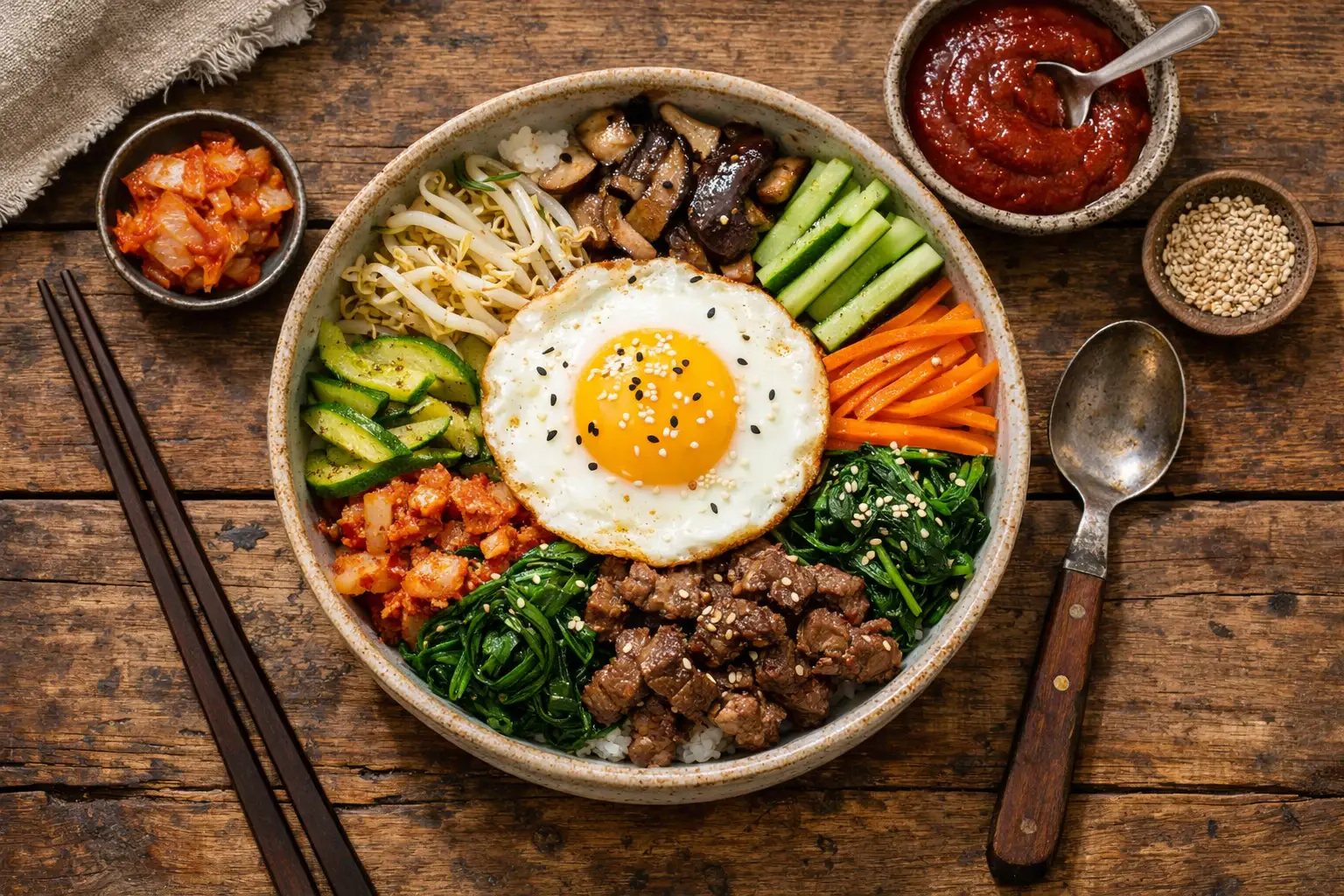
Korea's iconic mixed rice bowl combining steamed rice, sauteed vegetables, protein, egg, and spicy gochujang for a complete, balanced meal.
Quick Nutrition Facts
Per 1 Bowl Bibimbap (450g)
| Nutrient | Amount |
|---|---|
| Calories | 490 kcal |
| Protein | 25g |
| Carbohydrates | 65g |
| Fiber | 6g |
| Sugars | 8g |
| Fat | 14g |
| Sodium | 850mg |
| Iron | 4.5mg |
| Vitamin A | 180mcg |
| Vitamin C | 15mg |
Macronutrient Breakdown
 ChatGPT
  Claude
  AI Mode
  Perplexity
NUTRITIONIST INSIGHT
Bibimbap is a nutritionally balanced meal with protein, complex carbs, and vegetables in one bowl. The fermented gochujang provides probiotic benefits for gut health, while the variety of vegetables ensures diverse micronutrient intake.
Myth Busters
MYTH #1: Bibimbap Is Too High in Calories
TRUTH: A standard bibimbap bowl has 490 calories with balanced macros. This is a complete meal, not a side dish. The combination of protein, fiber, and complex carbs promotes satiety, preventing overeating later.
MYTH #2: Diabetics Should Avoid Bibimbap
TRUTH: Diabetics can enjoy bibimbap with modifications. Choose brown rice (GI 55 vs white rice GI 64), add extra vegetables, and use less gochujang. The protein and fiber help moderate blood glucose response.
MYTH #3: The Raw Egg Makes It Unsafe
TRUTH: Traditional bibimbap uses a raw or soft egg that cooks on the hot rice. For food safety, especially during pregnancy, request a fully cooked egg. The dish is equally delicious with a fried egg.
MYTH #4: Gochujang Is Unhealthy
TRUTH: Gochujang is a fermented paste containing probiotics and bioactive compounds with anti-inflammatory properties. While it contains sodium, its capsaicin from chili peppers may boost metabolism and reduce inflammation.
MYTH #5: Bibimbap Lacks Protein
TRUTH: A standard beef bibimbap provides 25g protein from meat (15-18g), egg (6g), and vegetables. This meets 50% of daily protein needs for most adults. Tofu versions offer comparable protein with plant-based benefits.
MYTH #6: All Bibimbap Is the Same Nutritionally
TRUTH: Nutrition varies significantly by preparation. Restaurant versions may have more oil and sodium. Home-prepared bibimbap with brown rice, lean protein, and extra vegetables can be substantially healthier.
NutriScore by Health Goals
| Health Goal | NutriScore | Why This Score? |
|---|---|---|
| Weight Loss |  | 490 calories for a complete meal with 6g fiber and 25g protein. Request half rice, double vegetables to reduce calories further. |
| Muscle Gain |  | Excellent post-workout meal with 25g protein and 65g carbs for glycogen replenishment. Add extra egg or protein for more gains. |
| Diabetes Management |  | White rice has moderate GI (64). Choose brown rice and prioritize vegetables to reduce glycemic impact. Monitor portions carefully. |
| PCOS Management | | The rice impacts blood sugar. Request brown rice, extra vegetables, and monitor gochujang sodium. Good protein content supports hormone balance. |
| Pregnancy Nutrition | | Rich in iron and folate from vegetables. Ensure egg is fully cooked. Spinach provides essential prenatal nutrients. |
| Viral/Flu Recovery | | Easy to digest, nutrient-dense, and provides quick energy. The fermented gochujang supports gut health and immunity during recovery. |
PERSONALIZED NUTRITION
Track your meals with NutriScan for personalized NutriScores based on your specific health goals!
Blood Sugar Response to Bibimbap
Understanding how bibimbap affects your blood glucose can help you make informed decisions about portions and preparation.
Typical Glucose Response Curve
This chart shows typical blood glucose response for general healthy individuals. Individual responses may vary. Not medical advice.
How to Flatten the Spike
Adding protein and fiber moderates glucose absorption and reduces the peak blood sugar level:
- 🍚 Choose brown rice - Lower GI (55 vs 64) and higher fiber
- 🥬 Extra vegetables - Add more spinach, bean sprouts, carrots
- 🥚 Eat protein first - Start with meat and egg before rice
- 🥜 Add sesame seeds - Healthy fats slow glucose absorption
This combination not only reduces the glucose spike but also extends energy release, keeping you fuller for longer.
Cultural Significance
Bibimbap, meaning "mixed rice," is one of Korea's most iconic dishes with roots dating back to the Joseon Dynasty.
In Korea:
- Traditionally eaten on the eve of Lunar New Year to use up leftover vegetables
- Jeonju bibimbap is considered the gold standard, featuring 30+ ingredients
- Dolsot bibimbap (stone pot version) creates a crispy rice crust called nurungji
- Represents the Korean philosophy of balanced eating with five colors (obangsaek)
Global Impact:
- Featured in Korean airline meals, introducing the dish worldwide
- UNESCO-recognized as part of Korean culinary heritage
- Popular health food in Western countries for its balanced nutrition
- Variations include vegetarian, vegan, and seafood versions
Compare & Substitute
Bibimbap vs Similar Rice Bowls (Per Serving)
| Nutrient | 🍚 Bibimbap | 🍣 Poke Bowl | 🍛 Burrito Bowl | 🍜 Donburi |
|---|---|---|---|---|
| Calories | 490 kcal | 550 kcal | 680 kcal | 520 kcal |
| Carbs | 65g | 55g | 75g | 70g |
| Fiber | 6g | 4g | 10g | 3g |
| Protein | 25g | 30g | 35g | 28g |
| Fat | 14g | 18g | 25g | 12g |
| Sodium | 850mg | 1200mg | 1500mg | 900mg |
| Best For | Balanced meal, gut health | Omega-3, high protein | High protein, fiber | Quick energy |
Frequently Asked Questions
Is bibimbap good for weight loss?
Yes, bibimbap can support weight loss as a complete meal with 490 calories, 25g protein, and 6g fiber. The combination promotes satiety and prevents overeating.
Best practices: Request half rice with extra vegetables, choose lean protein (chicken or tofu), and use gochujang sparingly. Brown rice adds more fiber for better fullness.
Can diabetics eat bibimbap?
Diabetics can eat bibimbap with modifications. White rice has a moderate glycemic index of 64, which can be reduced through smart choices.
Tips for diabetics:
- Choose brown rice (GI 55) instead of white
- Request half rice portions with extra vegetables
- Eat protein and vegetables before touching the rice
- Monitor blood sugar 2 hours after eating
The protein and fiber from vegetables help moderate blood sugar response. Always consult your healthcare provider.
How much protein is in bibimbap?
A standard beef bibimbap contains 25g of protein. This comes from beef (15-18g), egg (6g), and vegetables (2-3g combined).
For higher protein, add an extra egg or request double meat. Tofu versions provide approximately 20g protein with added plant-based benefits.
What are the main health benefits of bibimbap?
Key Benefits:
- Balanced Nutrition: Protein, carbs, fiber, and vitamins in one bowl
- Gut Health: Fermented gochujang provides probiotics
- Antioxidants: Diverse vegetables supply various antioxidants
- Heart Health: Sesame oil provides healthy unsaturated fats
- Iron: Beef and spinach contribute to daily iron needs
- Satiety: High protein and fiber promote fullness
Is bibimbap safe during pregnancy?
Bibimbap is generally safe and nutritious during pregnancy with one important modification: ensure the egg is fully cooked rather than runny.
Pregnancy benefits:
- Spinach provides folate essential for fetal development
- Beef supplies iron to prevent anemia
- Diverse vegetables offer vitamins and minerals
- Well-cooked eggs provide choline for brain development
Always ensure vegetables are properly washed and all ingredients are thoroughly heated.
How can I make bibimbap healthier?
Healthier modifications:
- Use brown rice - More fiber, lower GI
- Add extra vegetables - Boost fiber and nutrients
- Choose lean protein - Chicken, tofu, or lean beef
- Go easy on gochujang - Reduce sodium intake
- Cook the egg fully - Better food safety
- Use less sesame oil - Reduce total fat
Track your customized bibimbap with NutriScan app to see exact nutrition based on your modifications.
What vegetables are traditional in bibimbap?
Traditional bibimbap includes five vegetables representing five colors:
- White: Bean sprouts (sukju namul)
- Green: Spinach, zucchini, cucumber
- Red: Carrots, gochujang
- Yellow: Egg yolk, yellow squash
- Black/Brown: Shiitake mushrooms, fernbrake (gosari)
Each vegetable is seasoned separately with sesame oil and salt before being arranged on rice.


Similar Nutritious Foods
4505 Chicharrones Classic Chili Salt
7 Eleven Japan Crispy Corn Cheese
Explore More Nutrition Tools & Resources
AI Calorie Counter App - Snap a Photo, Get Macros
AI Nutritionist App That Reads Your Logged Meals
Best Protein Supplements for Women
Bulking Meal Plan App That Sets Your Surplus
ChatGPT Calorie Counter Alternative That Keeps the Total
ChatGPT Diet Plan Alternative That Tracks What You Eat
ChatGPT Weight Loss Coach Alternative With a Food Log
Fast Food Calorie Counter App That Reads the Tray
Free Calorie Tracker App with AI Photo Scans | NutriScan
Indian Diet Plan App With Veg and Non Veg Meals
Indian Food Calorie Calculator - Get Instant Nutrition Facts for Desi Meals — 2026
Intermittent Fasting for Women, Timer and Meal Log App
Intermittent Fasting Tracker App - Free Fasting Timer
Macro Tracker App That Fills the Numbers From a Photo
Mediterranean Diet Meal Plan App That Counts the Oil
Micronutrient Tracker App for Vitamins and Minerals
MyFitnessPal Alternative That Stays Free | NutriScan
NutriScore App: A Free Grade on Every Meal | NutriScan
Nutrition Label Scanner App for the Amount You Ate
Second Trimester Protein Guide
Vegetarian Meal Plan App With a Protein Target
Voice Calorie Counter - Speak to Track Meals Hands-Free
Water and Calorie Tracker App - Free Water Log