Bienenstich (Bee Sting Cake): Calories, Nutrition and Health Benefits
Traditional German yeast cake with caramelized almond topping and creamy vanilla filling - a beloved bakery classic.
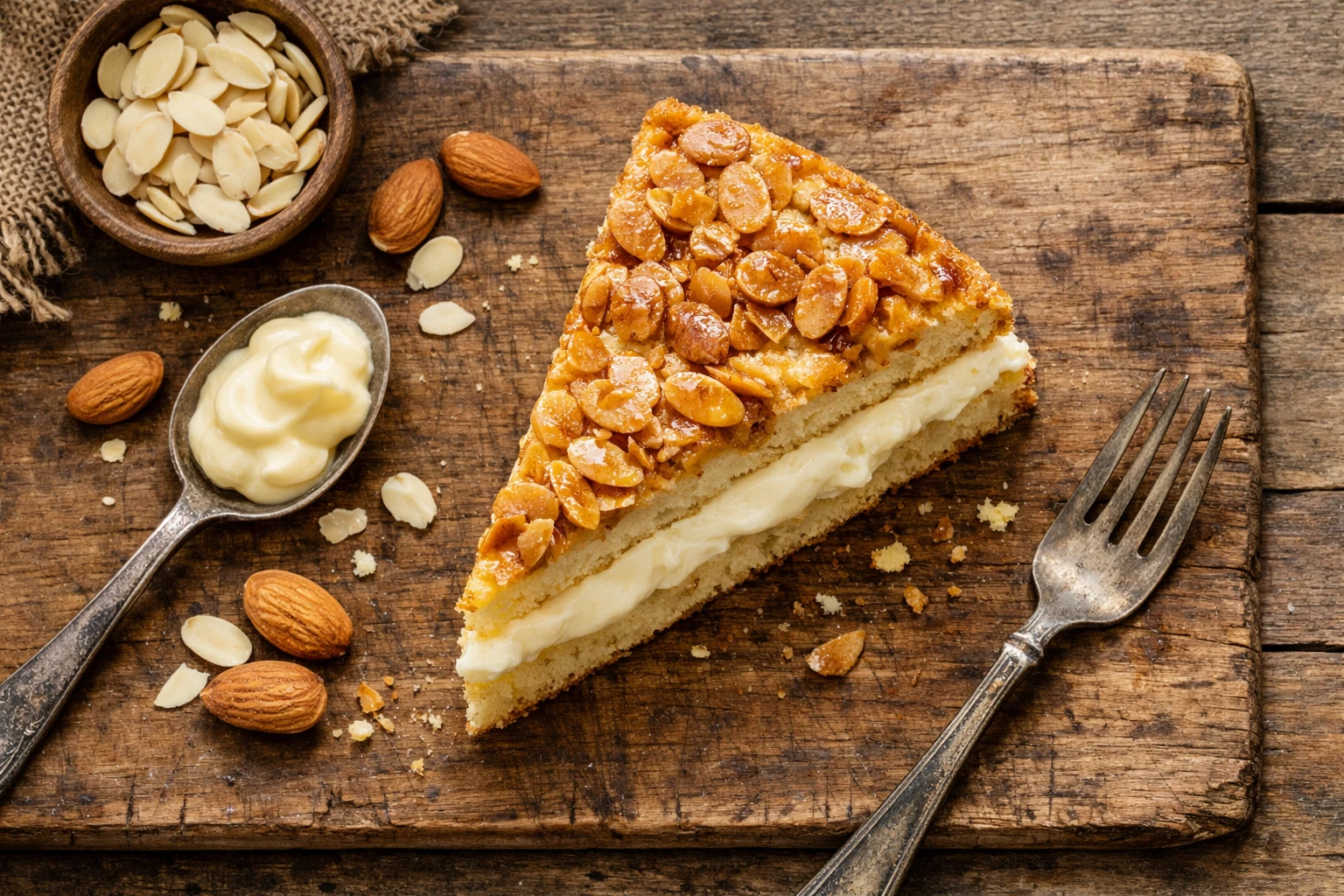
Quick Nutrition Facts
Per 1 Slice (100g)
| Nutrient | Amount |
|---|---|
| Calories | 350 kcal |
| Protein | 6g |
| Carbohydrates | 38g |
| Fiber | 1.2g |
| Sugars | 22g |
| Fat | 20g |
| Saturated Fat | 10g |
| Cholesterol | 75mg |
| Sodium | 180mg |
| Vitamin E | 3.2mg |
Macronutrient Breakdown
 ChatGPT
  Claude
  AI Mode
  Perplexity
NUTRITIONIST INSIGHT
Bienenstich's almond topping provides vitamin E and healthy monounsaturated fats. Enjoy as an occasional treat; pair with protein-rich meals to balance blood sugar response.
Myth Busters
MYTH #1: All German Cakes Are Unhealthy
TRUTH: While Bienenstich is calorie-dense (350 cal/100g), the almond topping provides heart-healthy fats and vitamin E, which support cardiovascular health. Moderation and portion control make any dessert fit into a balanced diet.
MYTH #2: Sugar-Free Versions Are Always Better
TRUTH: Sugar-free Bienenstich often contains artificial sweeteners and added fats to maintain texture. Whole food ingredients in traditional recipes may be easier for your body to process than synthetic alternatives. Small portions of the original recipe are often healthier.
MYTH #3: Diabetics Can Never Eat Bienenstich
TRUTH: Diabetics can enjoy small portions (1/4 to 1/2 slice) occasionally. Pairing with protein or fiber slows glucose absorption. Timing matters: consume after meals rather than alone, and monitor blood sugar response.
MYTH #4: Bienenstich Has No Nutritional Value
TRUTH: Beyond calories, Bienenstich provides protein (6g per slice) from eggs and dairy, vitamin E from almonds, and calcium from milk. It's not a health food, but it's not nutritionally empty either.
MYTH #5: Homemade Is Always Lower in Calories
TRUTH: Homemade Bienenstich can have similar or higher calories depending on butter and sugar amounts. However, you control ingredients quality and can reduce sugar by 20-30% without major texture loss.
NutriScore by Health Goals
| Health Goal | NutriScore | Why This Score? |
|---|---|---|
| Weight Loss |  | High calories (350 per slice), fat (20g), and sugar (22g). Limit to rare occasions; choose smaller portions. |
| Muscle Gain |  | Provides quick energy (38g carbs) and 6g protein. Better post-workout options exist, but acceptable as occasional high-calorie treat. |
| Diabetes Management |  | High sugar content (22g) causes rapid blood glucose spikes. Only small portions with protein; monitor closely. |
| PCOS Management | | High sugar and refined carbs worsen insulin resistance. Avoid or limit to very rare occasions. |
| Pregnancy Nutrition | | Provides calcium from dairy and vitamin E from almonds. Occasional treat acceptable; watch portion sizes. |
| Viral/Flu Recovery | | Quick energy from carbs and fats supports recovery. Almonds provide vitamin E for immune function. Better options exist, but acceptable as comfort food in moderation. |
PERSONALIZED NUTRITION
Track your meals with NutriScan for personalized NutriScores based on your specific health goals!
Blood Sugar Response to Bienenstich
Understanding how Bienenstich affects your blood glucose can help you make informed decisions about portion sizes and timing.
Typical Glucose Response Curve
This chart shows typical blood glucose response for general healthy individuals. Individual responses may vary. Not medical advice.
How to Flatten the Spike
Pairing Bienenstich with protein or consuming after a balanced meal slows glucose absorption and reduces blood sugar peaks:
- 🥛 Greek yogurt or quark - Adds protein and probiotics
- 🥜 A handful of almonds or walnuts - Healthy fats slow absorption
- ☕ Black coffee or unsweetened tea - No added sugar
- 🍽️ Eat after a protein-rich meal - Minimizes spike
This approach helps maintain steadier energy levels and reduces the insulin response, especially important for those managing diabetes or PCOS.
Cultural Significance
Bienenstich, literally "bee sting," is a beloved German yeast cake with debated origins dating back centuries.
In Germany:
- Name legend: Baker was stung by bee attracted to honey-almond topping
- Traditional at kaffeeklatsch (afternoon coffee gatherings)
- Regional variations in cream filling: buttercream, custard, or whipped cream
- Popular in bakeries across Germany, Austria, and Switzerland
Global Impact:
- Inspired similar almond-topped cakes in Scandinavia and Netherlands
- Found in German bakeries worldwide from US to Australia
- Part of German culinary heritage recognized by UNESCO
- Modern variations include chocolate, fruit, and nut-free versions
Compare & Substitute
Bienenstich vs Similar Desserts (Per 100g)
| Nutrient | 🍰 Bienenstich | 🍰 Black Forest Cake | 🥧 Apfelstrudel | 🧁 Vanilla Cupcake |
|---|---|---|---|---|
| Calories | 350 kcal | 320 kcal | 280 kcal | 305 kcal |
| Carbs | 38g | 35g | 36g | 42g |
| Fiber | 1.2g | 2g | 2.5g | 0.8g |
| Protein | 6g | 4g | 3g | 3.5g |
| Fat | 20g | 18g | 14g | 15g |
| Sugar | 22g | 24g | 18g | 28g |
| Vitamin E | 3.2mg | 0.8mg | 1.2mg | 0.5mg |
| Best For | Almond lovers, coffee time | Chocolate cravings | Lower calorie dessert | Kids' parties |
Frequently Asked Questions
Is Bienenstich good for weight loss?
Bienenstich is not ideal for weight loss due to high calories (350 per slice), fat (20g), and sugar (22g). If consumed, limit to occasional treat (once per week or less); eat half slice instead of full; balance with lower-calorie meals throughout the day; increase physical activity to offset calories.
Can diabetics eat Bienenstich?
Diabetics should approach Bienenstich cautiously due to 22g sugar per slice causing rapid blood glucose spikes. If consumed: eat 1/4 to 1/2 slice maximum; pair with protein-rich foods; consume after balanced meal rather than alone; monitor blood sugar 2 hours after eating; best as very rare occasion treat. Always consult healthcare provider.
How much protein is in Bienenstich?
A 100g slice contains 6g of protein, primarily from eggs in the yeast dough, milk in the cream filling, and small amounts from almonds in the topping. While not a protein-rich food, this is moderate for a dessert.
What are the main ingredients in Bienenstich?
Traditional Bienenstich consists of: yeast dough base (flour, butter, eggs, milk, sugar); vanilla custard or buttercream filling; caramelized almond honey topping (sliced almonds, honey, butter, sugar). Some versions use whipped cream instead of custard.
How many calories are in Bienenstich?
A typical slice (100g) contains 350 calories. Smaller bakery servings (60-80g) have 210-280 calories; larger café slices (120-150g) can reach 420-525 calories. Always check portion size for accurate tracking.
Is Bienenstich healthier than other German cakes?
Bienenstich has moderate calories compared to Black Forest Cake (320 cal/100g) but higher than Apfelstrudel (280 cal/100g). Advantages: almond topping provides vitamin E and monounsaturated fats; higher protein than many cakes (6g vs 3-4g); contains calcium from dairy. Still an indulgent dessert best enjoyed occasionally.
When is the best time to eat Bienenstich?
For blood sugar control: after lunch or dinner (not on empty stomach); mid-afternoon with coffee as traditional kaffeeklatsch. For weight management: earlier in day when metabolism is higher; after workout to replenish glycogen. For enjoyment: whenever you can savor it slowly and mindfully as an occasional treat.


Similar Nutritious Fruits
4505 Chicharrones Classic Chili Salt
7 Eleven Japan Crispy Corn Cheese
Explore More Nutrition Tools & Resources
AI Calorie Counter App - Snap a Photo, Get Macros
AI Nutritionist App That Reads Your Logged Meals
Best Protein Supplements for Women
Bulking Meal Plan App That Sets Your Surplus
ChatGPT Calorie Counter Alternative That Keeps the Total
ChatGPT Diet Plan Alternative That Tracks What You Eat
ChatGPT Weight Loss Coach Alternative With a Food Log
Fast Food Calorie Counter App That Reads the Tray
Free Calorie Tracker App with AI Photo Scans | NutriScan
Indian Diet Plan App With Veg and Non Veg Meals
Indian Food Calorie Calculator - Get Instant Nutrition Facts for Desi Meals — 2026
Intermittent Fasting for Women, Timer and Meal Log App
Intermittent Fasting Tracker App - Free Fasting Timer
Macro Tracker App That Fills the Numbers From a Photo
Mediterranean Diet Meal Plan App That Counts the Oil
Micronutrient Tracker App for Vitamins and Minerals
MyFitnessPal Alternative That Stays Free | NutriScan
NutriScore App: A Free Grade on Every Meal | NutriScan
Nutrition Label Scanner App for the Amount You Ate
Second Trimester Protein Guide
Vegetarian Meal Plan App With a Protein Target
Voice Calorie Counter - Speak to Track Meals Hands-Free
Water and Calorie Tracker App - Free Water Log