Bigos: Calories, Nutrition and Health Benefits
Poland's beloved national dish: a hearty slow-cooked stew combining sauerkraut, mixed meats, and warming spices that improves with age.
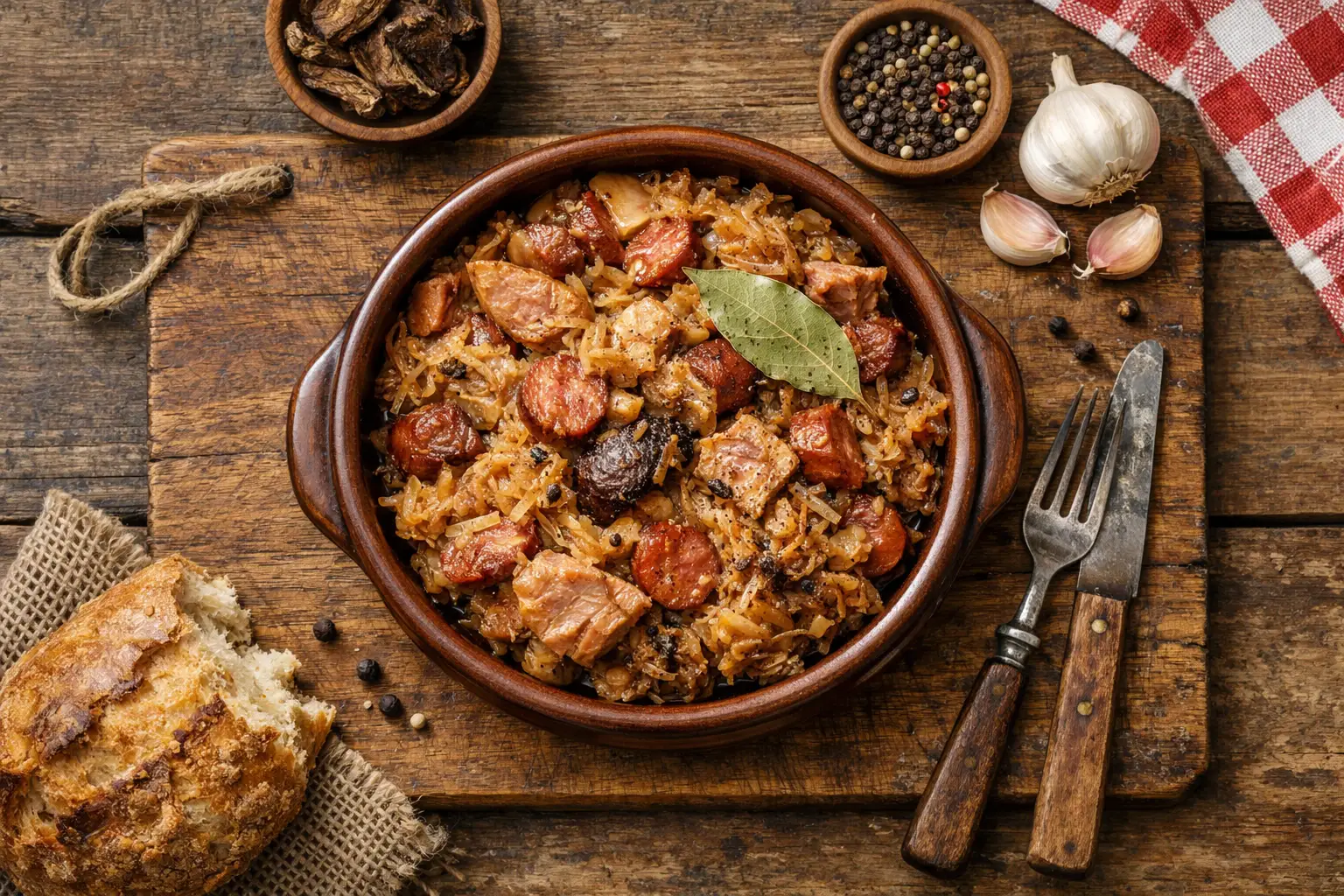
Quick Nutrition Facts
Per 1 Serving (300g)
| Nutrient | Amount |
|---|---|
| Calories | 240 kcal |
| Protein | 15g |
| Carbohydrates | 15g |
| Fiber | 3.9g |
| Sugars | 5.9g |
| Fat | 12g |
| Sodium | 630mg |
| Potassium | 400mg |
| Vitamin C | 19mg |
| Iron | 2mg |
Macronutrient Breakdown
 ChatGPT
  Claude
  AI Mode
  Perplexity
NUTRITIONIST INSIGHT
Bigos is one of the few traditional dishes where flavor and nutrition improve with time. The fermented sauerkraut provides probiotics for gut health, while the combination of meats offers complete protein (15g per serving). The dish's 3.9g fiber supports digestive health and satiety.
Myth Busters
MYTH #1: Bigos Is Too High in Fat for Weight Loss
TRUTH: While bigos contains 12g fat per serving, it's mostly from lean meats and provides satiety. The fermented sauerkraut's probiotics actually support weight management by improving gut bacteria balance. A 240-calorie serving with 15g protein makes it filling and diet-friendly.
MYTH #2: Fermented Foods Like Bigos Are Unsafe During Pregnancy
TRUTH: Thoroughly cooked bigos is safe during pregnancy when meats reach 165°F (74°C). The fermented sauerkraut provides beneficial probiotics and vitamin C. Just monitor sodium intake and choose low-sodium versions when possible.
MYTH #3: Bigos Has Too Much Sodium to Be Healthy
TRUTH: Traditional bigos has 630mg sodium per serving (27% DV), primarily from sauerkraut and sausage. To reduce sodium: rinse sauerkraut before cooking, use fresh meats instead of processed sausage, or make homemade versions with less salt. The fermentation benefits often outweigh sodium concerns for most people.
MYTH #4: Bigos Is Just Leftover Meat Scraps
TRUTH: Quality bigos uses specific cuts of pork, beef, and traditional Polish kielbasa for optimal flavor. The long slow-cooking process (2-4 hours) breaks down proteins and melds flavors. Traditional recipes are deliberate, not random leftovers.
MYTH #5: You Shouldn't Reheat Bigos Multiple Times
TRUTH: Bigos is one of the few dishes that improves with reheating. Traditional Polish wisdom says bigos is best after 3-4 days as flavors continue to develop. Store properly in the fridge and reheat to 165°F each time for food safety.
MYTH #6: Bigos Causes Digestive Problems
TRUTH: The opposite is true. Fermented sauerkraut in bigos contains beneficial probiotics that support digestive health. The 3.9g fiber aids regularity. Some people may experience gas initially as gut bacteria adjust, but this improves with regular consumption.
NutriScore by Health Goals
| Health Goal | NutriScore | Why This Score? |
|---|---|---|
| Weight Loss |  | 240 calories with 15g protein and 3.9g fiber promotes fullness. Fermented sauerkraut supports gut health. Watch sodium and limit to 1 serving daily. |
| Muscle Gain |  | Excellent 15g complete protein from mixed meats, balanced with 12g fat for hormone support. Ideal post-workout meal for muscle recovery and glycogen replenishment. |
| Diabetes Management | | Low glycemic load with only 15g carbs, mostly from fermented cabbage. Fermentation reduces glycemic impact. Monitor portion size (250g max). |
| PCOS Management | | Balanced protein-to-carb ratio supports insulin sensitivity. Probiotics from sauerkraut aid hormone balance. Watch sodium if you have water retention. |
| Pregnancy Nutrition | | Good protein (15g) for fetal development, vitamin C for immunity. Ensure meats reach 165°F to prevent listeria. Monitor sodium. |
| Viral/Flu Recovery | | Easy to digest, rich in vitamin C (19mg), probiotics boost immunity. Warm, comforting, and nutrient-dense for recovery. Hydrating from cabbage moisture. |
PERSONALIZED NUTRITION
Track your meals with NutriScan for personalized NutriScores based on your specific health goals!
Blood Sugar Response to Bigos
Understanding how bigos affects your blood glucose helps you make informed decisions about portion sizes and meal timing.
Typical Glucose Response Curve
This chart shows typical blood glucose response for general healthy individuals. Individual responses may vary. Not medical advice.
Why Bigos Has Minimal Blood Sugar Impact
The fermentation process in sauerkraut reduces glycemic load, while protein and fat from meats slow carbohydrate absorption:
- 🥩 High protein content (15g) - Slows glucose absorption
- 🫘 Fermented sauerkraut - Lower glycemic impact than fresh cabbage
- 🥓 Healthy fats from meat (12g) - Extends energy release
- 🥗 Fiber content (3.9g) - Stabilizes blood sugar levels
This combination creates a gentle, sustained energy release with minimal blood sugar spike, making bigos suitable for most dietary needs.
Cultural Significance
Bigos has been a cornerstone of Polish cuisine for over 600 years, with roots in medieval hunting traditions.
In Poland:
- National dish, traditionally served at weddings, Christmas, and festivals
- Made in large batches, believed to taste better after multiple reheats
- Each family has secret recipes passed down through generations
- Symbol of Polish hospitality and culinary pride
- Originally made with game meat by hunters in forests
Traditional Preparation:
- Slow-cooked for 2-4 hours, sometimes over several days
- Contains sauerkraut, fresh cabbage, dried mushrooms (often porcini)
- Meats include pork, beef, kielbasa, sometimes venison or wild boar
- Seasoned with bay leaves, juniper berries, black pepper, marjoram
- Best served with rye bread and Polish beer
Global Impact:
- Popular throughout Eastern Europe with regional variations
- Growing interest in fermented foods worldwide highlights bigos
- Represents Poland at international food festivals
- Featured in Polish diaspora communities globally
Compare & Substitute
Bigos vs Similar Stews (Per 300g Serving)
| Nutrient | 🥘 Bigos | 🥔 Irish Stew | 🍲 Goulash | 🫘 Chili con Carne |
|---|---|---|---|---|
| Calories | 240 kcal | 280 kcal | 320 kcal | 290 kcal |
| Carbs | 15g | 24g | 18g | 22g |
| Fiber | 3.9g | 3.2g | 2.8g | 6.5g |
| Protein | 15g | 18g | 22g | 20g |
| Fat | 12g | 14g | 18g | 12g |
| Sodium | 630mg | 520mg | 780mg | 850mg |
| Vitamin C | 19mg | 12mg | 8mg | 15mg |
| Iron | 2mg | 2.4mg | 3mg | 3.5mg |
| Best For | Gut health, fermented foods | Comfort food, potatoes | High protein, hearty meals | Fiber, spicy preference |
Frequently Asked Questions
Is bigos good for weight loss?
Yes, bigos can support weight loss when eaten in moderation. A 300g serving provides 240 calories with 15g protein that promotes fullness and 3.9g fiber for satiety. The fermented sauerkraut contains probiotics that support gut health, which is linked to weight management.
Best practices: Limit to 1 serving (250-300g) per day, pair with non-starchy vegetables, choose lean meat versions, and monitor sodium intake if prone to water retention.
Can diabetics eat bigos?
Yes, diabetics can eat bigos in moderation. With only 15g carbs per serving and low glycemic load from fermented cabbage, it has minimal blood sugar impact. The protein (15g) and fat (12g) further slow glucose absorption.
Tips for diabetics:
- Stick to 200-250g portions (12g carbs vs 15g)
- Pair with leafy greens or non-starchy vegetables
- Monitor blood sugar 2 hours after eating
- Choose versions with more vegetables, less sausage
- Best timing: lunch or early dinner
Always consult your healthcare provider about portion sizes for your specific needs.
Is bigos high in protein?
Yes, bigos provides 15 grams of protein per 300g serving, making it a solid protein source. The protein comes from mixed meats (pork, beef, kielbasa), providing all essential amino acids for muscle maintenance and recovery.
For muscle gain or high-protein diets, bigos offers complete protein with healthy fats, ideal for post-workout meals or balanced dinner options.
What are the main health benefits of bigos?
Key Benefits:
- Gut Health: Fermented sauerkraut provides beneficial probiotics for digestive health
- High Protein: 15g supports muscle maintenance and satiety
- Vitamin C: 19mg boosts immunity and collagen production
- Fiber: 3.9g promotes digestive regularity and fullness
- Balanced Macros: Protein-fat-carb ratio supports stable energy
- Antioxidants: From cabbage, mushrooms, and spices
Is bigos safe during pregnancy?
Yes, bigos is safe during pregnancy when thoroughly cooked to proper temperatures (165°F/74°C for all meats). The fermented sauerkraut provides probiotics and vitamin C beneficial for pregnancy.
Pregnancy guidelines:
- Ensure all meats reach safe internal temperature
- Choose low-sodium versions (target <500mg per serving)
- Limit to 1 serving every 2-3 days due to sodium
- Homemade is safer than restaurant versions
- Avoid if using unpasteurized sauerkraut
The 15g protein supports fetal development, and vitamin C aids iron absorption. Always reheat leftovers to steaming hot.
How much sodium is in bigos?
Traditional bigos contains 630-800mg sodium per 300g serving (27-35% DV), primarily from sauerkraut and processed meats like kielbasa.
To reduce sodium:
- Rinse sauerkraut thoroughly before cooking (removes 30-40% sodium)
- Use fresh meats instead of sausage
- Make homemade with low-sodium ingredients
- Limit portion to 250g if on low-sodium diet
- Balance with potassium-rich foods
If you have high blood pressure or heart disease, limit bigos to 1 serving every few days and rinse sauerkraut well.
Can I eat bigos on a keto diet?
Yes, bigos fits most keto diets with only 15g net carbs per serving (15g total carbs - 3.9g fiber = 11.1g net carbs). The 15g protein and 12g fat provide good macros for ketogenic eating.
Keto modifications:
- Reduce portion to 200-250g (9-11g net carbs)
- Skip any added sugar or dried fruit in recipe
- Add extra fat by cooking in lard or butter
- Pair with high-fat sides (sour cream, cheese)
- Monitor for hidden carbs in processed sausages
How long does bigos last in the refrigerator?
Properly stored bigos lasts 4-5 days in the refrigerator in an airtight container. Bigos also freezes excellently for up to 3 months.
Storage tips:
- Cool to room temperature before refrigerating (within 2 hours)
- Store in shallow containers for even cooling
- Reheat to 165°F (74°C) each time
- Flavor improves after 2-3 days as ingredients meld
- Don't leave at room temperature longer than 2 hours
Traditional Polish wisdom says bigos tastes best after 3 reheats, as long as properly stored and heated each time.


Similar Nutritious Foods
4505 Chicharrones Classic Chili Salt
7 Eleven Japan Crispy Corn Cheese
Explore More Nutrition Tools & Resources
AI Calorie Counter App - Snap a Photo, Get Macros
AI Nutritionist App That Reads Your Logged Meals
Best Protein Supplements for Women
Bulking Meal Plan App That Sets Your Surplus
ChatGPT Calorie Counter Alternative That Keeps the Total
ChatGPT Diet Plan Alternative That Tracks What You Eat
ChatGPT Weight Loss Coach Alternative With a Food Log
Fast Food Calorie Counter App That Reads the Tray
Free Calorie Tracker App with AI Photo Scans | NutriScan
Indian Diet Plan App With Veg and Non Veg Meals
Indian Food Calorie Calculator - Get Instant Nutrition Facts for Desi Meals — 2026
Intermittent Fasting for Women, Timer and Meal Log App
Intermittent Fasting Tracker App - Free Fasting Timer
Macro Tracker App That Fills the Numbers From a Photo
Mediterranean Diet Meal Plan App That Counts the Oil
Micronutrient Tracker App for Vitamins and Minerals
MyFitnessPal Alternative That Stays Free | NutriScan
NutriScore App: A Free Grade on Every Meal | NutriScan
Nutrition Label Scanner App for the Amount You Ate
Second Trimester Protein Guide
Vegetarian Meal Plan App With a Protein Target
Voice Calorie Counter - Speak to Track Meals Hands-Free
Water and Calorie Tracker App - Free Water Log