Bikaji Wasabi Peas: Calories, Nutrition and Health Benefits
A crunchy Japanese-Indian fusion snack that packs 14g protein per 100g with a bold wasabi kick and surprising nutritional depth.
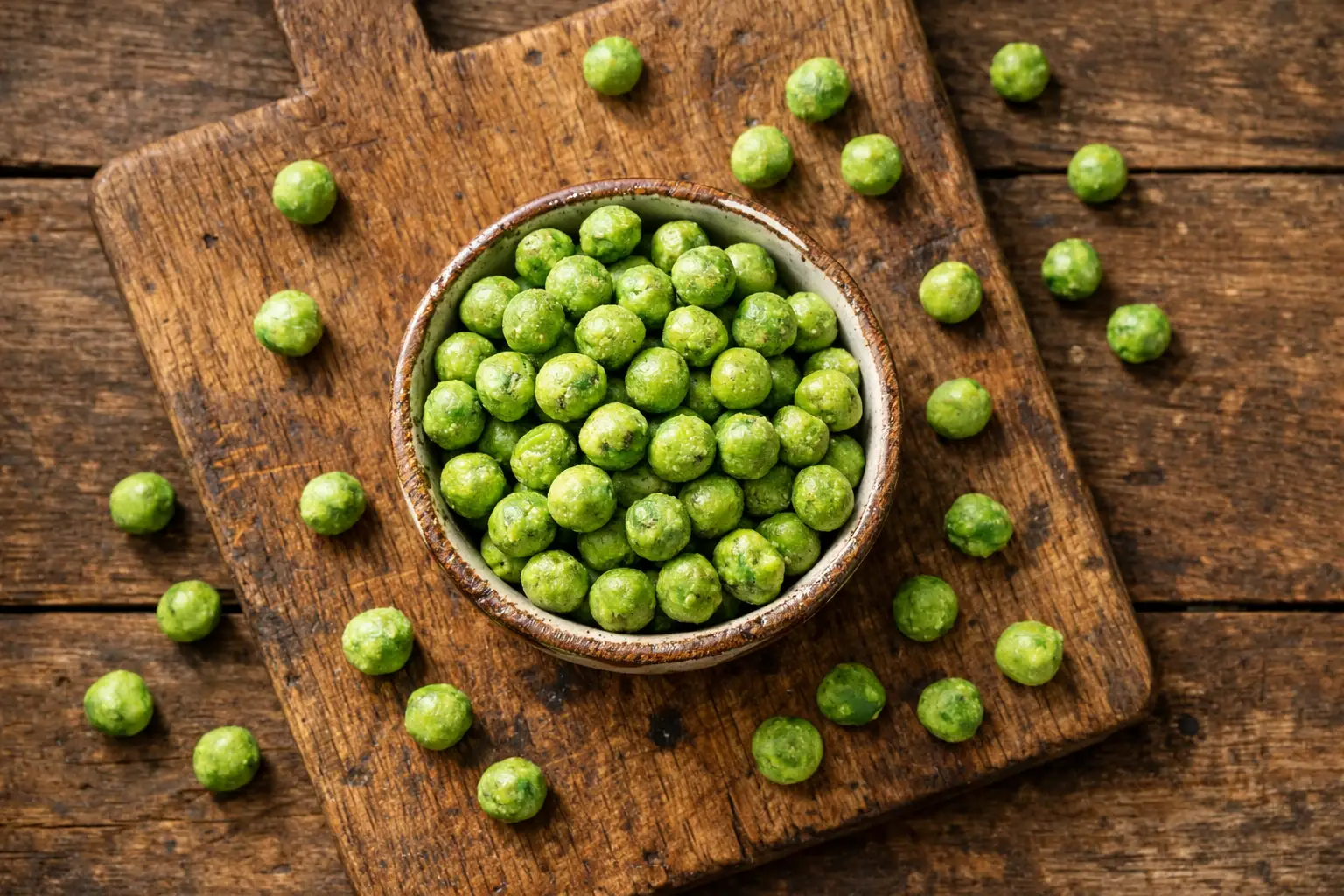
Quick Nutrition Facts
Per 1 Serving (30g)
| Nutrient | Amount |
|---|---|
| Calories | 130 kcal |
| Protein | 4.2g |
| Carbohydrates | 18.7g |
| Fiber | 1.1g |
| Sugars | 4.2g |
| Fat | 4.2g |
| Potassium | 220mg |
| Iron | 1.1mg |
| Folate | 41mcg |
| Magnesium | 31mg |
Macronutrient Breakdown
 ChatGPT
  Claude
  AI Mode
  Perplexity
NUTRITIONIST INSIGHT
Wasabi peas deliver 14g protein and 732mg potassium per 100g, outperforming most packaged snacks. The isothiocyanates from wasabi coating provide anti-inflammatory and antioxidant benefits that go beyond basic snacking nutrition.
Myth Busters
MYTH #1: Wasabi Peas Are Just Empty Calories Like Chips
TRUTH: Unlike potato chips (7g protein/100g), wasabi peas provide 14g protein and 3.8g fiber per 100g along with iron (3.8mg), folate (138mcg), and potassium (732mg). They are a nutrient-dense snack alternative.
MYTH #2: Wasabi Peas Are Too Spicy for Regular Consumption
TRUTH: Most commercial wasabi peas use horseradish-based coating, not real wasabi. The heat is mild and temporary. Wasabi compounds (6-MSITC) actually have anti-inflammatory properties that may benefit gut and brain health.
MYTH #3: Wasabi Peas Cause Stomach Problems
TRUTH: Green peas are a well-tolerated legume. The fiber content (3.8g/100g) supports digestion. Peas contain beneficial compounds that support gut microbiota. Only overconsumption (>100g) may cause mild bloating due to fiber and sodium.
MYTH #4: Wasabi Peas Are Bad for Blood Sugar
TRUTH: Green peas have a low glycemic index (22-51). Research shows pea meals produce significantly smaller blood sugar spikes compared to potato-based foods in type 2 diabetes patients. The protein and fiber content helps moderate glucose response.
MYTH #5: All Wasabi Pea Brands Are the Same Nutritionally
TRUTH: Nutrition varies significantly by brand. Some use more sugar coating, others add more oil. Bikaji wasabi peas are roasted rather than deep-fried, keeping fat content moderate at 14g per 100g compared to 30-35g in fried snacks.
NutriScore by Health Goals
| Health Goal | NutriScore | Why This Score? |
|---|---|---|
| Weight Loss |  | 432 cal/100g is calorie-dense. Limit to 30g serving (130 cal). Protein and fiber help with satiety vs chips. |
| Muscle Gain |  | 14g plant protein per 100g, pea protein supports muscle recovery comparable to whey. Good post-workout snack with carbs for glycogen. |
| Diabetes Management | | Low GI base (peas), but added sugars in coating. Pea meals reduce postprandial glucose vs potatoes. Limit to 20-30g, pair with veggies. |
| PCOS Management | | Moderate protein helps insulin sensitivity, but calorie density requires portion control. Limit to 1 serving daily. |
| Pregnancy Nutrition | | Rich in folate (138mcg/100g) essential for fetal development, iron (3.8mg), and B vitamins. Watch sodium intake. |
| Viral/Flu Recovery | | Wasabi isothiocyanates have anti-inflammatory properties. Easy to eat, provides protein and energy during recovery. |
PERSONALIZED NUTRITION
Track your meals with NutriScan for personalized NutriScores based on your specific health goals!
Blood Sugar Response to Wasabi Peas
Understanding how wasabi peas affect your blood glucose helps you plan smart snacking around your meals.
Typical Glucose Response Curve
This chart shows typical blood glucose response for general healthy individuals. Individual responses may vary. Not medical advice.
How to Flatten the Spike
Pairing legume-based snacks with protein or healthy fat slows glucose absorption and reduces the peak blood sugar level:
- 🥒 Cucumber or celery sticks - Adds volume and fiber without extra calories
- 🧀 A small piece of cheese - Provides protein and fat for slower absorption
- 🥜 A few almonds or walnuts - Healthy fats and additional protein
- 🍵 Green tea - Catechins may further moderate glucose response
This combination not only reduces the glucose spike but also extends energy release, keeping you fuller for longer.
Cultural Significance
Wasabi peas are a modern fusion snack that bridges Japanese and Indian culinary traditions.
Japanese Origins:
- Wasabi (Eutrema japonicum) has been used in Japanese cuisine for over 1,000 years
- Traditional pairing with sushi and sashimi for antimicrobial benefits
- Roasted green peas (endo-mame) are a classic Japanese bar snack
- Wasabi peas became a global snack phenomenon in the 1990s
Indian Connection:
- Bikaji, founded in 1993 in Bikaner, Rajasthan, brings the Indian namkeen tradition to global flavors
- Green peas (matar) are a staple in Indian cuisine across dal, pulao, and snacks
- The wasabi coating mirrors India's love for bold, spicy snack flavors
- Part of India's growing market for fusion and international-inspired snacks
Compare & Substitute
Wasabi Peas vs Similar Snacks (Per 100g)
| Nutrient | 🟢 Wasabi Peas | 🥜 Roasted Peanuts | 🍟 Potato Chips | 🫘 Roasted Chickpeas |
|---|---|---|---|---|
| Calories | 432 kcal | 567 kcal | 536 kcal | 400 kcal |
| Carbs | 62.2g | 16g | 53g | 60g |
| Fiber | 3.8g | 8.5g | 1.5g | 10g |
| Protein | 14.1g | 26g | 7g | 19g |
| Fat | 14.1g | 49g | 35g | 7g |
| Potassium | 732mg | 658mg | 1196mg | 875mg |
| Iron | 3.8mg | 2.3mg | 1.6mg | 4.3mg |
| Sugar | 14.1g | 4g | 0.5g | 2g |
| Best For | Protein snack, bold flavor | High protein, keto-friendly | Quick energy (least healthy) | High fiber, weight loss |
Frequently Asked Questions
Are wasabi peas good for weight loss?
Wasabi peas contain 432 calories per 100g, making portion control critical. A 30g serving (130 calories) provides 4.2g protein and 1.1g fiber that promote satiety better than chips or pretzels.
Best practices: Stick to 1 small handful (20-30g) per day, pre-portion into small containers, pair with raw vegetables, avoid eating directly from the bag.
Can diabetics eat wasabi peas?
Green peas have a low glycemic index, and research confirms pea-based meals produce smaller blood sugar spikes than potato meals in type 2 diabetes patients.
Tips for diabetics:
- Limit to 20-30g per serving (18-19g carbs)
- Check the label for added sugars in the coating
- Pair with protein-rich foods or vegetables
- Monitor blood sugar 2 hours after eating
The fiber and protein content helps moderate glucose absorption. Consult your healthcare provider for personalized advice.
How much protein is in wasabi peas?
Wasabi peas contain 14.1g of protein per 100g. A 30g serving delivers about 4.2g of plant-based protein from peas. While not as high as nuts (26g for peanuts), the protein quality from peas includes good levels of lysine and other essential amino acids.
For muscle gain, combine with complementary protein sources like rice or nuts for a complete amino acid profile.
What are the main health benefits of wasabi peas?
Key Benefits:
- Plant Protein: 14g protein per 100g supports muscle maintenance and satiety
- Iron Rich: 3.8mg iron (21% DV) supports oxygen transport and energy
- Folate Source: 138mcg folate (35% DV) important for cell division and pregnancy
- Anti-inflammatory: Wasabi isothiocyanates reduce inflammation markers
- Potassium: 732mg supports blood pressure regulation and muscle function
- B Vitamins: Thiamin (0.61mg), niacin (5.1mg), B6 (0.55mg) support energy metabolism
Are wasabi peas healthier than potato chips?
Yes. Wasabi peas provide double the protein (14g vs 7g), more fiber (3.8g vs 1.5g), significantly less fat (14g vs 35g), and beneficial micronutrients like iron and folate. However, both are calorie-dense snacks that require portion control.
Key advantages over chips: More satiating per calorie, lower fat content, plant-based protein, iron and folate content, anti-inflammatory wasabi compounds.
How many wasabi peas can I eat per day?
General Guidelines:
- 20-30g daily - Most people (130 calories, moderate sodium)
- 15-20g daily - Weight loss, diabetes, or sodium-restricted diets
- 30-50g daily - Athletes, active individuals, higher calorie needs
Watch for: Sodium content can be high (300mg/100g). If eating daily, balance with low-sodium meals and drink adequate water.
Track your snacking with NutriScan app to see how wasabi peas fit your daily nutrition targets.


Similar Nutritious Foods
4505 Chicharrones Classic Chili Salt
7 Eleven Japan Crispy Corn Cheese
Explore More Nutrition Tools & Resources
AI Calorie Counter App - Snap a Photo, Get Macros
AI Nutritionist App That Reads Your Logged Meals
Best Protein Supplements for Women
Bulking Meal Plan App That Sets Your Surplus
ChatGPT Calorie Counter Alternative That Keeps the Total
ChatGPT Diet Plan Alternative That Tracks What You Eat
ChatGPT Weight Loss Coach Alternative With a Food Log
Fast Food Calorie Counter App That Reads the Tray
Free Calorie Tracker App with AI Photo Scans | NutriScan
Indian Diet Plan App With Veg and Non Veg Meals
Indian Food Calorie Calculator - Get Instant Nutrition Facts for Desi Meals — 2026
Intermittent Fasting for Women, Timer and Meal Log App
Intermittent Fasting Tracker App - Free Fasting Timer
Macro Tracker App That Fills the Numbers From a Photo
Mediterranean Diet Meal Plan App That Counts the Oil
Micronutrient Tracker App for Vitamins and Minerals
MyFitnessPal Alternative That Stays Free | NutriScan
NutriScore App: A Free Grade on Every Meal | NutriScan
Nutrition Label Scanner App for the Amount You Ate
Second Trimester Protein Guide
Vegetarian Meal Plan App With a Protein Target
Voice Calorie Counter - Speak to Track Meals Hands-Free
Water and Calorie Tracker App - Free Water Log