Bikano Aloo Bhujia: Calories, Nutrition and Health Benefits
Bikaner's pride: crispy potato-based namkeen with aromatic spices, beloved Indian snack balancing tradition with modern nutrition awareness.
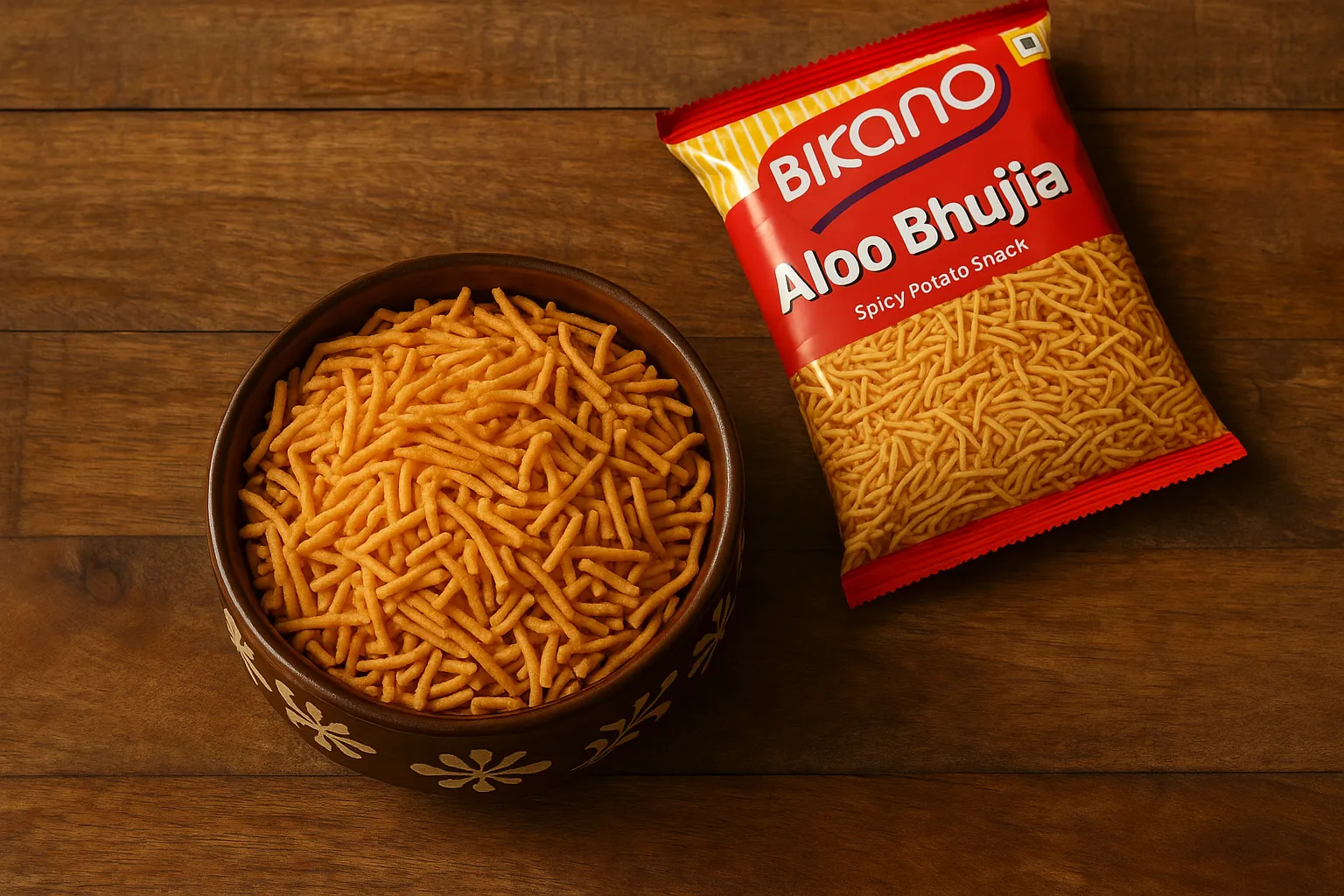
Quick Nutrition Facts
Per 100g (Standard Serving)
| Nutrient | Amount |
|---|---|
| Calories | 452 kcal |
| Protein | 8g |
| Carbohydrates | 48g |
| Fiber | 1.2g |
| Sugars | 1.5g |
| Fat | 22g |
| Sodium | 850mg |
| Iron | 2.1mg |
| Magnesium | 28mg |
| Potassium | 220mg |
Macronutrient Breakdown
 ChatGPT
  Claude
  AI Mode
  Perplexity
NUTRITIONIST INSIGHT
Bikano aloo bhujia delivers traditional Indian spice antioxidants (turmeric's curcumin, cumin's antimicrobial compounds) and plant-based protein (8g/100g from chickpea flour). The challenge: sodium at 850mg per 100g (36% DV) demands portion control. A 30g serving (135 cal) balances flavor with daily sodium targets (limit 2,300mg/day).
Myth Busters
MYTH #1: All Savory Snacks Are Equally Unhealthy
TRUTH: Snack healthiness depends on portion size and pairing. Aloo bhujia in 30-40g servings (135-180 cal) with salad or water-rich food is acceptable occasionally. High sodium snacks become problematic only with excess consumption. Pair mindfully; measure portions.
MYTH #2: Namkeen Destroys Your Diet
TRUTH: Indian snacks like bhujia fit balanced diets when portioned correctly. 30g aloo bhujia = 135 cal, manageable within 2,000 cal goals. The issue: mindless eating from bags (no portion awareness). Use small bowls, eat slowly, pair with vegetables for satiety.
MYTH #3: Oil-Fried Foods Are Completely Unhealthy
TRUTH: Frying in quality oils (vegetable, peanut) creates crispy texture without excessive saturated fat. Bikano uses standardized processes. The concern is sodium, not oil quality. Choose fried snacks sparingly, not never.
MYTH #4: Indian Spices Have No Nutritional Purpose
TRUTH: Turmeric, cumin, and chili peppers in aloo bhujia provide curcumin (inflammation reduction), carvone (digestive aid), and capsaicin (metabolism boost). Spices add measurable health value beyond flavor.
MYTH #5: Chickpea Flour (Besan) Is Too High in Calories
TRUTH: Chickpea flour provides 8-9g protein per 100g, higher than wheat flour (10-14g). Aloo bhujia's 8g protein per 100g comes from besan—a legitimate protein contributor. Plant-based protein is valuable for vegetarian diets.
NutriScore by Health Goals
| Health Goal | NutriScore | Why This Score? |
|---|---|---|
| Weight Loss |  | 452 cal, 22g fat per 100g. Limit to 30g serving (135 cal) with salad; high sodium causes water retention. Better: roasted chickpeas (lower salt, higher protein). |
| Muscle Gain | | 8g protein per 100g contributes to muscle recovery, but high sodium. Use 40g post-workout (180 cal, 3.2g protein) with yogurt for complete amino acid profile. Not primary source. |
| Diabetes Management | | 48g carbs/100g + 850mg sodium stresses kidney function. Blood pressure rises with sodium, worsening diabetic complications. Avoid or limit to 15g serving (68 cal) with meals only. |
| PCOS Management |  | High sodium (850mg/100g) triggers water retention and inflammation, worsening PCOS symptoms. High fat (22g) can promote estrogen dominance. Avoid or choose low-sodium alternatives. |
| Pregnancy Nutrition | | Moderate protein (8g) supports fetal growth, but sodium elevation risks gestational hypertension and preeclampsia. Max 15g serving (68 cal) 1-2 times weekly. Monitor blood pressure carefully. |
| Viral/Flu Recovery |  | Quick energy (452 cal/100g), protein for immune recovery, traditional spice antimicrobial benefits. Limit to 30g serving; high sodium may dehydrate—pair with water and hydrating foods. |
PERSONALIZED NUTRITION
Track your snacking patterns and portion sizes with NutriScan for personalized NutriScores based on your specific health goals!
Blood Sugar Response to Aloo Bhujia
Understanding how this savory snack affects your glucose helps you time servings and pair appropriately.
Typical Glucose Response Curve
This chart shows typical blood glucose response for general healthy individuals. Individual responses may vary. Not medical advice.
How to Manage the Response
Pairing aloo bhujia with protein, vegetables, and water minimizes glucose spikes and sodium impact:
- 🥛 Yogurt or buttermilk (lassi) - Protein + probiotics buffer blood sugar and offset sodium with potassium
- 🥒 Cucumber, tomato slices - Raw vegetables provide fiber and water for satiety without added calories
- 🥛 Full-fat milk or curd - Casein protein slows carb absorption; traditional pairing
- 💧 Plenty of water - Sodium draws fluid; drink extra water to maintain hydration balance
Best practice: Portion aloo bhujia into small bowls (30g max), eat slowly, pair with water-rich vegetables or yogurt, and enjoy 2-3 times weekly maximum.
Cultural Significance
Bikano aloo bhujia originates from Bikaner, Rajasthan, India's "Land of Spices." Since 1877, Bikano has transformed traditional namkeen (savory snacks) into a national institution, balancing Rajasthani heritage with modern manufacturing.
In India:
- Aloo bhujia is a festive snack during Diwali, weddings, and celebrations
- Sold in iconic yellow Bikano tins; gift-giving staple across Hindi-speaking regions
- Combines three elements: potato (humble everyday staple), chickpea flour (vegetarian protein), spices (Ayurvedic warming agents)
- Modern Indian households see aloo bhujia as "quick anytime snack," blurring traditional meal boundaries
Global Context:
- Indian snacks exported to 50+ countries; aloo bhujia popular in Indian diaspora communities
- Industrial snacking trend; portion-controlled 50g packs now compete with traditional bulk sales
- Growing health-conscious variants: low-sodium, baked (not fried) versions emerging
- Bikano dominates namkeen category with 35% market share in India
Compare & Substitute
Aloo Bhujia vs Similar Savory Snacks (Per 100g)
| Nutrient | 🥔 Aloo Bhujia | 🥜 Roasted Peanuts | 🥨 Roasted Chickpeas | 🥨 Baked Potato Chips |
|---|---|---|---|---|
| Calories | 452 kcal | 567 kcal | 360 kcal | 315 kcal |
| Carbs | 48g | 16g | 52g | 63g |
| Fiber | 1.2g | 2.4g | 8g | 4.5g |
| Protein | 8g | 26g | 19g | 4.5g |
| Fat | 22g | 49g | 5g | 1g |
| Sodium | 850mg | 10mg | 120mg | 380mg |
| Best For | Occasional snack | Sustained energy | Protein + fiber | Lower-fat alternative |
Frequently Asked Questions
Is aloo bhujia good for weight loss?
Aloo bhujia is calorie-dense (452 cal/100g) and high in sodium. For weight loss, limit to 30g servings (135 cal) 1-2 times weekly, paired with salad or vegetables for fiber and satiety. Better alternatives: roasted chickpeas (360 cal/100g, 8g fiber, lower sodium) provide similar crunch and satisfaction with fewer calories and less salt.
Can diabetics eat aloo bhujia?
Aloo bhujia is not recommended for diabetics. The 48g carbs/100g cause moderate blood glucose elevation, but the real concern is 850mg sodium per 100g stressing kidneys already burdened by diabetes. Sodium worsens hypertension, a common diabetic complication. If consumed: maximum 15g (68 cal) with protein-rich meals; avoid alone on empty stomach.
What is the protein content in aloo bhujia?
Aloo bhujia provides 8g protein per 100g (0.8g per 10g serving), sourced from chickpea flour (besan). While not a primary protein source, it contributes meaningfully to vegetarian diets. Pair with Greek yogurt (15g protein/100g) or paneer for a complete protein snack with balanced amino acids.
What are the health benefits of aloo bhujia?
Aloo bhujia offers traditional Indian spice antioxidants: turmeric's curcumin reduces inflammation, cumin's carvone aids digestion, and chili's capsaicin boosts metabolism. Plant-based protein (8g/100g) from chickpea flour supports muscle repair. Dietary fiber (1.2g/100g) aids bowel regularity. Primary drawback: sodium (850mg/100g) outweighs benefits if consumed frequently.
When is the best time to eat aloo bhujia?
Best as an occasional daytime snack (afternoon break or evening, not late night—high sodium disrupts sleep). Always pair with water-rich foods: cucumber, salad, tomato. Avoid on empty stomach; high sodium impacts blood pressure more when not buffered by food. Limit to 2-3 times weekly to stay within daily sodium targets (2,300mg max).
How much sodium is really in aloo bhujia?
Bikano aloo bhujia contains 850mg sodium per 100g (36% of daily value). A typical 30g snack serving contains 255mg sodium (11% DV). Daily recommended limit is 2,300mg; World Health Organization recommends 2,000mg. This snack consumes 11-12% of your daily allowance in one serving—substantial enough to monitor if you eat aloo bhujia multiple times weekly.
Are there healthier alternatives to aloo bhujia?
Yes, consider: Roasted peanuts (high protein, low sodium), roasted chickpeas (high fiber, moderate carbs), or baked potato chips (lower fat). If you crave aloo bhujia's taste, reduce frequency to 2-3 times monthly and pair with plenty of water. Some brands now offer low-sodium namkeen variants—check labels for sodium under 400mg per 100g.
Can I eat aloo bhujia during pregnancy?
Aloo bhujia provides moderate protein (8g/100g) supporting fetal growth, but sodium (850mg/100g) risks gestational hypertension and preeclampsia. If consumed: maximum 15g (68 cal) 1-2 times weekly with meals, never alone. Monitor blood pressure carefully; gestational diabetes screening becomes more important with high-sodium snacking. Consult your OB-GYN.


Similar Savory Snacks
4505 Chicharrones Classic Chili Salt
7 Eleven Japan Crispy Corn Cheese
Explore More Nutrition Tools & Resources
AI Calorie Counter App - Snap a Photo, Get Macros
AI Nutritionist App That Reads Your Logged Meals
Best Protein Supplements for Women
Bulking Meal Plan App That Sets Your Surplus
ChatGPT Calorie Counter Alternative That Keeps the Total
ChatGPT Diet Plan Alternative That Tracks What You Eat
ChatGPT Weight Loss Coach Alternative With a Food Log
Fast Food Calorie Counter App That Reads the Tray
Free Calorie Tracker App with AI Photo Scans | NutriScan
Indian Diet Plan App With Veg and Non Veg Meals
Indian Food Calorie Calculator - Get Instant Nutrition Facts for Desi Meals — 2026
Intermittent Fasting for Women, Timer and Meal Log App
Intermittent Fasting Tracker App - Free Fasting Timer
Macro Tracker App That Fills the Numbers From a Photo
Mediterranean Diet Meal Plan App That Counts the Oil
Micronutrient Tracker App for Vitamins and Minerals
MyFitnessPal Alternative That Stays Free | NutriScan
NutriScore App: A Free Grade on Every Meal | NutriScan
Nutrition Label Scanner App for the Amount You Ate
Second Trimester Protein Guide
Vegetarian Meal Plan App With a Protein Target
Voice Calorie Counter - Speak to Track Meals Hands-Free
Water and Calorie Tracker App - Free Water Log