Bisi Bele Bath: Calories, Nutrition and Health Benefits
Karnataka's iconic spiced rice-lentil comfort food delivering complete protein, iron, and folate in every wholesome bowl.
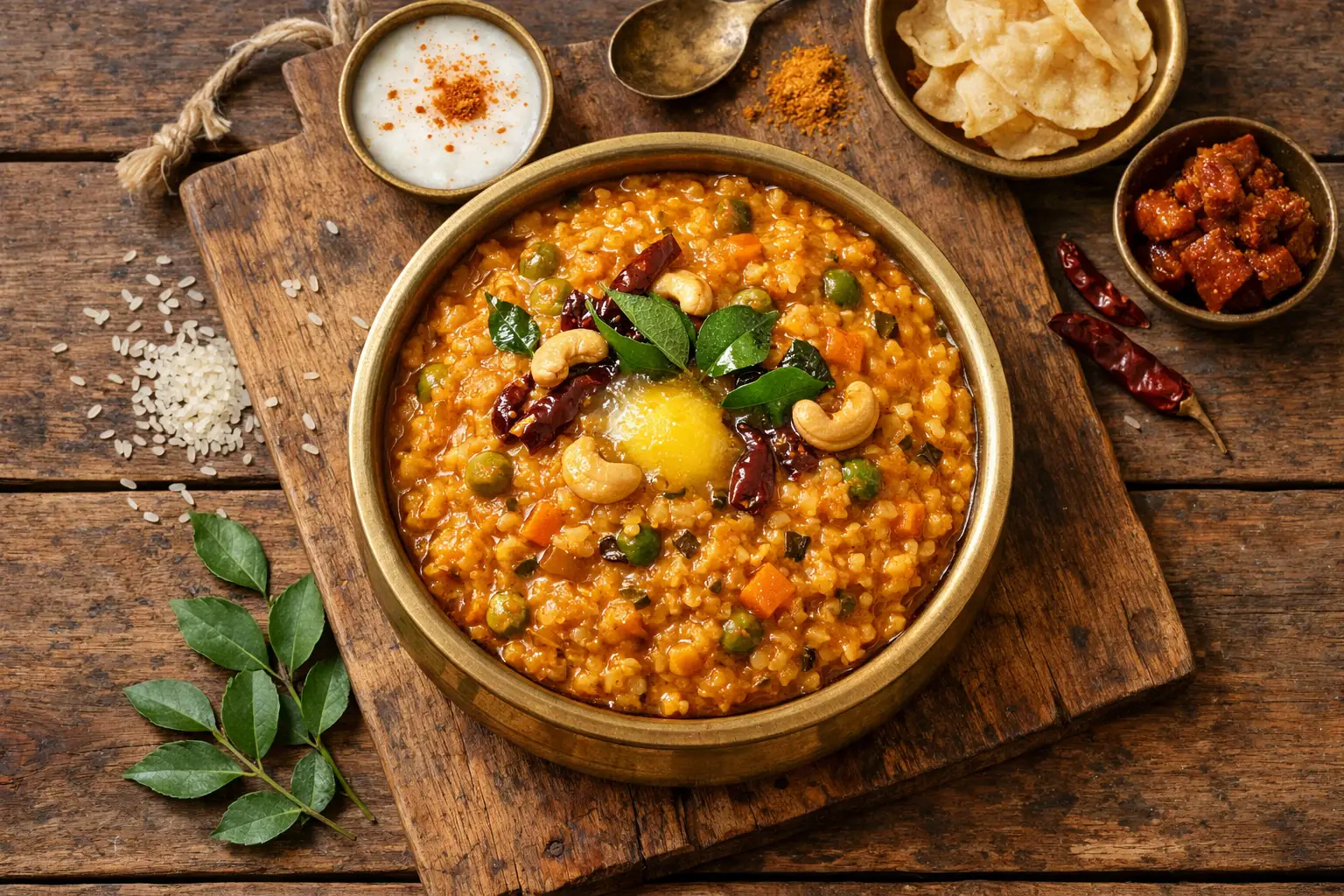
Quick Nutrition Facts
Per 1 Serving (250g)
| Nutrient | Amount |
|---|---|
| Calories | 350 kcal |
| Protein | 8g |
| Carbohydrates | 60g |
| Fiber | 6g |
| Sugars | 5g |
| Fat | 10g |
| Iron | 4.5mg |
| Potassium | 400mg |
| Folate | 120mcg |
| Sodium | 800mg |
Macronutrient Breakdown
 ChatGPT
  Claude
  AI Mode
  Perplexity
NUTRITIONIST INSIGHT
Bisi bele bath is one of the few single-dish meals that delivers complete protein. The rice-lentil combination provides all essential amino acids, while turmeric and curry leaves add anti-inflammatory benefits. One bowl covers 26% of your daily iron needs.
Myth Busters
MYTH #1: Bisi Bele Bath Is Too Heavy for Weight Loss
TRUTH: A controlled 200g portion has only 280 calories with 6g fiber that keeps you full for hours. The lentil fiber slows digestion and promotes satiety, making it more filling than plain rice dishes with fewer nutrients.
MYTH #2: The Rice Makes It Bad for Diabetics
TRUTH: The lentils reduce the glycemic response by approximately 20% compared to rice alone. Switch to brown rice or millets and increase dal ratio for even better blood sugar control.
MYTH #3: Bisi Bele Bath Lacks Protein
TRUTH: The rice-lentil combination creates a complete protein with all essential amino acids, comparable to animal protein quality. A 250g serving delivers 8g protein, and adding curd boosts it further.
MYTH #4: It's Just Fancy Khichdi
TRUTH: Bisi bele bath uses a unique spice blend (bisi bele bath masala) with tamarind, jaggery, and vegetables that khichdi lacks. The spice mix includes turmeric, fenugreek, and curry leaves with documented anti-inflammatory properties.
MYTH #5: Packaged Bisi Bele Bath Is Just As Healthy
TRUTH: Packaged versions often contain 2-3x more sodium and saturated fat. Homemade versions let you control oil, salt, and dal-to-rice ratio. Excess sodium contributes to hypertension risk.
NutriScore by Health Goals
| Health Goal | NutriScore | Why This Score? |
|---|---|---|
| Weight Loss |  | 140 cal/100g with 6g fiber per serving promotes fullness. Keep portions to 150-200g and reduce ghee. |
| Muscle Gain | | Complete protein from rice-lentil combo, 60g carbs for glycogen. Add paneer or egg for extra protein. |
| Diabetes Management |  | Medium GI (55-65). Lentils reduce postprandial glucose by ~20%. Use brown rice, limit to 150g, pair with salad. |
| PCOS Management | | Moderate glycemic load affects insulin. Keep portions small, increase vegetable ratio, choose millet base. |
| Pregnancy Nutrition |  | Rich in folate (~120mcg) for neural tube development, 4.5mg iron prevents anemia, complete protein supports fetal growth. |
| Viral/Flu Recovery | | Easy to digest, anti-inflammatory turmeric, quick energy from carbs, iron and folate support immune recovery. |
PERSONALIZED NUTRITION
Track your meals with NutriScan for personalized NutriScores based on your specific health goals!
Blood Sugar Response to Bisi Bele Bath
Understanding how bisi bele bath affects your blood glucose helps you time and portion this meal effectively.
Typical Glucose Response Curve
*This chart shows typical blood glucose response for general healthy individuals. Individual responses may vary. Not medical advice.*
How to Flatten the Spike
Pairing carb-rich meals with protein or fiber slows glucose absorption and reduces the peak blood sugar level:
- 🥗 Side salad with cucumber and onion - Raw vegetables add fiber and slow digestion
- 🥛 Buttermilk (chaas) or curd (dahi) - Protein and probiotics reduce glucose spike
- 🥒 Raw vegetable raita - Combines protein with fiber
- 🫘 Increase dal-to-rice ratio - More lentils means lower glycemic impact
This combination not only reduces the glucose spike but also extends energy release, keeping you fuller for longer.
Cultural Significance
Bisi bele bath literally means "hot lentil rice" in Kannada, reflecting its core identity as a warming, complete meal.
In Karnataka:
- Traced to the Mysore Palace royal kitchens, kept as a palace recipe for nearly 200 years
- Central to Ugadi (Kannada New Year), weddings, and temple feasts, symbolizing prosperity
- Every household has its own variation; the bisi bele bath masala spice blend is the defining element
- Originally designed as a complete farmer's meal providing all essential nutrients in one dish
Global Impact:
- Now served across South India and in Indian restaurants worldwide
- Popular as a one-pot meal among Indian diaspora for its convenience and nutrition
- Gaining recognition as a sustainable, plant-based complete protein source
Compare & Substitute
Bisi Bele Bath vs Similar Dishes (Per 100g)
| Nutrient | 🍚 Bisi Bele Bath | 🍛 Khichdi | 🥘 Sambar Rice | 🍲 Pongal |
|---|---|---|---|---|
| Calories | 140 kcal | 120 kcal | 130 kcal | 155 kcal |
| Carbs | 24g | 20g | 22g | 22g |
| Fiber | 2.4g | 1.8g | 2.0g | 1.5g |
| Protein | 3.2g | 3.0g | 2.8g | 3.5g |
| Fat | 4.0g | 2.5g | 3.5g | 5.5g |
| Iron | 1.8mg | 1.2mg | 1.5mg | 1.0mg |
| Sodium | 320mg | 280mg | 350mg | 300mg |
| Best For | Complete meal, iron boost | Light meal, recovery | Everyday dal-rice combo | Energy-dense comfort meal |
Frequently Asked Questions
How many calories are in bisi bele bath?
A typical homemade serving (250g) contains approximately 350 calories with 60g carbohydrates, 8g protein, and 10g fat. Per 100g, it provides about 140 calories. Packaged versions may contain more due to added oil.
Is bisi bele bath good for weight loss?
Yes, when portion-controlled to 150-200g per serving. The 6g fiber from lentils promotes satiety, and the complete protein prevents muscle loss during calorie restriction.
Best practices: Reduce ghee, increase vegetables, use brown rice, and pair with a side salad or raita.
Can diabetics eat bisi bele bath?
Diabetics can eat bisi bele bath with modifications. The lentils reduce glycemic impact by ~20% compared to plain rice.
Tips for diabetics:
- Replace white rice with brown rice or millets
- Increase dal-to-rice ratio
- Keep portions to 150-200g
- Pair with raw vegetable salad or raita
- Monitor blood sugar 2 hours after eating
Is bisi bele bath safe during pregnancy?
Bisi bele bath is excellent during pregnancy. Toor dal provides ~120mcg folate per serving for neural tube development, 4.5mg iron prevents anemia, and the rice-lentil combination offers complete protein.
Caution: Watch sodium intake if you have preeclampsia risk. Add lemon juice to boost iron absorption from the lentils.
What makes bisi bele bath a complete protein?
The combination of rice (rich in methionine) and toor dal (rich in lysine) creates a complete amino acid profile comparable to animal protein. This complementary protein principle is the foundation of traditional Indian meals.
How can I make bisi bele bath healthier?
6 modifications for a healthier version:
- Use brown rice or millets instead of white rice for lower GI
- Increase dal ratio to 1:1 with rice for more protein and fiber
- Add extra vegetables like beans, carrots, and peas
- Reduce ghee to 1 tsp per serving
- Use less salt and more tamarind for flavor
- Add a squeeze of lemon to boost iron absorption
Track your modified recipe with NutriScan app to see the exact nutritional impact.




Similar Nutritious Foods
4505 Chicharrones Classic Chili Salt
7 Eleven Japan Crispy Corn Cheese
Explore More Nutrition Tools & Resources
AI Calorie Counter App - Snap a Photo, Get Macros
AI Nutritionist App That Reads Your Logged Meals
Best Protein Supplements for Women
Bulking Meal Plan App That Sets Your Surplus
ChatGPT Calorie Counter Alternative That Keeps the Total
ChatGPT Diet Plan Alternative That Tracks What You Eat
ChatGPT Weight Loss Coach Alternative With a Food Log
Fast Food Calorie Counter App That Reads the Tray
Free Calorie Tracker App with AI Photo Scans | NutriScan
Indian Diet Plan App With Veg and Non Veg Meals
Indian Food Calorie Calculator - Get Instant Nutrition Facts for Desi Meals — 2026
Intermittent Fasting for Women, Timer and Meal Log App
Intermittent Fasting Tracker App - Free Fasting Timer
Macro Tracker App That Fills the Numbers From a Photo
Mediterranean Diet Meal Plan App That Counts the Oil
Micronutrient Tracker App for Vitamins and Minerals
MyFitnessPal Alternative That Stays Free | NutriScan
NutriScore App: A Free Grade on Every Meal | NutriScan
Nutrition Label Scanner App for the Amount You Ate
Second Trimester Protein Guide
Vegetarian Meal Plan App With a Protein Target
Voice Calorie Counter - Speak to Track Meals Hands-Free
Water and Calorie Tracker App - Free Water Log