Black Currant: Calories, Nutrition and Health Benefits
McCormick's 2026 Flavor of the Year: Tart-sweet superfruit packed with anthocyanins, 300% daily vitamin C, and powerful blood sugar benefits.
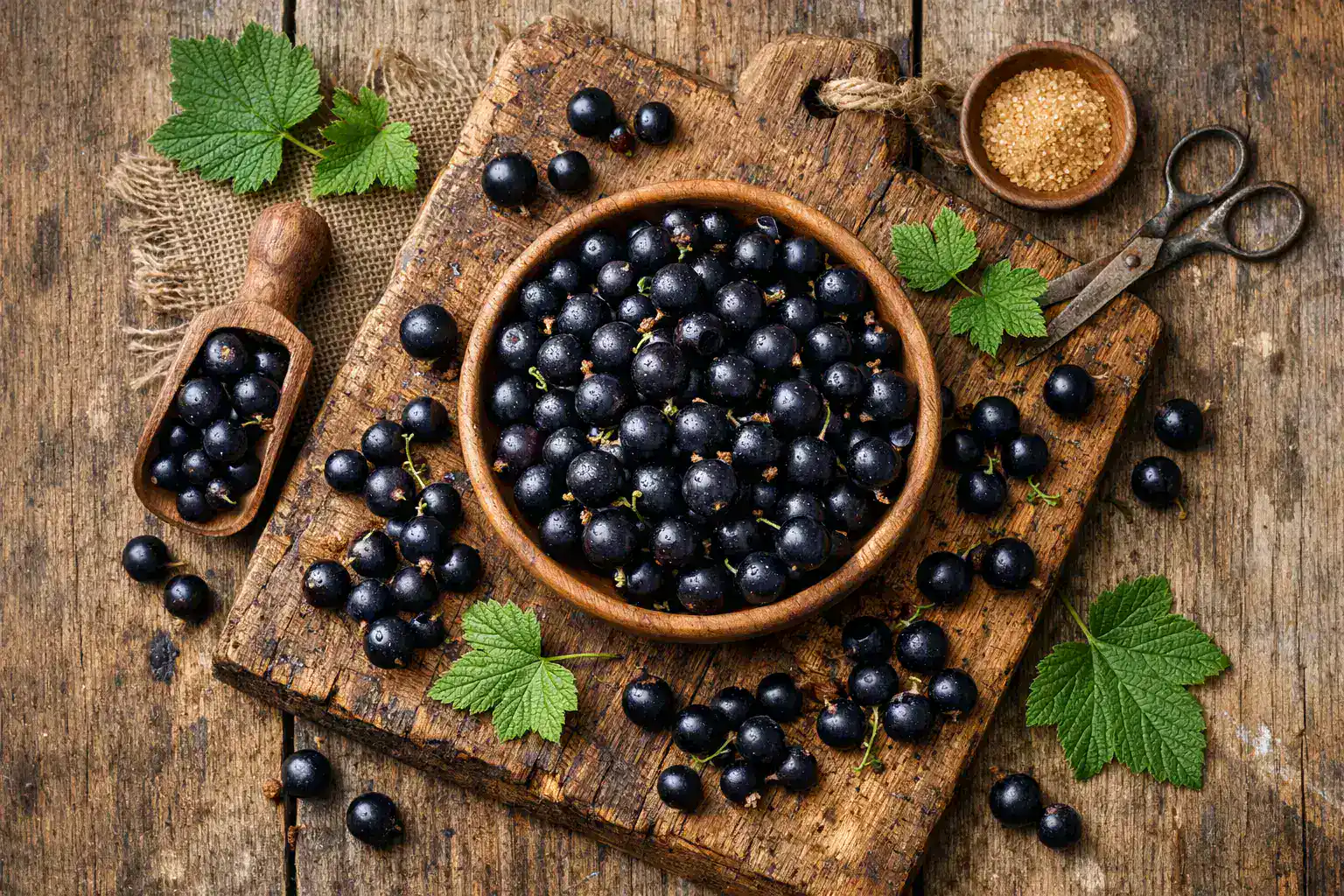
Quick Nutrition Facts
Per 100g Raw Black Currants
| Nutrient | Amount | % DV |
|---|---|---|
| Calories | 63 kcal | 3% |
| Protein | 1.4g | 3% |
| Carbohydrates | 15.4g | 12% |
| Fiber | 4.3g | 11% |
| Sugars | ~11g | - |
| Fat | 0.4g | 2% |
| Potassium | 322mg | 7% |
| Vitamin C | 181mg | 201% |
| Anthocyanins | ~700mg | - |
| ORAC Value | 7,950 TE | - |
Macronutrient Breakdown
 ChatGPT
  Claude
  AI Mode
  Perplexity
NUTRITIONIST INSIGHT
Black currants deliver 181mg vitamin C per 100g, over 3x more than oranges. Their anthocyanins rank among nature's highest, supporting blood sugar control and cardiovascular health.
Myth Busters
MYTH #1: Black Currants Are Too Sour to Eat Fresh
TRUTH: While tart, fresh black currants are perfectly edible and offer maximum nutrient retention. The high anthocyanin content is heat-sensitive; cooking reduces antioxidant content by 25-40%. Pair with sweeter fruits or yogurt.
MYTH #2: All Berries Have Similar Nutritional Value
TRUTH: Black currants vastly outperform common berries. With 181mg vitamin C vs 58mg in strawberries, 4x the anthocyanins of blueberries, and significantly higher antioxidant capacity, black currants are nutritionally superior.
MYTH #3: Anthocyanin Supplements Work as Well as Whole Fruit
TRUTH: Whole black currants provide fiber, vitamin C, potassium, and compounds that enhance anthocyanin bioavailability through synergistic action. Isolated supplements miss the full spectrum benefits of whole fruit consumption.
MYTH #4: Black Currants Spike Blood Sugar Like Other Fruits
TRUTH: Black currants have low glycemic impact. Studies show 100g reduces postprandial glucose by 34% through enzyme inhibition. The 4.3g fiber and anthocyanins slow glucose absorption, making them diabetic-friendly.
MYTH #5: You Need Huge Amounts for Health Benefits
TRUTH: Just 75 grams significantly reduces blood sugar spikes. Research shows moderate portions of black currants improve lipid profiles and reduce inflammation markers with regular consumption.
MYTH #6: Black Currants Are the Same as Raisins (Dried Currants)
TRUTH: "Dried currants" sold in stores are actually Zante grapes, not black currants. Fresh black currants (Ribes nigrum) contain significantly higher anthocyanins; raisins contain minimal anthocyanins and lack vitamin C.
NutriScore by Health Goals
| Health Goal | NutriScore | Why This Score? |
|---|---|---|
| Weight Loss |  | Only 63 calories per 100g, 4.3g fiber promotes fullness. Anthocyanins support fat metabolism and reduce body weight in research studies. |
| Muscle Gain |  | 15.4g carbs for glycogen, 181mg vitamin C supports collagen synthesis, anthocyanins reduce exercise-induced oxidative stress. |
| Diabetes Management | | Reduces postprandial glucose 34%, improves insulin sensitivity, protects pancreatic beta cells. Low glycemic impact with 4.3g fiber. |
| PCOS Management | | Anthocyanins reduce inflammation and insulin resistance—core PCOS mechanisms. Phytoestrogen activity supports hormonal balance. |
| Pregnancy Nutrition | | Safe during pregnancy, 181mg vitamin C supports iron absorption and fetal development. Black currant seed oil designated safe for lactation. Consult your doctor. |
| Viral/Flu Recovery | | 181mg vitamin C (300% DV) boosts immunity, anthocyanins reduce viral inflammation, easy to digest during illness. |
PERSONALIZED NUTRITION
Track your meals with NutriScan for personalized NutriScores based on your specific health goals!
Blood Sugar Response to Black Currant
Black currants uniquely lower blood sugar through multiple mechanisms: anthocyanins inhibit α-amylase and α-glucosidase enzymes, slowing carb digestion; delphinidin-3-rutinoside stimulates GLP-1 secretion; AMPK activation enhances glucose uptake.
Typical Glucose Response Curve
*This chart shows typical blood glucose response for general healthy individuals. Individual responses may vary. Not medical advice.*
How to Maximize Blood Sugar Benefits
Pairing black currants strategically enhances glucose control:
- 🥣 With high-carb meals - Add 75-100g fresh black currants to oatmeal, yogurt, or smoothies before carb-heavy meals
- 🥜 With protein/fat - Combine with Greek yogurt, nuts, or nut butter to further slow glucose absorption
- 🍵 As black currant tea - Steep dried black currants or leaves for sustained anthocyanin delivery
- 💊 Standardized extract - 392-784mg anthocyanin supplements daily for consistent blood sugar control
This combination approach produces 34% reduction in peak glucose and improved insulin response over 3-hour postprandial period.
Cultural Significance
Black currants (Ribes nigrum L.) originated in Northern Europe and Asia, cultivated since the Middle Ages for medicinal and culinary purposes.
McCormick's 2026 Flavor of the Year:
- Named top flavor trend for 2026 due to tart-sweet complexity
- Trending in beverages, desserts, and savory applications
- Growing from niche to mainstream across US and European markets
- Used in craft cocktails, artisan jams, and functional beverages
Traditional Medicine:
- Medieval Europe used black currant leaves for urinary health
- Russian folk medicine valued berries for immune support
- Native Americans used related Ribes species for digestive health
- Modern research validates traditional uses through anthocyanin mechanisms
Global Production:
- Russia, Poland, and UK are top producers
- Banned in US (1911-1966) due to white pine blister rust concerns
- Now legal and increasingly cultivated in Pacific Northwest and Northeast US
- Sustainable crop requiring minimal pesticides
Compare & Substitute
Black Currant vs Similar Berries (Per 100g)
| Nutrient | 🫐 Black Currant | 🔵 Blueberry | 🍓 Strawberry | 🍒 Tart Cherry |
|---|---|---|---|---|
| Calories | 63 kcal | 57 kcal | 32 kcal | 50 kcal |
| Carbs | 15.4g | 14.5g | 7.7g | 12.2g |
| Fiber | 4.3g | 2.4g | 2.0g | 1.6g |
| Protein | 1.4g | 0.7g | 0.7g | 1.0g |
| Fat | 0.4g | 0.3g | 0.3g | 0.3g |
| Vitamin C | 181mg (201%) | 9.7mg (11%) | 58.8mg (65%) | 10mg (11%) |
| Anthocyanins | ~700mg | ~160mg | ~25mg | ~350mg |
| Potassium | 322mg | 77mg | 153mg | 222mg |
| ORAC | 7,950 | 4,669 | 4,302 | 3,747 |
| Best For | Diabetes, high vitamin C | Cognitive health, snacking | Low-calorie, vitamin C | Anti-inflammatory, sleep |
Frequently Asked Questions
Are black currants good for diabetes?
Yes, black currants are exceptional for diabetes management. Studies show 100g reduces postprandial glucose peak by 34% and improves insulin sensitivity through anthocyanin-mediated enzyme inhibition. Clinical trials demonstrate 392-784mg daily anthocyanin supplements significantly lower fasting glucose and HOMA-IR (insulin resistance marker) within 6 months.
Best practices: Consume 75-100g fresh black currants with carb-heavy meals; choose anthocyanin supplements (392-784mg daily) for consistent control; pair with protein/fat for extended benefits; monitor blood sugar response individually.
How much vitamin C is in black currants?
Black currants contain 181mg vitamin C per 100g, providing 200-300% of daily needs. This is 3-4 times more than oranges (53mg/100g) and double strawberries (59mg/100g), making black currants one of nature's richest vitamin C sources.
Practical serving: Just 50g (½ cup) provides 100% daily vitamin C; 100g exceeds requirements for most adults. Vitamin C is heat-sensitive—consume fresh or minimally processed for maximum retention.
Can black currants help with weight loss?
Yes, black currant extract increases fat burning by 61% without exercise. Anthocyanins activate AMPK metabolic pathways that enhance fatty acid oxidation, suppress lipogenesis (fat storage), and improve mitochondrial function. Clinical studies show 1% blackcurrant powder (32% anthocyanins) significantly attenuates weight gain in diet-induced obesity.
Effective dosing: 392-784mg anthocyanin supplements daily; 75-100g fresh berries; combine with calorie deficit and exercise for optimal results; effects require intact gut microbiota (probiotics may enhance benefits).
Are black currants safe during pregnancy?
Yes, black currants are safe and beneficial during pregnancy. Large prospective studies show anthocyanin-rich fruit intake reduces gestational diabetes risk by 27% and protects against small-for-gestational-age births by 20-30%, particularly in women with pro-inflammatory diets. Black currant seed oil (GLA) is designated safe for pregnancy use by integrative medicine authorities.
Pregnancy benefits: 181mg vitamin C supports fetal development; anthocyanins reduce gestational inflammation; folate and potassium support healthy pregnancy; whole food forms preferred over isolated supplements; consult healthcare provider for personalized guidance.
What are anthocyanins and why are they important?
Anthocyanins are water-soluble polyphenolic antioxidants giving black currants their dark purple color. Black currants contain ~700mg per 100g—among nature's highest concentrations—comprising delphinidin-3-rutinoside, delphinidin-3-glucoside, cyanidin-3-rutinoside, and cyanidin-3-glucoside.
Health mechanisms: Reduce inflammation through NF-κB inactivation; improve insulin sensitivity via AMPK activation; protect cardiovascular health through LDL oxidation prevention; enhance fat burning; support gut microbiota diversity; function as phytoestrogens for hormonal balance.
How do black currants compare to other berries?
Black currants rank among the most nutrient-dense berries available. ORAC antioxidant value of 7,950 exceeds blueberries (4,669) and strawberries (4,302); vitamin C content (181mg) is 3-4x higher than common fruits; anthocyanin concentration (~700mg) vastly exceeds blueberries (~160mg) and strawberries (~25mg).
Unique advantages: Superior blood sugar control compared to other berries; exceptional vitamin C for immunity; higher fiber (4.3g vs 2.4g in blueberries); more potassium; broader anthocyanin profile with unique delphinidin compounds.
How many black currants should I eat per day?
General Guidelines:
- 75-100g daily - Most people seeking blood sugar and cardiovascular benefits
- 50g daily - Minimum dose for vitamin C adequacy (100% DV)
- 150-200g daily - Athletes or those targeting maximum anthocyanin intake
- 392-784mg anthocyanin supplements - Standardized dose for clinical benefits
Forms and timing: Fresh berries provide maximum nutrients; frozen retain 80-90% anthocyanins; dried lose vitamin C; consume with carb-heavy meals for glucose control; divide doses morning/evening for supplements.
Can I eat black currants on an empty stomach?
Generally safe for most people—the 4.3g fiber and gentle acidity are well-tolerated on empty stomach for quick antioxidant delivery.
May want to avoid if you have:
- Acid Reflux/GERD: Tartness may trigger symptoms in sensitive individuals
- IBS: High fiber (4.3g per 100g) may cause bloating when consumed alone
- Iron deficiency: Anthocyanins chelate iron; separate from iron supplements by 2+ hours
Better approach: Combine with yogurt, oatmeal, or nuts for balanced nutrition and enhanced anthocyanin bioavailability through protein/fat co-consumption.




Similar Nutritious Foods
4505 Chicharrones Classic Chili Salt
7 Eleven Japan Crispy Corn Cheese
Explore More Nutrition Tools & Resources
AI Calorie Counter App - Snap a Photo, Get Macros
AI Nutritionist App That Reads Your Logged Meals
Best Protein Supplements for Women
Bulking Meal Plan App That Sets Your Surplus
ChatGPT Calorie Counter Alternative That Keeps the Total
ChatGPT Diet Plan Alternative That Tracks What You Eat
ChatGPT Weight Loss Coach Alternative With a Food Log
Fast Food Calorie Counter App That Reads the Tray
Free Calorie Tracker App with AI Photo Scans | NutriScan
Indian Diet Plan App With Veg and Non Veg Meals
Indian Food Calorie Calculator - Get Instant Nutrition Facts for Desi Meals — 2026
Intermittent Fasting for Women, Timer and Meal Log App
Intermittent Fasting Tracker App - Free Fasting Timer
Macro Tracker App That Fills the Numbers From a Photo
Mediterranean Diet Meal Plan App That Counts the Oil
Micronutrient Tracker App for Vitamins and Minerals
MyFitnessPal Alternative That Stays Free | NutriScan
NutriScore App: A Free Grade on Every Meal | NutriScan
Nutrition Label Scanner App for the Amount You Ate
Second Trimester Protein Guide
Vegetarian Meal Plan App With a Protein Target
Voice Calorie Counter - Speak to Track Meals Hands-Free
Water and Calorie Tracker App - Free Water Log