Blistered Cabbage Steak: Calories, Nutrition and Health Benefits
A charred, caramelized vegetable main dish with just 45 calories per serving, loaded with fiber, vitamin C, and cancer-fighting glucosinolates.
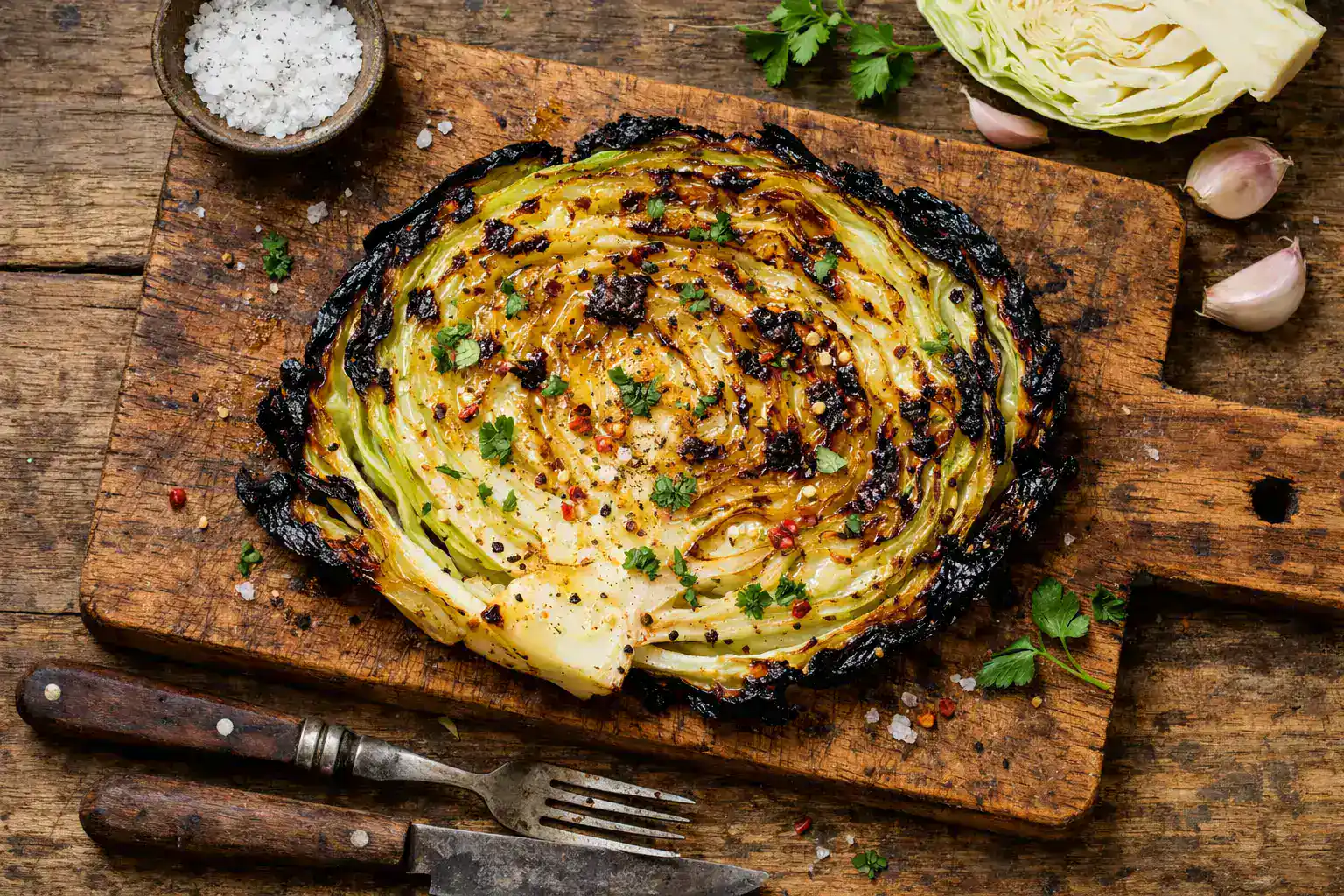
Quick Nutrition Facts
Per 1 Blistered Cabbage Steak (150g)
| Nutrient | Amount |
|---|---|
| Calories | 45 kcal |
| Protein | 2g |
| Carbohydrates | 8g |
| Fiber | 3g |
| Sugars | 4.2g |
| Fat | 1g |
| Vitamin C | 36mg |
| Vitamin K | 76mcg |
| Folate | 43mcg |
| Potassium | 170mg |
Macronutrient Breakdown
 ChatGPT
  Claude
  AI Mode
  Perplexity
NUTRITIONIST INSIGHT
Blistered cabbage steaks deliver 63% of your daily vitamin K and 40% of vitamin C in just 45 calories. The high-heat roasting caramelizes natural sugars while preserving glucosinolates, the sulfur compounds linked to cancer prevention in cruciferous vegetables.
Myth Busters
MYTH #1: Roasting Cabbage Destroys All Its Nutrients
TRUTH: While some vitamin C is lost during roasting, cabbage retains significant antioxidant capacity and fiber after cooking. Vitamin K is heat-stable and largely preserved. The blistering process also creates beneficial Maillard reaction compounds.
MYTH #2: Cabbage Steaks Are Not a Real Source of Protein
TRUTH: At 2g protein per 150g serving, cabbage steak alone is modest in protein. However, cruciferous vegetables provide essential amino acids and bioactive compounds that complement protein from other sources. Pair with chickpeas or tahini for a complete meal.
MYTH #3: Blistered Cabbage Is Unhealthy Because of Charring
TRUTH: The light charring on cabbage steaks is not the same as charring on meat. Vegetable blistering creates beneficial antioxidant compounds without forming harmful heterocyclic amines (HCAs) that occur when protein-rich foods are charred at high temperatures.
MYTH #4: Cabbage Causes Bloating and Should Be Avoided
TRUTH: While raw cabbage can cause gas in some people, roasting breaks down raffinose sugars that cause bloating. Blistered cabbage is actually easier to digest than raw cabbage while still providing 3g of beneficial fiber per serving.
NutriScore by Health Goals
| Health Goal | NutriScore | Why This Score? |
|---|---|---|
| Weight Loss |  | Only 45 calories per 150g with 3g fiber for satiety. One of the lowest-calorie satisfying dishes you can eat. |
| Muscle Gain |  | Low protein (2g) and low calories. Good as a side dish but must be paired with protein sources like grilled chicken or tofu. |
| Diabetes Management | | Very low GI (10), only 8g carbs per serving. Cabbage compounds improve insulin sensitivity and reduce inflammation. |
| PCOS Management | | Low-carb, anti-inflammatory cruciferous vegetable. Glucosinolates may support hormonal balance and reduce insulin resistance. |
| Pregnancy Nutrition |  | Good source of folate (43mcg) and vitamin C (36mg). Folate is essential for neural tube development. Wash thoroughly and cook well. |
| Viral/Flu Recovery | | 40% daily vitamin C supports immune function. Easy to digest when roasted. Light enough for recovery meals. |
PERSONALIZED NUTRITION
Track your meals with NutriScan for personalized NutriScores based on your specific health goals!
Blood Sugar Response to Blistered Cabbage Steak
With a glycemic index of just 10, blistered cabbage steak causes virtually no blood sugar spike, making it one of the most diabetes-friendly dishes available.
Typical Glucose Response Curve
*This chart shows typical blood glucose response for general healthy individuals. Individual responses may vary. Not medical advice.*
How to Flatten the Spike
Pairing low-GI vegetables with protein and healthy fats further stabilizes blood glucose response:
- 🥜 Tahini drizzle - Adds healthy fats and plant protein
- 🧀 Crumbled feta or parmesan - Provides protein and calcium
- 🥚 Fried or poached egg on top - Complete protein source
- 🫘 White bean puree - Adds fiber and plant protein
This combination ensures sustained energy release and keeps blood sugar remarkably stable throughout the meal.
Cultural Significance
Cabbage steaks emerged as a modern plant-based cooking trend, transforming a humble vegetable into a centerpiece dish.
Origins and Evolution:
- Thick-cut roasted cabbage gained popularity in the 2010s through plant-based and vegetarian cooking movements
- Inspired by traditional European roasted cabbage wedges, especially from German, Polish, and Irish cuisines
- Blistering technique borrowed from Asian wok cooking where high-heat charring is prized
In Indian Cuisine:
- Cabbage (patta gobi) is widely used across India in sabzis, kootu, and poriyal preparations
- Southern Indian cabbage poriyal uses a similar high-heat technique with mustard seeds and curry leaves
- Ayurveda classifies cabbage as a cooling vegetable beneficial for Pitta dosha
Global Popularity:
- Featured in major food publications and restaurant menus as a plant-forward main course
- Popular in whole30, keto, and paleo diets for its low-carb, high-nutrient profile
- Versatile canvas for global flavor profiles from miso-glazed to chimichurri-topped
Compare & Substitute
Blistered Cabbage Steak vs Similar Dishes (Per 100g)
| Nutrient | Blistered Cabbage Steak | Cauliflower Steak | Grilled Zucchini | Roasted Broccoli |
|---|---|---|---|---|
| Calories | 30 kcal | 35 kcal | 24 kcal | 55 kcal |
| Carbs | 5.3g | 5g | 3.1g | 7g |
| Fiber | 2g | 2.1g | 1g | 3.3g |
| Protein | 1.3g | 2g | 1.2g | 3.7g |
| Fat | 0.7g | 0.3g | 0.3g | 0.6g |
| Vitamin C | 24mg | 44mg | 17mg | 65mg |
| Vitamin K | 51mcg | 16mcg | 4.3mcg | 141mcg |
| Best For | Weight loss, low-cal meals | Keto, protein pairing | Light grilling, summer side | Nutrient density, immunity |
Frequently Asked Questions
How many calories are in a blistered cabbage steak?
45 calories per 150g serving without added oil. Adding 1 tablespoon of olive oil for roasting adds approximately 120 calories. A typical lightly brushed cabbage steak with oil totals about 80-100 calories.
Is blistered cabbage steak good for weight loss?
Yes, blistered cabbage steak is one of the best weight loss foods available. At 45 calories per serving with 3g fiber, it provides excellent volume and satiety.
Best practices: Use minimal oil (spray or light brush), serve as a main dish with protein, eat 1-2 steaks per meal, and pair with a lean protein source.
Can diabetics eat blistered cabbage steak?
Blistered cabbage steak is excellent for diabetics. With a GI of 10 and only 8g carbs per serving, it causes virtually no blood sugar response.
Tips for diabetics:
- Enjoy freely as a side or main dish
- Pair with protein for a balanced meal
- Use olive oil sparingly (healthy fats aid absorption)
- Monitor portion of any sauce or glaze added
What vitamins are in blistered cabbage steak?
Key nutrients per 150g serving:
- Vitamin K: 76mcg (63% DV) for bone health and blood clotting
- Vitamin C: 36mg (40% DV) for immune function and skin health
- Folate: 43mcg (11% DV) for cell division and pregnancy health
- Potassium: 170mg (4% DV) for blood pressure regulation
- Glucosinolates: Sulfur compounds with anti-cancer properties in cruciferous vegetables
How do you make the perfect blistered cabbage steak?
Simple method:
- Cut cabbage into 1-inch thick rounds through the core (keeps slices intact)
- Brush lightly with olive oil, season with salt and pepper
- Roast at 425F (220C) for 25-30 minutes, flipping halfway
- Edges should be deeply charred and caramelized
IMPORTANT NOTE
Keep the core intact when slicing to prevent the steak from falling apart during roasting.
Is blistered cabbage steak keto-friendly?
Yes, with only 8g total carbs and 3g fiber (5g net carbs) per 150g serving, blistered cabbage steak fits perfectly into a keto diet. Add butter, cheese, or bacon for extra fat content while staying within keto macros.
Track your meals with NutriScan app to see how blistered cabbage steak fits your personal nutrition goals.




Similar Nutritious Foods
4505 Chicharrones Classic Chili Salt
7 Eleven Japan Crispy Corn Cheese
Explore More Nutrition Tools & Resources
AI Calorie Counter App - Snap a Photo, Get Macros
AI Nutritionist App That Reads Your Logged Meals
Best Protein Supplements for Women
Bulking Meal Plan App That Sets Your Surplus
ChatGPT Calorie Counter Alternative That Keeps the Total
ChatGPT Diet Plan Alternative That Tracks What You Eat
ChatGPT Weight Loss Coach Alternative With a Food Log
Fast Food Calorie Counter App That Reads the Tray
Free Calorie Tracker App with AI Photo Scans | NutriScan
Indian Diet Plan App With Veg and Non Veg Meals
Indian Food Calorie Calculator - Get Instant Nutrition Facts for Desi Meals — 2026
Intermittent Fasting for Women, Timer and Meal Log App
Intermittent Fasting Tracker App - Free Fasting Timer
Macro Tracker App That Fills the Numbers From a Photo
Mediterranean Diet Meal Plan App That Counts the Oil
Micronutrient Tracker App for Vitamins and Minerals
MyFitnessPal Alternative That Stays Free | NutriScan
NutriScore App: A Free Grade on Every Meal | NutriScan
Nutrition Label Scanner App for the Amount You Ate
Second Trimester Protein Guide
Vegetarian Meal Plan App With a Protein Target
Voice Calorie Counter - Speak to Track Meals Hands-Free
Water and Calorie Tracker App - Free Water Log