Bratwurst: Calories, Nutrition and Health Benefits
Germany's iconic grilled pork sausage delivers bold flavor with high protein and B vitamins, perfect for occasional indulgence.
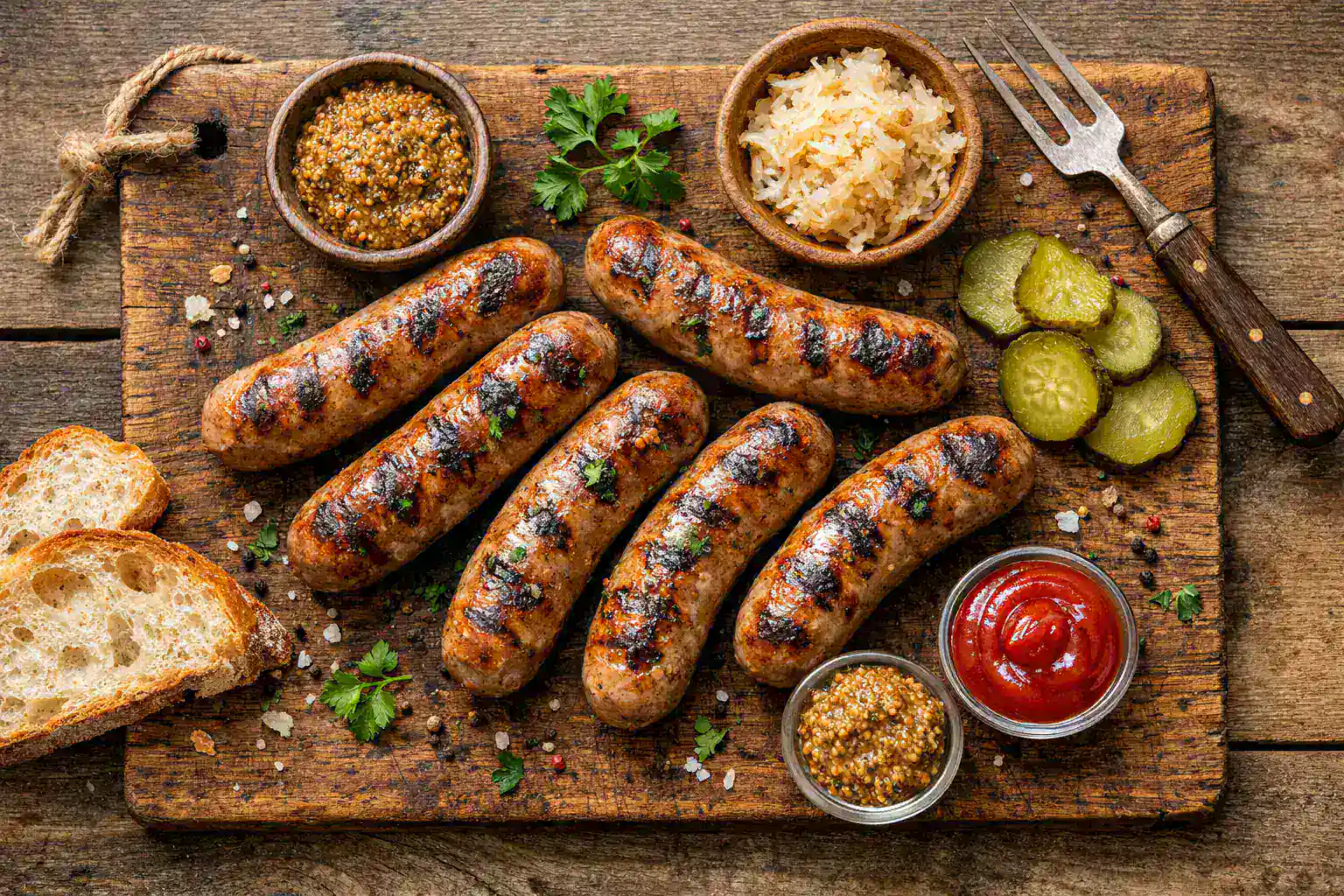
Quick Nutrition Facts
Per 1 Bratwurst Link (75g)
| Nutrient | Amount |
|---|---|
| Calories | 250 kcal |
| Protein | 10g |
| Carbohydrates | 2g |
| Fiber | 0g |
| Sugars | 0g |
| Fat | 22g |
| Saturated Fat | 7.5g |
| Sodium | 635mg |
| Cholesterol | 56mg |
| Potassium | 261mg |
Macronutrient Breakdown
 ChatGPT
  Claude
  AI Mode
  Perplexity
NUTRITIONIST INSIGHT
Bratwurst delivers 54% of your daily selenium needs in one link, supporting thyroid function and antioxidant defense. The B-vitamin profile (B1, B12, niacin) aids energy metabolism. Enjoy grilled with sauerkraut to add fiber and probiotics.
Myth Busters
MYTH #1: All Sausages Are Equally Unhealthy
TRUTH: Bratwurst made from pork contains more B vitamins and less sodium than many processed hot dogs. Quality varies significantly - traditional German-style bratwurst uses whole cuts of meat rather than mechanically separated meat found in cheaper alternatives.
MYTH #2: Bratwurst Has No Nutritional Value
TRUTH: One bratwurst provides 29% DV thiamin, 23% DV vitamin B12, 22% DV zinc, and 54% DV selenium. These nutrients support energy production, nerve function, and immune health. The protein content (10g) provides essential amino acids for muscle maintenance.
MYTH #3: Grilling Bratwurst Makes It Healthier
TRUTH: Grilling does allow some fat to drip away, but high-temperature cooking of processed meats can form heterocyclic amines. The healthiest preparation is moderate-heat grilling or pan-searing - avoid charring or burning.
MYTH #4: You Must Avoid Bratwurst Completely on a Diet
TRUTH: At 250 calories per link with 10g protein, bratwurst can fit into a balanced diet when portion-controlled. The high protein and fat content promotes satiety. Limit to 1 link and pair with vegetables, not calorie-dense buns and toppings.
MYTH #5: Bratwurst Is Too High in Sodium for Everyone
TRUTH: One link contains 635mg sodium (28% DV), which is significant but manageable for most healthy adults. Those with hypertension should limit processed meat intake, but occasional consumption with plenty of potassium-rich vegetables can help balance sodium intake.
NutriScore by Health Goals
| Health Goal | NutriScore | Why This Score? |
|---|---|---|
| Weight Loss |  | High in calories (250/link) and fat (22g). Limit to occasional treat; pair with low-calorie vegetables instead of buns. |
| Muscle Gain |  | Good protein source (10g), rich in B vitamins for energy metabolism, zinc for testosterone support. Post-workout option. |
| Diabetes Management |  | Very low carbs (2g) won't spike blood sugar directly. However, processed meat is linked to diabetes risk - limit to occasional consumption. |
| PCOS Management | | High saturated fat may worsen insulin resistance. Choose lean protein sources more often. |
| Pregnancy Nutrition | | High sodium and processed meat nitrates should be limited during pregnancy. Ensure thoroughly cooked if consumed. |
| Viral/Flu Recovery | | Provides zinc and B12 for immune support, but high sodium may worsen dehydration. Pair with broth and vegetables. |
PERSONALIZED NUTRITION
Track your meals with NutriScan for personalized NutriScores based on your specific health goals!
Blood Sugar Response to Bratwurst
Understanding how bratwurst affects your blood glucose can help you make informed decisions about when and how to eat it.
Typical Glucose Response Curve
This chart shows typical blood glucose response for general healthy individuals. Individual responses may vary. Not medical advice.
How to Balance Your Meal
Adding fiber and vegetables to your bratwurst meal helps maintain stable energy and supports digestive health:
- Sauerkraut - Adds fiber, probiotics, and vitamin C
- Grilled vegetables (peppers, onions, zucchini) - Fiber and potassium
- Whole grain bread or roll - Fiber slows digestion
- Side salad with vinegar dressing - Vinegar may help glucose response
This combination provides more balanced nutrition and extends satiety compared to eating bratwurst alone.
Cultural Significance
Bratwurst (from Old High German "brat" meaning finely chopped meat and "wurst" meaning sausage) has been a German culinary tradition since the 14th century.
In Germany:
- Over 40 regional varieties exist, each with protected geographical status
- Nuremberg bratwurst (Nurnberger) are small, finger-sized, and made with marjoram
- Thuringian bratwurst are longer and seasoned with caraway and marjoram
- Traditional accompaniments: sauerkraut, German mustard, pretzels
- Annual consumption: Germans eat approximately 800 million bratwurst per year
Global Spread:
- German immigrants brought bratwurst to Wisconsin, USA in the 1800s
- Sheboygan, Wisconsin claims the title "Bratwurst Capital of the World"
- Now popular at American barbecues, baseball games, and Oktoberfest celebrations
- Modern variations include chicken, turkey, and plant-based versions
Compare & Substitute
Bratwurst vs Similar Foods (Per 100g)
| Nutrient | Bratwurst | Hot Dog | Italian Sausage | Chicken Sausage |
|---|---|---|---|---|
| Calories | 333 kcal | 290 kcal | 346 kcal | 172 kcal |
| Carbs | 3g | 2g | 1g | 3g |
| Fiber | 0g | 0g | 0g | 0g |
| Protein | 14g | 11g | 14g | 19g |
| Fat | 29g | 26g | 31g | 9g |
| Sodium | 846mg | 1,090mg | 665mg | 620mg |
| Sat. Fat | 10g | 10g | 11g | 2.5g |
| Best For | Occasional indulgence, BBQ | Quick meals, ballpark food | Italian dishes, pasta | Lower-fat protein option |
Frequently Asked Questions
How many calories are in a bratwurst?
A standard bratwurst link (75g) contains 250 calories, with 22g fat, 10g protein, and 2g carbs. Per 100g, bratwurst provides approximately 333 calories.
Calorie comparison by preparation:
- Plain grilled bratwurst: 250 calories
- With standard bun: ~380 calories
- With bun and toppings: 450-550 calories
Is bratwurst healthy?
Bratwurst offers nutritional benefits including high-quality protein, B vitamins (especially thiamin, B12, niacin), selenium (54% DV), and zinc (22% DV).
However, consider these factors:
- High in saturated fat (7.5g per link, 38% DV)
- High sodium (635mg per link, 28% DV)
- Processed meat category - WHO classifies as Group 1 carcinogen
Best enjoyed 1-2 times per month as part of a varied diet rich in vegetables, fruits, and whole grains.
Can diabetics eat bratwurst?
Bratwurst is very low in carbohydrates (2g per link), so it won't directly spike blood sugar. However, long-term processed meat consumption is associated with increased type 2 diabetes risk.
Tips for diabetics:
- Limit to occasional consumption (once weekly or less)
- Pair with fiber-rich vegetables and whole grains
- Choose uncured varieties when available
- Monitor overall sodium intake from other sources
What's the difference between bratwurst and hot dogs?
Bratwurst uses coarsely ground pork (sometimes beef or veal) with spices like nutmeg, ginger, and caraway. Hot dogs typically use finely ground, emulsified meat with simpler seasonings.
Key differences:
- Bratwurst: More protein, coarser texture, regional spice variations
- Hot dogs: More processed, higher sodium, uniform texture
- Both are processed meats; neither should be dietary staples
How should I cook bratwurst for the healthiest result?
Healthiest methods:
- Grill over medium heat - allows fat to drip away
- Pan-sear in non-stick pan - no added oil needed
- Bake at 400°F (200°C) on rack - fat drains off
Methods to avoid:
- Deep frying - adds significant calories
- Boiling in beer - adds calories, less flavor
- High-heat charring - forms potentially harmful compounds
Serve with sauerkraut (adds fiber, probiotics) on a whole grain bun or skip the bun entirely.
How much bratwurst is safe to eat per week?
Based on health guidelines for processed meat consumption, limit bratwurst to 1-2 servings per week maximum.
Portion guidance:
- 1 standard link (75g) = 1 serving
- Pair with at least 2 cups vegetables per serving
- Balance with fish, poultry, or plant proteins on other days
- Choose quality bratwurst with fewer additives
Track your intake with NutriScan app to ensure bratwurst fits within your weekly nutrition goals.


Similar Nutritious Foods
4505 Chicharrones Classic Chili Salt
7 Eleven Japan Crispy Corn Cheese
Explore More Nutrition Tools & Resources
AI Calorie Counter App - Snap a Photo, Get Macros
AI Nutritionist App That Reads Your Logged Meals
Best Protein Supplements for Women
Bulking Meal Plan App That Sets Your Surplus
ChatGPT Calorie Counter Alternative That Keeps the Total
ChatGPT Diet Plan Alternative That Tracks What You Eat
ChatGPT Weight Loss Coach Alternative With a Food Log
Fast Food Calorie Counter App That Reads the Tray
Free Calorie Tracker App with AI Photo Scans | NutriScan
Indian Diet Plan App With Veg and Non Veg Meals
Indian Food Calorie Calculator - Get Instant Nutrition Facts for Desi Meals — 2026
Intermittent Fasting for Women, Timer and Meal Log App
Intermittent Fasting Tracker App - Free Fasting Timer
Macro Tracker App That Fills the Numbers From a Photo
Mediterranean Diet Meal Plan App That Counts the Oil
Micronutrient Tracker App for Vitamins and Minerals
MyFitnessPal Alternative That Stays Free | NutriScan
NutriScore App: A Free Grade on Every Meal | NutriScan
Nutrition Label Scanner App for the Amount You Ate
Second Trimester Protein Guide
Vegetarian Meal Plan App With a Protein Target
Voice Calorie Counter - Speak to Track Meals Hands-Free
Water and Calorie Tracker App - Free Water Log