German Brezel: Calories, Nutrition and Health Benefits
Germany's iconic twisted bread - a perfect balance of chewy texture, golden-brown crust, and coarse salt that delivers quick energy for active lifestyles.
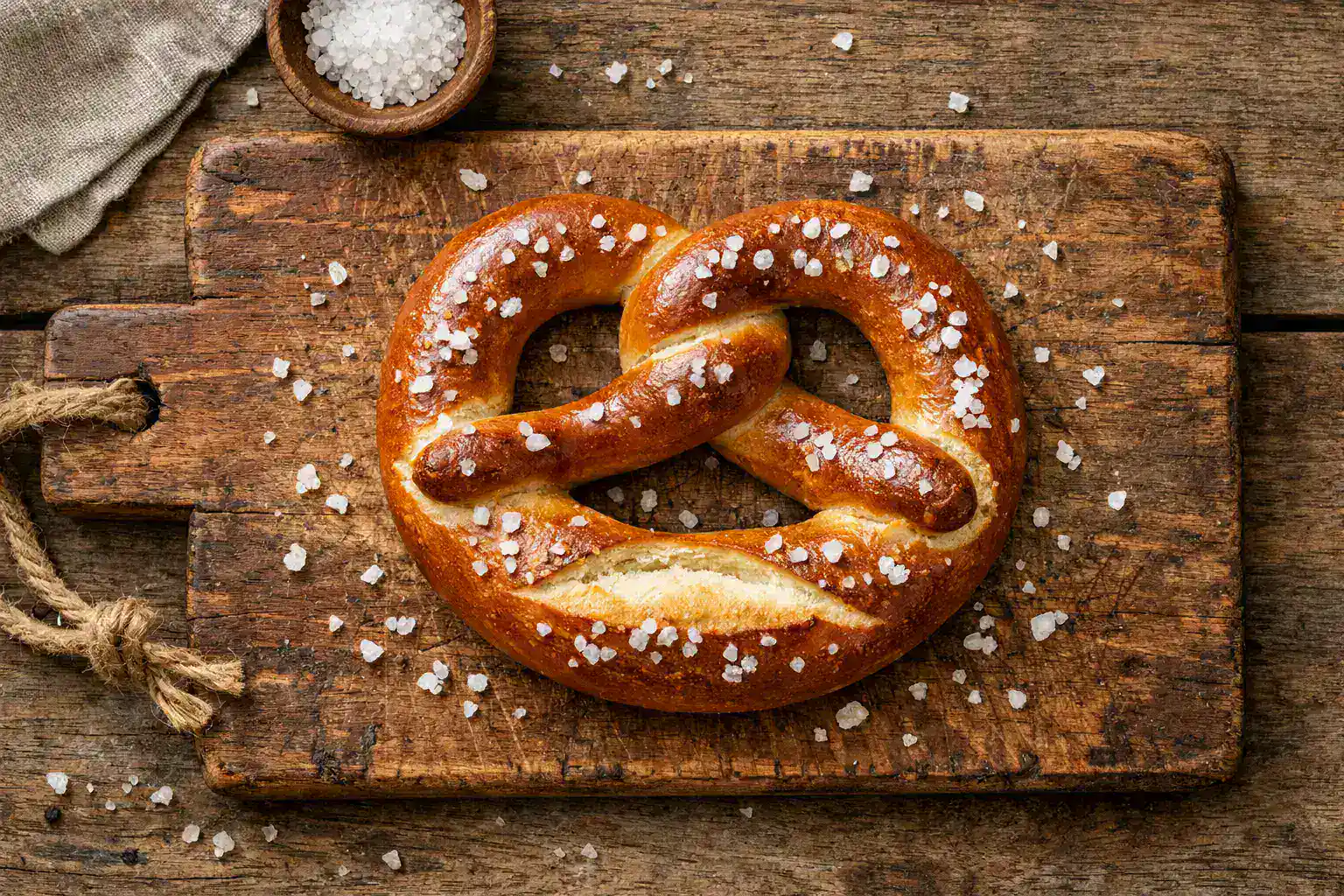
Quick Nutrition Facts
Per 1 Medium Brezel (80g)
| Nutrient | Amount |
|---|---|
| Calories | 270 kcal |
| Protein | 6.6g |
| Carbohydrates | 55g |
| Fiber | 1.4g |
| Sugars | 0.2g |
| Fat | 2.5g |
| Sodium | 1123mg |
| Iron | 3.1mg |
| Calcium | 18mg |
| Potassium | 70mg |
Macronutrient Breakdown
 ChatGPT
  Claude
  AI Mode
  Perplexity
NUTRITIONIST INSIGHT
Brezels are a quick energy source with 55g carbs per serving, ideal for pre-workout fuel. However, watch the sodium - one brezel provides nearly half your daily limit at 1123mg. Pair with mustard instead of cheese dip to keep calories in check.
Myth Busters
MYTH #1: Brezels Are a Healthy Low-Fat Snack
TRUTH: While brezels are indeed low in fat (2.5g per serving), they're high in refined carbohydrates that spike blood sugar rapidly. The high glycemic index (GI 80) makes them less suitable for sustained energy or blood sugar management.
MYTH #2: The Salt on Brezels Is Just for Flavor
TRUTH: Coarse salt contributes significantly to brezel's high sodium content. Excessive sodium intake is linked to elevated blood pressure, with one brezel providing 49% of daily recommended sodium. Brushing off excess salt can reduce intake by 200-300mg.
MYTH #3: Brezels Are Empty Calories
TRUTH: Brezels provide 6.6g protein and 22% daily iron per serving. While not nutrient-dense, they offer quick-digesting carbohydrates that athletes need for energy replenishment. The key is portion control and timing.
MYTH #4: All Pretzels Have the Same Nutrition
TRUTH: German brezels differ from hard pretzels and American soft pretzels. Traditional soft pretzels have a GI of 80, while soy-based versions can have GI as low as 39. Whole grain versions offer more fiber and lower glycemic impact.
MYTH #5: Brezels Are Bad for Everyone
TRUTH: For athletes and active individuals, brezels provide valuable quick energy. The sodium actually helps with electrolyte replacement during intense exercise. Context matters - occasional enjoyment is fine for most healthy adults.
NutriScore by Health Goals
| Health Goal | NutriScore | Why This Score? |
|---|---|---|
| Weight Loss |  | 270 calories with limited satiety due to low fiber (1.4g). High GI causes hunger rebound. Limit to half a brezel occasionally. |
| Muscle Gain |  | Good post-workout carbs (55g) for glycogen replenishment. Sodium aids electrolyte balance. Pair with protein source for optimal recovery. |
| Diabetes Management | | High glycemic index (GI 80) causes rapid blood sugar spikes. Choose whole grain alternatives or limit to small portions with protein. |
| PCOS Management | | Refined carbs affect insulin sensitivity. High GI worsens insulin resistance. Choose fiber-rich whole grain breads instead. |
| Pregnancy Nutrition |  | Provides iron (22% DV) beneficial during pregnancy. However, high sodium may contribute to water retention. Limit to occasional consumption. |
| Viral/Flu Recovery | | Easy to digest carbs provide energy during illness. Sodium helps if dehydrated. However, low in vitamins - supplement with fruits and vegetables. |
PERSONALIZED NUTRITION
Track your meals with NutriScan for personalized NutriScores based on your specific health goals!
Blood Sugar Response to Brezel
Understanding how brezels affect your blood glucose can help you make informed decisions about when and how to eat them.
Typical Glucose Response Curve
This chart shows typical blood glucose response for general healthy individuals. Individual responses may vary. Not medical advice.
How to Flatten the Spike
Pairing brezel with protein or healthy fat slows glucose absorption and reduces the peak blood sugar level:
- 🧀 Cheese or cream cheese - Adds protein and fat to slow absorption
- 🌭 German mustard - Low calorie, adds flavor without sugar
- 🥜 Nut butter - Provides healthy fats and protein
- 🍖 Cold cuts or Leberkäse - Protein helps moderate blood sugar response
This combination not only reduces the glucose spike but also extends energy release, keeping you fuller for longer.
Cultural Significance
The brezel is one of Germany's most recognizable culinary symbols, with a history spanning over 1,400 years.
In Germany:
- Symbol of bakers' guilds since medieval times - the pretzel shape appears on bakery signs across German-speaking regions
- Traditional Oktoberfest food paired with Weisswurst (white sausage) and sweet mustard
- Regional variations: Bavarian Brezen are thicker; Swabian Brezeln are thinner with more salt
- New Year's tradition: In some regions, brezels symbolize good luck and prosperity
Global Impact:
- German immigrants brought brezels to America in the 18th century, establishing the soft pretzel tradition in Pennsylvania
- The pretzel industry in the US is worth over $1 billion annually
- International Pretzel Day celebrated on April 26th
- UNESCO recognized German bread culture (including brezels) as Intangible Cultural Heritage in 2014
Compare & Substitute
Brezel vs Similar Baked Goods (Per 100g)
| Nutrient | 🥨 Brezel | 🥖 Baguette | 🥯 Bagel | 🍞 Whole Wheat Bread |
|---|---|---|---|---|
| Calories | 338 kcal | 274 kcal | 257 kcal | 252 kcal |
| Carbs | 69g | 51g | 50g | 43g |
| Fiber | 1.7g | 2.4g | 2.1g | 6.0g |
| Protein | 8.2g | 9.4g | 10g | 12g |
| Fat | 3.1g | 1.6g | 1.1g | 3.4g |
| Sodium | 1404mg | 602mg | 450mg | 455mg |
| GI | 80 (High) | 70 (High) | 72 (High) | 54 (Low) |
| Best For | Pre-workout, festivals | Sandwiches, everyday bread | Breakfast, brunch | Blood sugar control, fiber |
Frequently Asked Questions
How many calories are in a German brezel?
A standard German brezel (80g) contains approximately 270 calories. Per 100g, soft pretzels provide 338 calories with 69g carbohydrates, 8.2g protein, and 3.1g fat.
Size variations:
- Small brezel (62g): 210 calories
- Medium brezel (80g): 270 calories
- Large brezel (115g): 389 calories
Is brezel healthy to eat?
Brezels are a moderate choice for most people. They're low in fat and provide quick energy, but have significant drawbacks.
Pros:
- Low fat (2.5g per serving)
- Good source of iron (22% DV)
- Quick energy from carbs
Cons:
- Very high sodium (49% DV per serving)
- High glycemic index (GI 80)
- Low fiber (1.4g)
Best practice: Enjoy occasionally, choose whole grain versions when available, and pair with protein.
Can diabetics eat brezels?
Diabetics should limit brezel consumption. Soft pretzels have a high glycemic index (GI 80), causing rapid blood sugar spikes.
Tips for diabetics:
- Choose half portions (40g = 135 calories)
- Always pair with protein (cheese, meat)
- Avoid on empty stomach
- Monitor blood glucose 2 hours after eating
- Consider whole grain or soy-based pretzels (GI as low as 39)
Consult your healthcare provider for personalized advice.
Why are brezels so high in sodium?
Brezels get their sodium from two sources: the coarse salt topping and the lye solution (sodium hydroxide) used in traditional preparation. One 80g brezel contains about 1123mg sodium.
To reduce sodium intake:
- Brush off visible salt crystals (saves 200-300mg)
- Choose unsalted versions
- Limit to half a brezel
- Drink extra water to help process sodium
What is the difference between a pretzel and a brezel?
Brezel is simply the German word for pretzel. The main differences are preparation style:
German Brezel:
- Dipped in food-grade lye solution before baking
- Creates distinctive dark brown, glossy crust
- Chewy interior with dense texture
- Traditional coarse salt topping
American Soft Pretzel:
- Often uses baking soda solution instead of lye
- Generally sweeter dough
- Lighter golden color
- Served with cheese dip or cinnamon sugar
When is the best time to eat a brezel?
Depends on your goal:
- Athletes: 1-2 hours before exercise for sustained energy, or post-workout for glycogen replenishment
- Weight management: Mid-morning with protein, avoid late night
- Blood sugar concerns: Early afternoon with cheese or protein, never on empty stomach
- General enjoyment: As occasional treat at Oktoberfest or German restaurants
IMPORTANT NOTE
Avoid eating brezels late at night - high sodium may cause water retention and disturbed sleep.
How should I store brezels?
Fresh brezels are best consumed within 2-3 hours of baking. For longer storage:
- Room temperature: 1 day in paper bag (loses freshness quickly)
- Freezer: Up to 3 months in airtight bag
- Reheating: Brush with water, bake at 180°C (350°F) for 5-7 minutes
Avoid refrigerating - cold temperatures accelerate staling in bread products.


Similar Nutritious Foods
4505 Chicharrones Classic Chili Salt
7 Eleven Japan Crispy Corn Cheese
Explore More Nutrition Tools & Resources
AI Calorie Counter App - Snap a Photo, Get Macros
AI Nutritionist App That Reads Your Logged Meals
Best Protein Supplements for Women
Bulking Meal Plan App That Sets Your Surplus
ChatGPT Calorie Counter Alternative That Keeps the Total
ChatGPT Diet Plan Alternative That Tracks What You Eat
ChatGPT Weight Loss Coach Alternative With a Food Log
Fast Food Calorie Counter App That Reads the Tray
Free Calorie Tracker App with AI Photo Scans | NutriScan
Indian Diet Plan App With Veg and Non Veg Meals
Indian Food Calorie Calculator - Get Instant Nutrition Facts for Desi Meals — 2026
Intermittent Fasting for Women, Timer and Meal Log App
Intermittent Fasting Tracker App - Free Fasting Timer
Macro Tracker App That Fills the Numbers From a Photo
Mediterranean Diet Meal Plan App That Counts the Oil
Micronutrient Tracker App for Vitamins and Minerals
MyFitnessPal Alternative That Stays Free | NutriScan
NutriScore App: A Free Grade on Every Meal | NutriScan
Nutrition Label Scanner App for the Amount You Ate
Second Trimester Protein Guide
Vegetarian Meal Plan App With a Protein Target
Voice Calorie Counter - Speak to Track Meals Hands-Free
Water and Calorie Tracker App - Free Water Log