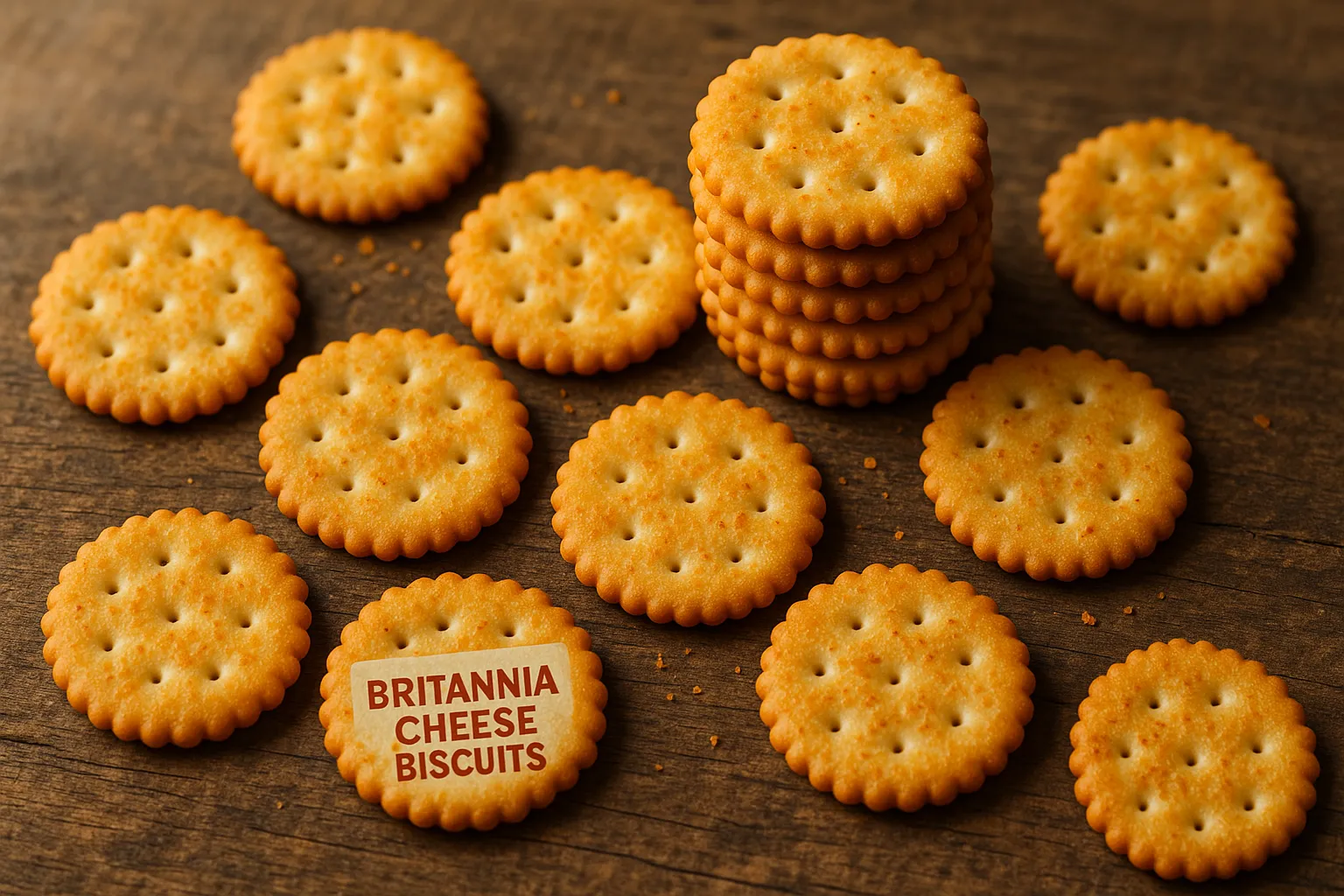
Britannia Cheese Biscuits: Calories, Nutrition and Health Benefits
Britannia's savory cheese-flavored crackers delivering rich, tangy taste with satisfying crunch in every bite.
Quick Nutrition Facts
Per 100g (approximately 20 biscuits)
| Nutrient | Amount |
|---|---|
| Calories | 498 kcal |
| Protein | 9g |
| Carbohydrates | 62g |
| Fiber | 2.5g |
| Sugars | 8g |
| Fat | 23g |
| Saturated Fat | 11g |
| Sodium | 680mg |
Macronutrient Breakdown
 ChatGPT
  Claude
  AI Mode
  Perplexity
NUTRITIONIST INSIGHT
Cheese Biscuits are calorie-dense savory snacks (498 kcal per 100g) with higher sodium content (680mg). The cheese flavoring adds slightly more protein than sweet biscuits. Best enjoyed in small portions (4-5 crackers) as occasional savory treats.
Myth Busters
MYTH #1: Cheese Biscuits Are High in Real Cheese Protein
TRUTH: Despite the name, cheese biscuits contain cheese flavoring, not substantial cheese. Protein content (9g per 100g) comes mainly from refined flour. Processed snacks typically contain minimal actual dairy content for cost efficiency.
MYTH #2: Savory Biscuits Are Healthier Than Sweet Ones
TRUTH: Cheese biscuits have similar calories (498 vs 486 kcal) to sweet varieties but much higher sodium (680mg vs 280mg). High sodium intake is linked to hypertension and cardiovascular risk. Neither is "healthy."
MYTH #3: Crackers Are Good for Dieting
TRUTH: The term "cracker" suggests lightness, but cheese biscuits pack 498 calories per 100g. Refined flour snacks have high glycemic impact regardless of savory or sweet flavoring. Portion control is essential.
MYTH #4: Cheese Biscuits Provide Calcium Benefits
TRUTH: Cheese flavoring contributes minimal calcium compared to actual cheese. A 100g serving provides roughly 50-80mg calcium versus 700mg in real cheddar. Don't rely on these for calcium intake.
MYTH #5: Savory Snacks Don't Spike Blood Sugar
TRUTH: Refined flour in cheese biscuits causes blood sugar spikes similar to sweet biscuits. The GI of 65-70 means moderate glucose impact. Diabetics should treat savory crackers with same caution as sweet ones.
MYTH #6: Cheese Biscuits Are Better for Kids Than Chips
TRUTH: Both are processed snacks with similar drawbacks. Cheese biscuits have high sodium (680mg/100g) and saturated fat (11g). Children's snacks should prioritize whole foods over processed options.
NutriScore by Health Goals
| Health Goal | NutriScore | Why This Score? |
|---|---|---|
| Weight Loss |  | High calorie density (498 kcal/100g), high fat (23g). Limit to 3-4 biscuits (75 cal) 2-3 times weekly. |
| Muscle Gain |  | Moderate protein (9g) and quick carbs (62g) for post-workout energy. Better paired with protein shake; alone insufficient for muscle building. |
| Diabetes Management | | Refined flour causes rapid blood sugar variations. Moderate GI (~65-70). Limit to 2-3 biscuits, pair with vegetables. |
| PCOS Management | | High refined carbs worsen insulin resistance. High sodium affects hormonal balance. Avoid or limit to rare occasions (2-3 biscuits monthly). |
| Pregnancy Nutrition | | Can satisfy savory cravings in moderation (4-5 biscuits). High sodium concerning for pregnancy-related hypertension risk. Monitor intake carefully. |
| Viral/Flu Recovery | | Easy to eat when appetite is low, provides quick energy. High sodium helps with electrolyte balance during illness. Better options exist (soups, fruits). |
PERSONALIZED NUTRITION
Track your meals with NutriScan for personalized NutriScores based on your specific health goals!
Blood Sugar Response to Cheese Biscuits
Understanding how Cheese Biscuits affect your blood glucose helps you make informed snacking decisions.
Typical Glucose Response Curve
This chart shows typical blood glucose response for general healthy individuals. Individual responses may vary. Not medical advice.
How to Flatten the Spike
Pairing refined flour crackers with protein or fiber slows glucose absorption and reduces peak blood sugar:
- 🥬 Vegetable sticks (cucumber, carrot) - Fiber slows carb absorption
- 🧀 Real cheese slice - Protein and fat buffer glucose response
- 🥜 Hummus or nut butter - Healthy fats extend energy release
- 🥚 Boiled egg - Complete protein stabilizes blood sugar
This combination reduces glucose spikes and prevents energy crashes, especially important for diabetics and PCOS management.
Cultural Significance
Britannia Cheese Biscuits represent the growing Indian preference for savory Western-style snacks adapted to local tastes.
In India:
- Popular teatime alternative to sweet biscuits
- Common in office snack boxes and party platters
- Bridge between traditional namkeen and Western crackers
- Britannia's extensive distribution makes them nationally available
- Growing urban preference for savory over sweet snacks
Market Impact:
- Part of India's growing savory biscuit segment
- Competes with Monaco, TopIt, and imported crackers
- Available in multiple pack sizes (50g to 200g)
- Often paired with cheese spreads or dips in modern consumption
Compare & Substitute
Cheese Biscuits vs Similar Crackers (Per 100g)
| Nutrient | 🧀 Cheese Biscuits | 🥨 Monaco Classic | 🍪 TopIt Crackers | 🌾 NutriChoice Digestive |
|---|---|---|---|---|
| Calories | 498 kcal | 478 kcal | 485 kcal | 465 kcal |
| Carbs | 62g | 65g | 63g | 72g |
| Fiber | 2.5g | 2g | 2g | 5g |
| Protein | 9g | 8g | 7.5g | 10g |
| Fat | 23g | 20g | 22g | 15g |
| Saturated Fat | 11g | 9g | 10g | 6g |
| Sodium | 680mg | 720mg | 650mg | 450mg |
| Best For | Savory cheese craving | Light salted cracker | Dips and toppings | Healthier fiber option |
Frequently Asked Questions
Are Britannia Cheese Biscuits good for weight loss?
Cheese Biscuits are not ideal for weight loss due to high calorie density (498 kcal per 100g), high fat content (23g), and refined flour base.
Best practices: Limit to 3-4 biscuits (15-20g, 75-100 calories) as rare savory treats 2-3 times weekly; pair with vegetables for fiber; account for calories in daily limit; choose high-fiber alternatives like NutriChoice or whole grain crackers.
Can diabetics eat Britannia Cheese Biscuits?
Diabetics should limit consumption significantly. Refined flour has moderate-high glycemic index causing blood sugar spikes.
Tips for diabetics:
- Maximum 2-3 biscuits rarely (weekly, not daily)
- Always pair with protein (cheese, hummus) or fiber (vegetables)
- Best timing: mid-morning, never on empty stomach
- Monitor blood sugar 2 hours after eating
- Better alternatives: whole grain crackers, vegetable sticks
Consult your healthcare provider for personalized advice.
How much protein is in Britannia Cheese Biscuits?
Britannia Cheese Biscuits contain 9g protein per 100g. A typical serving of 4 biscuits (20g) provides approximately 1.8g protein, slightly higher than sweet biscuits due to cheese flavoring. For high-protein diets, combine with real cheese, Greek yogurt, or nut butters.
What are the main health benefits of Cheese Biscuits?
Key Benefits:
- Savory Alternative: Lower sugar (8g vs 25g) compared to sweet biscuits
- Quick Energy: 62g carbs per 100g provide fast fuel
- Moderate Protein: 9g protein slightly higher than most biscuits
- Convenient Snacking: Shelf-stable, portable, pairs well with dips
- Sodium for Athletes: Higher sodium (680mg) can help electrolyte replacement during intense exercise
Important: Benefits are limited; use as occasional treats, not nutritious staples.
When is the best time to eat Cheese Biscuits?
Depends on your goal:
- Weight Loss: Avoid or limit to 3-4 biscuits mid-morning (9-11 AM) with vegetables. Never late night.
- Muscle Gain: Post-workout within 30 minutes (5-6 biscuits) paired with protein shake for quick carb replenishment.
- Diabetes: Rarely, mid-morning only, maximum 2-3 biscuits with hummus or vegetables. Avoid empty stomach.
- General Energy: Mid-afternoon (3-4 PM) with tea as savory pick-me-up snack.
IMPORTANT NOTE
Avoid eating biscuits as meal replacements. High sodium content makes frequent consumption problematic for blood pressure.
How many Cheese Biscuits should I eat per day?
General Guidelines:
- 4-5 biscuits (20-25g) - Occasional snack for most people (100-125 calories)
- 3-4 biscuits (15-20g) - Maximum for weight loss, 2-3 times weekly only
- 2-3 biscuits (10-15g) - Diabetes, PCOS, hypertension, strict diets, rarely
- 5-6 biscuits (25-30g) - Athletes, active individuals with protein, post-workout
Avoid excess: More than 8 biscuits daily (40g, 200 calories) adds empty calories, refined carbs, high sodium without nutritional benefits.
Track with NutriScan app to see how Cheese Biscuits fit your personal nutrition goals.
Can I eat Cheese Biscuits on an empty stomach?
Not recommended for most people, especially those with:
- Diabetes: Causes blood sugar spike without fiber/protein buffer
- Hypertension: High sodium (680mg/100g) on empty stomach increases absorption
- PCOS/Insulin Resistance: Worsens hormonal imbalances
- Acid Reflux/GERD: Sodium and refined flour can trigger discomfort
Better approach: Always pair with protein (cheese, eggs) or fiber (vegetables) or have after a balanced meal. Choose whole grain breakfast options (oats, eggs, fruits) instead.


Similar Nutritious Snacks
4505 Chicharrones Classic Chili Salt
7 Eleven Japan Crispy Corn Cheese
Explore More Nutrition Tools & Resources
AI Calorie Counter App - Snap a Photo, Get Macros
AI Nutritionist App That Reads Your Logged Meals
Best Protein Supplements for Women
Bulking Meal Plan App That Sets Your Surplus
ChatGPT Calorie Counter Alternative That Keeps the Total
ChatGPT Diet Plan Alternative That Tracks What You Eat
ChatGPT Weight Loss Coach Alternative With a Food Log
Fast Food Calorie Counter App That Reads the Tray
Free Calorie Tracker App with AI Photo Scans | NutriScan
Indian Diet Plan App With Veg and Non Veg Meals
Indian Food Calorie Calculator - Get Instant Nutrition Facts for Desi Meals — 2026
Intermittent Fasting for Women, Timer and Meal Log App
Intermittent Fasting Tracker App - Free Fasting Timer
Macro Tracker App That Fills the Numbers From a Photo
Mediterranean Diet Meal Plan App That Counts the Oil
Micronutrient Tracker App for Vitamins and Minerals
MyFitnessPal Alternative That Stays Free | NutriScan
NutriScore App: A Free Grade on Every Meal | NutriScan
Nutrition Label Scanner App for the Amount You Ate
Second Trimester Protein Guide
Vegetarian Meal Plan App With a Protein Target
Voice Calorie Counter - Speak to Track Meals Hands-Free
Water and Calorie Tracker App - Free Water Log