Broccolini: Calories, Nutrition and Health Benefits
A nutrient-dense cruciferous powerhouse with only 34 calories per 100g, packed with vitamin C, vitamin K, and cancer-fighting sulforaphane.
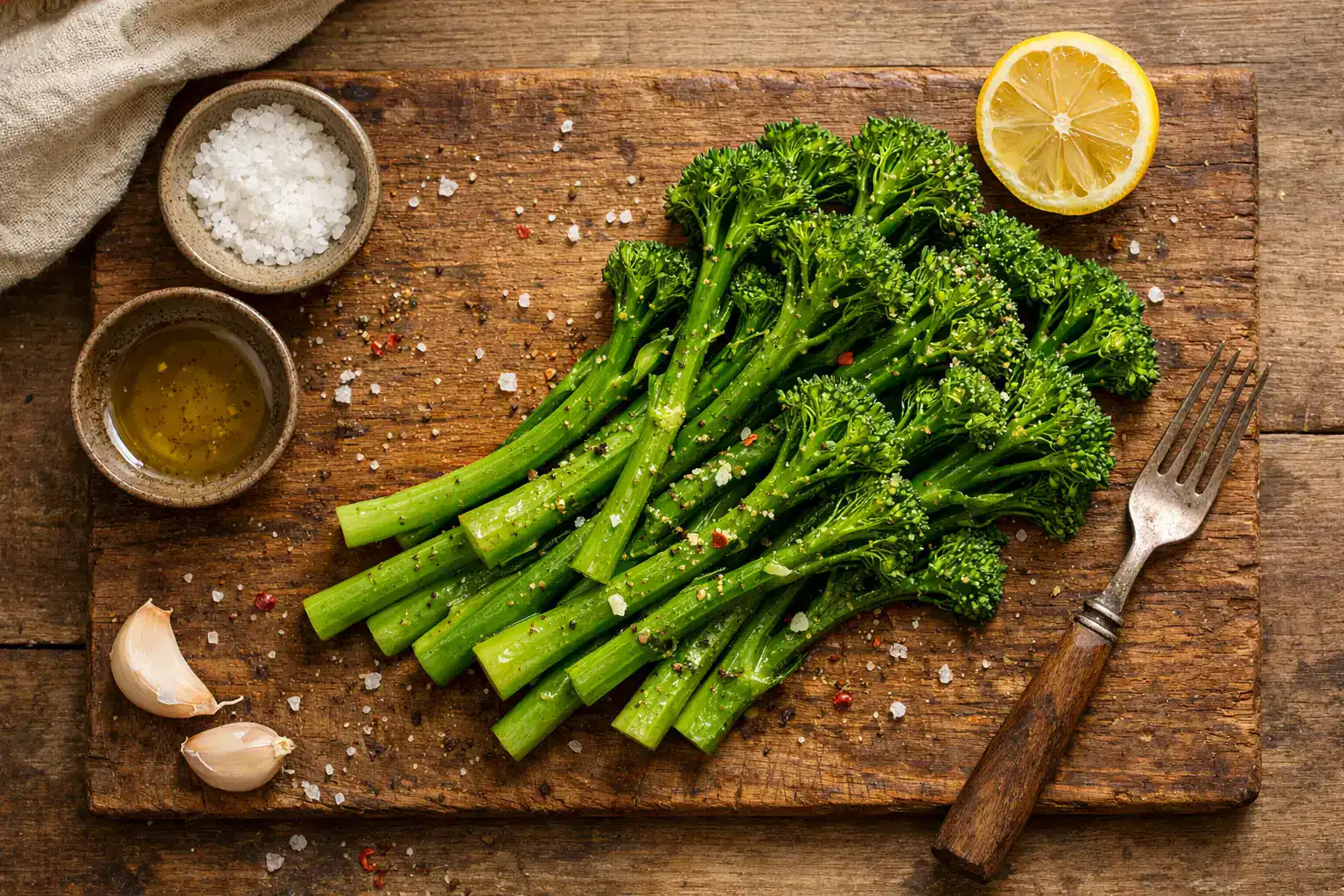
Quick Nutrition Facts
Per 1 Bunch Steamed Broccolini (85g)
| Nutrient | Amount |
|---|---|
| Calories | 29 kcal |
| Protein | 2.4g |
| Carbohydrates | 4.4g |
| Fiber | 2.2g |
| Sugars | 1.4g |
| Fat | 0.3g |
| Vitamin C | 79.2mg |
| Vitamin K | 86.4mcg |
| Folate | 54mcg |
| Potassium | 276mg |
Macronutrient Breakdown
 ChatGPT
  Claude
  AI Mode
  Perplexity
NUTRITIONIST INSIGHT
Broccolini delivers 104% of your daily vitamin C and 85% of vitamin K in just 100g, with only 34 calories. Steaming for 2-3 minutes preserves the most sulforaphane, a potent compound linked to cancer prevention and blood sugar regulation.
Myth Busters
MYTH #1: Broccolini and Broccoli Are the Same Vegetable
TRUTH: Broccolini is a distinct hybrid of broccoli and Chinese broccoli (gai lan), developed in Japan in 1993. It has thinner stems, smaller florets, and a milder, slightly sweet flavor. The two plants have different growing patterns and culinary uses.
MYTH #2: Raw Is Always Better Than Cooked
TRUTH: Steaming for 2-3 minutes actually preserves most glucosinolates while improving digestibility and releasing more bioavailable carotenoids. Boiling is the worst method as it leaches water-soluble nutrients.
MYTH #3: Cooking Destroys All the Nutrients
TRUTH: Steaming and stir-frying preserve the majority of vitamin C, vitamin K, and sulforaphane. Vitamin K is heat-stable. Only prolonged boiling significantly degrades nutrients.
MYTH #4: Broccolini Has No Protein
TRUTH: At 2.8g protein per 100g, broccolini has more protein than most vegetables. Per calorie, it delivers approximately 8g protein per 100 calories, making it one of the most protein-dense vegetables available.
MYTH #5: Baby Broccoli Is Just Immature Broccoli
TRUTH: Broccolini is a fully mature plant, a purpose-bred hybrid, not young broccoli harvested early. The name "baby broccoli" is a marketing term coined by Mann Packing Company in 1998.
MYTH #6: Cruciferous Vegetables Are Unsafe During Pregnancy
TRUTH: Broccolini is safe and beneficial during pregnancy. Its folate content (63 mcg/100g) supports neural tube development. The goitrogen concern only applies to extreme raw consumption, which is irrelevant at normal dietary amounts.
NutriScore by Health Goals
| Health Goal | NutriScore | Why This Score? |
|---|---|---|
| Weight Loss |  | Only 34 cal/100g with 2.6g fiber. One of the lowest-calorie, most nutrient-dense vegetables available. |
| Muscle Gain |  | 2.8g protein/100g is high for a vegetable. Rich in vitamin C which aids iron absorption and collagen synthesis for recovery. |
| Diabetes Management | | Very low GI (~15), glycemic load ~0.9. Cruciferous vegetable intake associated with lower type 2 diabetes risk. |
| PCOS Management | | Anti-inflammatory sulforaphane, high fiber, and minimal sugar help manage insulin resistance. |
| Pregnancy Nutrition | | Folate (63 mcg/100g) is essential for neural tube development. Also provides iron, calcium, and vitamin C for maternal health. |
| Viral/Flu Recovery | | 104% DV vitamin C per 100g boosts immunity. Easy to digest when steamed. Sulforaphane has anti-inflammatory properties. |
PERSONALIZED NUTRITION
Track your meals with NutriScan for personalized NutriScores based on your specific health goals!
Blood Sugar Response to Broccolini
Understanding how broccolini affects your blood glucose can help you make informed decisions about meal planning.
Typical Glucose Response Curve
*This chart shows typical blood glucose response for general healthy individuals. Individual responses may vary. Not medical advice.*
How to Flatten the Spike
With a glycemic load of just 0.9, broccolini causes virtually no blood sugar spike. Cruciferous vegetables actually reduce glycemic variability compared to root vegetables. Pair broccolini with other foods to build balanced, blood-sugar-friendly meals:
- 🥚 Eggs or tofu - Add protein for a complete low-GI meal
- 🫒 Olive oil or sesame oil - Healthy fats enhance nutrient absorption
- 🍚 Brown rice or quinoa - Broccolini's fiber slows carb absorption from grains
- 🥜 Almonds or cashews - Adds healthy fats and additional protein
This combination creates a nutrient-dense, blood-sugar-stable meal ideal for diabetes management and sustained energy.
Cultural Significance
Broccolini is a modern vegetable with a fascinating origin story, created through traditional plant breeding, not genetic modification.
Origin & Development:
- Created in 1993 in Yokohama, Japan by Sakata Seed Company
- Natural hybrid of broccoli (Brassica oleracea var. italica) and Chinese broccoli/gai lan (B. oleracea var. alboglabra)
- Originally named "Asparation" in Japan, referencing its asparagus-like stems
- Rebranded as "Broccolini" in 1998 by Mann Packing Company for the US market
Global Adoption:
- Now a staple in restaurant kitchens worldwide for its elegant presentation
- Known as "Tenderstem" in the UK, "Asparation" in Japan
- Grows well in warmer climates, expanding cruciferous vegetable availability
- Thin stems and small florets cook faster than traditional broccoli
In Indian Cuisine:
- Gaining popularity in urban Indian restaurants and health-conscious households
- Works well in Indian preparations: tadka, stir-fry with mustard seeds, or steamed with dal
- Complements traditional Indian spices like turmeric, cumin, and ginger
Compare & Substitute
Broccolini vs Similar Vegetables (Per 100g)
| Nutrient | 🥦 Broccolini | 🥦 Broccoli | 🥬 Kale | 🫛 Asparagus |
|---|---|---|---|---|
| Calories | 34 kcal | 34 kcal | 49 kcal | 20 kcal |
| Carbs | 5.2g | 6.6g | 8.8g | 3.9g |
| Fiber | 2.6g | 2.6g | 3.6g | 2.1g |
| Protein | 2.8g | 2.8g | 4.3g | 2.2g |
| Fat | 0.4g | 0.4g | 0.9g | 0.1g |
| Vitamin C | 93.2mg | 89.2mg | 120mg | 5.6mg |
| Vitamin K | 101.6mcg | 101.4mcg | 389.6mcg | 41.6mcg |
| Potassium | 325mg | 316mg | 491mg | 202mg |
| Best For | Low-cal meals, quick cooking | Roasting, soups, stir-fry | Smoothies, salads, chips | Grilling, roasting, salads |
Frequently Asked Questions
How many calories are in steamed broccolini?
Steamed broccolini has approximately 34 calories per 100g or 29 calories per bunch (85g). It is one of the lowest-calorie vegetables available, making it an excellent choice for weight loss and calorie-conscious diets.
Per 100g breakdown: 2.8g protein, 5.2g carbs (2.6g fiber, 1.7g sugar), 0.4g fat.
Is broccolini the same as broccoli?
No. Broccolini is a hybrid of broccoli and Chinese broccoli (gai lan), created by Sakata Seed Company in Japan in 1993. Key differences:
- Thinner, longer stems (entirely edible)
- Smaller, looser florets
- Milder, slightly sweeter flavor
- Cooks faster (2-3 minutes vs 5-7 for broccoli)
- Slightly higher vitamin C content
Is broccolini good for diabetics?
Yes, broccolini is excellent for diabetes management. With a glycemic index of approximately 15 and a glycemic load of just 0.9, it causes virtually no blood sugar spike.
Key benefits for diabetics: Very low carbs (5.2g/100g), high fiber (2.6g), sulforaphane may reduce fasting blood sugar, and cruciferous vegetable intake is linked to lower type 2 diabetes risk. Always consult your healthcare provider.
What are the main health benefits of broccolini?
Key Benefits:
- Cancer Prevention: Sulforaphane and glucosinolates have potent chemopreventive properties
- Immune Support: 104% DV vitamin C per 100g strengthens immune function
- Bone Health: 85% DV vitamin K supports calcium metabolism and bone density
- Pregnancy Support: 16% DV folate aids neural tube development
- Blood Sugar Control: Very low GI with fiber that slows glucose absorption
- Heart Health: Potassium, fiber, and anti-inflammatory compounds support cardiovascular function
What is the best way to cook broccolini?
Ranked by nutrient preservation:
- Steaming (2-3 min): Best method. Preserves sulforaphane, vitamin C, and glucosinolates
- Stir-frying (3-4 min): Good retention. Quick, high heat minimizes nutrient loss
- Roasting (10-12 min at 200C): Moderate loss. Develops caramelized flavor
- Boiling: Worst method. Leaches water-soluble vitamins and bioactive compounds into water
IMPORTANT NOTE
Add a squeeze of lemon after cooking to boost vitamin C and iron absorption.
How much broccolini should I eat per day?
General Guidelines:
- 1-2 bunches daily (85-170g) - Most people, for general health
- 2-3 bunches daily - Weight loss, diabetes management, increased vegetable intake
- 1 bunch daily - Those on blood thinners (high vitamin K; consult your doctor)
Track your meals with NutriScan app to see how broccolini fits your personal nutrition goals.




Similar Nutritious Foods
4505 Chicharrones Classic Chili Salt
7 Eleven Japan Crispy Corn Cheese
Explore More Nutrition Tools & Resources
AI Calorie Counter App - Snap a Photo, Get Macros
AI Nutritionist App That Reads Your Logged Meals
Best Protein Supplements for Women
Bulking Meal Plan App That Sets Your Surplus
ChatGPT Calorie Counter Alternative That Keeps the Total
ChatGPT Diet Plan Alternative That Tracks What You Eat
ChatGPT Weight Loss Coach Alternative With a Food Log
Fast Food Calorie Counter App That Reads the Tray
Free Calorie Tracker App with AI Photo Scans | NutriScan
Indian Diet Plan App With Veg and Non Veg Meals
Indian Food Calorie Calculator - Get Instant Nutrition Facts for Desi Meals — 2026
Intermittent Fasting for Women, Timer and Meal Log App
Intermittent Fasting Tracker App - Free Fasting Timer
Macro Tracker App That Fills the Numbers From a Photo
Mediterranean Diet Meal Plan App That Counts the Oil
Micronutrient Tracker App for Vitamins and Minerals
MyFitnessPal Alternative That Stays Free | NutriScan
NutriScore App: A Free Grade on Every Meal | NutriScan
Nutrition Label Scanner App for the Amount You Ate
Second Trimester Protein Guide
Vegetarian Meal Plan App With a Protein Target
Voice Calorie Counter - Speak to Track Meals Hands-Free
Water and Calorie Tracker App - Free Water Log