Bulgogi: Calories, Nutrition and Health Benefits
Korea's beloved marinated beef, bulgogi delivers exceptional protein with a sweet-savory flavor that makes healthy eating delicious.
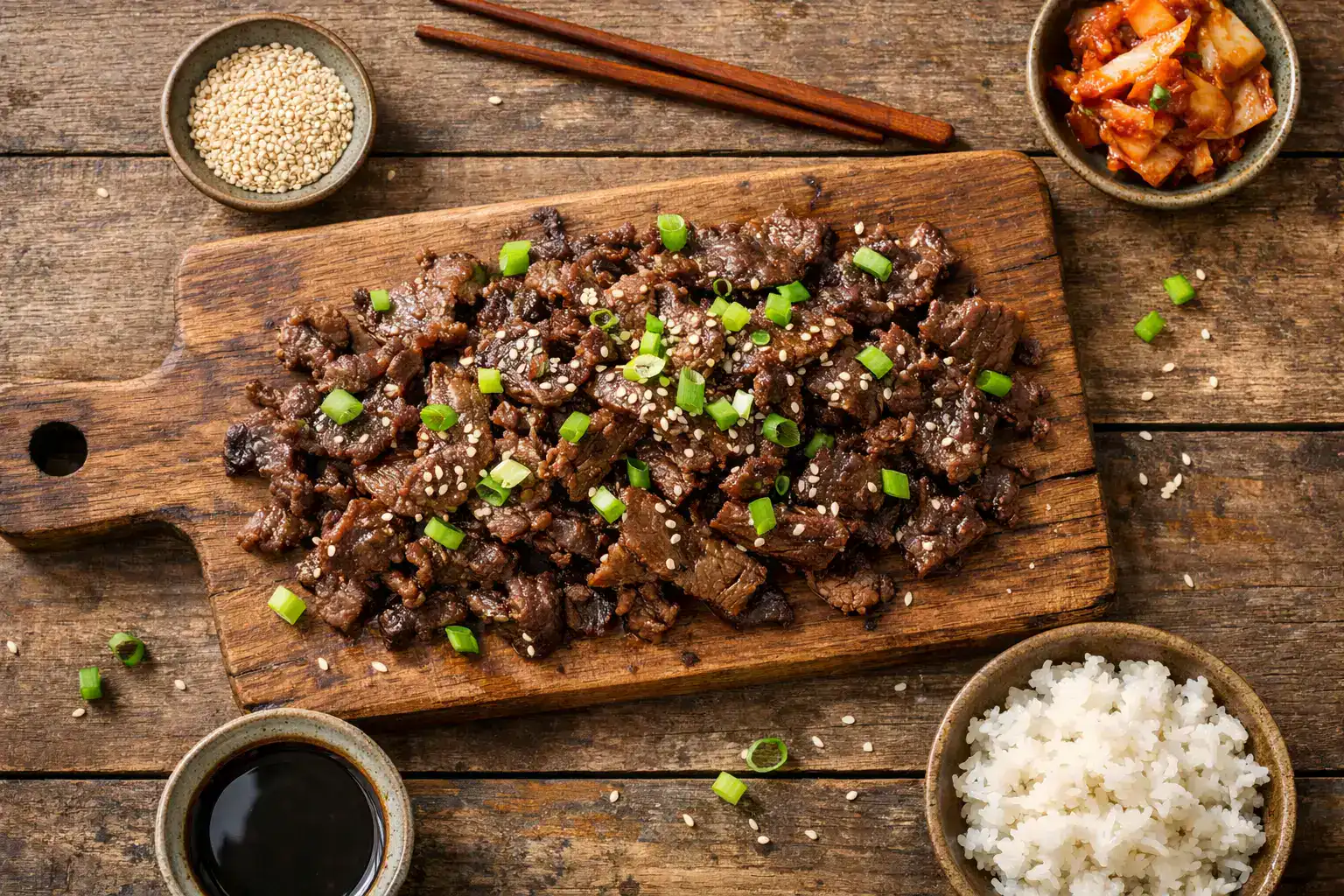
Quick Nutrition Facts
Per 1 Serving (150g cooked)
| Nutrient | Amount |
|---|---|
| Calories | 282 kcal |
| Protein | 35g |
| Carbohydrates | 15g |
| Fiber | 0.5g |
| Sugars | 12g |
| Fat | 9g |
| Iron | 3.2mg |
| Zinc | 6.5mg |
| Vitamin B12 | 2.8mcg |
| Sodium | 680mg |
Macronutrient Breakdown
 ChatGPT
  Claude
  AI Mode
  Perplexity
NUTRITIONIST INSIGHT
Bulgogi provides 35g of complete protein per serving with all essential amino acids. The traditional marinade with garlic, sesame, and pear contains antioxidants that may help reduce harmful compounds formed during cooking.
Myth Busters
MYTH #1: Bulgogi Is Too High in Fat
TRUTH: Traditional bulgogi uses lean cuts like sirloin, containing only 9g fat per serving. The protein-to-fat ratio is excellent for muscle building. Choose leaner cuts to reduce fat further.
MYTH #2: The Sugar in Bulgogi Makes It Unhealthy
TRUTH: While bulgogi marinade contains sugar (12g per serving), the overall glycemic impact is moderated by the high protein content. Marinating meat in acidic ingredients actually reduces harmful AGE formation during cooking.
MYTH #3: Red Meat Should Be Avoided Completely
TRUTH: Lean red meat like bulgogi provides highly bioavailable iron, zinc, and B12 that are harder to obtain from plant sources. Moderate consumption (2-3 servings weekly) fits a balanced diet.
MYTH #4: Bulgogi Is Only a High-Calorie Indulgence
TRUTH: At 282 calories per serving with 35g protein, bulgogi has excellent nutrient density. The protein promotes satiety, making it suitable for weight management when portion-controlled.
MYTH #5: Grilled Meat Is Always Carcinogenic
TRUTH: Traditional bulgogi is quickly grilled over high heat, minimizing char formation. Marinades with acidic ingredients (pear, vinegar) reduce AGE formation by up to 50% compared to unmarinated meat.
NutriScore by Health Goals
| Health Goal | NutriScore | Why This Score? |
|---|---|---|
| Weight Loss |  | High protein (35g) promotes satiety. Watch marinade sugar and pair with vegetables instead of rice. |
| Muscle Gain |  | Excellent complete protein source with all essential amino acids. Iron and zinc support muscle recovery and growth. |
| Diabetes Management |  | Moderate carbs from marinade (15g). Choose low-sugar recipes, smaller portions, pair with fiber-rich vegetables. |
| PCOS Management | | Good protein helps blood sugar stability. Limit sugar in marinade and choose lean cuts. |
| Pregnancy Nutrition | | Excellent iron source (3.2mg) for increased blood volume needs. B12 supports fetal development. Ensure meat is well-cooked. |
| Viral/Flu Recovery | | High-quality protein supports immune function. Zinc (6.5mg) aids recovery. Garlic in marinade adds immune benefits. |
PERSONALIZED NUTRITION
Track your meals with NutriScan for personalized NutriScores based on your specific health goals!
Blood Sugar Response to Bulgogi
Understanding how bulgogi affects your blood glucose can help you make informed decisions about when and how to eat it.
Typical Glucose Response Curve
*This chart shows typical blood glucose response for general healthy individuals. Individual responses may vary. Not medical advice.*
How to Flatten the Spike
Pairing bulgogi with fiber and eating protein first slows glucose absorption and reduces the peak blood sugar level:
- 🥬 Lettuce wraps (ssam) - Traditional serving method adds fiber, reduces carbs vs rice
- 🥒 Pickled vegetables (banchan) - Fermented sides slow digestion
- 🍚 Cauliflower rice - Low-carb alternative to white rice
- 🥗 Large green salad - Fiber first, then protein, then any carbs
This combination not only reduces the glucose spike but also extends energy release, keeping you fuller for longer.
Cultural Significance
Bulgogi ("fire meat") has been a cornerstone of Korean cuisine for over 2,000 years, dating back to the Goguryeo era.
In Korea:
- Served at celebrations, holidays (Chuseok, Lunar New Year), and family gatherings
- Traditionally grilled at the table on a dome-shaped pan (bulgogi pan)
- Represents Korean hospitality and is often the first dish served to honored guests
- Regional variations exist across the peninsula with different marinades
Global Impact:
- One of the most recognized Korean dishes worldwide alongside kimchi and bibimbap
- Korean Wave (Hallyu) has spread bulgogi to restaurants globally
- Adaptable to various dietary needs (lettuce wraps for low-carb, lean cuts for health-conscious)
- Growing popularity in meal prep communities for high-protein convenience
Compare & Substitute
Bulgogi vs Similar Protein Sources (Per 100g)
| Nutrient | 🥩 Bulgogi | 🍖 Grilled Chicken | 🐟 Grilled Salmon | 🥓 Bacon |
|---|---|---|---|---|
| Calories | 188 kcal | 165 kcal | 208 kcal | 541 kcal |
| Carbs | 10g | 0g | 0g | 1.4g |
| Fiber | 0.3g | 0g | 0g | 0g |
| Protein | 23g | 31g | 20g | 37g |
| Fat | 6g | 3.6g | 13g | 42g |
| Iron | 2.1mg | 1.0mg | 0.8mg | 0.7mg |
| Zinc | 4.3mg | 1.0mg | 0.6mg | 2.0mg |
| B12 | 1.9mcg | 0.3mcg | 3.2mcg | 0.8mcg |
| Best For | Muscle gain, iron boost | Low-fat protein | Omega-3, heart health | Flavor only (limit intake) |
Frequently Asked Questions
Is bulgogi good for muscle gain?
Yes, bulgogi is excellent for muscle gain with 35g of complete protein per serving containing all essential amino acids. The beef provides highly bioavailable iron and zinc that support muscle recovery and growth.
Best practices: Eat within 2 hours post-workout, pair with complex carbs for glycogen replenishment, choose lean sirloin cuts.
Can diabetics eat bulgogi?
Diabetics can eat bulgogi in moderation. The traditional marinade contains sugar (10-15g carbs per serving), which affects blood glucose.
Tips for diabetics:
- Choose recipes with reduced sugar or sugar substitutes
- Serve in lettuce wraps instead of with rice
- Limit portion to 100g (125 calories, 10g carbs)
- Pair with high-fiber vegetables
Monitor blood sugar 2 hours after eating. Always consult your healthcare provider.
How many calories are in bulgogi?
A typical 150g serving of bulgogi contains approximately 280-300 calories. Per 100g, bulgogi has about 188 calories, making it a moderate-calorie protein source.
The calorie content varies based on:
- Cut of beef (ribeye has more fat than sirloin)
- Amount of sugar in marinade
- Cooking method and added oils
What are the main health benefits of bulgogi?
Key Benefits:
- Muscle Building: 35g complete protein with all essential amino acids
- Iron Boost: 3.2mg iron (18% DV) for oxygen transport and energy
- Immune Support: 6.5mg zinc supports immune function
- Nerve Health: 2.8mcg B12 (117% DV) for neurological function
- Antioxidants: Garlic, sesame, and pear in marinade provide protective compounds
- Reduced AGEs: Acidic marinade reduces harmful compound formation during cooking
What is the best cut of beef for bulgogi?
Traditional choices:
- Ribeye - Most flavorful, marbled fat, tender (higher fat)
- Sirloin - Leaner, still tender when sliced thin (best balance)
Lean alternatives:
- Flank steak - Very lean, requires thin slicing
- Top round - Budget-friendly, lean
Key preparation tip: Always slice against the grain, very thin (2-3mm), while meat is partially frozen for easier cutting.
Is bulgogi safe during pregnancy?
Bulgogi is safe and nutritious during pregnancy when properly cooked. It provides iron (prevents anemia), B12 (supports fetal development), and high-quality protein.
Safety requirements:
- Cook to internal temperature of 160°F (71°C)
- Avoid rare or medium-rare preparation
- Use fresh, properly stored meat
- Limit sodium intake if watching blood pressure
How should I store leftover bulgogi?
Refrigerator: Store in airtight container for 3-4 days. Reheat to 165°F (74°C).
Freezer: Marinated raw bulgogi freezes well for 2-3 months. Thaw in refrigerator overnight before cooking.
Meal prep tip: Cook bulgogi, portion into containers with vegetables, refrigerate for quick high-protein meals throughout the week.




Similar Nutritious Foods
4505 Chicharrones Classic Chili Salt
7 Eleven Japan Crispy Corn Cheese
Explore More Nutrition Tools & Resources
AI Calorie Counter App - Snap a Photo, Get Macros
AI Nutritionist App That Reads Your Logged Meals
Best Protein Supplements for Women
Bulking Meal Plan App That Sets Your Surplus
ChatGPT Calorie Counter Alternative That Keeps the Total
ChatGPT Diet Plan Alternative That Tracks What You Eat
ChatGPT Weight Loss Coach Alternative With a Food Log
Fast Food Calorie Counter App That Reads the Tray
Free Calorie Tracker App with AI Photo Scans | NutriScan
Indian Diet Plan App With Veg and Non Veg Meals
Indian Food Calorie Calculator - Get Instant Nutrition Facts for Desi Meals — 2026
Intermittent Fasting for Women, Timer and Meal Log App
Intermittent Fasting Tracker App - Free Fasting Timer
Macro Tracker App That Fills the Numbers From a Photo
Mediterranean Diet Meal Plan App That Counts the Oil
Micronutrient Tracker App for Vitamins and Minerals
MyFitnessPal Alternative That Stays Free | NutriScan
NutriScore App: A Free Grade on Every Meal | NutriScan
Nutrition Label Scanner App for the Amount You Ate
Second Trimester Protein Guide
Vegetarian Meal Plan App With a Protein Target
Voice Calorie Counter - Speak to Track Meals Hands-Free
Water and Calorie Tracker App - Free Water Log