Bun Cha: Calories, Nutrition and Health Benefits
Hanoi's iconic grilled pork and noodle dish, packed with protein, fresh herbs, and bold Vietnamese flavors in every bite.
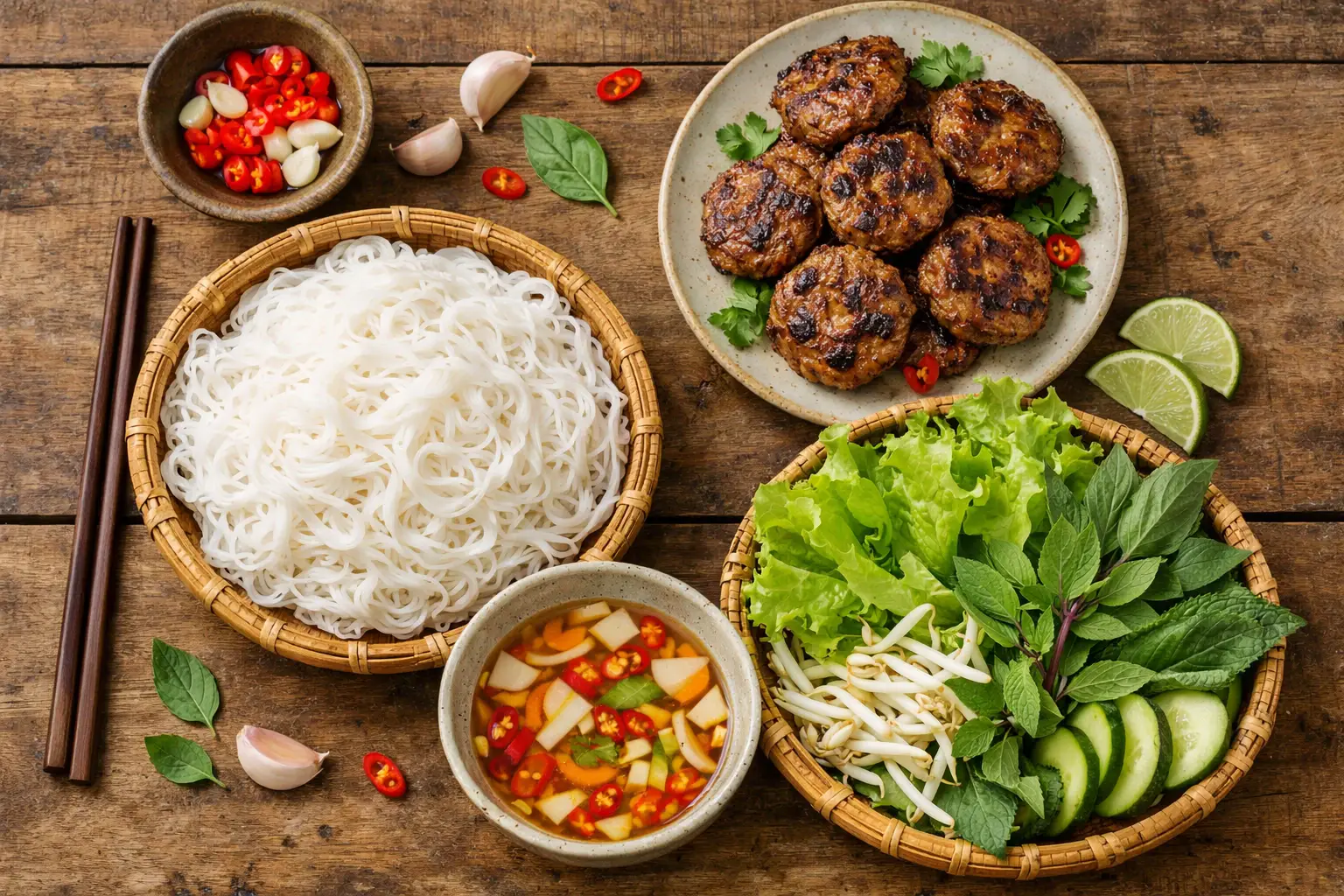
Quick Nutrition Facts
Per 1 Serving (350g)
| Nutrient | Amount |
|---|---|
| Calories | 420 kcal |
| Protein | 25g |
| Carbohydrates | 42g |
| Fiber | 3g |
| Sugars | 8g |
| Fat | 18g |
| Saturated Fat | 6g |
| Sodium | 890mg |
| Iron | 2.8mg |
| Zinc | 3.2mg |
Macronutrient Breakdown
 ChatGPT
  Claude
  AI Mode
  Perplexity
NUTRITIONIST INSIGHT
Bun cha delivers 25g of complete protein per serving, making it an excellent muscle-building meal. The fresh herbs (mint, perilla, cilantro) add antioxidants and digestive benefits. Balance the sodium from fish sauce by increasing vegetable portions.
Myth Busters
MYTH #1: Bun Cha Is Too Fatty to Be Healthy
TRUTH: While pork contains fat, a properly prepared bun cha uses grilled (not fried) meat, which reduces fat content. Pork provides high-quality complete protein with all essential amino acids, plus important B vitamins and zinc for immune function.
MYTH #2: Rice Noodles Cause Blood Sugar Spikes
TRUTH: Rice vermicelli has a moderate glycemic index of 39-61, lower than white rice. When eaten with protein-rich pork and fiber from fresh vegetables, the blood sugar response is further moderated.
MYTH #3: Vietnamese Food Is Always High in Sodium
TRUTH: While fish sauce contains sodium, bun cha emphasizes fresh herbs and vegetables. You control sodium intake by using less dipping sauce. The potassium in fresh vegetables helps balance sodium effects.
MYTH #4: Grilled Meat Is Carcinogenic
TRUTH: Moderate consumption of grilled meat is safe. The risk comes from charring and high-temperature cooking. Marinating meat (as in bun cha) and eating with fresh vegetables provides protective antioxidants that offset potential risks.
MYTH #5: Bun Cha Is Not Suitable for Weight Loss
TRUTH: At 420 calories with 25g protein, bun cha can fit into a weight loss plan. Protein promotes satiety, fresh herbs add volume without calories, and you can reduce noodle portions. It's more satisfying than many diet foods.
NutriScore by Health Goals
| Health Goal | NutriScore | Why This Score? |
|---|---|---|
| Weight Loss |  | 420 calories, high protein (25g) for satiety. Reduce noodle portion and increase herbs for lower calories. |
| Muscle Gain |  | Excellent protein source (25g complete protein), carbs for energy, zinc and iron support muscle function. |
| Diabetes Management |  | Moderate GI noodles. Pair protein with reduced noodles, increase vegetables to manage blood sugar response. |
| PCOS Management | | Moderate carbs affect insulin. Choose lean pork, reduce noodles to half portion, maximize fresh vegetables. |
| Pregnancy Nutrition | | Good protein and iron for fetal development. Ensure pork is thoroughly cooked, moderate sodium intake. |
| Viral/Flu Recovery | | Warm broth soothes throat, protein supports immune function, fresh herbs provide vitamin C and antioxidants. |
PERSONALIZED NUTRITION
Track your meals with NutriScan for personalized NutriScores based on your specific health goals!
Blood Sugar Response to Bun Cha
Understanding how bun cha affects your blood glucose can help you make informed decisions about when and how to eat it.
Typical Glucose Response Curve
This chart shows typical blood glucose response for general healthy individuals. Individual responses may vary. Not medical advice.
How to Flatten the Spike
Pairing carbohydrates with protein slows glucose absorption and reduces the peak blood sugar level:
- 🥗 Eat vegetables and herbs first - Fiber slows carbohydrate absorption
- 🍖 Consume pork before noodles - Protein buffers glucose response
- 🥢 Reduce noodle portion by half - Less carbs means smaller spike
- 🌿 Add extra fresh vegetables - Lettuce, cucumber, herbs add fiber and volume
This combination not only reduces the glucose spike but also extends energy release, keeping you fuller for longer.
Cultural Significance
Bun cha is the quintessential dish of Hanoi, representing the culinary soul of Vietnam's capital city.
In Vietnam:
- Originated in Hanoi and remains the city's most iconic street food
- Traditionally eaten for lunch, served from small sidewalk stalls
- Made famous globally when President Obama and Anthony Bourdain shared bun cha in Hanoi in 2016
- The dish showcases Vietnamese balance philosophy: hot-cold, savory-sweet, fresh-grilled
Global Impact:
- Introduced Vietnamese cuisine to millions through the Obama-Bourdain lunch
- Vietnamese restaurants worldwide now feature bun cha as a signature dish
- Represents the fresh, herb-forward approach that defines Vietnamese cooking
- Part of Vietnam's growing soft power through culinary diplomacy
Compare & Substitute
Bun Cha vs Similar Vietnamese Dishes (Per Serving)
| Nutrient | 🍖 Bun Cha | 🍜 Pho Bo | 🥗 Bun Thit Nuong | 🍲 Banh Mi |
|---|---|---|---|---|
| Calories | 420 kcal | 380 kcal | 450 kcal | 520 kcal |
| Carbs | 42g | 48g | 52g | 58g |
| Fiber | 3g | 2g | 4g | 3g |
| Protein | 25g | 22g | 24g | 28g |
| Fat | 18g | 12g | 18g | 22g |
| Sodium | 890mg | 1200mg | 820mg | 980mg |
| Best For | Muscle gain, protein-focused | Light meal, cold weather | Balanced nutrition | Quick energy, on-the-go |
Frequently Asked Questions
Is bun cha healthy?
Bun cha offers solid nutritional value with 25g protein per serving. The dish combines grilled lean protein, fresh vegetables, and aromatic herbs. Balance the 890mg sodium by using less dipping sauce and adding extra vegetables.
Health benefits:
- Complete protein for muscle building
- Fresh herbs provide antioxidants
- Lower fat than many grilled meat dishes
- Customizable portions for dietary goals
How many calories are in bun cha?
A typical restaurant serving contains 420 calories with this breakdown: 42g carbohydrates, 25g protein, and 18g fat. Homemade versions can be lighter (350-400 calories) by using lean pork and reducing noodles.
Can diabetics eat bun cha?
Diabetics can enjoy bun cha with modifications. Rice vermicelli has a moderate glycemic index (39-61).
Tips for diabetics:
- Reduce noodle portion to 1/2 cup
- Eat the pork and vegetables first
- Add extra fresh vegetables and herbs
- Monitor blood sugar 2 hours after eating
The protein from pork helps moderate blood sugar response when eaten together with noodles.
What is bun cha made of?
Main components:
- Grilled pork patties - Seasoned ground pork formed into small patties
- Grilled pork belly slices - Marinated and charred for smoky flavor
- Rice vermicelli - Cold, thin rice noodles
- Dipping broth - Fish sauce, vinegar, sugar, garlic, chili
- Fresh herbs - Mint, perilla, cilantro, lettuce
Is bun cha good for muscle building?
Bun cha is excellent for muscle building. With 25g of complete protein containing all essential amino acids, plus 2.8mg iron and 3.2mg zinc per serving, it supports muscle repair and growth. The carbohydrates help replenish glycogen after workouts.
Best timing: Consume within 2 hours post-workout for optimal muscle recovery.
How can I make bun cha healthier?
Healthier preparation tips:
- Use 90% lean ground pork instead of fatty cuts
- Grill over moderate heat to reduce charring
- Reduce sugar in dipping sauce by half
- Use low-sodium fish sauce
- Double the fresh herbs and vegetables
- Reduce noodle portion by 1/3
What's the difference between bun cha and bun thit nuong?
Both are Vietnamese noodle dishes with grilled pork, but preparation differs:
- Bun Cha (Hanoi style): Pork served IN a warm dipping broth, noodles served separately cold
- Bun Thit Nuong (Southern style): Grilled pork served ON TOP of cold noodles with sauce drizzled over
Bun cha has a distinctive hot-cold, wet-dry contrast unique to Hanoi cuisine.


Similar Nutritious Foods
4505 Chicharrones Classic Chili Salt
7 Eleven Japan Crispy Corn Cheese
Explore More Nutrition Tools & Resources
AI Calorie Counter App - Snap a Photo, Get Macros
AI Nutritionist App That Reads Your Logged Meals
Best Protein Supplements for Women
Bulking Meal Plan App That Sets Your Surplus
ChatGPT Calorie Counter Alternative That Keeps the Total
ChatGPT Diet Plan Alternative That Tracks What You Eat
ChatGPT Weight Loss Coach Alternative With a Food Log
Fast Food Calorie Counter App That Reads the Tray
Free Calorie Tracker App with AI Photo Scans | NutriScan
Indian Diet Plan App With Veg and Non Veg Meals
Indian Food Calorie Calculator - Get Instant Nutrition Facts for Desi Meals — 2026
Intermittent Fasting for Women, Timer and Meal Log App
Intermittent Fasting Tracker App - Free Fasting Timer
Macro Tracker App That Fills the Numbers From a Photo
Mediterranean Diet Meal Plan App That Counts the Oil
Micronutrient Tracker App for Vitamins and Minerals
MyFitnessPal Alternative That Stays Free | NutriScan
NutriScore App: A Free Grade on Every Meal | NutriScan
Nutrition Label Scanner App for the Amount You Ate
Second Trimester Protein Guide
Vegetarian Meal Plan App With a Protein Target
Voice Calorie Counter - Speak to Track Meals Hands-Free
Water and Calorie Tracker App - Free Water Log