Burrata Cheese: Calories, Nutrition and Health Benefits
Italy's creamiest cheese treasure: a delicate mozzarella shell filled with rich stracciatella and cream, delivering exceptional protein and calcium.
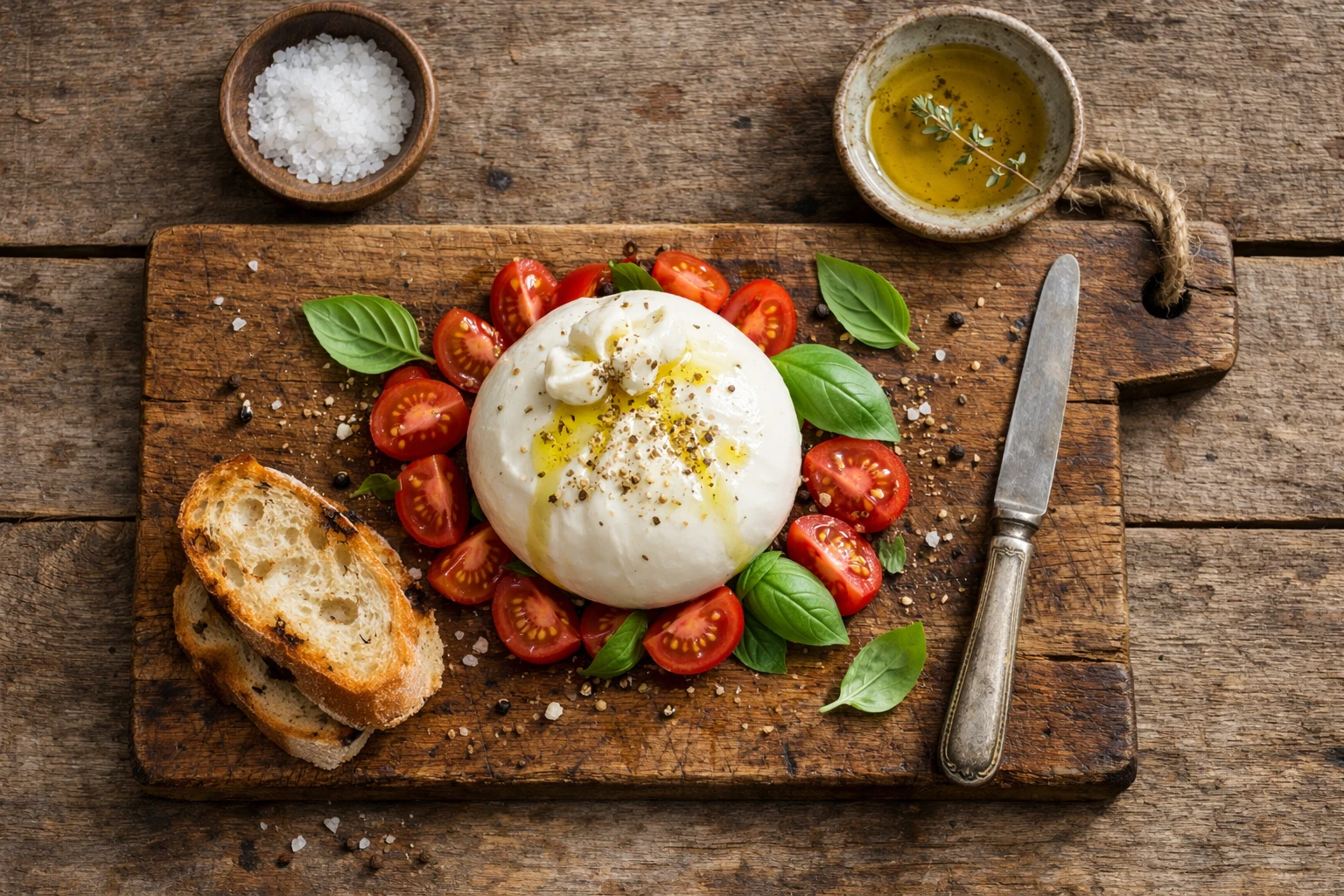
Quick Nutrition Facts
Per 100g Burrata Cheese
| Nutrient | Amount |
|---|---|
| Calories | 330 kcal |
| Protein | 18g |
| Carbohydrates | 1g |
| Fat | 28g |
| Saturated Fat | 18g |
| Calcium | 350mg |
| Sodium | 200mg |
| Vitamin A | 850 IU |
| Phosphorus | 280mg |
Macronutrient Breakdown
 ChatGPT
  Claude
  AI Mode
  Perplexity
NUTRITIONIST INSIGHT
Burrata delivers 18g of complete protein per 100g along with 35% of daily calcium needs. The cream center provides conjugated linoleic acid (CLA), a fatty acid linked to anti-inflammatory benefits. Best enjoyed fresh within 2-3 days.
Myth Busters
MYTH #1: Burrata Is Too Fattening to Eat Regularly
TRUTH: While calorie-dense (330 cal per 100g), moderate cheese consumption (40g daily) is associated with reduced cardiovascular risk. The key is portion control: 30-50g provides protein and calcium without excessive calories.
MYTH #2: All Cheese Is Bad for Heart Health
TRUTH: Full-fat dairy including burrata contains beneficial nutrients like vitamin K2 and CLA. Recent research shows full-fat dairy doesn't increase heart disease risk when consumed as part of a balanced diet.
MYTH #3: Burrata Has No Nutritional Value
TRUTH: Burrata provides 18g high-quality protein, 350mg calcium (35% DV), vitamin A for eye health, and phosphorus for bone strength. It's nutrient-dense, not empty calories.
MYTH #4: Lactose-Intolerant People Cannot Eat Burrata
TRUTH: Burrata contains minimal lactose (1-2g per 100g) as most lactose is removed during cheese-making. Many lactose-intolerant individuals can tolerate small portions of fresh cheese, though individual tolerance varies.
MYTH #5: Burrata Is Just Fancy Mozzarella
TRUTH: Burrata has a mozzarella shell filled with stracciatella (shredded mozzarella) and cream, creating a unique creamy center. It's richer in fat (28g vs 21g) and calories (330 vs 280 per 100g) than regular mozzarella.
MYTH #6: You Should Eat Burrata Straight from the Fridge
TRUTH: Burrata's flavor and texture peak at room temperature. Remove from refrigeration 30 minutes before serving for optimal creaminess and taste. Cold burrata loses its signature silky texture.
NutriScore by Health Goals
| Health Goal | NutriScore | Why This Score? |
|---|---|---|
| Weight Loss |  | High calories (330 per 100g) and fat. Limit to 30-50g portions; 18g protein aids satiety. |
| Muscle Gain |  | Excellent protein (18g) and calories for muscle building, rich in leucine for protein synthesis. |
| Diabetes Management | | Only 1g carbs, minimal blood sugar impact. High-fat dairy may improve insulin sensitivity. |
| PCOS Management |  | Low-carb, high-protein; supports hormone balance. Moderate portions (50g) recommended. |
| Pregnancy Nutrition | | Calcium (350mg) and protein support fetal development. Ensure pasteurized milk source to avoid listeria. |
| Viral/Flu Recovery | | High protein supports immune function, easily digestible, provides energy and nutrients for recovery. |
PERSONALIZED NUTRITION
Track your meals with NutriScan for personalized NutriScores based on your specific health goals! Use our Online Macro Calculator to find your daily nutrition targets.
Blood Sugar Response to Burrata
Understanding how burrata affects your blood glucose helps with meal planning, especially for low-carb diets.
Typical Glucose Response Curve
*This chart shows typical blood glucose response for general healthy individuals. Individual responses may vary. Not medical advice.*
How to Pair Burrata for Balanced Meals
Combining burrata with fiber-rich foods creates balanced nutrition and enhances satisfaction:
- 🍅 Fresh tomatoes and basil - Classic caprese adds fiber and antioxidants
- 🥗 Mixed greens and arugula - Provides vitamins and balances richness
- 🥖 Whole grain bread (small portion) - Adds fiber and complex carbs
- 🫒 Olives and roasted vegetables - Mediterranean pairing with healthy fats
This combination delivers complete nutrition while keeping blood sugar stable.
Cultural Significance
Burrata originated in Puglia, Italy, in the early 20th century as a resourceful way to use leftover mozzarella scraps mixed with cream.
In Italy:
- Traditional Puglian specialty from Andria region
- Name means "buttered" in Italian, referring to creamy texture
- Historically consumed within 24 hours of production
- Symbol of Italian artisan cheese-making craftsmanship
Global Impact:
- Exploded in popularity worldwide during 2010s
- Top trending food in Australia 2025
- Restaurant staple from fine dining to casual Italian eateries
- Craft burrata-making spreading to artisan dairies globally
Compare & Substitute
Burrata vs Similar Cheeses (Per 100g)
| Nutrient | 🧀 Burrata | 🧀 Fresh Mozzarella | 🧀 Ricotta | 🧀 Stracciatella |
|---|---|---|---|---|
| Calories | 330 kcal | 280 kcal | 174 kcal | 340 kcal |
| Protein | 18g | 22g | 11g | 17g |
| Fat | 28g | 21g | 13g | 30g |
| Carbs | 1g | 3g | 3g | 1g |
| Calcium | 350mg | 505mg | 207mg | 320mg |
| Sodium | 200mg | 373mg | 84mg | 180mg |
| Best For | Appetizers | Pizza, salads | Pasta, desserts | Pasta, bruschetta |
Frequently Asked Questions
Is burrata cheese good for weight loss?
Burrata is calorie-dense (330 cal per 100g) and high in fat (28g), making it challenging for weight loss. However, 18g protein per 100g promotes satiety and muscle preservation during calorie restriction.
Best practices: Limit to 30-50g portions; pair with vegetables and leafy greens; track calories carefully; choose as occasional treat rather than daily staple.
Can diabetics eat burrata cheese?
Yes, diabetics can safely eat burrata. With only 1g carbs per 100g, it has minimal blood sugar impact. The high fat and protein content actually helps stabilize glucose levels.
Tips for diabetics:
- Pair with non-starchy vegetables (tomatoes, arugula, cucumber)
- Avoid pairing with white bread; choose whole grain if desired
- Monitor portion sizes to manage calorie intake
- Excellent for low-carb meal plans
How much protein is in burrata?
Burrata contains 18g of protein per 100g. This is high-quality complete protein with all essential amino acids. A typical 50g serving provides 9g protein.
For muscle gain or high-protein diets, burrata is an excellent choice, though portion control is important due to high calories.
What are the main health benefits of burrata?
Key Benefits:
- Muscle Health: 18g complete protein supports muscle maintenance and growth
- Bone Strength: 350mg calcium (35% DV) maintains bone density
- Eye Health: Vitamin A supports vision and immune function
- Anti-Inflammatory: Contains conjugated linoleic acid (CLA) with potential benefits
- Low-Carb Friendly: Only 1g carbs per 100g
- Satiety: High protein and fat promote fullness
What is the difference between burrata and mozzarella?
Structure: Burrata has a mozzarella shell filled with stracciatella (shredded mozzarella) and cream; mozzarella is solid throughout.
Nutrition (per 100g):
- Burrata: 330 cal, 28g fat, 18g protein
- Mozzarella: 280 cal, 21g fat, 22g protein
Texture: Burrata is creamier with liquid center; mozzarella is firmer and drier.
Usage: Burrata best fresh as appetizer; mozzarella melts well for cooking.
How should burrata be stored and served?
Storage: Keep burrata in its original brine; refrigerate at 2-4°C; consume within 2-3 days of opening. Once cut, eat immediately as it doesn't store well.
Serving: Remove from refrigeration 30 minutes before serving; serve at room temperature for optimal flavor and creamy texture; cut open just before serving to preserve freshness.
Signs of spoilage: Sour smell, yellowing, or separation indicates spoilage; discard if brine is cloudy or cheese feels slimy.




Similar Nutritious Foods
4505 Chicharrones Classic Chili Salt
7 Eleven Japan Crispy Corn Cheese
Explore More Nutrition Tools & Resources
AI Calorie Counter App - Snap a Photo, Get Macros
AI Nutritionist App That Reads Your Logged Meals
Best Protein Supplements for Women
Bulking Meal Plan App That Sets Your Surplus
ChatGPT Calorie Counter Alternative That Keeps the Total
ChatGPT Diet Plan Alternative That Tracks What You Eat
ChatGPT Weight Loss Coach Alternative With a Food Log
Fast Food Calorie Counter App That Reads the Tray
Free Calorie Tracker App with AI Photo Scans | NutriScan
Indian Diet Plan App With Veg and Non Veg Meals
Indian Food Calorie Calculator - Get Instant Nutrition Facts for Desi Meals — 2026
Intermittent Fasting for Women, Timer and Meal Log App
Intermittent Fasting Tracker App - Free Fasting Timer
Macro Tracker App That Fills the Numbers From a Photo
Mediterranean Diet Meal Plan App That Counts the Oil
Micronutrient Tracker App for Vitamins and Minerals
MyFitnessPal Alternative That Stays Free | NutriScan
NutriScore App: A Free Grade on Every Meal | NutriScan
Nutrition Label Scanner App for the Amount You Ate
Second Trimester Protein Guide
Vegetarian Meal Plan App With a Protein Target
Voice Calorie Counter - Speak to Track Meals Hands-Free
Water and Calorie Tracker App - Free Water Log