Cadbury Dairy Milk Caramel: Calories, Nutrition and Health Benefits
Smooth milk chocolate with a gooey caramel center, delivering pure indulgence with rich flavor and immediate energy gratification.
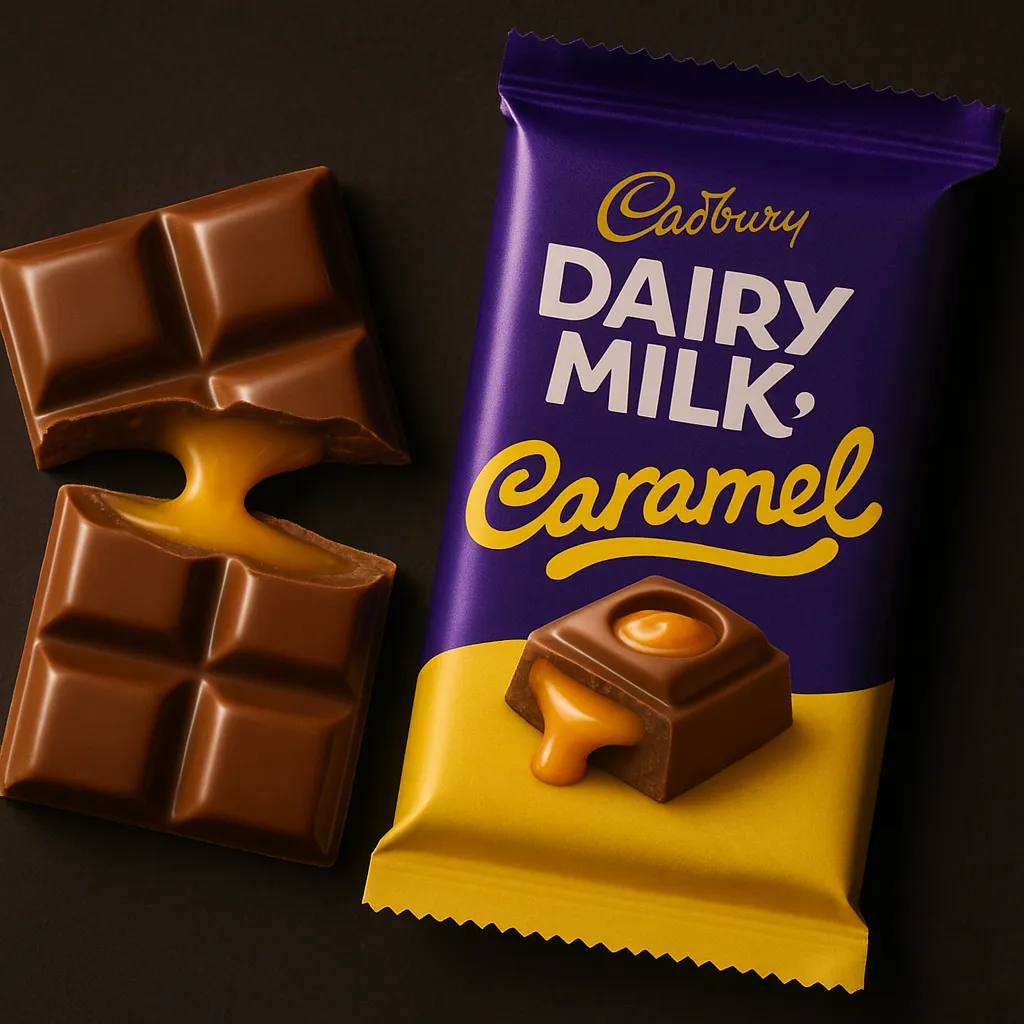
Quick Nutrition Facts
Per 100g
| Nutrient | Amount |
|---|---|
| Calories | 512 kcal |
| Protein | 7.5g |
| Carbohydrates | 56g |
| Fiber | 0.5g |
| Sugars | 50g |
| Fat | 30g |
| Saturated Fat | 19g |
| Calcium | 210mg |
| Phosphorus | 165mg |
| Sodium | 95mg |
Macronutrient Breakdown
 ChatGPT
  Claude
  AI Mode
  Perplexity
NUTRITIONIST INSIGHT
Cadbury Dairy Milk Caramel delivers maximum palatability through a sugar-rich caramel center and smooth milk chocolate shell. The combination triggers dopamine release and immediate blood glucose elevation—ideal for emergency energy pre-workout but less suitable for sustained energy or health-focused eating. The minimal fiber (0.5g) means zero appetite suppression.
Myth Busters
MYTH #1: Caramel Adds Nutritional Value to Chocolate
TRUTH: Caramel is essentially milk, sugar, and butter. Compared to dark chocolate or nuts, caramel adds no fiber, minimal protein, and no unique antioxidants. It purely increases sugar content (50g per 100g vs 30-35g in plain chocolate) and calorie density without offsetting nutritional benefit.
MYTH #2: Small Portions of Caramel Chocolate Don't Spike Blood Sugar
TRUTH: High glycemic index foods (caramel ~95 GI, milk chocolate ~70 GI) cause rapid glucose spikes regardless of portion size. Even 20g servings elevate blood glucose 30-45 minutes post-consumption. Timing with protein is essential, not portion alone.
MYTH #3: Caramel Chocolate Is Better Than Plain Chocolate
TRUTH: Plain milk chocolate offers slightly better nutritional profiles (more cocoa solids, lower total sugar if darker). Caramel adds 15-20% more sugar while losing fiber and antioxidant density. The choice is purely about preference, not health advantage.
MYTH #4: Chocolate Cravings Mean You Need Sugar
TRUTH: Chocolate cravings signal desire for magnesium, serotonin boost, or simple habit. Magnesium content in chocolate is modest (20-40mg per 100g) and unnecessary if diet includes nuts, leafy greens, or seeds. Satisfy cravings with small dark chocolate portions (>70% cocoa) for better nutrient density.
MYTH #5: Eating Caramel Chocolate With Milk Neutralizes Sugar
TRUTH: Pairing chocolate with milk doesn't neutralize sugar; it adds more lactose (milk sugar). What matters is pairing with protein and fat to slow glucose absorption—Greek yogurt, nuts, or cheese work better than milk alone.
NutriScore by Health Goals
| Health Goal | NutriScore | Why This Score? |
|---|---|---|
| Weight Loss |  | 512 cal/100g, 50g sugar, 0.5g fiber = poor satiety. Minimal willpower margin. Reserve for rare treats only (once monthly). Avoid entirely if strict calorie deficit. |
| Muscle Gain |  | 512 calories + 56g carbs + 7.5g protein ideal during surplus for post-workout energy replenishment. Lacks micronutrient density but calorie/carb ratio suits muscle gain timing. |
| Diabetes Management | | 50g sugar per 100g unacceptable for most diabetics. GI ~90 causes severe glucose spikes. Avoid entirely or limit to <5g portions with medical supervision. |
| PCOS Management | | High sugar (50g) and saturated fat (19g) worsen insulin resistance. Avoid; choose dark chocolate 70%+ or nuts-based alternatives instead. |
| Pregnancy Nutrition |  | Calcium (210mg/100g) supports fetal bone development; phosphorus aids mineral absorption. However, 50g sugar per 100g demands strict portion limits (max 20g daily). Gestational diabetes risk. |
| Viral/Flu Recovery | | Quick energy (512 cal), antioxidants from chocolate, calcium for bone strength. Sugar provides immediate energy for weak immune systems. Enjoy 30-50g portions during recovery. |
PERSONALIZED NUTRITION
Track your meals with NutriScan for personalized NutriScores based on your specific health goals!
Blood Sugar Response to Caramel Chocolate
Caramel chocolate has one of the highest glycemic responses among confectionery due to dual sugar sources (caramel + milk chocolate).
Typical Glucose Response Curve
This chart shows typical blood glucose response for general healthy individuals. Individual responses may vary. Not medical advice.
How to Minimize the Spike
Caramel chocolate's high glycemic index (~90) demands strategic pairing to avoid glucose dysregulation:
- 🥛 Greek yogurt or curd - Pair 20g chocolate with 100g yogurt for protein-fat buffer
- 🥜 Peanut or almond butter - Consume 1 tbsp nut butter before chocolate to slow absorption
- 🫘 A handful of nuts - 10-15 almonds or walnuts extend satiety and flatten glucose curve
- ☕ Coffee or green tea - Polyphenols in beverages enhance chocolate's antioxidant effect (though minimal nutritional impact)
Post-meal movement (light walking 15 minutes after eating) further reduces glucose peak by 30% through muscle glucose uptake. This combination approach is critical for diabetics or those managing blood sugar.
Cultural Significance
Cadbury Dairy Milk Caramel emerged as a premium variant of India's most-loved chocolate brand, appealing to consumers seeking indulgence beyond plain chocolate. The caramel filling innovation positioned it as a luxury treat rather than everyday snack.
In India:
- Launched to compete with international caramel chocolate brands while maintaining Cadbury's heritage
- Popular gift during festivals, corporate events, and celebrations
- Symbol of treated-yourself moments among young adults and children
- Wider distribution in urban areas; growing presence in tier-2/3 cities
Global Context:
- Caramel-filled chocolate variants drive premium chocolate segment across Europe, UK, and Asia
- Represents 8-10% of total chocolate confectionery market worldwide
- Positioning as self-care indulgence appeals to busy professionals and students
Compare & Substitute
Caramel & Premium Chocolate Bars: Nutrition Per 100g
| Nutrient | Cadbury Dairy Milk Caramel | Cadbury Silk (Premium Dark) | Nestlé Aero | Amul Dark 70% |
|---|---|---|---|---|
| Calories | 512 kcal | 485 kcal | 505 kcal | 545 kcal |
| Carbs | 56g | 56g | 58g | 44g |
| Fiber | 0.5g | 1.5g | 0.8g | 5g |
| Protein | 7.5g | 8g | 6.5g | 12g |
| Fat | 30g | 25g | 28g | 36g |
| Sugar | 50g | 51g | 52g | 38g |
| Best For | Caramel lovers, indulgence | Silky smoothness, daily | Airy texture | Dark chocolate, antioxidants |
Frequently Asked Questions
Is Cadbury Dairy Milk Caramel worse than other caramel chocolates?
Cadbury Dairy Milk Caramel is comparable to most caramel-filled chocolates (Nestlé Aero: 505 cal, Lindt: 515 cal). The 512 calories per 100g and 50g sugar put it in the high-calorie range. Dark chocolate alternatives (Amul 70%: 545 cal but 5g fiber, 38g sugar) offer better nutritional profiles. Choose based on taste preference, not perceived healthfulness.
Can I eat Cadbury Dairy Milk Caramel while intermittent fasting?
No. 512 calories breaks a fast; 50g sugar spikes insulin significantly. Reserve for eating windows only. If practicing time-restricted eating, consume post-workout during eating window for optimal glucose clearance (carbs + fat support glycogen replenishment and hormone response).
Is the caramel filling made with real cream?
Cadbury's caramel typically contains milk derivatives, sugar, and butter—not fresh cream. This extends shelf life but adds calories (30g fat per 100g from milk solids and butter). Check packaging for ingredient specifics; cream-based fillings differ nutritionally from butter-based ones by negligible amounts.
How does Cadbury Dairy Milk Caramel compare to homemade chocolate?
Homemade chocolate (dark 70%+ cocoa + nut butter caramel) typically has higher cocoa solids (40-50%), more fiber (from nuts), and lower refined sugar. Cadbury's manufacturing process uses emulsifiers and milk powder for smoothness, reducing fiber and increasing fat. Homemade versions offer nutritional superiority but lower palatability for many.
Can I eat caramel chocolate before a workout?
Yes, if doing intense cardio (HIIT, running). The 56g carbs provide glycogen for high-intensity effort, and 30g fat aids hormone balance. Limit to 30-40g (140-160 cal) 30-45 minutes before workout. For strength training requiring sustained energy, pair with banana or oatmeal for extended fuel.
Should diabetics completely avoid Cadbury Dairy Milk Caramel?
Consult your healthcare provider. Most diabetes guidelines recommend avoiding or limiting to <10g monthly due to 50g sugar per 100g. If included, pair with protein (Greek yogurt, nuts), space portions 3+ hours apart, and monitor blood glucose response closely. Individual tolerance varies significantly.


Similar Nutritious Foods
4505 Chicharrones Classic Chili Salt
7 Eleven Japan Crispy Corn Cheese
Explore More Nutrition Tools & Resources
AI Calorie Counter App - Snap a Photo, Get Macros
AI Nutritionist App That Reads Your Logged Meals
Best Protein Supplements for Women
Bulking Meal Plan App That Sets Your Surplus
ChatGPT Calorie Counter Alternative That Keeps the Total
ChatGPT Diet Plan Alternative That Tracks What You Eat
ChatGPT Weight Loss Coach Alternative With a Food Log
Fast Food Calorie Counter App That Reads the Tray
Free Calorie Tracker App with AI Photo Scans | NutriScan
Indian Diet Plan App With Veg and Non Veg Meals
Indian Food Calorie Calculator - Get Instant Nutrition Facts for Desi Meals — 2026
Intermittent Fasting for Women, Timer and Meal Log App
Intermittent Fasting Tracker App - Free Fasting Timer
Macro Tracker App That Fills the Numbers From a Photo
Mediterranean Diet Meal Plan App That Counts the Oil
Micronutrient Tracker App for Vitamins and Minerals
MyFitnessPal Alternative That Stays Free | NutriScan
NutriScore App: A Free Grade on Every Meal | NutriScan
Nutrition Label Scanner App for the Amount You Ate
Second Trimester Protein Guide
Vegetarian Meal Plan App With a Protein Target
Voice Calorie Counter - Speak to Track Meals Hands-Free
Water and Calorie Tracker App - Free Water Log