Cadbury Dairy Milk Crackle: Calories, Nutrition and Health Benefits
Smooth milk chocolate with crispy rice crisps—lightweight texture that delivers crunch without added nutritional complexity.
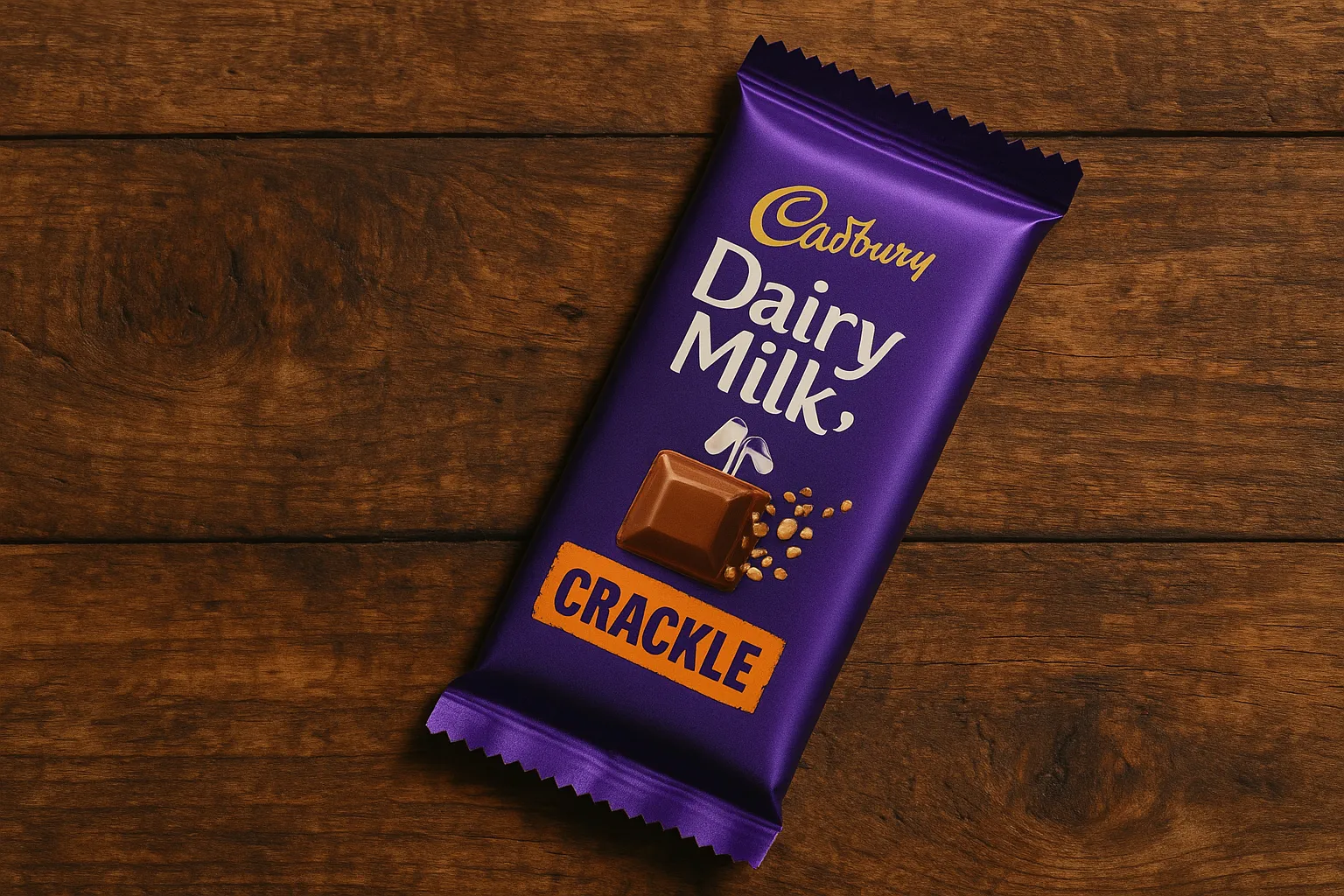
Quick Nutrition Facts
Per 1 Bar (40g)
| Nutrient | Amount |
|---|---|
| Calories | 235 kcal |
| Protein | 3g |
| Carbohydrates | 26g |
| Fiber | 0.8g |
| Sugars | 21g |
| Fat | 14g |
| Cocoa Solids | ~30% |
| Iron | 1.1mg |
| Calcium | 130mg |
| Magnesium | 30mg |
Macronutrient Breakdown
 ChatGPT
  Claude
  AI Mode
  Perplexity
NUTRITIONIST INSIGHT
Cadbury Dairy Milk Crackle adds puffed rice to milk chocolate for a light, airy texture. While the crunch appeals to taste preferences, rice contributes primarily starch (carbohydrates) and air rather than nutritional value. A 40g bar delivers 235 calories with minimal satiety compared to nuts or real fruit alternatives.
Myth Busters
MYTH #1: Crispy Rice Makes Chocolate Healthier
TRUTH: Puffed rice is 95% carbohydrates and starch with negligible fiber, vitamins, or minerals. It's air-processed cereal that adds texture and calories without nutritional benefit. Nuts, fruits, and dark cocoa offer superior health value.
MYTH #2: Crackle Has Less Sugar Than Classic Dairy Milk
TRUTH: Crackle contains 21g sugar per 40g bar; Classic contains 20g. The rice puffing process actually requires additional sugar coating to adhere rice to chocolate. Sugar content is nearly identical despite texture differences.
MYTH #3: Chocolate With Crispy Elements Is Lower in Fat
TRUTH: Crackle contains 14g fat per bar versus 13.5g in Classic Dairy Milk. The rice doesn't reduce fat content; it simply displaces some cocoa solids, but total calorie density remains high (235 vs 220 calories).
MYTH #4: Puffed Rice Aids Digestion
TRUTH: Puffed rice is processed cereal with minimal fiber (0.8g per bar). Unlike whole grains with natural fiber, puffed rice has undergone heat processing that damages fiber structure. Digestion support is negligible.
MYTH #5: Crackle Is Lighter and Better for Weight Loss
TRUTH: While texture feels lighter, Crackle delivers 235 calories per bar—slightly more than Classic (220 calories). The air in puffed rice creates psychological lightness, but caloric density and satiety are inferior. Nuts-based chocolate supports weight loss better due to slower digestion.
NutriScore by Health Goals
| Health Goal | NutriScore | Why This Score? |
|---|---|---|
| Weight Loss |  | 235 calories, 14g fat, 21g sugar per bar. High energy density with low satiety (puffed rice = air). Monthly limit of 1 bar maximum. |
| Muscle Gain |  | Only 3g protein; insufficient for muscle building. Carbs (26g) aid post-workout glycogen, but combine with whey isolate for optimal recovery. |
| Diabetes Management | | 21g sugar with high glycemic index (puffed rice ranks GI 75+). Rapid blood sugar spike. Avoid; choose dark chocolate (70%+) with <5g sugar instead. |
| PCOS Management | | 21g sugar and high GI from puffed rice trigger insulin spikes damaging to PCOS management. Avoid entirely; opt for nuts or dark chocolate. |
| Pregnancy Nutrition | | Milk provides calcium (130mg); magnesium aids leg cramps. However, 21g sugar requires moderation—1–2 pieces only. Poor carbs compared to whole foods. |
| Viral/Flu Recovery | | Quick carbs (26g) provide fast energy; milk solids offer calories for recovery. Cocoa offers mild antioxidant support, but use cautiously due to sugar. |
PERSONALIZED NUTRITION
Track your meals with NutriScan for personalized NutriScores based on your specific health goals!
Blood Sugar Response to Chocolate With Puffed Rice
Crispy rice amplifies the blood glucose spike compared to regular chocolate because puffing increases starch's glycemic index.
Typical Glucose Response Curve
This chart shows typical blood glucose response for general healthy individuals. Individual responses may vary. Not medical advice.
How to Minimize the Spike
Pairing chocolate with protein or fiber slows glucose absorption; critical for puffed rice's high GI:
- 🥛 Greek yogurt or curd (dahi) - Protein and lactose slow starch digestion
- ☕ Black coffee or green tea - Polyphenols reduce glucose spike intensity
- 🥜 Peanut or almond butter - Monounsaturated fats buffer carbohydrate absorption
- 🥗 High-fiber snack (whole grain, vegetable) - Fiber competes for digestion bandwidth, delaying sugar peak
Avoid eating Crackle alone on an empty stomach; the puffed rice digests rapidly, causing sharp spikes followed by energy crashes.
Cultural Significance
Cadbury Dairy Milk Crackle launched in India as a texture innovation on the classic Dairy Milk formula.
In India:
- Crackle positioned as the "modern" version of Dairy Milk; appeals to younger consumers seeking texture novelty
- Gifted during examinations as a "success charm" (psychological comfort rather than nutritional benefit)
- Often consumed during afternoon tea breaks in offices; the crunch provides sensory satisfaction beyond taste
- Less traditional than Classic Dairy Milk; associated with contemporary, Western-influenced snacking culture
- Available in seasonal variants and limited-edition flavors (Mocha, Caramel, etc.) primarily in urban metros
Global Presence:
- Crackle competes with Nestlé's Aero (aerated chocolate) and Ferrero's Kinder Bueno (wafer-based crunch)
- Indian Crackle formulation typically uses rice crisps; European versions may use different puffed cereals or wafer structures
- Market positioning emphasizes fun, youthful indulgence rather than nutrition; reflects broader chocolate industry trends
Compare & Substitute
Cadbury Dairy Milk Crackle vs Similar Textured Chocolate Bars (Per 40g serving)
| Nutrient | 🍫 Crackle | 🍫 Aero | 🍫 Dairy Milk Classic | 🍫 Dark 70% |
|---|---|---|---|---|
| Calories | 235 kcal | 190 kcal | 220 kcal | 210 kcal |
| Carbs | 26g | 21g | 23g | 19g |
| Protein | 3g | 2.8g | 3.2g | 3g |
| Fat | 14g | 11g | 13.5g | 15g |
| Sugars | 21g | 19g | 20g | 7g |
| Fiber | 0.8g | 1g | 0.8g | 3g |
| Best For | Taste/texture | Lighter texture | Classic taste | Health |
Frequently Asked Questions
Is Cadbury Dairy Milk Crackle suitable for daily consumption?
No. At 235 calories and 21g sugar per bar, daily consumption provides 147g added sugar weekly—far exceeding WHO recommendations (25–35g daily). Limit to 1–2 bars monthly maximum; treat as rare indulgence.
Why is Crackle higher in calories than Classic Dairy Milk?
Puffed rice requires oil coating and sugar adhesive during manufacturing, adding 15 extra calories per bar versus Classic (220 kcal). The rice structure also displaces some denser cocoa, reducing satiety while maintaining calorie count.
Can someone with a nut allergy enjoy Crackle instead of Fruit & Nut?
Yes. Crackle is nut-free and suitable for nut-allergic individuals. However, it lacks the nutritional benefit of nuts (vitamin E, magnesium, healthy fats). Choose dark chocolate (70%+) for superior antioxidants without nuts.
How does the glycemic index of Crackle compare to other chocolates?
Puffed rice has a glycemic index of 75+ (high). Combined with milk chocolate's GI (~55), Crackle's overall GI reaches approximately 60–65 (medium-high). Classic Dairy Milk (GI ~55) and dark chocolate (GI ~23) are metabolically preferable.
Is Cadbury Dairy Milk Crackle lactose-free?
No. Like all milk chocolates, Crackle contains milk solids and lactose. Lactose-intolerant individuals should avoid or consume <10g (quarter bar) with lactase enzyme supplements.
What is the shelf life of Cadbury Dairy Milk Crackle?
Typically 12–18 months from manufacturing date when stored in cool (below 25°C), dry conditions. The puffed rice can become stale over time; older bars may lose crunch despite maintaining taste. Check expiry date on packaging.
Does Crackle contain artificial flavoring?
Cadbury India Crackle lists "natural and artificial flavoring" in some batches. The primary flavoring is cocoa butter and milk solids; rice crisps are plain (no added flavor). Check ingredient list on packaging for specific batch composition.
Why does Crackle sometimes taste different than expected?
Indian Dairy Milk formulations vary by batch and season. Winter production uses slightly different cocoa ratios due to cocoa butter availability. Temperature fluctuations during storage (melting and re-solidifying) also alter texture and perceived taste.


Similar Nutritious Foods
4505 Chicharrones Classic Chili Salt
7 Eleven Japan Crispy Corn Cheese
Explore More Nutrition Tools & Resources
AI Calorie Counter App - Snap a Photo, Get Macros
AI Nutritionist App That Reads Your Logged Meals
Best Protein Supplements for Women
Bulking Meal Plan App That Sets Your Surplus
ChatGPT Calorie Counter Alternative That Keeps the Total
ChatGPT Diet Plan Alternative That Tracks What You Eat
ChatGPT Weight Loss Coach Alternative With a Food Log
Fast Food Calorie Counter App That Reads the Tray
Free Calorie Tracker App with AI Photo Scans | NutriScan
Indian Diet Plan App With Veg and Non Veg Meals
Indian Food Calorie Calculator - Get Instant Nutrition Facts for Desi Meals — 2026
Intermittent Fasting for Women, Timer and Meal Log App
Intermittent Fasting Tracker App - Free Fasting Timer
Macro Tracker App That Fills the Numbers From a Photo
Mediterranean Diet Meal Plan App That Counts the Oil
Micronutrient Tracker App for Vitamins and Minerals
MyFitnessPal Alternative That Stays Free | NutriScan
NutriScore App: A Free Grade on Every Meal | NutriScan
Nutrition Label Scanner App for the Amount You Ate
Second Trimester Protein Guide
Vegetarian Meal Plan App With a Protein Target
Voice Calorie Counter - Speak to Track Meals Hands-Free
Water and Calorie Tracker App - Free Water Log