Cadbury Dairy Milk Fruit & Nut: Calories, Nutrition and Health Benefits
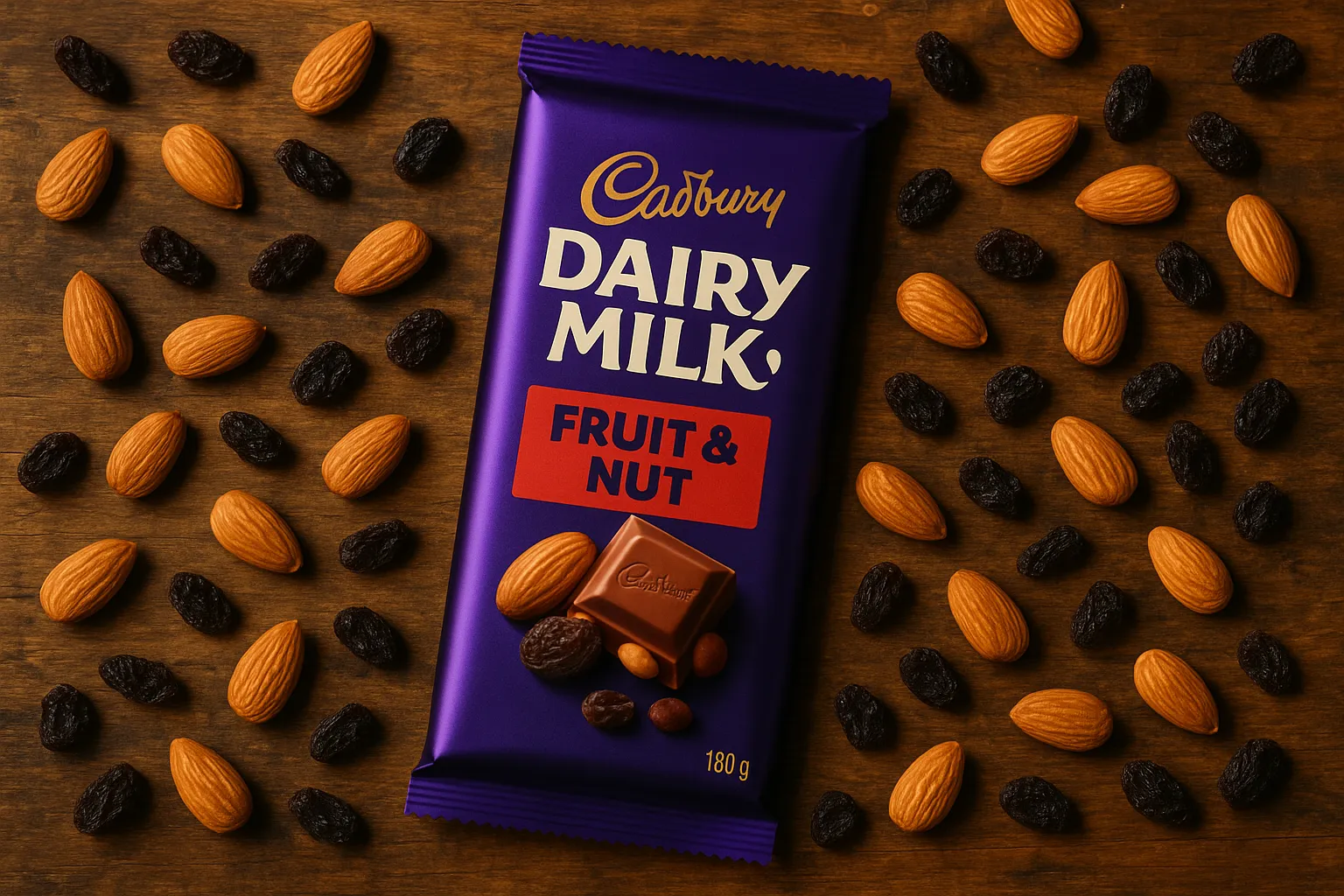
Classic chocolate bar with almonds and raisins—indulgent taste with nutritional value from nuts and dried fruit.
Quick Nutrition Facts
Per 1 Bar (40g)
| Nutrient | Amount |
|---|---|
| Calories | 220 kcal |
| Protein | 3.5g |
| Carbohydrates | 25g |
| Fiber | 1.2g |
| Sugars | 19g |
| Fat | 13g |
| Vitamin E | 2.4mg |
| Magnesium | 35mg |
| Iron | 1.2mg |
| Potassium | 110mg |
Macronutrient Breakdown
 ChatGPT
  Claude
  AI Mode
  Perplexity
NUTRITIONIST INSIGHT
Cadbury Dairy Milk Fruit & Nut combines milk chocolate with real almonds and raisins, delivering vitamin E and iron. The nuts provide monounsaturated fats that support heart health, but the 19g sugar per bar makes this a treat-category chocolate rather than a daily snack.
Myth Busters
MYTH #1: All Chocolate Is Bad for Health
TRUTH: The almonds and raisins in Dairy Milk Fruit & Nut contribute antioxidants, fiber, and minerals. Moderate cocoa consumption supports cardiovascular function. Portion control transforms it from junk to occasional treat.
MYTH #2: Chocolate Causes Acne
TRUTH: Scientific evidence does not conclusively link chocolate to acne. Sugar and dairy may trigger breakouts in susceptible individuals, but chocolate itself is not the culprit. Quality matters—this bar uses quality cocoa butter and milk.
MYTH #3: Nut-Containing Bars Are Always High-Protein
TRUTH: At 3.5g protein per bar, Dairy Milk Fruit & Nut is modest. The calorie density (220 per 40g) comes primarily from cocoa butter and sugar, not protein. Almonds contribute only ~1g protein per bar.
MYTH #4: Dried Fruit in Chocolate Reduces Sugar Impact
TRUTH: Raisins are naturally concentrated sugars (17g per 30g serving). When combined with milk chocolate and added sugars, the total sugar load (19g per bar) remains high. The fiber from raisins (1.2g total) provides minimal glucose buffering.
MYTH #5: Indian Chocolates Have Different Nutrition Than Western Brands
TRUTH: Cadbury India formulates Dairy Milk Fruit & Nut similarly to global versions—cocoa solids, milk solids, almonds, raisins, and sugar proportions are consistent. Slight flavor variations exist but macros stay equivalent.
NutriScore by Health Goals
| Health Goal | NutriScore | Why This Score? |
|---|---|---|
| Weight Loss |  | 220 calories, 13g fat, 19g sugar per bar. Calorie-dense with limited satiety. Limit to 1–2 bars monthly. |
| Muscle Gain |  | Only 3.5g protein; not a muscle-building food. Post-workout carbs (25g) aid glycogen, but combine with whey isolate for effective recovery. |
| Diabetes Management | | 19g sugar, high glycemic load. Not recommended for diabetics. Choose dark chocolate (70%+) with <5g sugar per serving instead. |
| PCOS Management | | 19g sugar impacts insulin sensitivity adversely. Limit severely; opt for low-sugar dark chocolate alternatives. |
| Pregnancy Nutrition | | Mild folate from nuts (24mcg), magnesium aids leg cramps, but sugar content requires moderation—1–2 pieces only. |
| Viral/Flu Recovery | | Milk chocolate provides quick energy and comfort. Cocoa polyphenols offer mild immune support, but sugar may delay recovery—use sparingly. |
PERSONALIZED NUTRITION
Track your meals with NutriScan for personalized NutriScores based on your specific health goals!
Blood Sugar Response to Chocolate
Understanding how chocolate affects your blood glucose helps optimize timing and portion size, especially for those managing diabetes or weight.
Typical Glucose Response Curve
This chart shows typical blood glucose response for general healthy individuals. Individual responses may vary. Not medical advice.
How to Mitigate the Spike
Pairing chocolate with protein or fat slows glucose absorption:
- 🥛 Greek yogurt or curd (dahi) - Protein and probiotics reduce spike
- 🥜 Peanut or almond butter - Healthy fats extend energy release
- ☕ Black coffee or green tea - Polyphenols support glucose metabolism
- 🧈 Whole milk or cheese - Lactose and casein protein buffer sugar absorption
This pairing not only reduces the glucose spike but also provides sustained energy without the post-sugar crash.
Cultural Significance
Cadbury Dairy Milk has been India's most loved chocolate since 1948, transcending generations and occasions.
In India:
- Gifting Dairy Milk is customary for celebrations—birthdays, festivals (Diwali, Holi), and achievements
- The tagline "Kya mast hai life" (Life is sweet) resonates deeply in Indian advertising culture
- Dairy Milk Fruit & Nut variant launched to appeal to health-conscious consumers seeking nuts' nutritional value
- Consumed during winter months; chocolate melts slower in cooler climates
- Temple and festival offerings occasionally include wrapped Dairy Milk as a "prasad" (blessed offering)
Global Impact:
- Cadbury is the world's second-largest chocolate manufacturer (behind Mars)
- Fruit & Nut variant competes globally with Hershey's with Almonds and Lindt Hazelnut bars
- Indian versions maintain lower cocoa content (30–35%) compared to European variants (35–40%), affecting taste and mouthfeel
Compare & Substitute
Cadbury Dairy Milk Fruit & Nut vs Similar Chocolate Bars (Per 40g serving)
| Nutrient | 🍫 Cadbury F&N | 🍫 Cadbury Classic | 🍫 Hershey Almonds | 🍫 Dark 70% Lindt |
|---|---|---|---|---|
| Calories | 220 kcal | 220 kcal | 235 kcal | 210 kcal |
| Carbs | 25g | 23g | 21g | 19g |
| Protein | 3.5g | 3.2g | 4g | 3g |
| Fat | 13g | 13.5g | 15.5g | 15g |
| Sugars | 19g | 20g | 18g | 7g |
| Fiber | 1.2g | 0.8g | 1.5g | 3g |
| Best For | Treat with nuts | Smooth indulgence | Nut texture lovers | Diabetes/health |
Frequently Asked Questions
Can I eat Cadbury Dairy Milk Fruit & Nut daily?
No. At 220 calories and 19g sugar per bar, daily consumption exceeds recommended added sugar intake (25–35g daily for women; 36–50g for men). Limit to 1–2 bars weekly maximum; treat as occasional indulgence rather than daily snack.
How does Cadbury Dairy Milk Fruit & Nut compare to dark chocolate?
Dairy Milk Fruit & Nut contains 30–35% cocoa solids and added sugars totaling 19g per bar. Dark chocolate (70%+) has 50–90% cocoa, minimal added sugars (2–5g), and higher antioxidant polyphenols. Dark chocolate is nutritionally superior; Dairy Milk is taste-focused.
Is Cadbury Dairy Milk Fruit & Nut gluten-free?
Most Cadbury India Dairy Milk bars are gluten-free (certified on packaging), but cross-contamination can occur in factories. Celiacs should confirm the specific batch with Cadbury customer service.
What about the caffeine in Cadbury Dairy Milk Fruit & Nut?
One 40g bar contains ~2–4mg caffeine from cocoa solids. While minor compared to coffee (95mg per cup), sensitive individuals or those consuming before bed may notice sleep disruption. Time consumption for morning or early afternoon.
How does eating half a bar instead of a full bar change the nutrition?
Half a bar (20g) provides 110 calories, 9.5g sugar, 6.5g fat, 12.5g carbs, and 1.75g protein. This portion is more suitable for weight-conscious or diabetic individuals; pair with tea or coffee to extend satisfaction.
Are the almonds and raisins real or artificial flavoring?
Cadbury India Dairy Milk Fruit & Nut uses real roasted almonds and raisins, though in small quantities (approximately 5–8% of the bar by weight). Quality varies by batch; check ingredient list for "almond pieces" and "raisins" rather than "almond flavor" or "raisin concentrate."
Can children safely eat Cadbury Dairy Milk Fruit & Nut?
Yes, but limit to 1–2 pieces (5–10g) once weekly. The sugar content can promote tooth decay if not followed by water rinse or tooth brushing. The nut pieces present minor choking risk for children under 5; supervise consumption.


Similar Nutritious Foods
4505 Chicharrones Classic Chili Salt
7 Eleven Japan Crispy Corn Cheese
Explore More Nutrition Tools & Resources
AI Calorie Counter App - Snap a Photo, Get Macros
AI Nutritionist App That Reads Your Logged Meals
Best Protein Supplements for Women
Bulking Meal Plan App That Sets Your Surplus
ChatGPT Calorie Counter Alternative That Keeps the Total
ChatGPT Diet Plan Alternative That Tracks What You Eat
ChatGPT Weight Loss Coach Alternative With a Food Log
Fast Food Calorie Counter App That Reads the Tray
Free Calorie Tracker App with AI Photo Scans | NutriScan
Indian Diet Plan App With Veg and Non Veg Meals
Indian Food Calorie Calculator - Get Instant Nutrition Facts for Desi Meals — 2026
Intermittent Fasting for Women, Timer and Meal Log App
Intermittent Fasting Tracker App - Free Fasting Timer
Macro Tracker App That Fills the Numbers From a Photo
Mediterranean Diet Meal Plan App That Counts the Oil
Micronutrient Tracker App for Vitamins and Minerals
MyFitnessPal Alternative That Stays Free | NutriScan
NutriScore App: A Free Grade on Every Meal | NutriScan
Nutrition Label Scanner App for the Amount You Ate
Second Trimester Protein Guide
Vegetarian Meal Plan App With a Protein Target
Voice Calorie Counter - Speak to Track Meals Hands-Free
Water and Calorie Tracker App - Free Water Log